A discreet buyer’s guide to separating meaningful acoustic glass performance from polished sales language in South Florida luxury residences.
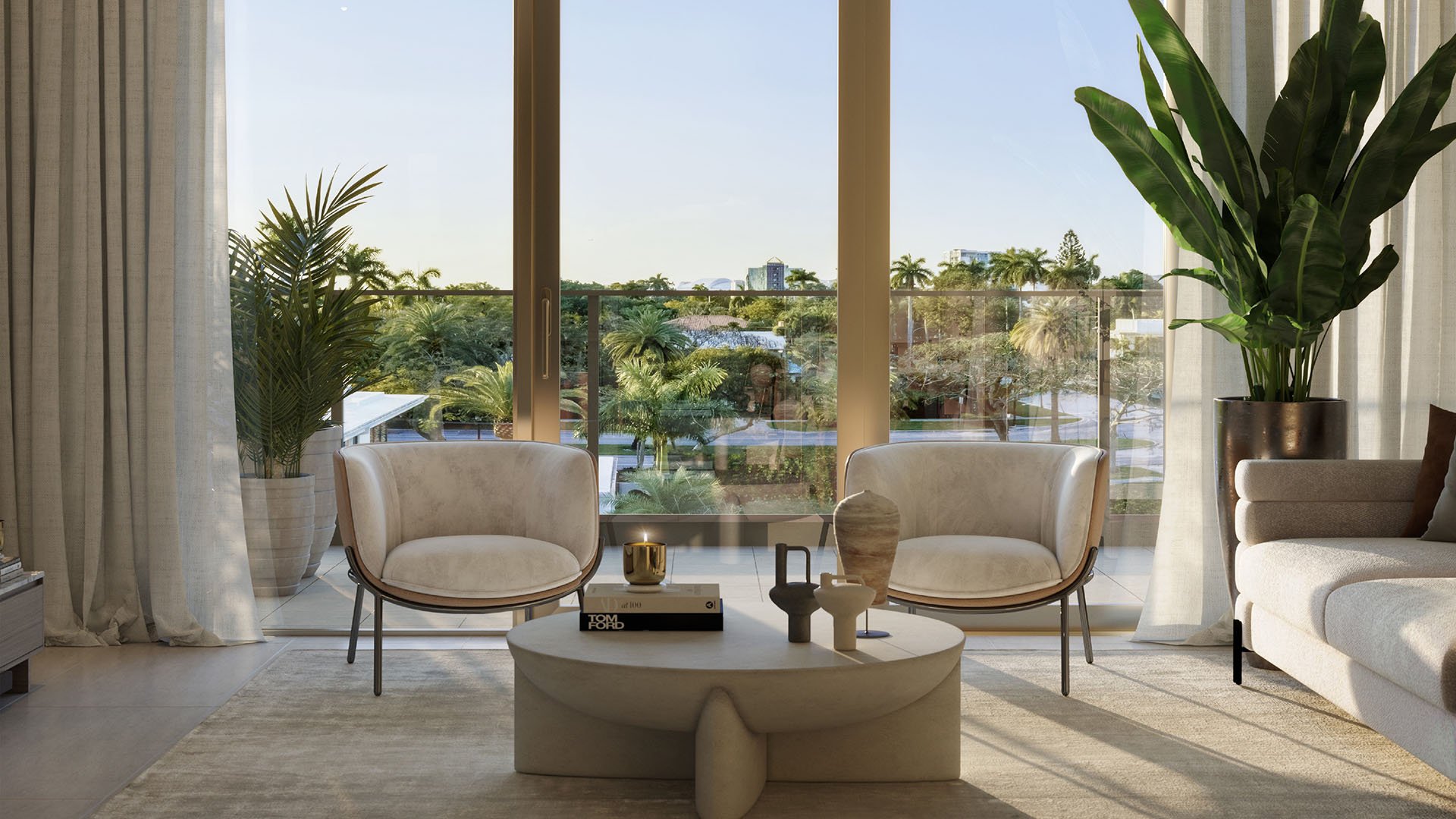
In South Florida luxury real estate, silence has become part of the view. A residence may offer water, skyline, sunset, and sweep, yet the lasting impression often comes from what the buyer does not hear: traffic below, marina activity, pool decks, aircraft, mechanical hum, late-night energy, or the low percussion of a dense urban corridor.
That is why acoustic glass has become a favored phrase in sales galleries. It sounds technical, refined, and reassuring. It suggests a life sealed away from friction, where the city appears cinematic but never intrusive. The difficulty is that the phrase can mean very different things depending on the full window and door system, the frame, the seals, the installation, and the actual acoustic rating context.
For a buyer in Brickell, Aventura, Surfside, or an oceanfront setting, the right question is not simply whether the residence has acoustic glass. The better question is whether the entire exterior envelope has been designed, specified, and executed to support acoustic comfort in the way you will actually live.
Marketing theater often begins with a beautiful word attached to an incomplete detail. “Acoustic” may describe laminated glass, insulated glass, a specialty interlayer, or a broader glazing package. Yet sound does not respect the brochure. It travels through weak points.
A high-performing pane can be compromised by a lesser frame. A premium fixed window may perform differently than a sliding door. A terrace threshold, operable panel, or balcony door can become the acoustic weak link. In a balcony-driven market, this matters because indoor-outdoor living is part of the purchase, but every opening changes the performance conversation.
A disciplined buyer asks about the assembly, not the adjective. What glass is being used? What frame system accompanies it? Are operable doors and fixed panels treated differently? Is the acoustic claim tied to testing, ratings, or specifications, or is it simply descriptive language?
The most credible answers tend to be specific without being theatrical. They acknowledge that glass, frame, seals, and installation work together. They do not imply that one elegant material can solve every sound condition in every orientation.
Quiet is not a single product. It is an outcome. It depends on exterior noise conditions, building orientation, height, unit layout, room use, and the way openings are detailed.
Higher floors can change the listening experience, but they do not automatically erase sound. A residence above a busy corridor may still receive reflected noise, wind interaction, or distant mechanical patterns. A lower residence beside landscaping or water may feel surprisingly calm if the enclosure is well considered. The point is not to assume. The point is to test and question with precision.
Buyers should also avoid treating acoustic glass as a universal cure. A bedroom, primary bath, and main living space may have different exposure profiles. A corner residence may receive sound from more than one direction. A den or media room may be quieter than a dramatic living room with expansive glazing. The glass is one part of a larger sensory plan.
In new-construction conversations, the most useful language is comparative and practical: how does this residence address sound relative to its exposure, use, and openings? That question invites a better answer than a simple assurance that the building uses upgraded glass.
A polished presentation can make every specification sound inevitable. The buyer’s task is to slow the conversation down.
Ask whether acoustic performance is documented for the full window or door assembly. Ask whether the same approach applies across fixed glazing, sliders, and terrace doors. Ask whether different glazing packages apply to different elevations. Ask whether residential floors have been considered differently from amenity areas or common spaces. Ask what a buyer should expect when doors are closed, not when a model residence is staged for calm.
A strong sales team should be comfortable discussing limitations. That does not weaken the offering. It strengthens trust. No luxury building can promise absolute silence in every condition, and the best residences do not need to pretend. They demonstrate that acoustic comfort has been considered intelligently.
Be cautious when the answer becomes vague, overly romantic, or entirely visual. Phrases about serenity, sanctuary, and urban retreat may be true in spirit, but they are not substitutes for specification clarity. If a claim cannot be connected to an assembly, a rating framework, or a practical explanation, it may be theater.
A buyer touring at noon may hear a different building than the owner who returns at dusk. A weekday can feel different from a weekend. A residence may be calm with doors closed and animated once terrace doors are opened for evening air.
The practical approach is to listen deliberately. Stand in the primary bedroom with the doors closed. Pause in the living room without conversation. Notice whether sound enters as a sharp intrusion, a low background layer, or barely at all. Open and close terrace doors and listen for the transition. If possible, visit at a time that resembles your actual routine.
For a Coconut Grove buyer, the concern may be less about skyline density and more about neighborhood rhythm, tree canopy, nearby roads, or outdoor entertaining. In a waterfront tower, the issue may be wind, marina activity, or resort-style amenity energy. In a dense urban setting, it may be traffic, nightlife, or construction cycles around you.
This is not about rejecting city life. It is about understanding the acoustic character you are buying, just as you would understand light, view, privacy, and elevator experience.
The most sophisticated buyers no longer treat acoustic comfort as a minor technical line item. It affects sleep, entertaining, concentration, resale confidence, and daily composure. It is especially important in residences where the architecture celebrates glass and exposure.
Yet quiet should be evaluated alongside other priorities. A spectacular view may justify some ambient energy for one buyer and not for another. A pied-à-terre owner may value dramatic access and overlook some sound conditions. A full-time resident may prioritize bedroom calm over terrace spectacle. A family may focus on study areas, nursery placement, and separation between social and private rooms.
The best purchase decisions come from matching the acoustic profile to the intended life. That means looking beyond the sales phrase and toward lived performance. Acoustic glass can be meaningful, but only when it is part of a coherent system.
Real substance is calm, clear, and verifiable. It does not need exaggerated promises. It can explain the role of laminated or insulated glass without implying magic. It can identify the importance of frames and seals. It can distinguish between fixed and operable openings. It can address exposure and orientation without drifting into vague reassurance.
Marketing theater, by contrast, flattens nuance. It treats all glass as equal, all views as quiet, and all buyers as satisfied by the same answer. In the ultra-premium market, that is not enough.
A serious buyer should expect a serious conversation. The goal is not to interrogate for sport. It is to protect the feeling that made the residence desirable in the first place: the ability to live above, beside, or within South Florida’s energy while preserving a private atmosphere inside.
What does acoustic glass usually mean in a luxury residence? It generally refers to glazing intended to reduce sound transmission, but the exact meaning depends on the full assembly and specification.
Is acoustic glass alone enough to make a condo quiet? No. Frames, seals, operable doors, installation quality, and exterior conditions all influence the final experience.
Should I ask for ratings when acoustic performance is mentioned? Yes. A rating context helps separate technical substance from a broad marketing phrase.
Do sliding doors affect acoustic performance? They can. Operable openings often perform differently from fixed glass, so they deserve specific attention.
Are higher floors always quieter? Not always. Height can change exposure, but sound can still travel or reflect in unexpected ways.
How should I evaluate sound during a showing? Stand quietly in key rooms, close all doors, and listen at a time that resembles your actual routine.
Is oceanfront living automatically quieter than urban living? Not necessarily. Wind, amenities, nearby activity, and building design can shape the sound environment.
What is a red flag in an acoustic glass pitch? Be cautious when the explanation is purely emotional and cannot be connected to the full window or door system.
Should bedroom sound matter more than living room sound? For many buyers, yes. Sleep quality often makes bedroom acoustic performance especially important.
Can acoustic priorities affect resale appeal? Yes. Quiet, privacy, and comfort are enduring luxury attributes when they are supported by the residence itself.
To compare the best-fit options with clarity, connect with MILLION.
If branded residences are on your mind — as a home or as an allocation — we would be glad to share what we are seeing, privately.
Begin a quiet conversation