For buyers moving from Brooklyn to Coral Gables and greater South Florida, the most durable luxury is not visibility. It is the quiet accuracy of arrivals, staffing, maintenance, privacy, and daily logistics.

For a Brooklyn buyer considering Coral Gables, the question is rarely whether South Florida can deliver sunshine, space, and beauty. It can. The more consequential question is whether a home can deliver daily precision without requiring constant attention. Social buzz may introduce a neighborhood, a tower, or a private enclave, but it is not what makes a residence effortless on a Tuesday morning.
Service precision is the quieter luxury. It is how guests are received, how deliveries move, how maintenance is anticipated, how parking feels at peak hours, and whether the building or community operates with the calm assurance of a well-run private club. For relocating buyers accustomed to the intensity and immediacy of Brooklyn, that distinction matters.
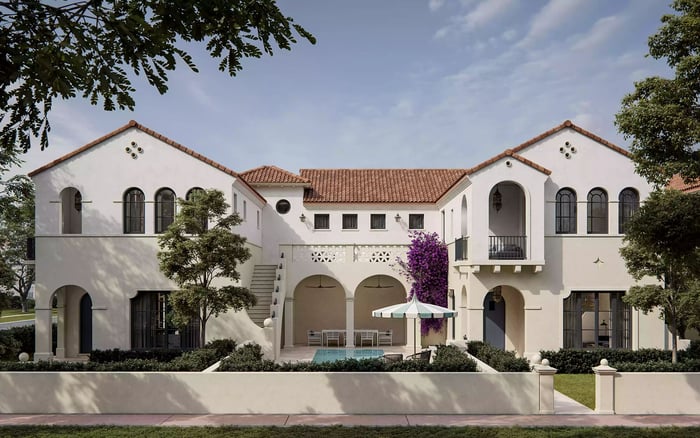
Coral Gables has a particular appeal for buyers who want refinement without constant performance. Its strongest residential choices tend to favor proportion, shade, privacy, and neighborhood rhythm over spectacle. That makes the area especially relevant for those leaving a dense urban lifestyle without abandoning sophistication.
A residence such as Ponce Park Coral Gables belongs in a conversation about buyers who want to remain close to the civility of the city while prioritizing a more measured sense of arrival. Nearby, The Village at Coral Gables speaks to a different but related instinct: the desire for an architectural setting that feels residential first, rather than scene-driven.
For Brooklyn buyers, this is often the shift. The most desirable home is not necessarily the one that photographs loudest. It is the one that makes everyday life smoother, more private, and better managed.
Brooklyn buyers often evaluate neighborhoods through walking patterns: coffee, school runs, dining, parks, transit, friends, errands. In South Florida, the equivalent test is broader. Walkability still matters in select pockets, but daily satisfaction also depends on vehicle flow, valet protocol, guest parking, secure package handling, storm preparation, and how easily service providers can access the home without disrupting privacy.
This is where a buyer should slow down. Ask how the property handles recurring deliveries. Observe the porte cochere or arrival sequence during a busy hour. Understand whether staff are trained for discretion or simply positioned as a visible amenity. The difference can be felt quickly.
In Coconut Grove, for example, the appeal often comes from a softer residential atmosphere combined with proximity to Miami’s broader cultural and business life. Four Seasons Residences Coconut Grove is relevant for buyers comparing the grace of a quieter setting with expectations for polished residential service.
Service precision is not about excess attention. In the best buildings and communities, service feels nearly invisible because the system works before the owner has to intervene. A resident should not need to explain the same preference repeatedly. A guest should not feel processed. A repair should not become a project management exercise.
This is particularly important for owners who split time between South Florida and New York, or who are managing family, travel, business, and household staff. A beautiful lobby matters less if the operating culture behind it is inconsistent. Buyers should evaluate the people, not just the finishes: front desk judgment, valet choreography, housekeeping coordination, security posture, and management responsiveness.
Brickell may attract buyers who still want a vertical urban experience, but the best choice is not simply the most visible address. A project such as St. Regis® Residences Brickell should be assessed through the same service-first lens: arrival, privacy, residential separation, staff depth, and how gracefully the building supports a demanding schedule.
South Florida offers a wide spectrum of atmospheres, from club-like beachfront living to gardened village environments and high-design urban towers. The challenge is that social energy can disguise operational weakness. A buzzy address may feel exciting during a tour, then become inconvenient once daily life begins.
Miami Beach is a useful example. For some buyers, the right setting may involve proximity to culture, dining, and the ocean, but the deciding factor should still be control. How does the building manage arrivals after dinner? Is the beach experience supported with order and privacy? Does the property feel residential, or does it feel constantly on display? The Ritz-Carlton Residences® Miami Beach belongs in that broader conversation for buyers comparing waterfront atmosphere with the discipline of a serviced residential environment.
The same principle applies across South Florida. A home should support the life you actually live, not the version that looks best on a weekend itinerary.
The most useful framework begins with friction. Identify what could become irritating after move-in, then evaluate how the property prevents it. Arrival, parking, pets, children, guests, groceries, contractors, luggage, storage, housekeeping, and security should all be part of the same conversation.
Governance matters as well. A polished residence depends on rules that are clear, consistently applied, and aligned with the owner profile. Buyers should understand rental posture, renovation protocols, move-in procedures, amenity reservation systems, and how management communicates. These details may not feel glamorous, but they protect the experience.
Lifestyle should be examined as a daily operating system. Coral Gables may suit a buyer seeking privacy, architecture, and composure. Coconut Grove may appeal to those who want mature greenery and a more relaxed cultural rhythm. Brickell may work for buyers who prize immediacy and vertical convenience. Miami Beach may suit those who want ocean proximity with careful service discipline. The right answer is not the loudest neighborhood. It is the one whose operating logic matches your life.
Why should Brooklyn buyers focus on service precision in South Florida? Because daily comfort depends on how well a home handles arrivals, maintenance, privacy, parking, deliveries, and guests, not just how compelling it looks in marketing.
Is Coral Gables a good fit for buyers leaving Brooklyn? It can be, especially for buyers seeking a quieter residential rhythm, privacy, architectural character, and a more composed lifestyle.
How is South Florida different from Brooklyn for daily living? The evaluation shifts from block-by-block walkability to a broader logistics picture that includes driving patterns, service access, parking, and household management.
Should I choose a building because it is socially popular? Popularity can be useful context, but it should not outweigh operational quality, governance, privacy, and long-term residential fit.
What should I observe during a property tour? Watch the arrival sequence, staff interaction, guest handling, package flow, valet movement, and the general calm or stress of the property.
Does branded service automatically mean better living? Not automatically. The important question is whether the service culture is consistent, discreet, and suited to how you actually live.
Is Brickell too urban for a Brooklyn buyer seeking calm? Not necessarily. The right Brickell residence can provide urban convenience, but buyers should be especially attentive to privacy and building operations.
Can Miami Beach work for a service-first buyer? Yes, if the property manages access, amenities, beach proximity, and guest flow with discipline rather than relying only on lifestyle appeal.
What role should amenities play in the decision? Amenities matter most when they are easy to use, well managed, and integrated into daily life without creating crowding or friction.
How can buyers vet social-media claims about a luxury listing? Cross-check permits, condo documents, and verified sales records, then tour comparable units for real-world context.
When you're ready to tour or underwrite the options, connect with MILLION.
If branded residences are on your mind — as a home or as an allocation — we would be glad to share what we are seeing, privately.
Begin a quiet conversation