A practical, discreet guide for evaluating a Key Biscayne condo through the lens of family life: layout, privacy, documents, amenities, daily rhythm, and long-term ownership discipline.

A view can make a buyer generous. It softens the sharp edges of a floor plan, distracts from an awkward bedroom wing, and makes a narrow terrace feel more cinematic than useful. In Key Biscayne, where the pull of water, light, and privacy is unusually strong, that generosity can become expensive. The more beautiful the outlook, the more disciplined the evaluation should be.
A family-scale condo is not simply a large apartment. It is a residence that can absorb children, guests, staff, pets, sports gear, groceries, remote work, and quiet retreat without making every day feel improvised. Before discussing finishes or sunset angles, define how the home must perform from morning to night. Where do bags land? Can one person work while another entertains? Is there a bedroom that feels genuinely separate for guests or a caregiver? Does the kitchen support real meals, not just catering?
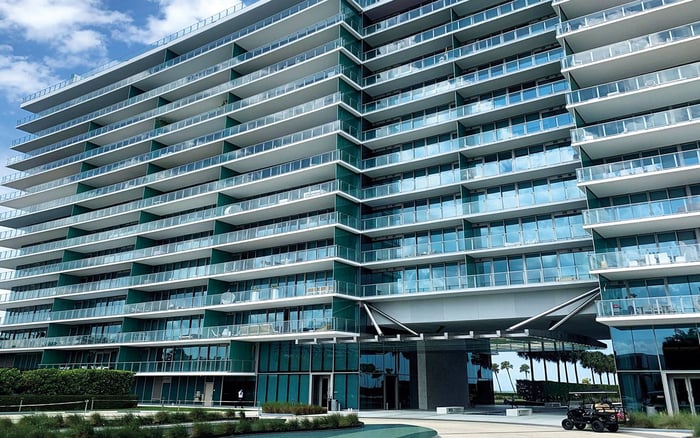
This is where a building such as Oceana Key Biscayne becomes a useful reference point in the conversation-not because a name alone answers the question, but because a buyer should examine how each residence translates resort-like appeal into practical domestic order.
The first test is circulation. A family residence should not force every movement through the same social room. Look for a plan that allows bedrooms to feel protected, service areas to function discreetly, and entertaining spaces to hold volume without turning the home into a corridor. In luxury real estate, square footage is less persuasive than usable hierarchy.
The second test is proportion. A gracious living room loses impact if secondary bedrooms feel compromised. A dramatic primary suite can become a liability if it consumes space a family needs for storage, study, or flexible use. The best layouts have an intuitive rhythm: arrival, gathering, retreat, and utility each has a place.
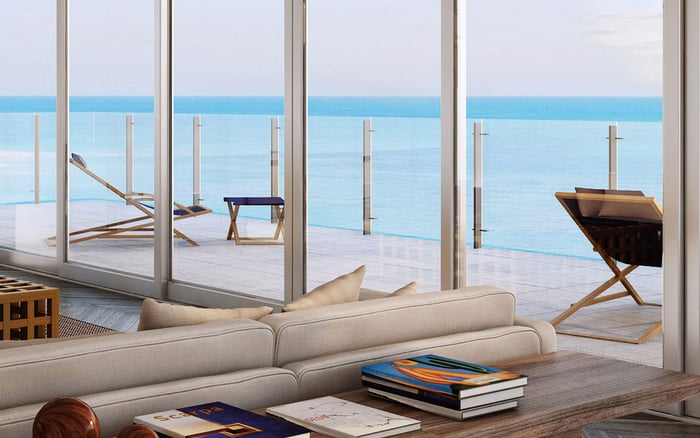
The third test is the terrace. A balcony should be more than a frame for photographs. Ask whether it can hold furniture comfortably, whether its access interrupts the living room, and whether it feels usable at different times of day. A view is passive; a terrace should be active.
Buyers often keep shorthand priorities such as Key-biscayne, Oceanfront, Waterview, Balcony, Pool, and Private-school in their search notes. The serious work is translating those labels into lived requirements, then measuring every residence against them.
A family-scale condo depends on the building as much as the unit. Private elevator entry, valet rhythm, package handling, guest arrival, bike storage, pet logistics, and service access all matter when a home is occupied full time or used intensively during peak seasons. A glamorous lobby is pleasant; a well-run arrival sequence is essential.
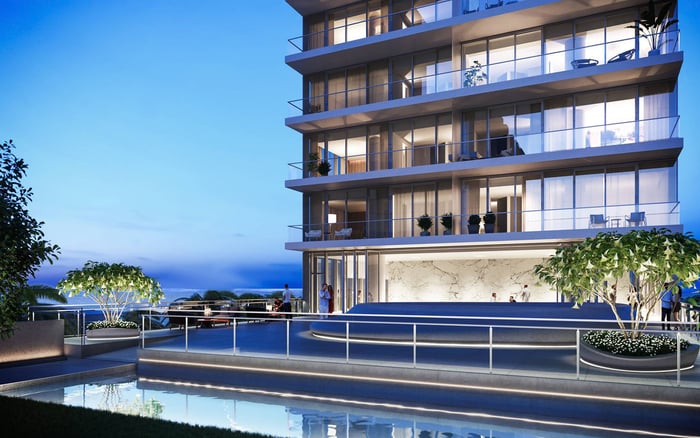
Ask how the building feels at the times your family will actually use it. Morning departures, weekend returns, holiday guest traffic, and pool hours reveal more than a quiet weekday showing. If there is a Pool, consider whether it reads as a serene amenity, a social stage, or a family workhorse. None of those identities is wrong, but one of them will be right for you.
Amenity quality should also be judged by adjacency. A fitness room may be beautifully designed yet inconvenient if the route is awkward. A children’s or family-friendly space may be less valuable if it creates noise near private residential areas. Service elevators, parking access, and storage rooms are not glamorous, but in a family residence they are part of the luxury.
The most elegant residence still sits inside an association. Before a buyer becomes attached, the building’s governing documents, budgets, reserves, rules, insurance structure, leasing policies, renovation procedures, and approval requirements deserve careful review by the appropriate professionals. This is not bureaucracy; it is a quality-of-life review.
Rules shape daily ownership. They influence whether guests can arrive easily, whether renovations can happen on a family’s timeline, whether pets are practical, and how common spaces are shared. Financial documents shape confidence. They help a buyer understand whether the building is being maintained with discipline or merely presented with polish.
For families relocating or splitting time between residences, operational clarity is especially important. Who handles issues when the owner is away? How responsive is management? Are vendors easy to coordinate? A residence with a superior view but uncertain administration may feel less luxurious than a quieter home in a building that operates with discretion.
A wise buyer does not evaluate Key Biscayne in isolation. The correct comparison is not always another island-style residence, nor is it always another waterfront tower. It is another version of the family’s life. A buyer considering Key Biscayne may also look at Vita at Grove Isle, Park Grove Coconut Grove, or The Ritz-Carlton Residences® Miami Beach to understand how different settings balance privacy, convenience, architecture, amenities, and daily cadence.
This comparison should sharpen, not dilute, the decision. Key Biscayne may appeal to a buyer seeking a more contained residential rhythm, while other South Florida addresses may emphasize urban proximity, beach energy, or a different social texture. The right question is not which market is most impressive. The right question is which setting reduces friction for the family that will live there.
Price discipline also improves through comparison. A superior view may justify a premium, but only after the unit clears the tests of layout, building condition, governance, and daily function. If a less theatrical residence solves more practical problems, it may be the more refined purchase.
Schedule a second visit with a different purpose from the first. On the first showing, it is natural to respond emotionally. On the second, behave as if you already live there. Open closets. Stand in secondary bedrooms. Walk the route from parking to kitchen. Imagine wet towels, luggage, scooters, groceries, homework, visiting grandparents, and a dinner for friends happening in the same week.
Bring the people whose routines matter. A residence that delights one buyer may frustrate another family member. Children notice different things. A frequent guest may sense whether the guest room feels like an afterthought. A household manager or designer may identify operational issues that the view conceals.
Most importantly, resist the temptation to negotiate with yourself too early. Do not decide a tight bedroom is acceptable because the horizon is beautiful. Do not excuse limited storage because the lobby is handsome. In a true family-scale condo, beauty and utility should reinforce each other.
Luxury is not only the moment of arrival. It is the absence of recurring irritation. The best family-scale condo in Key Biscayne should feel calm after the showing, after the inspection, after the document review, and after the first month of ownership. It should make daily life easier, not merely more scenic.
A view can be the reason you first notice a residence. It should not be the reason you stop asking questions.
What is a family-scale condo? It is a residence judged by daily capacity, including privacy, storage, circulation, parking, service access, and calm common areas.
Should the view be the first filter in Key Biscayne? No. Treat the view as a premium feature after the floor plan, building operations, documents, and daily usability have passed review.
How important is the terrace? Very important if it functions as real living space. Measure comfort, furniture placement, access, shade, and privacy before valuing it emotionally.
What documents should a buyer review? Association documents, budgets, reserves, rules, insurance structure, leasing policies, renovation procedures, and approval requirements all deserve professional review.
Why does building management matter? Management affects arrivals, vendors, maintenance, guests, packages, pets, and problem-solving, all of which shape daily luxury.
Is a larger condo always better for a family? Not necessarily. A smaller residence with better zoning, storage, and circulation can live more comfortably than a larger but inefficient plan.
How should amenities be evaluated? Judge whether they match your household’s routines, not just whether they photograph well. Access, noise, hours, and crowding all matter.
Should buyers compare Key Biscayne with other South Florida areas? Yes. Comparing alternatives helps clarify whether Key Biscayne best supports the family’s preferred rhythm, privacy level, and daily logistics.
When should professionals enter the process? Early. Legal, inspection, insurance, design, and financial guidance can reveal issues before emotion turns into commitment.
What is the simplest rule before making an offer? If the home still feels practical after you ignore the view, it may be worth deeper pursuit.
To compare the best-fit options with clarity, connect with MILLION.
If branded residences are on your mind — as a home or as an allocation — we would be glad to share what we are seeing, privately.
Begin a quiet conversation