Miami Beach is full of glossy condo towers, but only a handful truly qualify as ultra luxury. For discerning buyers, the difference lies in irreplaceable waterfront land, world class architecture, estate scale floor plans, low density privacy and resort calibre services. Buildings such as The Perigon Miami Beach, Faena House Miami Beach, The Residences at Six Fisher Island and The Ritz-Carlton Residences® Miami Beach set the benchmark.
In Miami Beach it is easy to confuse price with quality. Dozens of new towers market themselves as premium or luxury, and headline prices regularly reach eight figures. Yet only a small subset of these buildings truly achieve an ultra-luxury standard that can stand beside a best in class penthouse in London, New York or Dubai. For buyers at this level, the question is not how glossy the brochure looks, but whether the building can genuinely function as a primary residence and a long term store of lifestyle and capital.
The term ultra-luxury should therefore be reserved for residences that combine irreplaceable land, serious design pedigree, large scale homes and a service culture that feels closer to a private club than to a conventional condominium. These are buildings where every decision, from the geometry of the floor plates to the staffing ratios at the porte cochere, has been made with a singular resident experience in mind. Marketing language may be fluid, but the underlying criteria are remarkably consistent.
For buyers and advisors focused on Miami-beach, a practical framework is essential. The same lens that separates a boutique hotel from a true palace also separates an expensive high rise from a genuine ultra-luxury address. The case studies mentioned in this guide are not endorsements, but they are useful benchmarks that show how leading buildings interpret these standards along the ocean, the bay and on private islands.
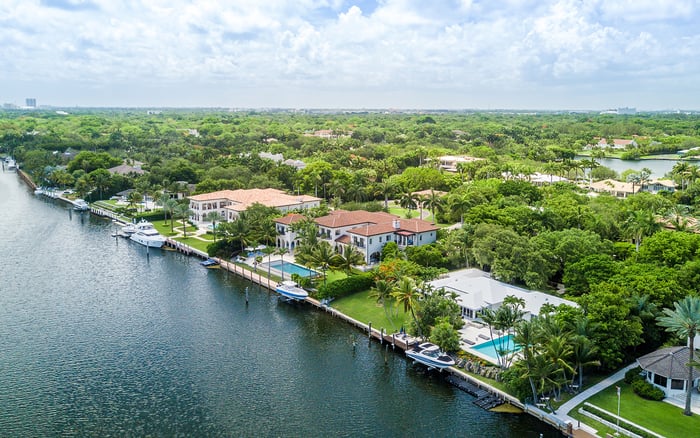
The first filter is always the land. In Miami Beach, true ultra-luxury buildings almost always occupy rare waterfront parcels, either directly on the sand or on a wide bayfront with clear sightlines. What separates these sites is not just the postcard view, but also the privacy of the setting, the width of the lot and the ability to control what can be built around it in the future. A deep oceanfront parcel in Mid-Beach or a private island shoreline is fundamentally different from a thin infill lot hemmed in by neighboring towers.
For example, The Perigon Miami Beach is instructive. The 17 story tower is positioned on a generous oceanfront parcel and intentionally shaped so that every residence angles toward both sunrise over the Atlantic and sunset over Biscayne Bay. Instead of creating a wall of units, the architecture breaks into slender volumes so that homes feel like individual villas in the sky, with wide water exposure and minimal direct neighbors. This combination of dual water views and low density is a clear marker of ultra-luxury intent.
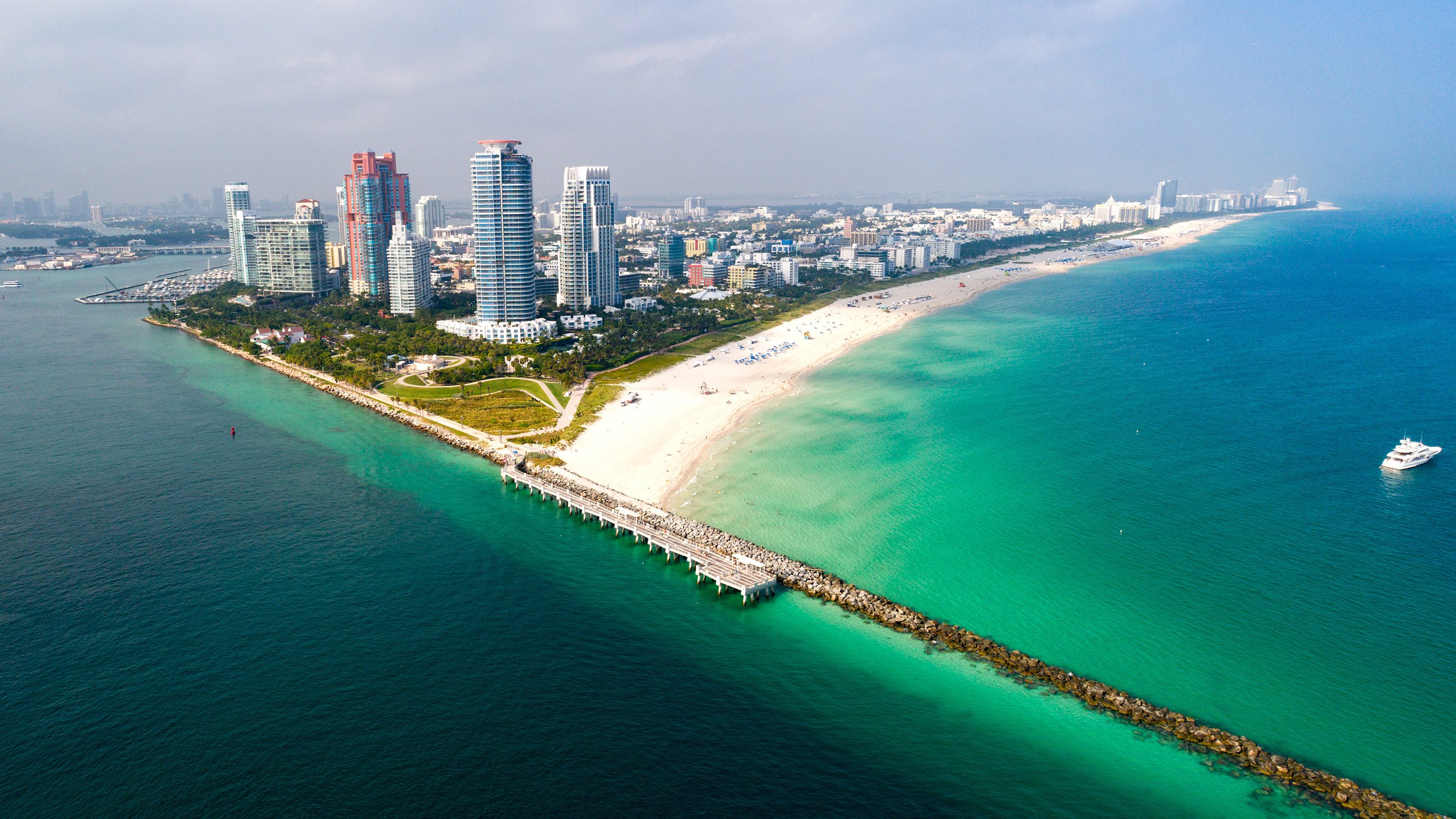
At the southern tip of the island, Continuum has long demonstrated the the power of a campus scale site. Continuum on South Beach stretches across multiple oceanfront acres with private gardens, clay tennis courts and deep setbacks from the sand. On the opposite end of the spectrum, the private ferry approach to The Residences at Six Fisher Island offers a different expression of rarity: a members only island with golf, spa, marina and beaches, minutes from the mainland yet effectively in its own secure world.
In North Beach and Surfside, boutique buildings such as Eighty Seven Park Surfside and Rivage Bal Harbour show how adjacency to parks, low rise neighborhoods and protected shoreline can create views and privacy that feel almost resort like. When you review a site, it is worth asking simple questions. Is the building truly on the water or across a road from it. Are there existing or future structures that might compromise light or view corridors. Does the land offer enough depth for proper arrival, landscaping and amenities rather than a narrow podium.
Once the land passes scrutiny, the next differentiator is design pedigree. Ultra-luxury buyers are increasingly sensitive to who is behind the architecture and interiors, not for name recognition alone but for the lived experience that results. Iconic Faena House Miami Beach, with its deep wraparound terraces and seamless indoor outdoor flow, remains a reference point for how a tower can feel more like a series of bespoke beachfront homes than a conventional slab of apartments.
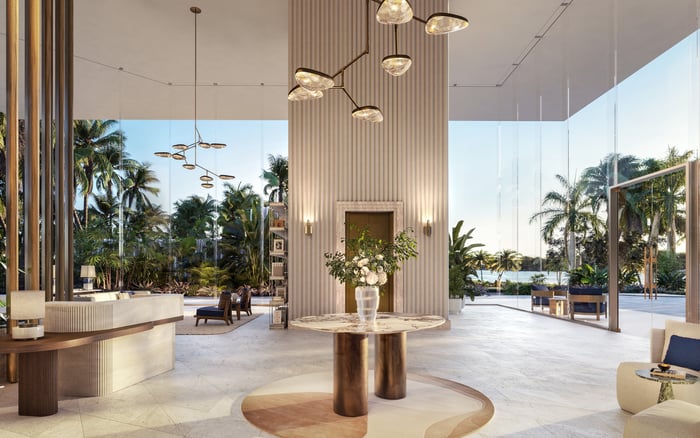
Inside the homes, genuine ultra-luxury is expressed through scale, proportion and craftsmanship rather than ornament. Boutique buildings such as 57 Ocean Miami Beach prioritize private elevator foyers, wide great rooms, twelve foot deep terraces and spa grade bathrooms finished in natural stone. At The Ritz-Carlton Residences® Miami Beach, the residences are closer in spirit to European villas, with ten foot ceilings, Italian kitchens, generous storage and thoughtful touches such as catering kitchens and wine storage that acknowledge how owners actually live and entertain.
Scale at the residence level is as important as the finishes themselves. At Apogee South Beach, for example, the decision to limit each floor to four flow through residences created homes with double frontage and expansive terraces facing both the bay and the ocean. Full floor or half floor layouts, service entrances, dens and media rooms and private pools on select penthouse terraces all support the idea that these are primary homes, not occasional pieds a terre.
When you walk into a residence, it should feel closer to a freestanding estate than an upmarket hotel suite. Look for ceiling heights of at least ten feet, substantial doors, quiet mechanical systems, integrated smart home infrastructure and storage that allows the home to function through seasons and family growth. In a true ultra-luxury condo, there is nothing provisional or good enough about the specification; the default is fully finished, often with built in closets, lighting and window treatments so that the apartment is genuinely turnkey on day one.
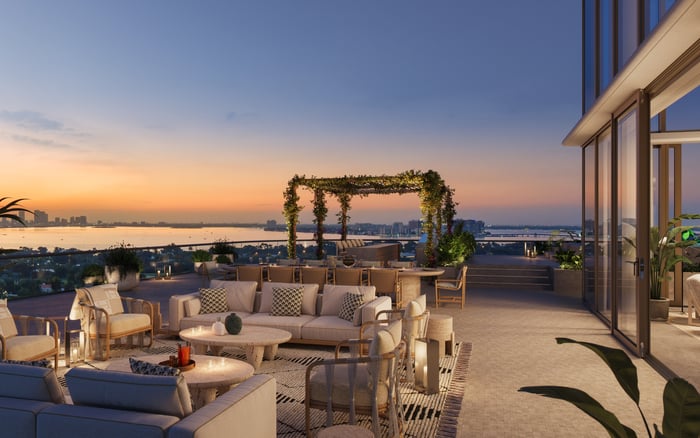
An address can have a spectacular site and beautiful homes yet still fall short if the amenities and service culture do not reach the level of a top private club. The baseline for ultra-luxury in Miami Beach is now a full wellness program with spa, hydrotherapy, fitness and outdoor spaces that feel carefully landscaped rather than perfunctory. Oceanfront pools with cabanas, residents only beach service, cold plunge pools, treatment rooms and quiet gardens are no longer optional extras, but central components of the daily experience.
Dining and entertaining infrastructure is equally critical. At The Perigon Miami Beach, the planned resident only restaurant, cocktail lounge and guest suites bring a boutique hotel sensibility directly into the building, so owners can entertain effortlessly without leaving home. On the bay, marinas and yacht facilities are a significant differentiator. The private boat dock program at The Ritz-Carlton Residences® Miami Beach signals a lifestyle where stepping from residence to yacht is as simple as taking the elevator downstairs.
Privacy sits alongside service as the other non negotiable. Low density buildings with one to four residences per floor, private or semi private lift lobbies and attentive but discreet staff create an atmosphere where residents can move through their daily routines without spectacle. The private island setting of The Residences at Six Fisher Island shows this principle in its purest form: controlled access via ferry, on island security and a tight knit residential community sharing club quality amenities.
When evaluating a building, it is worth paying close attention to the rhythm of the common areas. Are lobbies and amenity floors human scale or cavernous. Does staff feel overextended or able to recognize and anticipate residents preferences. Are there distinct zones for children, teens and adults so that families and those seeking quiet can each enjoy their own space. At the ultra-luxury level, the goal is effortless living, where concierge, valet, housekeeping and maintenance are present yet almost invisible.
For many buyers, the easiest way to apply these principles is to convert them into a simple due diligence checklist that can be used across buildings. The first step is to map the address in context. Stand on the site, or at least study aerial imagery and surveys, to understand width of frontage, depth of parcel, relationship to neighboring structures and long term zoning around it. Ask how many residences the project will have, how many per floor and whether every home truly has a primary water exposure.
The second step is to study the team and the product. Look into the architects, landscape designers and interior designers, and seek out their previous work. Review typical floor plans looking for generous great rooms, circulation that does not waste square footage and practical elements such as laundry rooms, storage and flexible spaces that can evolve over time. Sampling a finished model residence, when available, is invaluable. The feel of the doors, the quiet of the glazing and the quality of the fitted joinery will tell you more in thirty seconds than any brochure.
Finally, interrogate the lifestyle. Compare amenity programming, staffing levels and estimated operating budgets for at least two or three peer buildings. An ultra-luxury tower will rarely be the cheapest on monthly dues, but the fee should be justifiable when you factor in services, staffing and long term capital reserves. For clients of MILLION and their advisors, this structured approach helps separate marketing language from fundamentals so that decisions are driven by quality, scarcity and personal priorities rather than by momentum. For tailored guidance on specific buildings and off market opportunities, you can connect with the team at MILLION Luxury.
What price level usually signals a true ultra-luxury condo in Miami Beach?
Price is a byproduct rather than the definition. In todays market, most ultra-luxury buildings trade in the high seven to eight figure range for prime residences, but a high price alone does not qualify a property. The underlying land, design, scale of the residence and service culture must justify the number.
How many residences per floor should I target when I want maximum privacy?
As a rule of thumb, anything above four residences per floor starts to feel conventional rather than ultra-luxury. Boutique towers with one to three homes per floor, private lift lobbies and controlled visitor access provide a much more discreet experience, especially for owners who intend to be in residence frequently.
Are branded residences always better than non branded buildings?
A respected hospitality or lifestyle brand can be a strong positive, particularly for service standards and international recognition. However, some unbranded buildings with exceptional land, architecture and resident culture outperform heavily marketed branded product. The key is to weigh the specific team, amenity programming and long term quality of the association, not just the name on the signage.
Should I focus on pre construction opportunities or only on completed buildings?
Both can make sense, but for different reasons. Pre construction purchases can secure a preferred line or exposure at an earlier price point, yet they require confidence in the developer, the design team and the overall capital structure of the project. Completed buildings allow you to verify the reality of finishes, service and resident mix before committing.
How important are monthly condo fees at the ultra-luxury level?
It is sensible to compare fees across comparable buildings, but ultra-luxury services and low density naturally require higher operating budgets. Rather than simply seeking the lowest dues, focus on whether the fees translate into proper staffing, well maintained amenities and adequate reserves. This often protects long term value and the owner experience.
If branded residences are on your mind — as a home or as an allocation — we would be glad to share what we are seeing, privately.
Begin a quiet conversation