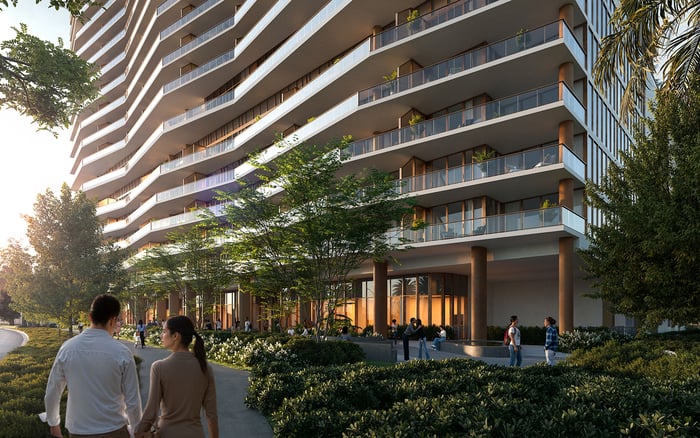
A discreet buyer’s guide to reviewing luxury condominium service animal and assistance animal policies through privacy, cost allocation, and everyday livability.

In South Florida’s top condominium market, animal policy is not a casual footnote. It is part of a building’s operating culture, privacy posture, and cost structure. Buyers comparing a refined Brickell tower, an oceanfront Miami Beach residence, or a quieter West Palm Beach address should review service animal and assistance animal language with the same seriousness they bring to reserve funding, insurance, valet operations, and elevator protocols.
The first distinction is essential. Under the ADA, a service animal is generally a dog individually trained to perform work or tasks for a person with a disability. Emotional support alone does not qualify as ADA service-animal work. The ADA can also require reasonable modifications for miniature horses in limited circumstances, but dogs remain the primary covered service animals in most property settings.
Housing rules are broader. In residential settings, the relevant concept is often an assistance animal, which can include a task-trained service animal as well as an animal that provides disability-related emotional support. A building advertised as no-pet, limited-pet, or pet-restricted is therefore not necessarily animal-free. Lawful accommodations may require waiver of pet restrictions, including breed, size, or weight limits, when the request is valid.
For buyers considering vertical urban living at 2200 Brickell or a branded private-residence environment such as St. Regis® Residences Brickell, the question is not simply whether the building is permissive or restrictive. The sharper question is whether the association or operator separates ordinary pet policy from legally required assistance-animal accommodation.
A well-run luxury building protects personal information with quiet discipline. In ADA-covered public-facing areas, staff may ask only two questions when the service role is not obvious: whether the animal is required because of a disability, and what work or task the animal has been trained to perform. Staff may not ask about the person’s disability, demand medical documentation, require a special identification card or training certificate, or ask the animal to demonstrate its task.
Residential accommodation review is different, but still limited. If the disability or need for the animal is not readily apparent, a housing provider may request reliable disability-related documentation. The inquiry should be confined to what is needed to evaluate the accommodation. It should not become a request for medical records or detailed information about physical or mental impairments.
This is where governance quality becomes visible. Before buying, ask whether the building has a written reasonable-accommodation procedure, who receives requests, how information is stored, and whether board members, management, front desk personnel, and security are trained to avoid unnecessary disability-related inquiry. A discreet process reduces both human friction and legal exposure.
Buyers should also be alert to internet-only certificates or registrations. A certificate, registration, or license obtained online, without reliable information from a health care professional, is not by itself sufficient for a housing accommodation review. The best buildings understand this without overcorrecting into intrusive questioning.
For approved assistance animals, housing providers generally may not charge pet rent, pet fees, or pet deposits. Florida housing law similarly bars additional fees, deposits, or surcharges for an emotional support animal, while allowing damage charges if the building normally charges residents for comparable damage. Florida law also protects people with disabilities who use service animals in public accommodations without extra charges, with liability for damage where normal policies charge others for similar damage.
This does not mean animal-related costs disappear. Cleaning, hallway touch-ups, elevator sanitation, landscaping impacts, waste-station servicing, insurance review, legal compliance, and management time may still exist. The diligence question is whether those costs are absorbed through the building’s general operating budget and assessments rather than imposed as animal-specific fees on an approved assistance animal.
In a coastal environment such as 57 Ocean Miami Beach, buyers may focus on salt air, beach circulation, lobby finishes, and exterior access. In a resort-style Sunny Isles context such as Bentley Residences Sunny Isles, the same review should extend to valet areas, elevator protocols, and cleaning standards. These details are not about excluding animals. They are about whether the building has anticipated everyday operations with financial clarity.
Ask for the condominium documents, rules and regulations, pet policy, accommodation policy, fine schedule, damage policy, and recent board minutes where animal-related expenses or rule enforcement are discussed. The goal is not to identify individual residents. It is to understand whether cost allocation is lawful, predictable, and consistent.
The strongest buildings enforce conduct, not status. Assistance animals are not ordinary pets for accommodation purposes, but residents can still be held to neutral rules concerning noise, waste, sanitation, control, leash practices where appropriate, and property damage. A service animal may be excluded from an ADA-covered area only if it is out of control and the handler does not take effective action, or if it is not housebroken. In housing, an accommodation request may be denied if the specific animal poses a direct threat or would cause substantial physical damage that cannot be reduced or eliminated by another reasonable accommodation.
Allergies or fear of dogs are not valid reasons to deny access or refuse service to a person using a service animal in ADA-covered areas. That makes operational design important. Separate circulation where it already exists, timely cleaning, clear waste procedures, and responsive management can improve comfort without creating discriminatory barriers.
For buyers comparing boutique buildings, branded towers, and waterfront residences, daily comfort often comes down to three questions. Are rules written neutrally? Are they enforced consistently? Does management respond quickly to nuisance, sanitation, or damage issues without treating approved assistance animals as fee-bearing pets?
At a waterfront West Palm Beach property such as Alba West Palm Beach, or in a dense Brickell setting, the same principle applies: privacy and comfort are not opposites. A polished building can protect resident confidentiality while maintaining impeccable common areas.
A sophisticated buyer should review animal policy before the inspection period ends, not after closing. Request the written pet policy, assistance-animal procedure, house rules, damage policy, fine schedule, and any resident handbook. Look for language that clearly distinguishes pets from assistance animals. Overbroad language requiring registration cards, medical records, blanket deposits, or automatic denials based on breed or weight should prompt further review.
Ask management how front desk staff are trained when a service animal enters a public-facing area and the service role is not obvious. Ask whether the building has a single point of contact for accommodation requests. Ask whether approved assistance animals are exempt from pet fees and deposits, while remaining subject to neutral conduct and damage rules. Ask how complaints are documented and resolved.
The most elegant answer is rarely dramatic. It is a calm written policy, a narrow documentation process, a clean budget treatment, and consistent enforcement of conduct rules. In luxury real estate, that is what discretion looks like.
Is a service animal the same as an emotional support animal? No. A service animal under the ADA is generally a dog trained to perform disability-related work or tasks, while housing rules can cover broader assistance animals, including disability-related emotional support animals.
Can a no-pet condominium still have assistance animals? Yes. Assistance animals are not treated as ordinary pets in housing, so no-pet rules and size, breed, or weight restrictions may need to be waived for a valid accommodation.
Can staff ask what disability a resident has? In ADA-covered public areas, staff may not ask about the disability. In housing, any documentation request should be limited to what is needed to evaluate the accommodation.
Can a building require medical records for an assistance animal request? Generally, no. A building should not demand medical records or detailed impairment information when reviewing an assistance-animal accommodation.
Are online animal certificates always enough? No. An online certificate, registration, or license alone is not sufficient if it lacks reliable disability-related information from a health care professional.
Can a condominium charge pet rent for an approved assistance animal? Generally, no. Approved assistance animals are not subject to pet rent, pet fees, or pet deposits.
Can the resident be charged for damage caused by the animal? Yes, if the building normally charges residents for comparable damage they cause. Damage responsibility is separate from unlawful pet fees.
Can allergies or fear of dogs justify denying a service animal access? No. Allergies or fear of dogs are not valid reasons to deny access or refuse service in ADA-covered areas.
What daily rules can still apply? Neutral rules on noise, waste, sanitation, control, and damage can apply when enforced consistently and not used as disguised pet restrictions.
What is the key policy document a buyer should request? Ask for the written reasonable-accommodation procedure, along with pet rules, damage policies, fine schedules, and resident handbooks.
If you'd like a private walkthrough and a curated shortlist, connect with MILLION.
If branded residences are on your mind — as a home or as an allocation — we would be glad to share what we are seeing, privately.
Begin a quiet conversation