A buyer-focused guide to evaluating catering access in South Florida penthouses, with attention to service routes, elevator capacity, staging areas, privacy, security, climate, and event-day flow.

In a South Florida Penthouse, entertaining is rarely an afterthought. A formal dinner, waterfront cocktail reception, holiday gathering, or private chef evening depends on an invisible choreography: arrivals, deliveries, staff circulation, food staging, waste removal, and guest privacy. The most polished event is often the one where no guest notices the mechanics behind it.
For buyers, catering access deserves the same scrutiny as views, finishes, ceiling heights, and parking. A magnificent great room can lose its ease if every tray crosses the guest entry. A generous Terrace can underperform if there is no practical route for florals, bars, linens, ice, and rental equipment. In the upper tier of South Florida real estate, the question is not simply whether a residence can host. The question is whether it can host gracefully.
The first point of evaluation is the path from street level to the residence. Ask how catering teams, private chefs, florists, rental crews, valet partners, and event staff reach the home without interrupting resident and guest circulation. The ideal experience separates the service route from the primary arrival sequence, preserving discretion from the lobby to the penthouse door.
In a vertical building, the service elevator is central. Buyers should understand whether it can accommodate the scale of items commonly used for private events, including rolling racks, food carriers, bar components, floral installations, glassware, and folding service stations. It is not enough to confirm that a service elevator exists. The more relevant issues are how it is scheduled, who controls it, whether protective padding is required, and how it connects to loading and back-of-house areas.
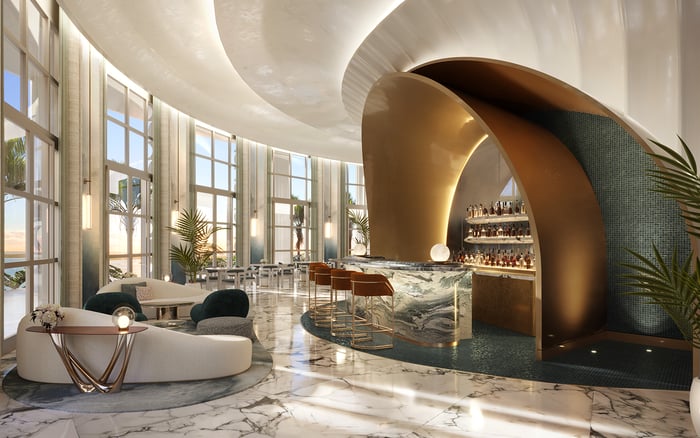
A refined Penthouse functions best when staff can move directly to a kitchen, prep zone, service corridor, or secondary entry. If the only practical path runs through the formal foyer, dining room, or main seating area, even a modest dinner can feel operationally exposed.
Catering access begins before the first guest arrives. Loading procedures shape the entire day. In Brickell, Miami Beach, Sunny Isles, Fisher Island, Palm Beach, and other luxury enclaves, event logistics may involve multiple vendors arriving in sequence. Food, beverages, flowers, rentals, lighting, music, and staffing all require order, timing, and clearance.
A buyer should ask how deliveries are approved, where vehicles wait, when vendors may load in, and whether the building requires advance notice or insurance documentation. The most desirable buildings typically treat event logistics as a managed process rather than an informal favor. That structure can be valuable, especially for owners who entertain frequently or divide time between South Florida and another primary residence.
Timing also matters in this climate. Heat, humidity, afternoon rain, and waterfront winds can affect setup and presentation. The strongest plans allow chilled items to move efficiently, flowers to avoid unnecessary exposure, and service teams to adjust quickly if an outdoor event shifts indoors. A beautiful Oceanfront setting deserves a service plan that respects both the view and the weather.
A showpiece kitchen and an event-capable kitchen are not always the same. Materials, proportions, and appliances may photograph beautifully, but catering performance depends on circulation, counter space, refrigeration strategy, cleanup capacity, and proximity to dining areas.
For private chef evenings, the kitchen may be part of the theater. For larger catered events, it is often a production zone. Buyers should examine whether staff can plate, garnish, stage, and clear without creating congestion. If the residence has a secondary prep area, catering pantry, wet bar, butler’s pantry, or staff entry, those features can materially improve the entertaining experience.
Storage is another quiet indicator of event readiness. Linens, folding tables, serving pieces, beverage inventory, and extra glassware require space. If every event depends on bringing in nearly everything from outside, access and staging become more important. If the home already supports hospitality through thoughtful storage and prep zones, the experience can feel calmer and more residential.
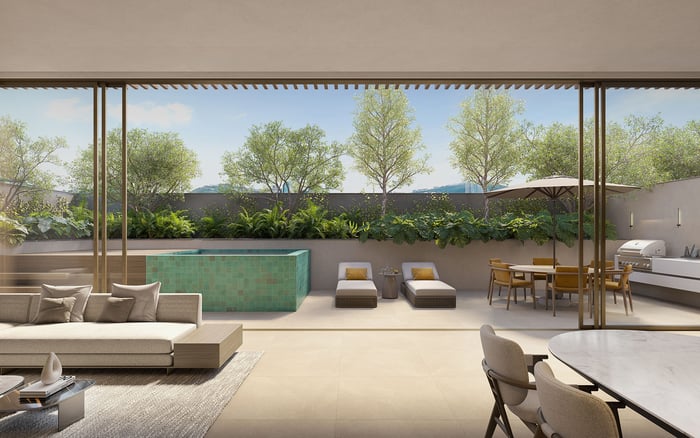
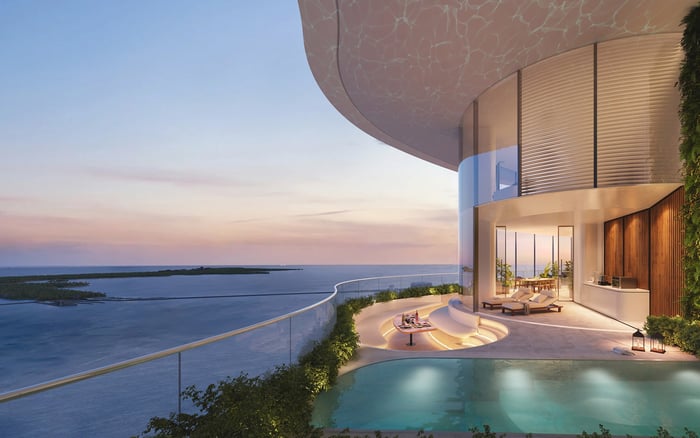
South Florida penthouses often trade on exterior drama: wraparound terraces, skyline lounges, roof decks, summer kitchens, plunge pools, and sunset dining areas. These spaces can be extraordinary, but they must be read operationally. Where would a bar be placed? Can servers circulate without squeezing behind seated guests? Is there a covered area for weather changes? Does the route from kitchen to Terrace make sense?
A Balcony used for morning coffee has a different requirement than a Terrace intended for fifty guests. A Pool deck has different safety and service considerations than a formal dining loggia. Wind exposure, floor surfaces, glass railings, step transitions, and lighting all influence how comfortably a catering team can work.
Buyers should also consider sound and privacy. An outdoor event that looks effortless during a daytime showing may feel very different after dark, when music, conversation, lighting, and neighboring residences come into play. A strong penthouse balances atmosphere with control.
Catering access is also a privacy issue. Every event expands the circle of people entering the property, even briefly. The residence should allow staff, vendors, and building personnel to do their jobs without unnecessary exposure to private bedrooms, offices, art, wardrobes, family areas, or secured rooms.
Ask whether there is a powder room or service restroom convenient for staff, whether valuables can be isolated from the event zone, and whether guest circulation can remain separate from working circulation. In trophy residences, privacy is not only about who sees the view. It is about who sees the living pattern.
Security protocols should feel firm but not theatrical. Guest lists, vendor lists, elevator permissions, parking instructions, and arrival windows should be coordinated in advance. When a building can manage these details smoothly, the host’s evening feels lighter.
Before committing to a penthouse, walk the event route in person. Start where a vendor vehicle would arrive, then follow the path through loading, elevator, corridor, entry, kitchen, dining room, Terrace, Balcony, Pool area, and waste removal point. This exercise reveals friction that a standard showing can miss.
Ask the property team how private events are handled, how far in advance approvals are needed, whether there are restrictions on vendors, and how elevator reservations work. If you host seated dinners, ask where prep tables would go. If you host cocktail events, ask how ice, glassware, and bar service would move. If you collect art or maintain a highly private household, ask how service areas can be contained.
The best South Florida residences make this feel intuitive. They support celebration without turning the home into a venue. That distinction matters. A penthouse should preserve the comfort of private life while allowing hospitality to unfold with elegance.
Why should catering access matter when buying a penthouse? It determines whether private events can be executed discreetly, efficiently, and without disrupting the home’s main living areas.
Is a service elevator enough? Not by itself. You should also review scheduling, elevator dimensions, loading access, protective procedures, and the path from elevator to kitchen.
What is the most important room for catering evaluation? The kitchen is central, but the full route matters, including loading, elevator, prep space, dining areas, outdoor areas, and cleanup.
How does a Terrace affect catering logistics? A Terrace can elevate entertaining, but it also requires practical circulation, weather planning, bar placement, lighting, and safe service routes.
Should I ask about building event rules before purchasing? Yes. Approval timing, vendor access, insurance requirements, elevator reservations, and guest management can all affect the ownership experience.
Does Brickell entertaining differ from waterfront entertaining? Brickell may emphasize vertical access and arrival timing, while waterfront settings may add wind, weather, and outdoor service considerations.
Can a Balcony work for catered entertaining? A Balcony can support intimate service if circulation is simple, but it may not function like a full outdoor dining or cocktail area.
What should I check for staff privacy? Look for secondary entries, service corridors, powder rooms, prep areas, and ways to keep private family zones separate from event activity.
How does an Oceanfront penthouse change planning? Oceanfront conditions can influence wind, humidity, and outdoor setup, so catering plans should allow quick transitions and protected staging.
What is the best way to shortlist comparable options for touring? Start with location fit, delivery status, and daily lifestyle priorities, then compare stacks and elevations to validate views and privacy.
For a confidential assessment and a building-by-building shortlist, connect with MILLION.
If branded residences are on your mind — as a home or as an allocation — we would be glad to share what we are seeing, privately.
Begin a quiet conversation