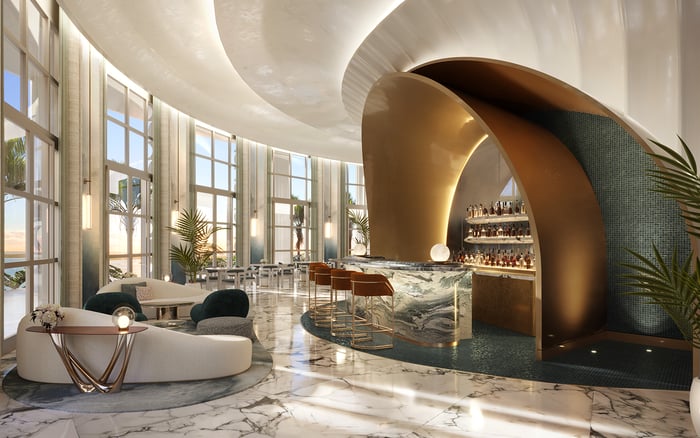
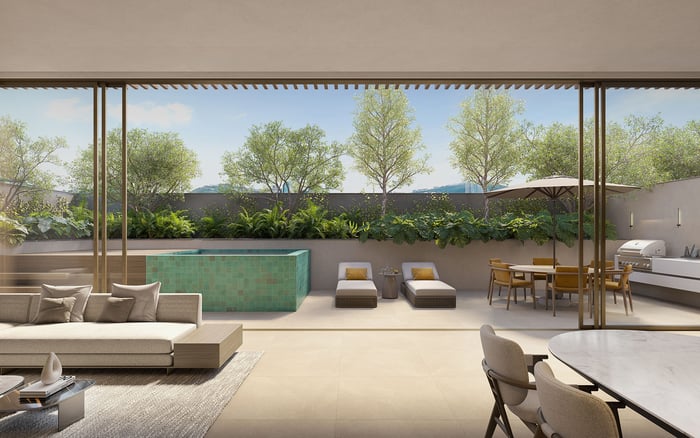
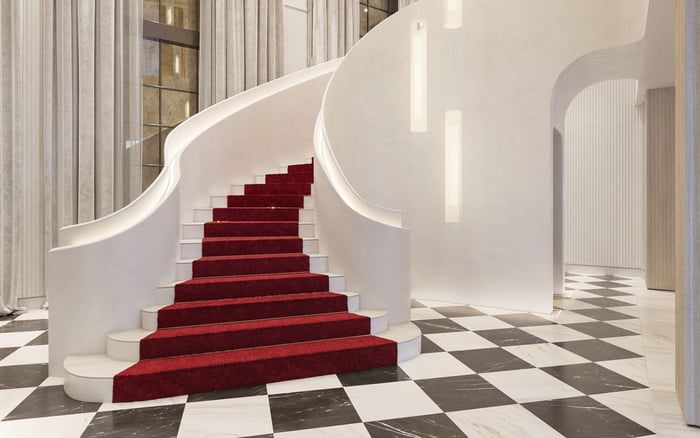
In South Florida penthouse living, elevation is only one measure of luxury. Outdoor rooms can shape daily comfort, entertaining potential, privacy, and long-term desirability more powerfully than height alone.
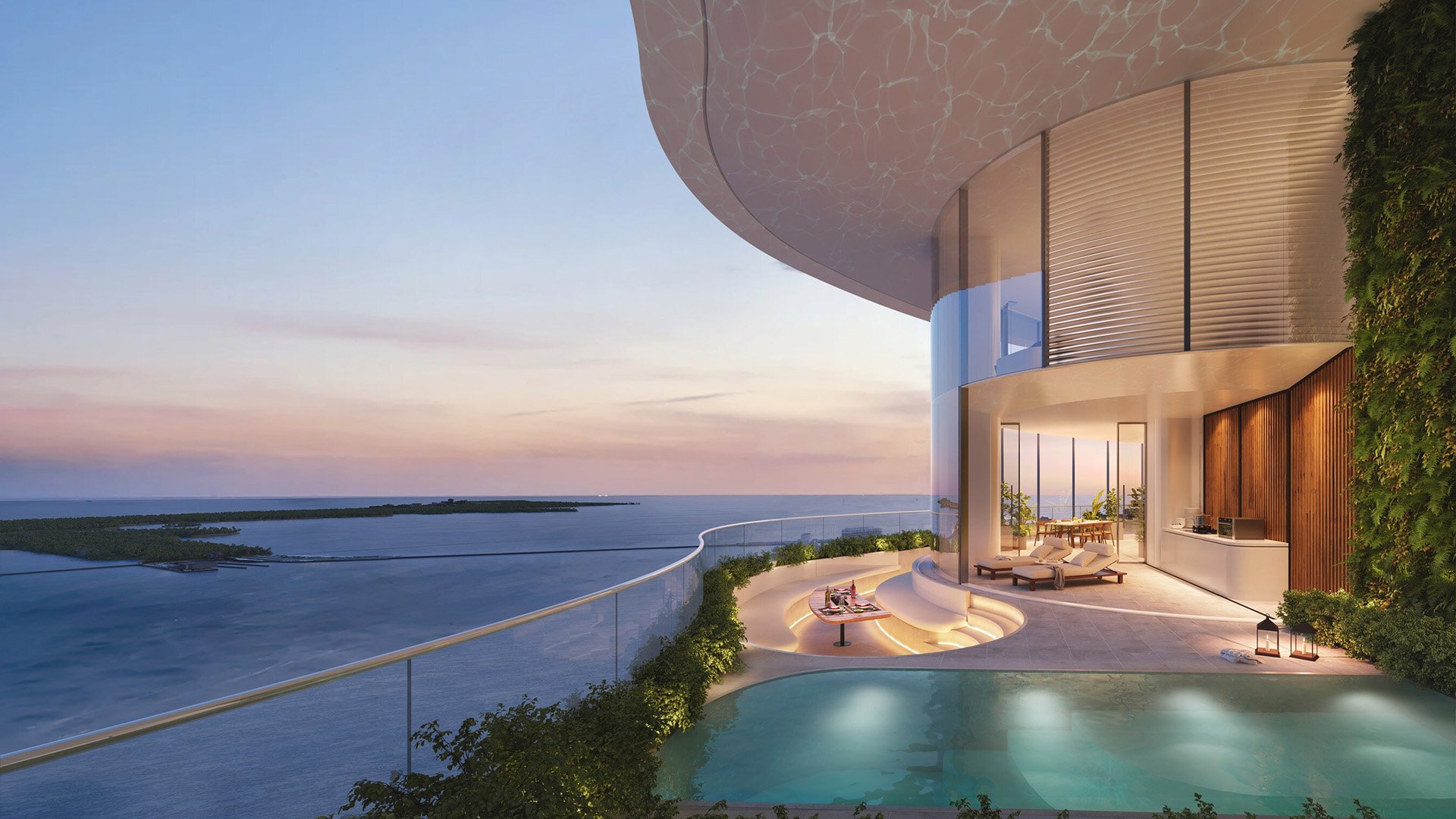
For years, penthouse value was framed by height: the top floor, the widest view, the most dramatic arrival. In South Florida, that language still matters, but it is no longer enough. The more refined question is not simply how high a residence sits. It is how well the home allows its owner to live outdoors.
A luxury penthouse with a compelling outdoor room can feel more complete than a higher residence with a narrow, decorative balcony. The distinction is subtle but important. Height is a condition. Outdoor living is an experience. One is admired from a distance; the other shapes breakfast, evening cocktails, quiet reading, private dinners, and the way a home feels as guests move through it.
The best buyers understand that a terrace is not leftover space beyond the glass. It is part of the floor plan. When proportioned, sheltered, and connected correctly, it becomes the emotional center of the home.
Elevation creates spectacle. It can frame skyline, water, and horizon in a way that feels cinematic. Yet after the first impression, daily life becomes more practical. Can the doors stay open comfortably? Is there room for seating that is not squeezed against a railing? Can a table be used without interrupting circulation? Does the outdoor space feel private enough to enjoy without performance?
These questions often matter more than a marginal difference in floor level. A residence can be exceptionally high and still offer outdoor space that is too shallow, too exposed, or too disconnected from the rooms inside. Conversely, a slightly lower penthouse with generous outdoor proportions may deliver a richer lifestyle because it supports how people actually use the home.
In Brickell, where glass towers and skyline energy define much of the residential experience, the difference between looking out and stepping out is especially meaningful. A great outdoor room allows the city to become atmosphere rather than scenery. It gives the owner a way to be immersed in the place while remaining entirely private.
A true terrace should be judged as carefully as a salon or primary suite. Scale comes first. There should be enough depth for furniture to face inward, outward, or across a conversation setting. A long strip of exterior space may photograph well, but if it only permits a line of chairs, it behaves more like a passage than a room.
Connection is equally important. The most successful outdoor spaces align with the home’s principal living areas, allowing movement to feel natural. When indoor flooring, ceiling heights, and door systems support continuity, the threshold nearly disappears. The result is not simply indoor-outdoor living as a phrase; it is a residence that expands and contracts throughout the day.
Orientation also deserves close attention. Morning light can be serene. Late-day exposure can be glorious or demanding. Breezes can be pleasant in one layout and disruptive in another. Buyers should stand in the space, imagine furniture in use, and consider whether the area encourages lingering. Luxury is not only what can be seen. It is what can be comfortably repeated.
The highest residence is not always the most private. Sightlines from neighboring towers, nearby amenities, and surrounding terraces can affect the experience of outdoor space. A carefully planned outdoor room offers a sense of enclosure without sacrificing openness. Landscaping, architectural fins, recessed zones, and thoughtful furniture placement can make a terrace feel like a private garden in the air.
This is where restraint becomes valuable. The most elegant outdoor rooms are not overfilled. They allow space between zones, preserve view corridors, and create moments of intimacy. A dining area, lounge grouping, and quiet corner can coexist if the footprint permits. If not, the better choice is often to do fewer things beautifully.
For oceanfront residences, privacy has an additional dimension. The view may be expansive, but exposure can be part of the equation. A successful outdoor room balances the romance of water with the need for shelter, shade, and comfort. The goal is not to conquer the elements. It is to design with them intelligently.
Luxury buildings often offer shared outdoor amenities, from resort decks to garden lounges and a pool environment. These can be important, but they do not replace private exterior space. A penthouse outdoor room is different because it belongs to the rhythm of the residence. It can be used spontaneously, without planning, dressing, or leaving home.
This sense of possession is central to ultra-premium living. Owners may appreciate a grand amenity deck, but the ability to step outside from the primary suite or living room is more personal. It changes how the day begins and ends. It also changes entertaining. Guests are not only impressed by the view; they remember the sequence of arrival, conversation, air, light, and privacy.
A private outdoor room can also soften the scale of a large residence. Even the most polished interiors benefit from a place where formality relaxes. The home becomes less about display and more about atmosphere.
When evaluating a penthouse, buyers should think beyond headline height. Begin with depth and shape. A square or generously proportioned terrace usually has more design potential than a narrow run of exterior area. Consider how doors open, where furniture can sit, and whether outdoor zones connect to the rooms where people naturally gather.
Next, study cover and exposure. Covered space can extend usability and make the terrace feel more architectural. Fully open space can be beautiful, especially when used selectively, but it may not always function as the primary outdoor living area. The strongest layouts often offer more than one condition: a protected lounge, an open sun area, and a quieter edge for reflection.
Finally, consider the feeling of arrival. Does the outdoor room reveal itself as a destination, or does it feel incidental? In the best penthouses, the terrace is part of the home’s choreography. It is visible enough to pull people toward it, yet private enough to feel earned.
The premium for outdoor space is not only financial. It is emotional. A penthouse terrace can hold the rituals that make a residence irreplaceable: a quiet coffee before the city wakes, a family dinner under shifting light, a private pause after travel, a celebration that feels suspended above the coastline.
Height may define status, but outdoor living defines memory. For the South Florida buyer, that distinction is decisive. The best penthouse is not always the one nearest the clouds. It is the one that turns air, light, privacy, and proportion into a livable form of luxury.
Why can outdoor rooms matter more than height in a penthouse? Height creates drama, but outdoor rooms shape daily living, entertaining, privacy, and comfort.
Is a larger terrace always better? Not necessarily. Proportion, depth, shelter, access, and privacy can matter more than raw size.
What makes a terrace feel like a true room? It needs usable depth, clear furniture zones, comfortable circulation, and a natural connection to the interior.
Should buyers prioritize views or outdoor usability? The strongest penthouses offer both, but usability often has a greater impact on everyday enjoyment.
Does a balcony add the same value as a terrace? A balcony can be valuable, but a deeper terrace usually supports more complete outdoor living.
How important is privacy for penthouse outdoor space? Privacy is essential, especially when neighboring towers or amenity areas create direct sightlines.
What should buyers notice during a terrace visit? They should assess wind, shade, door access, furniture potential, noise, privacy, and overall comfort.
Can shared amenities replace private outdoor space? Shared amenities add lifestyle value, but they rarely replace the convenience and intimacy of private space.
Is oceanfront outdoor space different from urban outdoor space? Yes. Oceanfront terraces often emphasize exposure and horizon, while urban terraces may focus on skyline immersion.
What is the best test of penthouse outdoor quality? Ask whether the space invites daily use, not just admiration during a showing.
To compare the best-fit options with clarity, connect with MILLION.
If branded residences are on your mind — as a home or as an allocation — we would be glad to share what we are seeing, privately.
Begin a quiet conversation