A collector-focused framework for assessing climate stability, controlled lighting, dedicated storage, documentation, and resale flexibility in Sunny Isles Beach residences.
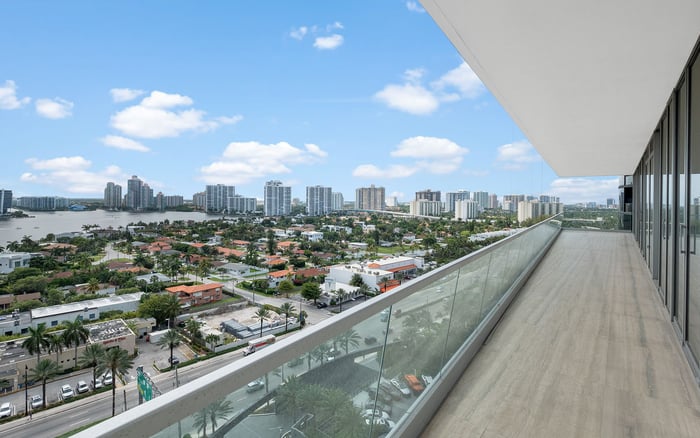
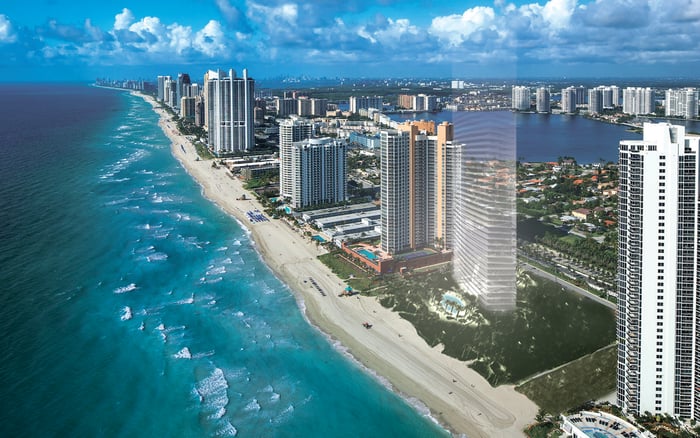
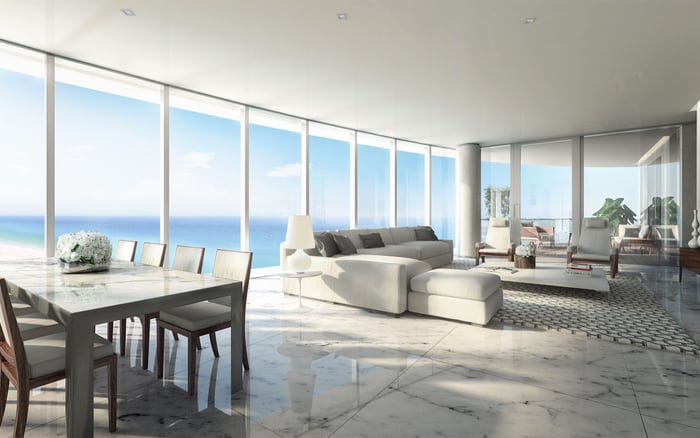
In Sunny Isles Beach, expansive glazing is central to the appeal of an oceanfront residence. For a collector, however, the first question is not simply whether the home offers generous walls. It is whether those walls, adjoining rooms, and building systems can support specific works without compromising daily comfort or future marketability.
Museum benchmarks provide useful starting points, not universal prescriptions. Many cultural materials perform well at 45-55% relative humidity, within a broader annual range of 40-60%, and at temperatures of 59-77°F when change is controlled. Paintings are commonly associated with the same humidity band and temperature range, with daily fluctuations ideally limited to 5% RH and 4°C. The appropriate target still depends on each work’s material, condition, value, framing, and display schedule.
Begin with a collection-first inventory: identify paintings, photographs, textiles, works on paper, sculpture, and objects intended for storage. Then test the residence against those needs.
An oversized mechanical system does not demonstrate conservation-grade performance. Request historical temperature and humidity readings, review sensor locations, and determine whether the data captures seasonal and daily changes. A thermostat records a moment; a continuous log reveals behavior.
Stability matters because abrupt shifts can trigger expansion, contraction, and moisture movement. For many collections, approximately 64-68°F is a useful reference range, while temperatures should remain below 75°F. Dedicated storage may call for roughly 60-68°F, making a separately conditioned room more credible than a standard comfort-cooled closet.
Zoning is especially valuable, allowing storage and display areas to operate differently from bedrooms and entertaining spaces. When viewing Armani Casa Sunny Isles Beach or Jade Signature Sunny Isles Beach as part of a comparison set, ask how each residence is zoned, where sensors can be installed, and whether supplemental equipment would require condominium approval.
A dramatic art wall beside ocean-facing glass may be visually compelling yet unsuitable for vulnerable media. Direct daylight should not fall on displayed or stored works. Protected interior walls generally provide a more controllable setting, while motorized shades and UV-blocking film can help where daylight cannot otherwise be excluded.
Lux and exposure time both matter because light damage is cumulative. Textiles, watercolors, photographs, and dyed organic materials are often limited to about 50 lux. Oil and tempera paintings, along with other moderately sensitive works, are commonly displayed at around 200 lux. Stone, metal, and ceramics tolerate more illumination, although avoidable exposure still offers no conservation benefit.
Request lux readings at different hours rather than relying on a single nighttime demonstration. Sensitive works may require rotation or shorter display periods even near 50 lux. Favor dimmable LED lighting, keep storage lights off when unoccupied, and avoid quartz or halogen sources in collection areas because of their ultraviolet and infrared output.
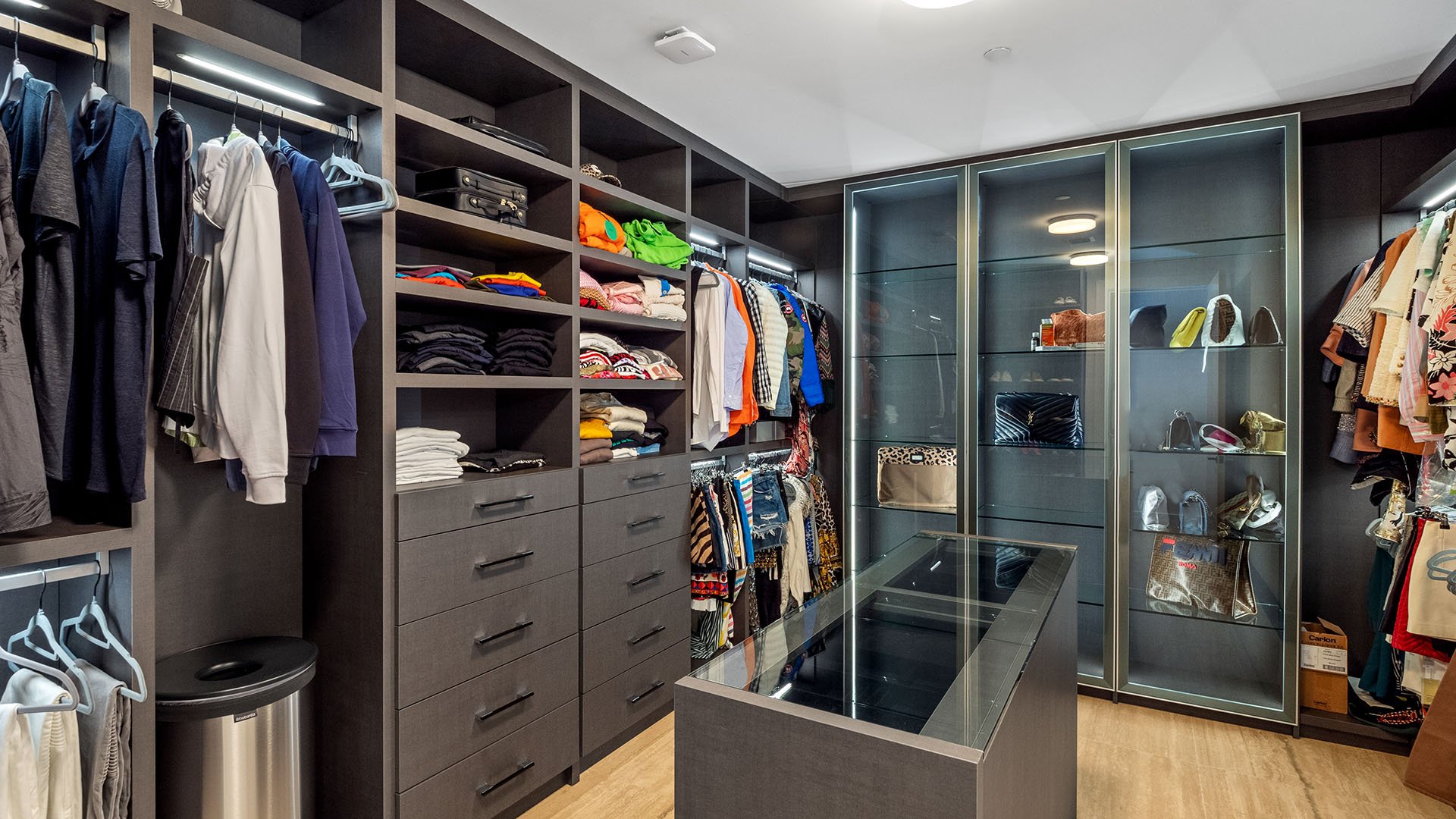
A credible art-storage room requires more than finished cabinetry. Review its independent conditioning, air distribution, sensor placement, lighting controls, and separation from direct sun. Especially sensitive objects may also require boxes or protective enclosures, even within a controlled room.
The practical test is operational: Can the room maintain its target while the rest of the home follows a normal residential schedule? Can equipment be serviced without moving the collection? Is there sufficient clearance for handling, inspection, and future acquisitions? Residences considered alongside St. Regis® Residences Sunny Isles should be assessed at the unit level, since a building name alone cannot establish conditions inside a particular art room.
Conservation-grade features may strengthen a residence’s positioning with collector buyers, but no specific resale premium should be assumed. The strongest investment case is typically a discreet, documented, and reversible installation that expands utility without making the home difficult for a non-collector to understand.
Design and architecture decisions should therefore preserve flexibility. A dedicated room might later serve as secure storage, a library, or another conditioned interior use. Shades should integrate cleanly with the glazing. Sensors and controls should be legible, serviceable, and supported by records. Avoid highly personal interventions that disturb major finishes unless their conservation value clearly justifies the change.
When comparing with The Ritz-Carlton Residences® Sunny Isles, prioritize transferable evidence over marketing language. Commissioning reports, maintenance contracts, shade specifications, lighting measurements, equipment information, and temperature and RH logs allow a future buyer to verify that the residence remains collection-ready.
Before closing, document target set points, allowable drift, HVAC zones, sensor locations, lighting controls, shade specifications, and historical readings. Confirm condominium rules governing window film, motorized shades, supplemental HVAC, electrical work, penetrations, and storage-room modifications before treating any retrofit as feasible.
Arrange independent measurements under realistic conditions. Test occupied and unoccupied periods, inspect sun paths during the hours that matter, and confirm how the system responds when doors open or entertaining loads rise. The objective is not to make a residence function like a museum. It is to establish a controlled residential environment appropriate to the collection while retaining the clarity and adaptability expected of a premium coastal home.
What relative humidity is a practical starting point for many artworks? A 45-55% RH band is a useful baseline, subject to the needs and condition of each work.
Is a thermostat reading enough to verify climate control? No. Continuous records from properly placed sensors are more informative than a single reading.
How cool should a dedicated art-storage room be? Roughly 60-68°F can be appropriate for many collections, but a conservator should set collection-specific targets.
Why is climate stability so important? Rapid changes can drive expansion, contraction, and moisture movement within vulnerable materials.
How much light can works on paper receive? Highly sensitive materials are commonly limited to about 50 lux, with exposure duration also controlled.
Are oil paintings suitable for brighter display areas? They are often assigned limits of around 200 lux, but direct sunlight should still be avoided.
Can UV film make an ocean-facing wall safe for art? Film can help, but shades, lux readings, exposure time, and the work’s sensitivity must also be considered.
What lighting is preferable inside art storage? Dimmable LED lighting is preferable and should remain off whenever the room is unused.
Do collection-ready improvements guarantee a resale premium? No specific premium is established, though documented and flexible systems may appeal to collector buyers.
Which records should transfer with the residence? Keep commissioning documents, maintenance contracts, equipment details, lux measurements, and climate logs.
For a confidential assessment and a building-by-building shortlist, connect with MILLION.
If branded residences are on your mind — as a home or as an allocation — we would be glad to share what we are seeing, privately.
Begin a quiet conversation