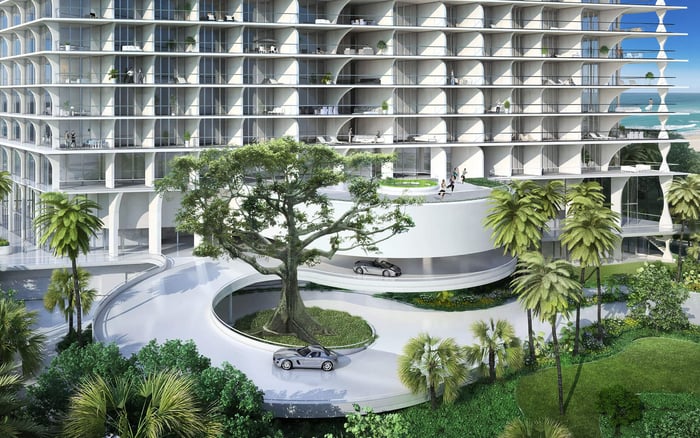
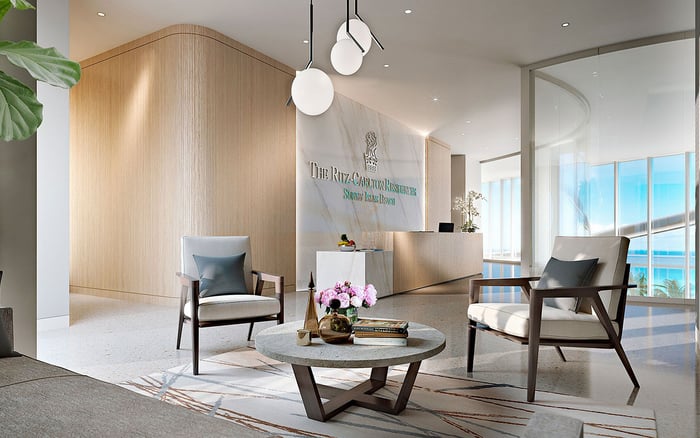
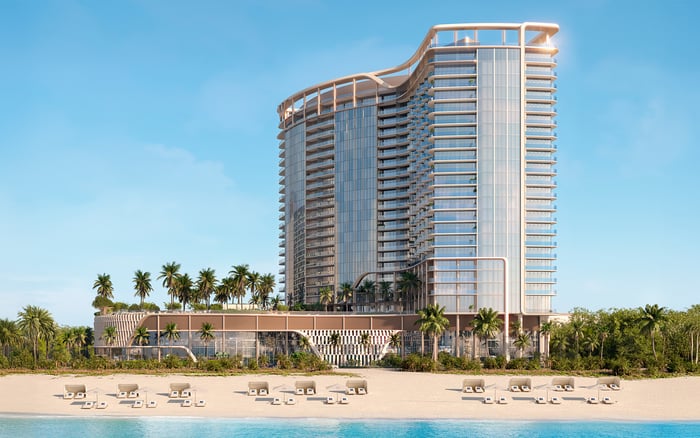
Jade Signature has a functioning secondary market, but its resale history argues for disciplined acquisition, a four-to-five-year hold, and realistic marketing time. Six-month leasing can bridge a delayed sale, while the prohibition on short-term rentals keeps the income strategy focused on long-stay tenants.
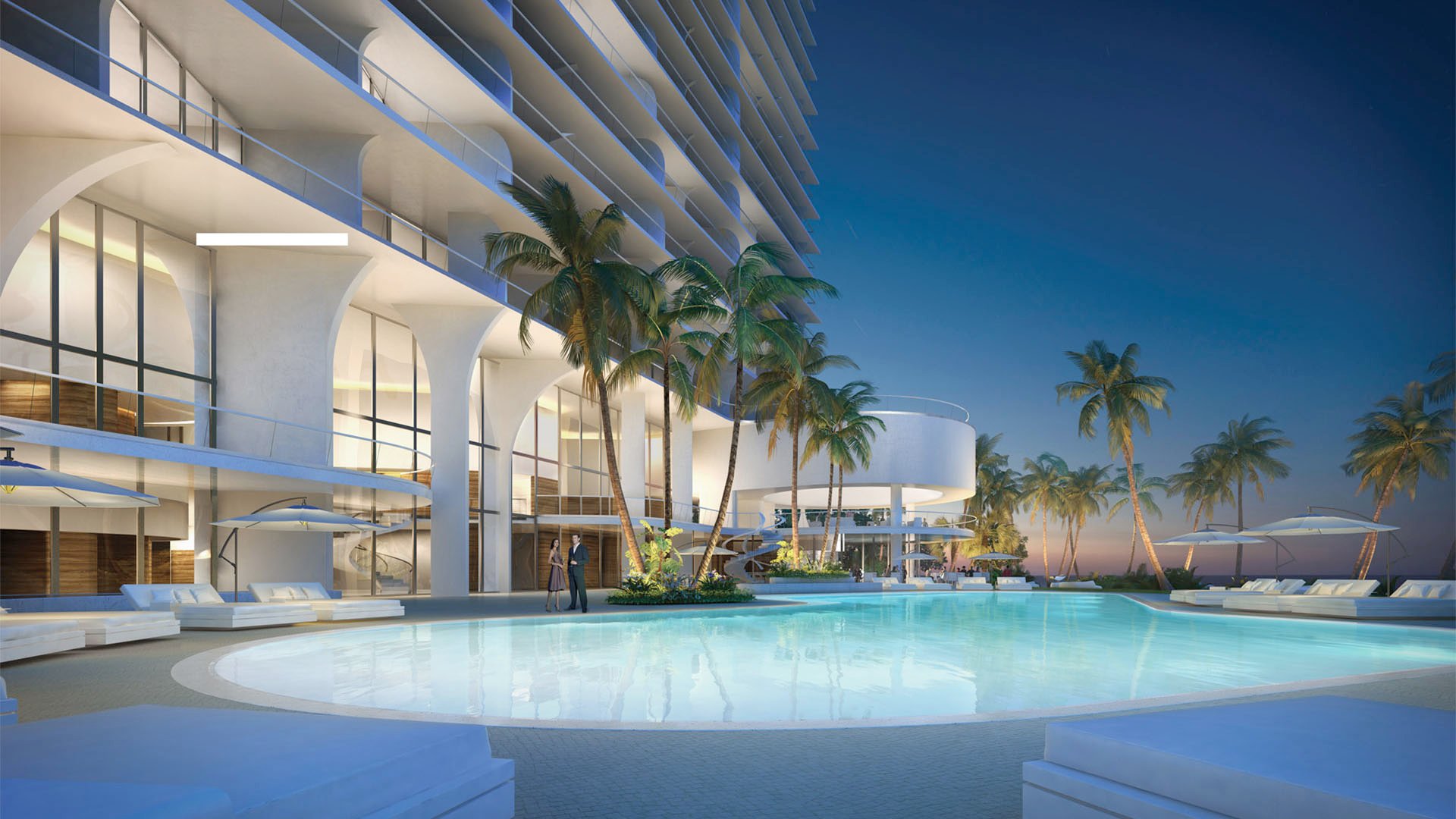
For buyers considering Jade Signature Sunny Isles Beach, the most useful investment question is not simply whether a residence is desirable today, but how readily the asset can be repositioned, leased, or sold as personal priorities and market conditions change.
The 192-residence oceanfront tower at 16901 Collins Avenue has sufficient transaction history to support a measured answer. Since 2018, 305 condominium sales have recorded a median price near $4 million and an average of $1,537 per square foot. Roughly 300 arm’s-length transactions and recurring resales indicate a functioning secondary market-not an opaque collection of rarely traded trophy homes.
Still, liquidity should not be confused with automatic appreciation. Across 106 same-unit resales, the median ownership period was approximately 4.3 years. Of those trades, 48% closed above the prior recorded price and 52% below it, producing a median gain near zero. For an investment buyer, that history places unusual weight on entry basis, residence line, elevation, view corridor, condition, furnishings, and eventual presentation.
A prudent plan begins with a four-to-five-year horizon. That range reflects the building’s observed ownership cycle and gives an owner greater latitude to avoid selling into a crowded inventory window. It also discourages reliance on rapid price expansion as the sole return thesis.
There are constructive signals. Sales since 2023 recorded a median near $1,638 per square foot, approximately 6% above the long-term median of $1,544 per square foot. Yet averages cannot price an individual residence. Unit 5103’s 2025 closing at $14.82 million-$2,605 per square foot after 91 days on market-is a high-end benchmark, not a building-wide valuation rule.
Resale planning should therefore begin well before a listing goes live. Owners can monitor directly competing residences, establish a realistic net target, and determine whether improvements or furnishing changes are likely to broaden appeal. Buyers comparing the local market may also consider Armani Casa Sunny Isles Beach and The Ritz-Carlton Residences® Sunny Isles, as prospective purchasers often evaluate several luxury options along the same coastline.
Inventory is the central variable in a finite building. A 2024 snapshot counted 14 Jade Signature residences for sale, equal to 7% of the tower, with an average asking price of $8.633 million and an average ask of $1,983 per square foot. A later snapshot showed eight offerings, spanning roughly $2 million to $6.9 million and one to five bedrooms. These are point-in-time readings, but they illustrate how quickly the competitive set can change.
The lesson is clearest in the development-era history, when 44 listings represented 23% of the building and asking prices reached $32 million. When multiple owners compete for a limited buyer pool, distinctions in price, floor, view, unit line, and finish quality become decisive.
Observed timing supports patience. Four 2024 closings averaged approximately $1,680 per square foot and 87 days on market, while the broader neighborhood averaged 167 days. Owners should generally reserve three to six months for an exit, recognizing that exceptional positioning can shorten that period while aspirational pricing can extend it.
Jade Signature permits leases with a six-month minimum and no more than two leases per residence annually. Airbnb, VRBO, and other vacation-style or short-term rentals are prohibited under the stated rules. The practical opportunity is therefore long-term rentals aimed at seasonal or executive occupants, not nightly turnover.
That structure can be useful when sale inventory is elevated or an owner prefers to wait for a stronger window. Smaller unfurnished one-bedroom residences may ask approximately $7,500 to $10,000 per month, while furnished penthouses may reach roughly $70,000 to $125,000 or more per month. One active snapshot showed five rentals asking approximately $9,500 to $42,000 monthly; across the neighborhood, 13 rentals carried a median ask near $20,000.
These are asking ranges, not guaranteed income. A six-month lease can offset carrying costs and preserve optionality, but the two-lease annual cap limits rapid repricing and tenant turnover. Before underwriting revenue, buyers should verify current rules, approvals, fees, application procedures, and timing directly with the condominium association.
The building’s sales count, estimated annual turnover rate of 15.5%, and range of listing sizes point to genuine buyer depth. The market is nevertheless price-sensitive. A $2 million residence and a penthouse-level offering do not attract identical prospects, and a spectacular closing should not be applied indiscriminately across every floor plan.
The relevant audience includes primary residents, second-home buyers, and investors seeking regulated rental flexibility. It also includes purchasers cross-shopping newer or differently positioned towers such as Turnberry Ocean Club Sunny Isles. That competition makes precision more valuable than optimism. A seller’s strongest defense is an asset bought well, maintained carefully, and introduced at a price supported by its closest substitutes.
For Sunny Isles Beach ownership, the durable strategy is straightforward: enter at a defensible basis, expect a multiyear hold, retain sufficient liquidity to avoid a forced sale, and treat leasing as an income bridge. Jade Signature offers credible exit pathways, but execution determines which owners can use them efficiently.
How long should a buyer expect to own at Jade Signature? The median period across 106 same-unit resales was about 4.3 years, supporting a four-to-five-year planning horizon.
How long can a resale take? Observed marketing periods of 87 to 167 days suggest allowing approximately three to six months.
Does the building have an active secondary market? Yes. Roughly 300 arm’s-length transactions and recurring resales indicate established, though price-sensitive, liquidity.
Have all same-unit resales been profitable? No. About 48% traded above the previous recorded price and 52% below it, with a median gain near zero.
What most affects resale performance? Acquisition basis, floor, view, unit line, condition, finish quality, and competing inventory can materially shape an exit.
Can owners lease their residences? Yes. The stated rules permit six-month minimum leases, with no more than two leases per residence annually.
Are short-term rentals permitted? No. Airbnb, VRBO, and similar nightly or vacation-style rental strategies are prohibited under the stated rules.
Can leasing bridge a delayed sale? A six-month tenancy can provide income while an owner waits, although the annual lease cap reduces flexibility.
Is $2,605 per square foot a building-wide benchmark? No. That figure reflects a specific high-end 2025 sale and should not be generalized across all residences.
What should owners verify before relying on rent? Confirm current leasing rules, application requirements, fees, approval timing, and procedures with the association.
For a tailored shortlist and next-step guidance, connect with MILLION.
If branded residences are on your mind — as a home or as an allocation — we would be glad to share what we are seeing, privately.
Begin a quiet conversation