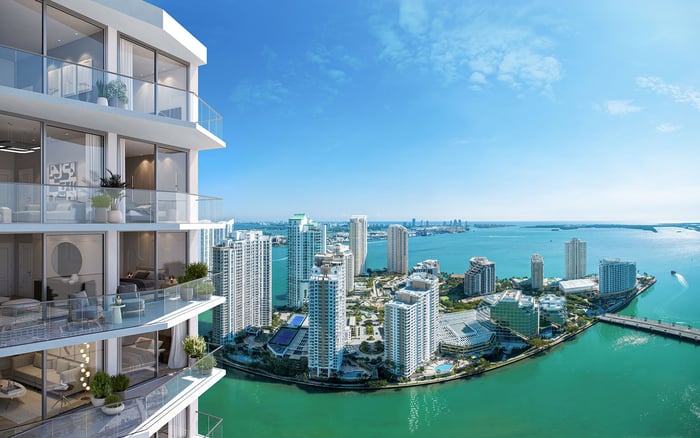
A discreet buyer’s guide to evaluating terrace drainage across South Florida’s oceanfront, bayfront, and urban condominium settings before choosing a view.
In South Florida luxury real estate, the terrace is rarely a secondary space. It is where sunrise coffee becomes a ritual, where the evening breeze defines a residence, and where the view becomes part of daily life. Yet one of the terrace’s most important qualities is almost invisible when it performs well: drainage.
Buyers often compare ceiling heights, glass lines, finishes, and amenity decks before asking how water actually leaves the private outdoor space. That question matters whether the residence is oceanfront, bayfront, or set within the vertical energy of Brickell. A terrace that drains gracefully protects finishes, improves comfort, and helps preserve the clean architectural experience that attracted the buyer in the first place.
The strongest approach is not to seek one universal answer. Oceanfront terraces, bayfront balconies, and city loggias each manage wind, rain, planters, furniture, and maintenance access differently. The buyer’s task is to understand the drainage logic before falling in love with the view.
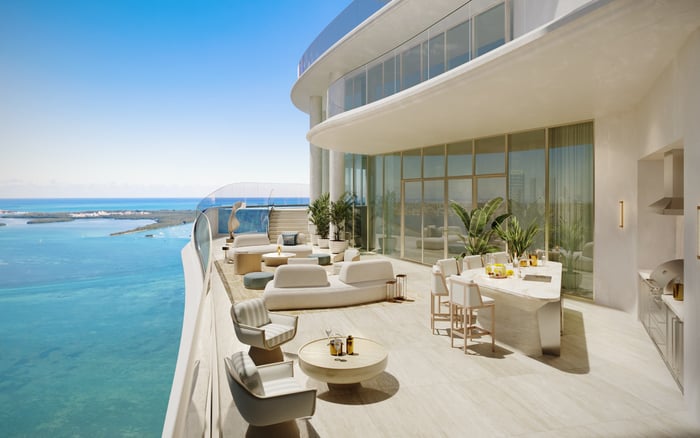
On the sand, a terrace should be evaluated as an exterior room in a highly exposed environment. Wind-driven rain can behave differently from vertical rainfall, and water may move toward door tracks, corners, or recessed seating areas if the terrace geometry is not properly considered. When touring residences such as The Perigon Miami Beach, the buyer should look beyond the uninterrupted horizon and study the floor plane underfoot.
The first question is slope. A terrace should feel level to the body, but it must still direct water away from the interior. Ask where the primary drains are located, whether there is an overflow path, and how water behaves near sliding glass doors. The most elegant designs make this practical choreography disappear.
Edges and transitions deserve equal attention. Door thresholds, exterior tile joints, railing bases, and corners are where water often reveals weaknesses. Staining, mineral marks, soft grout, swollen trim, or repeated patching can suggest that drainage has required attention. None of these observations should automatically disqualify a residence, but they should sharpen the conversation before an offer is written.
Bayfront living often feels calmer, more contemplative, and more connected to skyline light than surf energy. That does not make drainage less important. It simply changes the questions. A bayfront terrace may include deeper outdoor seating, planters, summer kitchens, or larger entertaining zones, any of which can interrupt water flow if not coordinated with the original drainage plan.
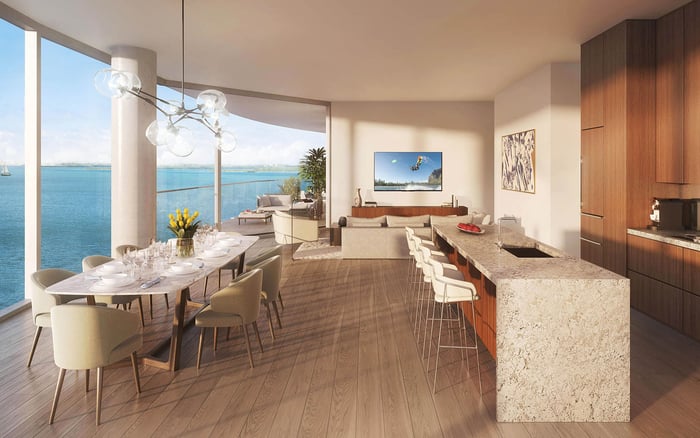
In buildings oriented to wide water views, such as Aria Reserve Miami, buyers should ask how terrace drains remain accessible after furniture, pots, rugs, and outdoor cabinetry are installed. A beautiful terrace can lose performance when lifestyle accessories cover drains or create low pockets where water rests.
Look especially at planters and built-ins. Irrigation runoff, soil migration, and leaf debris can all affect drainage behavior. If the terrace includes landscape elements, clarify who maintains them, how drains are cleaned, and whether the association has rules for modifying outdoor areas. The most successful waterview residences balance atmosphere with disciplined water management.
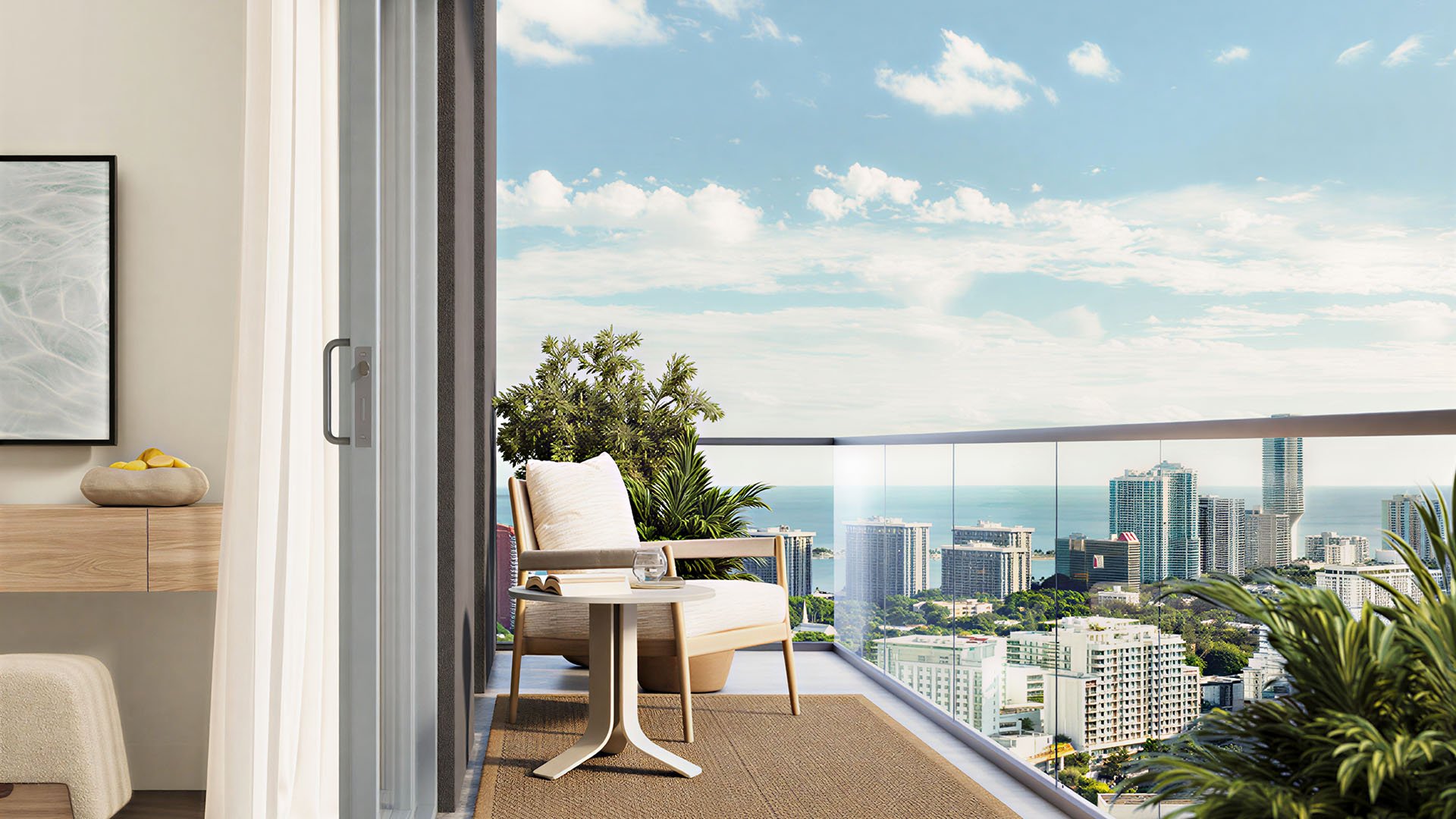
In a city setting, drainage is often less about open exposure and more about stacked architecture. Terraces may sit below other terraces, beside structural columns, or within façade recesses that influence how rainwater moves. In Brickell, a residence at Una Residences Brickell or 2200 Brickell should be evaluated not only for the view, but also for the building’s vertical water logic.
Ask whether water from upper levels can drip onto the private terrace, whether balcony lines are staggered, and how drainage is routed within the structure. A city terrace may appear more sheltered than an oceanfront terrace, but enclosure can create its own challenges. Recessed areas may dry more slowly, and privacy screens or architectural fins can alter airflow.
For buyers searching Miami Beach, Brickell, or Edgewater residences, the vocabulary may be lifestyle-driven, but the due diligence should remain technical. Terrace, waterview, and new-construction are attractive search filters; they are not substitutes for understanding how the outdoor space actually performs.
A polished showing can make almost any terrace feel effortless. Before committing, ask for practical information. Request the drainage plan if available, waterproofing details, terrace maintenance rules, and any history of repairs affecting the unit or line. If the residence is complete, ask whether the building team can explain the cleaning schedule for terrace drains and common exterior drainage components.
For resale residences, the condition of surrounding units can be informative. Look upward, downward, and laterally. Water does not always respect the boundaries of one apartment. If neighboring terraces show staining or deferred maintenance, it may be worth asking more detailed questions about building-wide exterior care.
For pre-construction or early delivery residences, focus on documents and specifications. Ask how slopes are formed, how thresholds are protected, and what testing is performed before turnover. A refined sales gallery may convey the lifestyle, but the terrace detail drawings tell a quieter, often more useful story.
If possible, tour the residence after a rain event. This is one of the simplest ways to read a terrace. Standing water, damp corners, slow-drying grout lines, staining at drain covers, and moisture near door tracks are all worth noting. The goal is not to hunt for flaws. The goal is to understand whether the space behaves in a way that matches the buyer’s expectations.
Walk the full perimeter. Check whether the terrace surface feels uneven. Look for drains hidden beneath furniture. Notice whether outdoor rugs are trapping water. Open and close the terrace doors, then examine the sill and track area. A terrace can look pristine from the living room and still reveal important details at the threshold.
Bring the same discretion to questions. Instead of asking whether there are problems, ask how the drainage system is designed, maintained, and accessed. Skilled building personnel are often able to explain the logic clearly. Clear answers are reassuring. Vague answers do not necessarily mean trouble, but they do suggest that further review is appropriate.
Terrace drainage is not merely a construction topic. It affects how often a buyer uses the outdoor space, how confidently furniture can be selected, and how relaxed ownership feels during seasonal rain. A well-drained terrace supports the lifestyle promised by the view. A poorly understood terrace can become a recurring inconvenience.
For the ultra-premium buyer, the standard should be both aesthetic and technical. The terrace should feel like an extension of the residence, but it should perform like a carefully detailed exterior system. When comparing oceanfront glamour, bayfront calm, and city convenience, drainage may be the quiet factor that separates an inspiring purchase from an effortless one.
Why should terrace drainage matter to a luxury buyer? It affects comfort, finish durability, furniture planning, and ease of daily use. A terrace that drains well preserves the experience of the view.
Is oceanfront drainage more important than city drainage? It is different, not simply more important. Oceanfront terraces face greater exposure, while city terraces may involve stacked conditions and slower-drying zones.
What is the first thing to look for on a terrace? Study where water is intended to go. Drains, slope, thresholds, corners, and overflow paths should all make visual and practical sense.
Should I tour after rain if possible? Yes. A post-rain showing can reveal standing water, staining, slow-drying areas, or threshold concerns that may not be visible on a dry day.
Are large terraces more likely to have drainage issues? Not necessarily. Large terraces simply require more careful coordination among slope, drains, furniture placement, planters, and maintenance access.
What should I ask the building team? Ask how terrace drains are maintained, how often they are cleaned, and whether any repairs have affected the unit line or surrounding exterior areas.
Do planters and outdoor kitchens affect drainage? They can. Built-ins, pots, rugs, and cabinetry may block drains or interrupt water flow if they are not planned around the drainage design.
Is new construction automatically better for terrace drainage? Not automatically. New construction may offer current detailing, but buyers should still review drawings, thresholds, testing, and maintenance protocols.
Can drainage affect resale perception? Yes. Buyers notice staining, repairs, dampness, and awkward outdoor usability. A clean, well-performing terrace supports confidence during resale.
Should an attorney or inspector review terrace concerns? Yes, when concerns arise. A qualified professional can help distinguish normal exterior wear from issues that deserve negotiation or further review.
For a discreet conversation and a curated building-by-building shortlist, connect with MILLION.
If branded residences are on your mind — as a home or as an allocation — we would be glad to share what we are seeing, privately.
Begin a quiet conversation