A discreet buyer’s guide to evaluating school-zone traffic around South Flagler, with practical ways to test morning, afternoon, seasonal, and lifestyle impacts before committing to a home.
On South Flagler, traffic is not merely a commute variable. It is part of the daily choreography of waterfront living: the school run, the club appointment, the bridge crossing, the morning walk, the dinner reservation, the private aviation transfer, the pediatrician visit, and the quiet return home. For luxury buyers, the question is not whether a route looks convenient on a map. It is whether the experience remains composed at 7:35 a.m., 2:45 p.m., and during the compressed late-afternoon window when school dismissal, service vehicles, cyclists, pedestrians, and local errands can converge.
The most discerning buyers evaluate school-zone traffic before they fall in love with a view. South Flagler can feel serenely residential, especially outside peak school movement. Yet the difference between a property that feels effortless and one that feels constrained may come down to one turn lane, one crossing pattern, one driveway position, or one short segment that becomes crowded for twenty minutes twice a day.
This is particularly relevant for buyers considering West Palm Beach and Palm Beach routines, whether the household includes young children, visiting grandchildren, staff circulation, or frequent appointments across the water. In a buyer file, themes such as private schools, college access, single-family homes, and new construction can help organize lifestyle questions, but the real answer is found through repeated observation.
Before comparing properties, define the life that will unfold from the front door. A family with school-age children may care most about arrival windows, dismissal queues, and the reliability of a ten-minute trip. A couple without children may be more sensitive to how school-zone congestion affects morning fitness routines, guest arrivals, or service access. A seasonal owner may need to understand peak winter patterns differently from summer calm.
Create a simple matrix for each candidate home. Include school destinations, after-school activities, doctors, clubs, airports, favorite bridges, grocery runs, and household staff routes. Then identify the two or three movements that would become daily pain points if delayed. This keeps a buyer from overvaluing the most scenic route while undervaluing the most frequently used one.
Luxury due diligence should also distinguish between the driver experience and the passenger experience. A chauffeured household may tolerate a slightly longer route if entry and exit are smooth. A parent driving children each morning may care more about left turns, narrow gaps, and the predictability of a drop-off approach. A residence can be superb and still be wrong for a specific routine.
Drive-by impressions are often misleading. A property toured at 11:00 a.m. may appear removed from all friction, while the same approach during school arrival can feel entirely different. A serious comparison should include at least three weekday observations: morning arrival, afternoon dismissal, and the late-afternoon period when after-school activity begins.
Do not rely only on travel time. Note how the route feels. Are drivers calm or impatient? Do vehicles stack near intersections? Are pedestrians crossing mid-block? Do cyclists have room? Are there protected turns, or only opportunistic openings? Is the property’s driveway approached from a convenient direction, or does access require an awkward turn across traffic?
It is equally important to observe the home itself during these periods. Stand near the entry, not only inside the residence. Listen for acceleration, braking, horns, and idling vehicles. Watch whether traffic affects privacy at the gate or lobby. A residence that remains visually serene may still have an acoustic rhythm at school-zone hours that matters to certain buyers.
Two properties on the same prestigious corridor can live very differently. One may offer a cleaner exit toward a preferred school. Another may require crossing heavier movement before turning south or north. A third may be slightly farther away yet benefit from a calmer approach, easier garage access, or a less contested intersection.
For each home, test more than one route. The shortest route may not be the best route. A longer loop with fewer difficult turns can be more reliable, especially when children need punctual arrivals or household staff are moving between appointments. Record the difference between best-case and worst-case times, then consider which version is more likely to occur during the season when the home will be used most.
Buyers should also evaluate return trips. Morning drop-off may be efficient, while the return home creates a more difficult left turn. Afternoon pick-up may be smooth until a sports practice or bridge delay changes the rhythm. A proper comparison treats every route as a circuit, not a one-way measurement.
School-zone traffic is not only about volume. It is about behavior. Parent queues, student crossings, buses, ride-share vehicles, service trucks, and delivery vans can each alter the feel of a block. On narrower residential approaches, one double-parked car may change the entire experience. At corners, sightlines can matter more than distance.
A buyer should watch how traffic marshals itself. Is there informal order, or does each driver improvise? Are there visible crossing patterns that slow vehicles? Do cars use residential side streets to bypass more formal routes? Are there moments when traffic spills beyond the school frontage and into adjacent blocks?
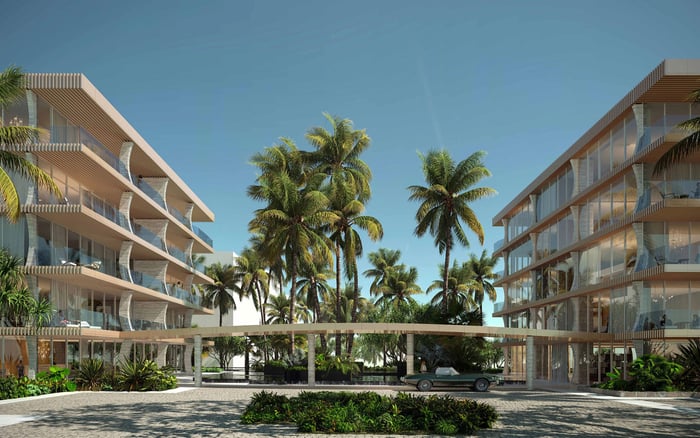
For condominium buyers, the key question is whether school-zone patterns affect the building’s own arrival sequence. A valet court, porte cochere, or garage ramp that works beautifully at noon may feel less graceful when nearby traffic tightens. For single-family buyers, the equivalent question is whether guests, vendors, and family members can enter and leave without feeling exposed to hurried drivers.
South Florida’s traffic personality changes across the year. School calendars, holidays, seasonal residents, events, weather, and construction can all influence how the same corridor feels. A buyer who visits during a quiet week should avoid assuming that calm is permanent. A buyer who visits during an unusually busy week should avoid dismissing a property without testing again.
The best approach is to gather impressions under different conditions. Dry weather and rain are not the same. A clear Monday morning may differ from a Friday dismissal. A week with exams, parent events, or sports activity may produce a different pattern from a routine academic day. The objective is not perfect certainty. It is to understand the range.
For ultra-premium buyers, range matters more than averages. A home that is usually convenient but occasionally difficult may still be acceptable if the household has flexibility. A home that becomes difficult at precisely the time children, staff, or guests need consistency may be less suitable, regardless of its finishes or view.
Traffic diligence should not be treated as a reason to be negative. It is a way to price lifestyle accurately. If two residences are otherwise comparable, the one with cleaner school-zone access may justify a premium for a family buyer. Conversely, a property with a remarkable interior but more complicated peak-hour access may still be desirable if the buyer’s routine avoids school windows.
Keep notes in practical language. Instead of writing “bad traffic,” describe the specific friction: difficult left turn during dismissal, garage exit blocked by queue, pedestrian crossing slows northbound approach, service arrival better before school hours. These details help advisors, family offices, and decision-makers compare properties without emotional distortion.
The most refined purchase decisions often come from small observations. A five-minute delay may be irrelevant. A five-minute delay with honking, tight turns, and anxious children may be material. A ten-minute longer route may be preferable if it feels calm, predictable, and safe.
Before making an offer, ask how the property performs at the household’s non-negotiable hours. Confirm the easiest approach, the cleanest exit, and the backup route. Consider whether a driver can stage discreetly, whether school-day service appointments need to be scheduled around traffic, and whether guests will understand the best way to arrive.
Also evaluate future flexibility. Children change schools. Grandchildren visit. Staff shifts evolve. A home purchased for a quiet adult lifestyle may later need to support a more active family routine. South Flagler’s appeal is enduring, but the right property should accommodate the buyer’s next chapter, not only the present one.
The final judgment is qualitative as much as numerical. The winning residence is not always the closest to school or the one with the fastest route on a single test. It is the home whose access pattern preserves composure, privacy, and ease across real life.
How many times should I test school-zone traffic before buying? Test at least during morning arrival, afternoon dismissal, and late afternoon. If the property is a serious contender, repeat on another weekday.
Is a shorter school route always better? No. A slightly longer route with fewer difficult turns and less queuing may feel more reliable and refined.
Should I test traffic if I do not have children? Yes. School-zone traffic can affect guest arrivals, service access, morning routines, and privacy near the entry.
What is the most important thing to observe from the property itself? Watch driveway or garage access during peak periods. The comfort of entering and leaving often matters more than map distance.
Can school-zone traffic affect resale? It can influence buyer perception, especially for family-oriented purchasers. Clear, calm access is a meaningful lifestyle advantage.
Should I compare weekday and weekend conditions? Yes. Weekend calm can be useful, but weekday school windows reveal how the property functions in daily life.
How should I document what I see? Use specific notes such as turn difficulty, queue location, noise, crossing activity, and backup route quality.
Does a condominium require different traffic diligence than a house? Yes. For condominiums, study valet, porte cochere, garage ramp, and lobby arrival patterns during school hours.
What if I only live in South Florida seasonally? Test during the season when you expect to use the home most. Seasonal patterns can feel different from quieter months.
When should traffic diligence happen in the buying process? Begin before an offer if possible, then refine observations during due diligence so lifestyle fit is clear.
If you'd like a private walkthrough and a curated shortlist, connect with MILLION.
If branded residences are on your mind — as a home or as an allocation — we would be glad to share what we are seeing, privately.
Begin a quiet conversation