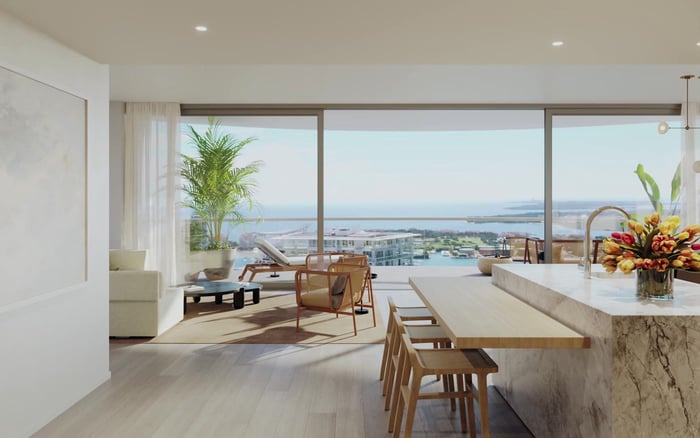
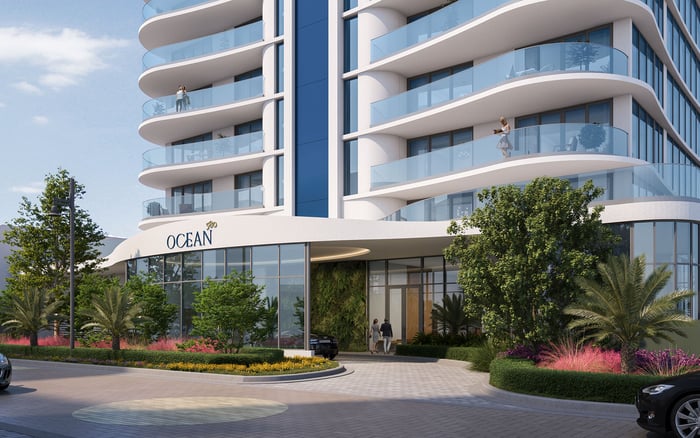
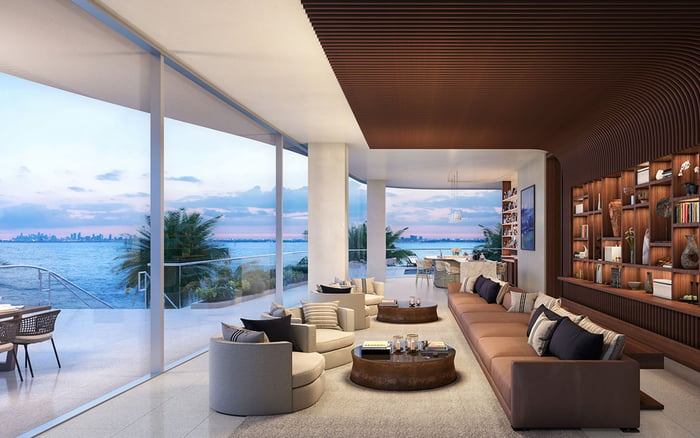
A practical buyer’s guide to evaluating penthouse terrace wind in South Florida, from terrace geometry and exposure to site visits, resident feedback, and daily usability.
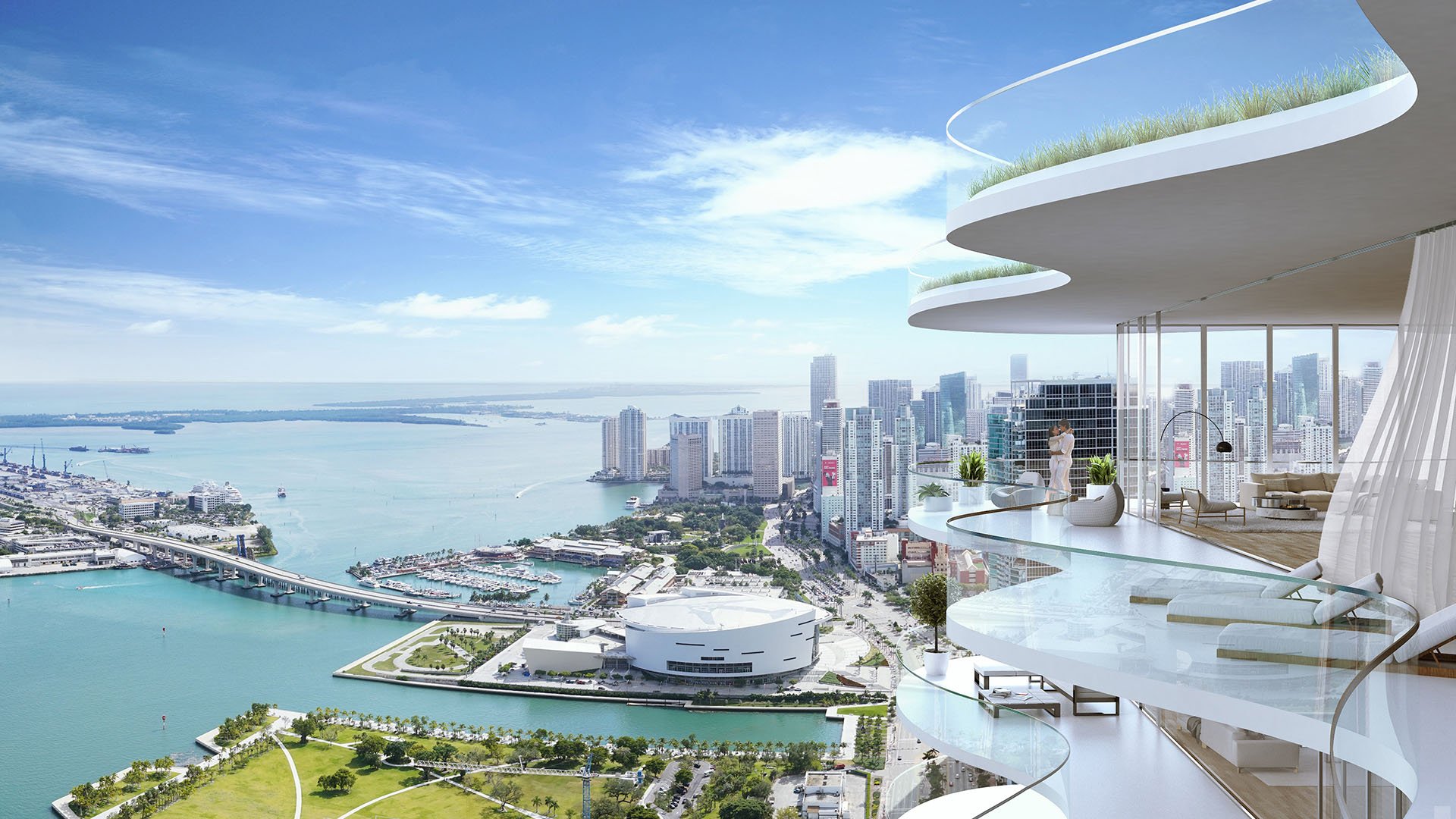
A penthouse terrace is often sold on its view, square footage, and rarity. Wind is less glamorous, but it can determine whether that outdoor room becomes a breakfast terrace, a cocktail setting, or a space admired mainly through glass.
In South Florida, the question is not simply whether a building is designed for severe weather. Code-level wind resistance and daily human comfort are different issues. A structurally compliant railing, window wall, or exterior system may perform as intended while the terrace still feels too gusty for loose cushions, paper menus, umbrellas, or a long dinner service.
High floors can feel dramatically different from mid-level residences in the same tower. Near the Atlantic coast, daily breeze patterns add another layer. A calm morning can become a noticeably brisk afternoon, especially on terraces with open exposure.
Luxury buyers often ask the hurricane question first. That is sensible, but it is not the same as asking whether a terrace will be pleasant during ordinary use. Severe-weather performance is about safety and resilience; daily terrace life is more often shaped by recurring moderate wind.
This is why outdoor square footage alone can mislead. A larger exposed terrace may be less valuable in lived terms than a smaller terrace protected by tower massing, a deeper overhang, a recessed plan, or a neighboring structure.
The more useful question is how the terrace behaves during the moments that matter: morning coffee, sunset drinks, a casual lunch, a catered dinner, or a quiet evening outside. A penthouse terrace is not just an area on a floor plan; it is a microclimate at elevation.
Begin with the fundamentals: elevation, orientation, and open exposure. A penthouse looking across open water can feel very different from one shielded by adjacent towers or set back within a denser skyline. That exposure can be desirable for air movement and views, but it should be understood, not assumed.
Orientation matters. In coastal South Florida, an east-facing terrace may behave differently from one oriented west, south, or north. A corner residence can be even more nuanced. Corners, setbacks, podium edges, parapets, and gaps between neighboring towers can accelerate air or create turbulence. Two terraces in the same penthouse can therefore have distinct personalities.
For Miami Beach, Fort Lauderdale, Palm Beach, and other coastal markets, this can be especially important because oceanfront, bayfront, and urban conditions can combine in subtle ways. When possible, visit at different times of day and pay attention to the simplest clues: hair movement, door pressure, sound levels, table settings, pool deck comfort, and how staff or residents arrange outdoor furniture.
A new-construction penthouse gives buyers the chance to ask questions before habits are already established. The most useful question is direct: did the design team evaluate wind comfort for terraces, rooftop amenities, pool decks, or setback levels? If the answer is yes, ask what areas were studied and whether the findings influenced railing height, parapet design, screening, landscape placement, or amenity programming.
Also ask how the sales team explains exterior usability. The best new-development teams will not promise a windless terrace. They will describe design intent, exposure, operable elements, furniture restrictions, and how outdoor areas are meant to be used in normal conditions.
Buyers should also ask whether any outdoor features require association approval or special handling. Umbrellas, shade devices, planters, grills, art objects, and loose accessories can become practical concerns on elevated terraces, even when the setting looks effortless in renderings.
A resale penthouse offers something equally valuable: history. Instead of relying only on renderings or sales language, ask how the terrace is actually used. Are umbrellas allowed or discouraged? Are planters unusually heavy? Are cushions clipped or stored after each use? Do residents avoid certain corners in the afternoon? Are doors fitted with practical hardware because pressure is noticeable?
Resident feedback can be especially revealing when it is specific. “Breezy” is vague. “The northeast corner is usually less comfortable in the afternoon” is useful. You are not trying to build an engineering model. You are checking whether your showing was representative or unusually calm.
For resale towers, look closely at the building itself. Older towers may have different terrace depths, railing types, parapet heights, and surrounding context than newer luxury buildings. A solid glass guardrail may feel different from open pickets. A recessed loggia may behave differently from a projecting slab. A neighboring tower may be a shield, a wind channel, or both.
A disciplined comparison should include terrace height, orientation, exposure to open water, corner position, railing or parapet design, terrace depth, overhangs, nearby tower shielding, and rules for loose furniture. If two residences have similar price and view, these details can separate the more usable outdoor room from the more theatrical one.
During visits, stand still in several locations rather than judging the terrace from the door. Sit at the likely dining area. Open and close terrace doors. Notice whether conversation feels easy. Look at how existing furniture is weighted, grouped, or absent. Ask whether outdoor cooking, umbrellas, shade structures, or planters are restricted by association rules.
The most sophisticated buyers compare terraces by lifestyle scenarios. Morning coffee. Sunset drinks. Children stepping outside. Pets on the terrace. Catered dinners. Art objects, planters, towels, and loose accessories. Each scenario can reveal a different version of the same outdoor space.
When comparing new construction and resale, avoid assuming that newer is always calmer or older is always riskier. Newer luxury towers may offer more design documentation and clearer explanations of outdoor programming. Older resale towers may offer years of resident experience and visible evidence of what works.
A practical scoring approach can help. Rate each penthouse for exposure, shelter, railing design, terrace depth, afternoon comfort, furniture practicality, and documentation. Then separate storm-resilience confidence from daily-use confidence. A residence can score highly on one and less strongly on the other.
For South Florida’s ultra-prime buyer, wind should not diminish the romance of a penthouse. It should refine the search. The goal is not a perfectly still terrace, which may be unrealistic at height near the coast. The goal is a terrace whose breezes match the way you intend to live.
Why are penthouse terraces usually windier than lower floors? High floors are more exposed, and nearby tower shapes, corners, and setbacks can make the terrace feel breezier than lower outdoor areas.
Is storm performance the same as terrace comfort? No. Storm performance is about safety and resilience, while terrace comfort is about how the space feels during ordinary use.
What should I compare first when judging terrace wind? Start with height, orientation, open-water exposure, corner position, terrace depth, railing design, and nearby shielding.
Should I visit a penthouse only on a calm day? No. A calm showing is helpful, but a second visit during a breezier period can reveal more about daily usability.
What should I ask a developer about wind? Ask whether terrace comfort, rooftop amenities, pool decks, and setback areas were evaluated during design.
What should I ask in a resale building? Ask how residents actually use the terrace, which areas feel most comfortable, and whether furniture or accessories require special handling.
Do glass railings make a terrace calmer? They can influence comfort, but the result depends on overall geometry, exposure, parapet design, and surrounding tower conditions.
Is a bigger terrace always better? Not necessarily. A smaller sheltered terrace may be more usable than a larger terrace exposed to frequent gusts.
How important is open-water exposure? It can be very important because a wide-open view may also mean less shielding from coastal breezes.
What is the best way to shortlist comparable options for touring? Start with location fit, delivery status, and daily lifestyle priorities, then compare stacks and elevations to validate views and privacy.
For a discreet conversation and a curated building-by-building shortlist, connect with MILLION.
If branded residences are on your mind — as a home or as an allocation — we would be glad to share what we are seeing, privately.
Begin a quiet conversation