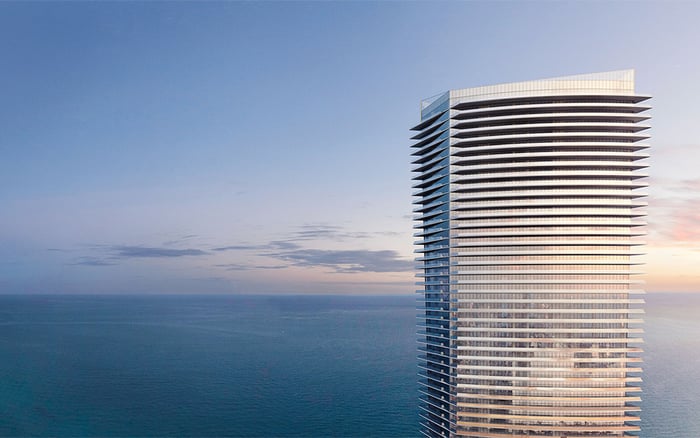
A buyer-oriented look at how brand culture, coastal setting, amenity programming, elevator operations, and condominium governance should be evaluated when comparing Armani Casa Sunny Isles Beach with Kempinski Residences Miami Design District.
At the top of South Florida’s condominium market, buyers often compare buildings by address, view, finishes, and brand. The deeper question is cultural: what kind of daily life does the building encourage, and who controls that experience after closing? That is the sharper lens for evaluating Armani Casa Sunny Isles Beach and Kempinski Residences Miami Design District.
Armani Casa Sunny Isles Beach is best considered through the lens of a design-led luxury residential identity. That distinction matters because a brand can shape aesthetics, perception, and the tone of arrival, while the practical experience still depends on condominium documents, association policies, staffing, budgets, and resident behavior.
Kempinski Residences Miami Design District invites a different cultural reading because the name sits within an urban design and hospitality context. But for a serious buyer, the comparison should not become a shortcut. Brand identity can frame expectations; it cannot replace the work of evaluating what is actually promised, governed, staffed, and funded.
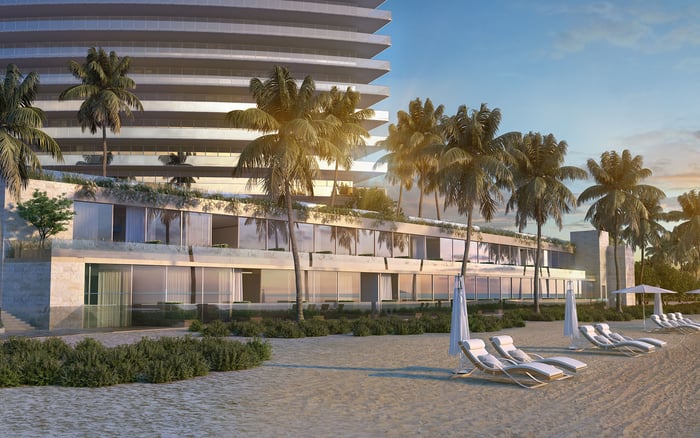
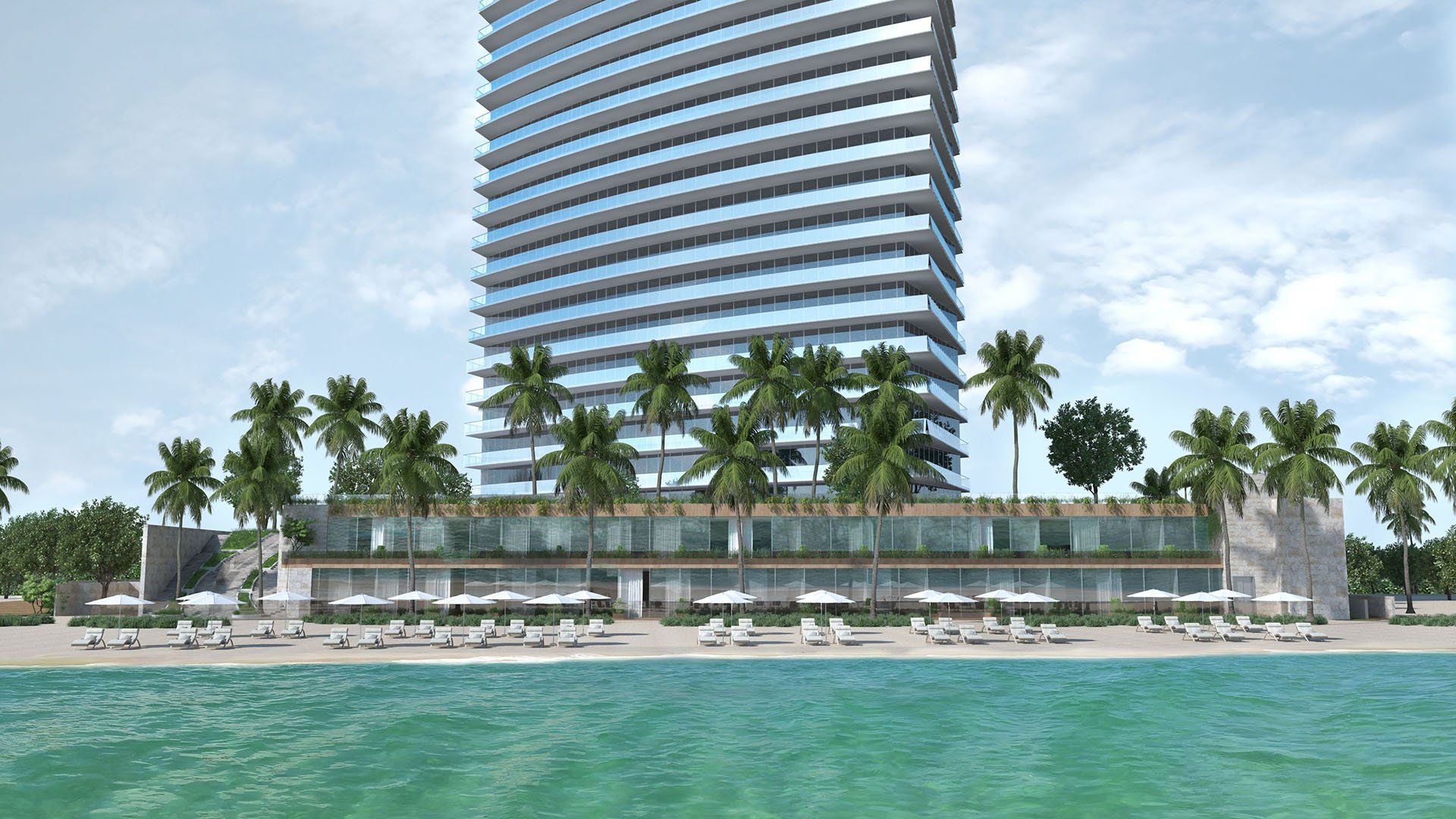
Armani Casa’s Sunny Isles Beach setting places it on the coastal, resort-oriented side of the conversation. That does not automatically mean more privacy, faster service, or richer amenities. It means the buyer should expect the building culture to be interpreted through beach proximity, seasonal ownership patterns, arrival choreography, and a quieter residential rhythm than a more urban district may suggest.
In search language, this topic naturally touches Armani Casa Sunny Isles Beach, Sunny Isles, oceanfront, new construction, pool, and investment filters. But filters are only the opening screen. A true acquisition decision should ask whether the building’s culture supports the owner’s intended use: full-time residence, seasonal pied-a-terre, family retreat, or long-horizon capital placement.
The Miami Design District side of the comparison is more urban and design-forward by association. Buyers drawn to that environment may prioritize restaurants, galleries, retail adjacency, and cultural immediacy over sand-and-sea repetition. In both cases, the most valuable amenity is not the longest list. It is the most coherent match between place, brand, and owner lifestyle.
Amenity density sounds like a simple calculation: divide shared amenity space by the number of residences. In practice, it is more nuanced. A building with a glamorous amenity suite can still feel crowded if access is poorly managed, hours are constrained, or spaces overlap during peak periods. A more restrained program can feel superior when reservations, staffing, acoustics, circulation, and maintenance are handled with discipline.
For Armani Casa, amenity questions are best treated as document-specific. The design identity may be central to the building’s positioning, but brand prestige alone should not be used to infer the scale, access rules, or operational quality of every shared space. A buyer should review the actual amenity descriptions, condominium declarations, budget assumptions, and house rules before assigning value.
This is especially important in branded residences, where the emotional power of a name can blur the line between mood and mechanics. A refined lobby, sculptural interiors, and an elegant pool deck can create a strong first impression. The long-term owner experience depends on how those spaces function at 8 a.m. in season, how guests are handled, how staff are trained, and how association costs evolve.
Elevator wait time is one of the least glamorous but most revealing luxury metrics. In a tall condominium, an owner can forgive many things before forgiving a slow, crowded, or unreliable vertical commute. The issue is not merely the number of elevators. It is the relationship among tower height, residence count, elevator banking, service elevators, staff movement, deliveries, guest traffic, move-ins, pet circulation, and peak-hour patterns.
For Armani Casa, specific elevator performance claims require building-specific traffic, elevator-bank, or resident-operation data. Without that evidence, the correct approach is neither to assume excellence nor deficiency. It is to ask targeted questions: Are there separate service routes? How are deliveries scheduled? What is the move-in protocol? How does valet or front desk activity affect arrival peaks? What happens during holidays and winter high season?
For any comparison with Kempinski Residences Miami Design District, the same discipline applies. A buyer should resist broad statements that one brand culture is inherently faster, more private, or more efficient than another. Elevator quality is experienced minute by minute, but it is created by planning and management decisions that must be verified.
Owner control is where luxury buyers should become especially precise. A branded residence can project a highly curated identity, but condominium governance determines how decisions are made after the initial sales period. That includes board authority, association budgets, reserve planning, rules on rentals and guests, design alterations, staffing contracts, pet policies, amenity access, insurance exposure, and dispute procedures.
For Armani Casa, owner control should be separated into three ideas. First, brand identity shapes the building’s public image. Second, condominium governance shapes voting, budgets, and daily policy. Third, the actual association documents define what owners can and cannot influence. These ideas are related, but they are not the same.
This separation is essential for sophisticated buyers. Some owners want a highly managed, tightly curated environment with less friction and fewer individual choices. Others want maximum control over operations, costs, and future modifications. Neither preference is wrong. The misstep is buying into a brand atmosphere without understanding the governance structure that will outlast the initial romance of the presentation.
The strongest comparison between these two residences is not a declaration that one is superior. It is a framework for inquiry. Armani Casa can be understood as a coastal, design-led branded condominium where design identity is central to positioning. Kempinski Residences Miami Design District can be considered through the buyer’s expectations for an urban branded residence in a cultural district. The decision turns on which culture feels more durable for the owner’s life.
Before signing, buyers should ask for the documents that convert ambiance into obligations. What amenities are included, and what is reserved, limited, or separately charged? How are staffing levels funded? What elevator systems serve residents, staff, guests, and service functions? How much authority will the association have, and how much influence remains with brand standards or management agreements? What rules govern leasing, guests, pets, renovations, and events?
In South Florida’s ultra-premium market, the winning residence is rarely the one with the loudest brand. It is the one where brand, building systems, governance, and location work together to create a seamless private life.
Is Armani Casa Sunny Isles Beach a design-led branded residence? It is best evaluated through a design-led residential lens, with brand identity treated as one part of the ownership experience rather than the whole decision.
Does Armani Casa’s brand prove its amenity density? No. Amenity density should be evaluated through project materials, condominium documents, access rules, staffing, and operating budgets.
Can buyers assume shorter elevator waits in one branded building over another? No. Elevator performance depends on building-specific systems, traffic patterns, operations, deliveries, staffing routes, and seasonal use.
Why does Sunny Isles Beach matter in this comparison? Sunny Isles Beach places Armani Casa in a coastal, resort-oriented context, which can shape owner expectations around privacy, views, and seasonal rhythm.
How should Kempinski Residences Miami Design District be evaluated? It should be evaluated through its actual residential documents, service model, amenity rules, governance structure, and urban lifestyle fit.
What is the biggest mistake buyers make with branded residences? They sometimes treat brand prestige as proof of operational quality. The daily experience must still be tested through documents and questions.
Where does owner control appear in a condominium purchase? Owner control appears in declarations, bylaws, budgets, board powers, association rules, management agreements, and alteration policies.
Is amenity count more important than amenity usability? No. Usability, reservation systems, crowding, staffing, acoustics, and maintenance often matter more than the number of amenities.
Should investment buyers weigh culture differently from end users? Yes. Investment buyers should consider how culture, governance, and operating costs may affect resale appeal and long-term ownership comfort.
What is the best first step before comparing these buildings? Define how the residence will be used, then review documents that clarify amenities, elevator operations, association control, and lifestyle restrictions.
If you'd like a private walkthrough and a curated shortlist, connect with MILLION.
If branded residences are on your mind — as a home or as an allocation — we would be glad to share what we are seeing, privately.
Begin a quiet conversation