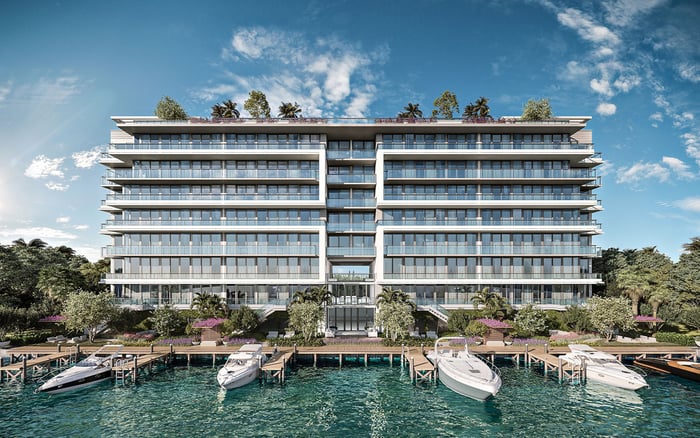
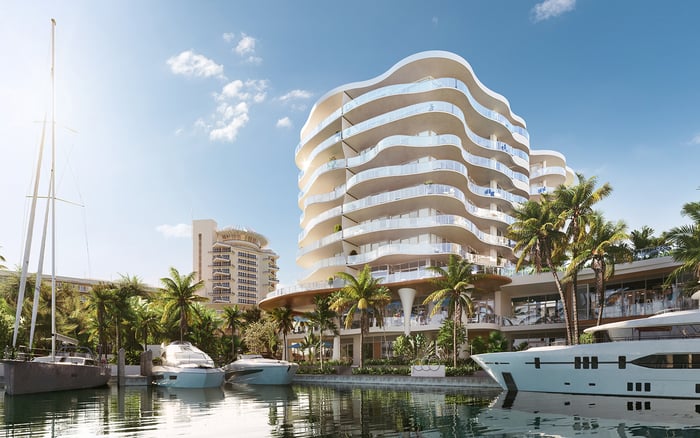
A buyer-focused guide to reviewing guest vessel rules, dockage permissions, and waterfront governance before purchasing in Bay Harbor Islands.

In Bay Harbor Islands, waterfront living is not only about the view. For many buyers, the more important question is how well a property receives people by water: family arriving for lunch, a captain repositioning a tender, friends stopping in for the evening, or a larger vessel waiting briefly while guests come ashore. Guest vessel rules determine whether that rhythm feels effortless or becomes a recurring administrative negotiation.
For a luxury buyer, the issue is rarely whether boating is desirable. It is whether the building, association, dock, and surrounding governance support the way you actually live. A residence may offer a beautiful water outlook, but the guest vessel policy may be narrow, highly conditional, or dependent on approvals that do not match your expectations. That gap can affect privacy, daily convenience, and ultimately the confidence of a future resale buyer who sees the waterfront as part of the home’s utility, not merely as a decorative backdrop.
The first step is to understand what the governing documents mean by a guest vessel. Some rules distinguish between an owner’s registered vessel, a tenant’s vessel, a contractor’s vessel, a delivery vessel, a chartered vessel, and a temporary guest vessel. Those categories may be treated very differently, even when the boats look similar from the terrace.
Ask whether a guest vessel is permitted to dock, idle, load passengers, unload passengers, stay overnight, or use a slip in an owner’s absence. Each verb matters. A policy that allows temporary pickup is not the same as one that allows a friend’s boat to occupy a slip for the weekend. A rule that permits access with advance notice may still require registration, insurance, identification, or written approval.
This is where many buyers make a subtle mistake. They hear that a property has dockage and assume the social boating experience will follow. In a well-run waterfront environment, dockage is usually governed with precision. That precision can be a benefit, preserving order and exclusivity, but only if it aligns with your intended use.
Guest vessel rules should be read through two separate lenses: how long a vessel may remain and how often the privilege may be used. A short visit for a lunch pickup is not the same as recurring weekend use. A one-time holiday exception is not the same as a standing right.
Look for daily, overnight, weekly, monthly, or seasonal limits. Then look for language that allows the association, dockmaster, management, or board to deny or condition access. In a premium building, discretionary approval can be appropriate, especially where security, wake exposure, limited dock capacity, and neighboring residences are involved. Still, that discretion should be understood before contract deadlines pass.
If the residence is intended as a second home, frequency limits can be especially important. You may entertain more intensely during shorter visits, with several guests arriving by water in the same week. A rule that seems generous on paper may feel restrictive when concentrated into peak-use periods.
The most elegant guest vessel policy is not necessarily the most permissive one. It is the one that is clear, consistent, and operationally realistic. Before buying, ask who grants approval, how much notice is required, what documents must be submitted, and whether approvals are handled during weekends, holidays, or after hours.
A strong comparison should identify whether guest access is managed by a concierge, property manager, dockmaster, board committee, marina operator, or another designated party. It should also clarify whether approval can be requested digitally, whether captains can communicate directly with management, and whether there is a written record of authorization.
For buyers comparing new-construction residences with established buildings, this review has a different character. A new development may present the boating lifestyle with polished renderings and hospitality language, while final operating rules may still require careful review. An established building may have more history, but also more entrenched procedures. Neither is inherently better. The advantage goes to the property whose rules are clear enough to support confident use.
Guest vessel policies often turn on risk control. Insurance certificates, vessel registration, captain identification, and indemnity language may all be part of the process. A buyer should not treat these requirements as mere paperwork. They reveal how the property thinks about liability, security, and shared waterfront infrastructure.
If you expect visiting yachts, tenders, personal watercraft, or service vessels, ask whether each category is treated differently. A building may permit one type and restrict another. Some policies may require proof that the vessel is properly insured, operated by a licensed professional, or compliant with size and draft limitations. Others may restrict fueling, maintenance, crew access, or unattended occupancy.
A boat slip can be one of the most meaningful privileges in a waterfront purchase, but its value depends on the bundle of rights attached to it. Is the slip deeded, assigned, leased, licensed, or subject to association reassignment? Can anyone other than the owner use it? Can a guest vessel occupy it temporarily? These distinctions should be reviewed with the same seriousness as parking, storage, and terrace rights.
Beyond written permission, the physical environment matters. Guest vessel access depends on whether the waterway, dock, pilings, turning radius, seawall, and neighboring vessels can safely accommodate the boat. Size limits are not merely aesthetic. They protect infrastructure and reduce conflicts among owners.
When comparing properties, request the operative measurements used by management: length overall, beam, draft, bridge clearance where relevant, and any restrictions on engines, tenders, lifts, or rafting. Confirm whether measurements include bow pulpits, swim platforms, and other extensions. A vessel that appears compliant in casual conversation may fall outside the formal standard once measured properly.
The most desirable waterview setting may also be one where dock operations are highly controlled. That is not a contradiction. In a refined waterfront community, the goal is to preserve both access and serenity.
Guest vessels bring guests, crew, vendors, and sometimes unexpected visibility. For some buyers, that is part of the appeal. For others, it creates privacy concerns. The correct policy depends on whether you want a highly social waterfront residence or a quieter setting where arrivals are tightly managed.
Ask where guests may disembark, how they are checked in, whether they can enter common areas from the dock, and whether staff or security must escort them. Clarify whether a vessel guest is treated like a residential guest for building access or remains limited to dockside movement. The distinction is important for families, visiting friends, and event hosting.
This is also where a Bay Harbor buyer should think beyond the unit itself. The relationship between dock, lobby, parking, elevators, and security desk can make a guest arrival feel either seamless or awkward. Luxury is often found in these transitions.
Before making an offer or during due diligence, create a concise comparison matrix. Include the property name, dock rights, guest vessel definition, approval authority, notice period, time limits, frequency limits, insurance requirements, size limits, captain rules, access path, penalties, and any board discretion.
Then rank each property according to your real use case. Are you hosting waterfront dinners? Receiving family by tender? Keeping a captain-managed vessel nearby? Allowing friends to visit by boat while you are in residence? A clean underwriting memo might mark each candidate as driven by Bay Harbor, boat slip, marina, waterview, new construction, or second-home priorities, then test vessel permissions against the primary reason for purchase.
Do not rely on verbal summaries. Ask for the condominium documents, dock rules, marina agreements where applicable, amendments, current policies, and any written procedures used by management. If the documents conflict, the conflict itself deserves attention.
Several issues warrant closer review. Vague rules with broad discretion may be workable, but only if management has a consistent operating culture. Rules that are silent on guest vessels should not be read as automatic permission. A slip assignment without clear guest-use rights may not deliver the flexibility a buyer expects.
Also watch for policies that depend on informal past practice. In luxury real estate, a practice that works under one board, manager, or neighbor dynamic can change. Written rights are more durable than courtesy arrangements.
The best outcome is not necessarily the least restrictive policy. It is the policy that protects value, privacy, safety, and the intended boating lifestyle with minimal ambiguity.
Should I review guest vessel rules before making an offer? Yes. If boating access is material to your purchase, review the rules before key contract deadlines.
Is a guest vessel the same as an owner vessel? Not always. Many waterfront properties treat owner, tenant, guest, service, and chartered vessels differently.
Can verbal permission from management be enough? Written rules and written approvals are more reliable than informal assurances, especially for resale confidence.
What documents should I request? Request governing documents, dock rules, amendments, slip agreements, insurance requirements, and current operating procedures.
Do guest vessel rules affect property value? They can, particularly for buyers who view waterfront access as part of the residence’s practical utility.
Are overnight guest vessels usually treated differently? Often, overnight stays receive closer scrutiny than short pickup, drop-off, or daytime visits.
Should my captain review the rules? Yes. A captain can identify operational issues involving draft, beam, clearance, docking, and access logistics.
What if the rules are silent on guest vessels? Silence should not be treated as permission. Ask for written clarification before relying on the use.
Can association rules change after purchase? Rules may evolve through the governing process, so buyers should understand both current rights and amendment procedures.
What is the best way to shortlist comparable options for touring? Start with location fit, delivery status, and daily lifestyle priorities, then compare stacks and elevations to validate views and privacy.
For a tailored shortlist and next-step guidance, connect with MILLION.
If branded residences are on your mind — as a home or as an allocation — we would be glad to share what we are seeing, privately.
Begin a quiet conversation