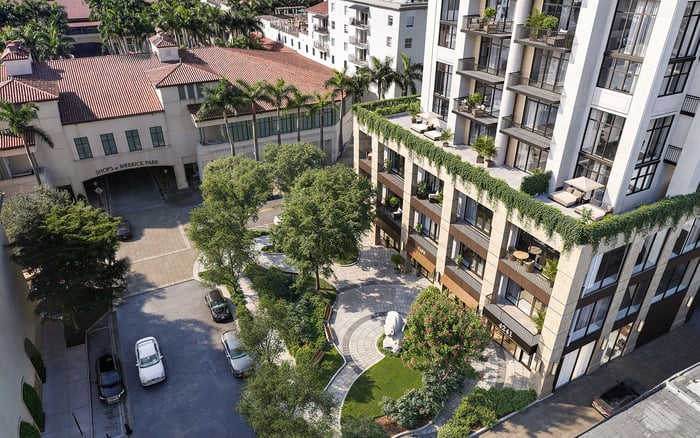
A buyer-focused look at how building culture, contract discipline, and execution certainty can influence negotiation strategy at Four Seasons Residences Coconut Grove and Cora Merrick Park.
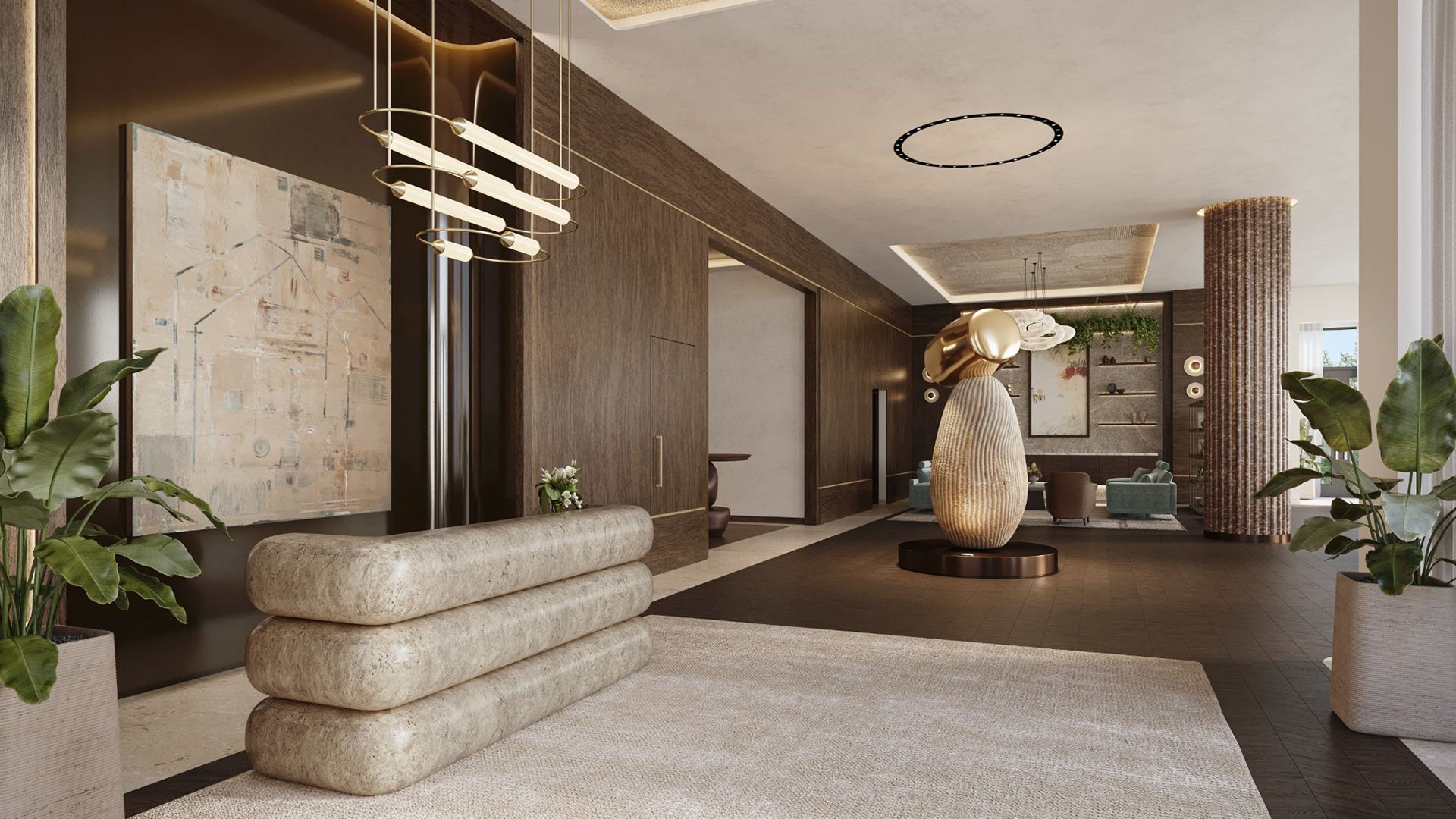
For a cash buyer comparing Four Seasons Residences Coconut Grove and Cora Merrick Park, the question is not simply which residence feels more prestigious. The sharper question is how each building culture may shape leverage, contract rhythm, closing confidence, and the kind of concession worth pursuing.
In ultra-premium South Florida real estate, cash is powerful, but it is not magic. Sellers, developers, and their representatives tend to respond to certainty. That certainty can take the form of a short diligence window, limited contingencies, early proof of funds, clean attorney review, and a buyer who understands the norms of the building or project before asking for special treatment.
Building culture is the soft architecture around the hard asset. It includes expectations around privacy, service, communication, design discipline, resident profile, deposit posture, governance, and tolerance for negotiation. A buyer who studies that culture can often negotiate with greater precision than one who simply asks for a reduction.
Four Seasons Residences Coconut Grove carries a name that naturally frames the conversation around hospitality, service, and a highly curated residential experience. Cora Merrick Park invites a different lens, one tied to a more locally specific sense of place and neighborhood identity. Those distinctions do not automatically make one better than the other. They make the negotiation different.
A hospitality-branded residential environment may require a buyer to think carefully about ongoing standards, service expectations, and the premium attached to brand alignment. The buyer should ask whether the value proposition is strongest in the daily experience, the lock-and-leave ease, the service culture, or the long-term desirability of the name.
By contrast, a buyer considering Cora Merrick Park may focus more intensely on how the property fits personal routines, neighborhood affinity, architectural restraint, and the atmosphere around ownership. In that setting, leverage may come less from challenging prestige and more from demonstrating speed, certainty, and a thoughtful understanding of the project’s buyer profile.
Within the buyer’s own notes, labels such as Coconut-grove, Coral-gables, New-construction, and Pre-construction can clarify the comparison, but those labels should not replace deeper underwriting. The name on the building sets the first impression. The building culture sets the negotiating field.
Cash buyers have three primary advantages: speed, simplicity, and reduced execution risk. The first is obvious. A seller or sponsor may prefer a buyer who can move without lender timing. The second is subtler. A cash offer can reduce the number of outside parties influencing the closing. The third is often the most valuable: a buyer who can close as promised is easier to prioritize.
Still, the way cash is presented matters. An aggressive offer with vague timing can be weaker than a slightly softer offer with impeccable documentation. In luxury negotiations, credibility is part of the currency. Proof of funds, clear decision-making authority, and a disciplined advisory team can make the buyer feel low-risk before price is even discussed.
Cash leverage may be especially useful when the requested concession is not merely a discount. Depending on the contract setting, a buyer may seek flexibility around closing logistics, selected finish considerations, credits where permitted, or resolution of punch-list issues. The strongest request is usually specific, rational, and tied to the seller’s desire for certainty.
For Four Seasons Residences Coconut Grove, a cash buyer should avoid treating the brand as something to be discounted casually. The better approach is to understand where certainty can be exchanged for a practical concession. For Cora Merrick Park, the same principle applies, but the argument may be more neighborhood- and execution-driven than brand-driven.
Cash removes lender risk, but it does not remove closing risk. In high-value transactions, risk can still arise from contract ambiguity, condominium document review, inspection concerns, title matters, delivery timing, insurance considerations, buyer entity formation, and last-minute advisory conflicts.
A disciplined buyer reduces that risk before negotiation begins. Entity structure should be ready. Counsel should understand the product type. Funds should be organized for timely verification. Decision-makers should agree on walk-away points before emotions enter the process.
This is where building culture becomes practical. Some buildings or projects may prize a quiet, efficient process. Others may tolerate more back-and-forth if the buyer is credible. A buyer who misreads the tone can lose leverage by appearing difficult rather than decisive.
In a branded or highly curated environment, discretion often matters. In a boutique or neighborhood-driven environment, alignment with the project’s identity may matter just as much. Either way, the buyer’s conduct becomes part of the offer. Luxury sellers and sponsors do not only evaluate price. They evaluate probability.
The least imaginative concession is always the blunt price reduction. Sometimes it is appropriate. Often, it is only one part of the conversation.
Cash buyers should think in tiers. The first tier is price. The second is timing, including closing date, deposit timing where applicable, or extension flexibility if available. The third is delivery quality, which may include completion items, repair standards, or documented handover expectations. The fourth is transaction friction, such as administrative clarity, streamlined approvals, or coordination around move-in logistics.
The best concession depends on the buyer’s intended use. A primary resident may value certainty around delivery and daily experience more than a marginal discount. A second-home buyer may value lock-and-leave readiness. A long-horizon owner may prefer contract clarity and durable building culture over short-term savings.
Negotiation should remain elegant. A long list of small demands can weaken a cash buyer’s aura of certainty. A concise request, supported by a clean path to closing, usually lands better. The message should be simple: the buyer is ready, serious, and prepared to perform if the terms reflect the realities of the transaction.
Before choosing between Four Seasons Residences Coconut Grove and Cora Merrick Park, a buyer should underwrite the intangible experience with the same seriousness applied to price per square foot. Who is the likely neighbor? What kind of arrival experience matters? How much service is desirable? How important is brand identity? Does the buyer want privacy through scale, intimacy through selectivity, or convenience through location?
None of these answers is universal. That is precisely why culture matters. Two residences can both be excellent and still serve different forms of wealth, routine, and discretion.
The most sophisticated cash buyers do not ask, “Where can I get the biggest concession?” They ask, “Where does my certainty matter most, and what concession best reflects that certainty?” That question reframes the purchase from a chase for savings into a disciplined acquisition strategy.
Does a cash buyer automatically have more leverage? Cash helps when it reduces uncertainty, but leverage also depends on timing, documentation, contract terms, and the seller’s motivation.
Should I ask for a price discount first? Not always. In some luxury transactions, timing flexibility, delivery certainty, or closing coordination may be more valuable than a small price movement.
How does building culture affect negotiation? Building culture shapes the tone of the process, the tolerance for special requests, and the value placed on discretion and certainty.
Is Four Seasons Residences Coconut Grove mainly a brand decision? The brand may be part of the appeal, but buyers should also evaluate daily use, contract posture, service expectations, and long-term fit.
How should I think about Cora Merrick Park? Treat it as a distinct residential decision, not merely a substitute. The strongest analysis considers lifestyle, neighborhood fit, timing, and execution risk.
Can cash reduce closing risk completely? No. Cash can remove lender dependency, but title, documents, inspections, entity structure, and timing still require careful management.
What is the cleanest way to present a cash offer? Provide proof of funds early, keep contingencies disciplined, use experienced counsel, and make the closing path easy to understand.
Are concessions always visible in the contract price? No. Some concessions may appear through timing, credits where allowed, delivery items, or reduced transaction friction.
Should I negotiate differently in a branded residence? Yes. A branded environment often rewards a polished, certainty-driven approach rather than a broad attempt to challenge the premium.
What should I decide before entering negotiations? Define your walk-away point, preferred concession, closing timeline, and whether the building culture truly matches how you intend to live.
For a tailored shortlist and next-step guidance, connect with MILLION.
If branded residences are on your mind — as a home or as an allocation — we would be glad to share what we are seeing, privately.
Begin a quiet conversation