A buyer-focused guide to interpreting flood-zone context before choosing among South Florida oceanfront, bayfront, and city residences.
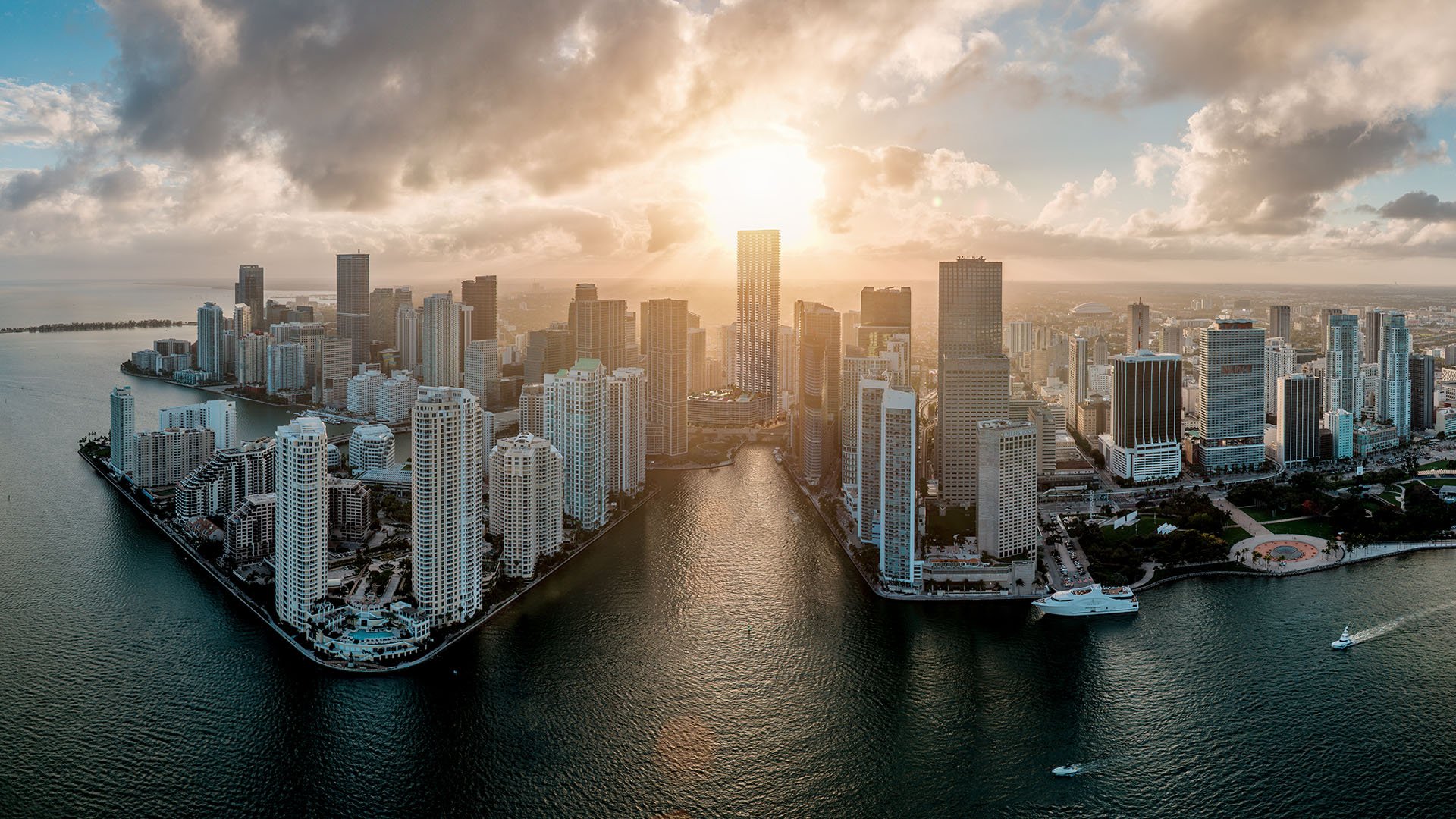
In South Florida, the most coveted views often demand the most disciplined interpretation. Oceanfront living, bayfront serenity, and the energy of a city address each create a distinct relationship with water, weather, insurance, access, and long-term ownership. The central question is not simply whether a property sits in a flood zone. The more sophisticated question is how that designation interacts with the building, the site, the association, the insurance profile, and the way you intend to live.
For a luxury buyer, flood-zone interpretation should function as a decision layer, not a deterrent. A map designation is only a starting point. It does not, on its own, explain finished-floor elevation, garage exposure, mechanical placement, lobby design, drainage behavior, seawall condition, reserve planning, or how a property performs during ordinary heavy rain. Two residences can carry similar map language yet feel very different in practice. One may be engineered around its waterfront condition, while another may place essential functions in more vulnerable areas.
That is where careful comparison becomes essential. Oceanfront, bayfront, and city living should not be weighed only by romance, commute, or amenity program. They should be evaluated through a practical lens that connects beauty with resilience.
Flood-zone language can feel absolute, but buyers should resist treating it as a simple yes-or-no filter. A more useful approach is comparative. What is the property’s relationship to the nearest water body? How is the site graded? Where are parking, storage, electrical systems, and amenity spaces positioned? What documentation is available? How does the insurance picture look today, and how might it influence carrying costs over time?
The most refined purchase process treats these questions as part of the same conversation as architecture, views, privacy, and service. An elegant residence is not only a composition of finishes. It is also a composition of systems.
For an oceanfront buyer, the dream is immediacy: morning light, surf, horizon, and a sensory connection that cannot be replicated inland. The interpretation, however, should focus on how the building manages that exposure. Ask how lower levels are used, whether key systems are protected, how access is maintained, and how the association discusses insurance and maintenance obligations.
For a bayfront buyer, the appeal is often quieter. The view is layered with boats, bridges, sunsets, and skyline. The due diligence should be equally layered. Review dock or seawall responsibilities where applicable, consider elevation context, and understand how the site handles water at the edge. Bayfront living can feel composed and private, but the details still matter.
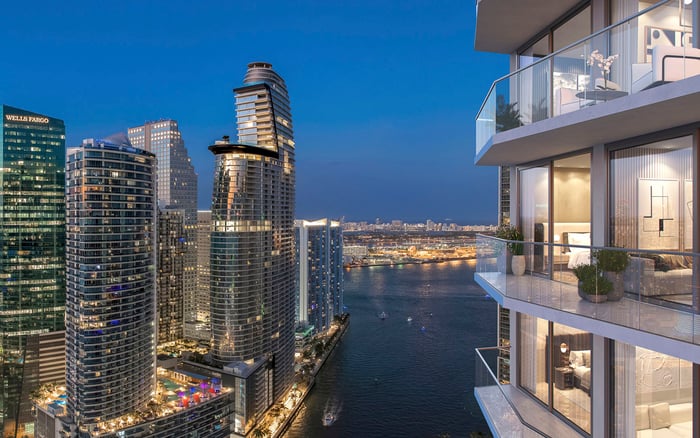
For city living, the flood conversation is sometimes overlooked because the address feels urban rather than coastal. That can be a mistake. In districts such as Brickell or Downtown, water may still shape drainage, parking, access routes, and insurance assumptions. A tower lifestyle can reduce certain concerns at the residence level, yet the garage, entry sequence, street approach, and association budget remain important.
Oceanfront ownership begins with an emotional proposition. Few settings offer the same clarity of identity. The horizon is the amenity. The beach is the foreground. The architecture, at its best, frames water as a daily ritual rather than a special occasion.
When comparing flood-zone interpretation, however, the most compelling oceanfront buildings are not merely those closest to the sand. They are the ones where design and operations acknowledge the setting. Buyers should examine how the building addresses ground-level spaces, what protections exist for essential infrastructure, and how the association communicates maintenance priorities. A refined lobby is important, but so is the logic behind what sits behind the walls and below the amenity deck.
Insurance should also be reviewed early, not late. In a luxury transaction, a premium is more than a number. It is a signal of how risk is being priced and how ownership costs may behave. Buyers should request current information, understand what is covered by the association, and clarify what remains the responsibility of the individual owner. If the residence is intended as a second home, the conversation should include how often someone will be present to monitor conditions and respond to building notices.
The goal is not to diminish the allure of the shoreline. It is to own it with awareness. The best oceanfront decisions combine emotional certainty with documentary calm.
Bayfront living often attracts buyers who want water without the same theatricality of open ocean. The mood is softer. The boats move slowly. The skyline may become part of the view. Waterview value, however, should still be evaluated alongside physical and financial resilience.
A bayfront property may involve details that are easy to overlook during a sunset showing. If there is a seawall, dock, marina component, or waterfront promenade, determine who maintains it and how those responsibilities are budgeted. If lower parking levels or service areas sit near grade, understand how the building manages water-intrusion risk. If access depends on causeways or low-lying approaches, consider not only the residence itself but also the route home.
Bayfront buyers often compare privacy, boating convenience, and proximity to dining or schools. Add a fourth category: operational confidence. The most elegant bayfront choice is the one that balances calm water with clear governance. Minutes from Aventura or close to a cultural district, the question remains consistent: does the property’s documentation support the lifestyle it is selling?
City residences can feel removed from flood concerns because the living space is elevated. A high-floor home may seem psychologically distant from street conditions. Yet flood-zone interpretation in an urban setting is often about the base of the building, not the view from the balcony.
Buyers should examine parking layout, elevator access, generator placement, lobby elevation, loading areas, and how the building communicates during disruptive weather. The residence itself may be high above the street, but daily living begins at arrival. If a garage, valet court, or entry drive is compromised, the experience changes.
In Brickell, Downtown, and other dense districts, the comparison also includes convenience. A city address can place restaurants, offices, wellness, and entertainment within a tight radius. That convenience should be tested against practical questions: how does the street perform in heavy rain, how quickly does the area return to normal, and what systems does the building have in place for continuity?
Investment decisions in urban luxury condos should also consider association strength. A prestigious address is only as durable as its maintenance culture. Review budgets, insurance line items, reserve discussions, and capital planning with the same seriousness given to views and interiors.
A disciplined buyer should request and review the documents that turn flood-zone language into a practical ownership picture. Useful materials may include survey information, elevation-related documentation, insurance summaries, association budgets, reserve materials, recent meeting notes, building rules, maintenance history, and any available engineering or capital-improvement discussions. For single-family homes, the review may also include drainage, grading, roof condition, windows, doors, mechanical locations, and any exterior improvements.
The point is not to become an engineer. It is to know which questions require expert answers before the contract becomes emotional. A beautiful residence can withstand rigorous review. In fact, the best properties usually benefit from it.
Buyers should also distinguish between personal risk tolerance and market perception. Some purchasers are comfortable with waterfront exposure if the building, insurance, and association profile are strong. Others prefer the psychological ease of a more urban or inland address. Neither position is inherently superior. The better choice is the one that aligns with lifestyle, liquidity, carrying costs, and long-term confidence.
Before choosing among oceanfront, bayfront, or city living, imagine the property on an ordinary perfect day and on an inconvenient weather day. On the perfect day, the oceanfront residence may feel unmatched, the bayfront home may feel serene, and the city tower may feel effortlessly connected. On the inconvenient day, different questions emerge. Can you access the building comfortably? Are services available? Is parking protected? Are building communications clear? Are the systems designed for continuity?
This scenario planning is especially useful for buyers who split time among multiple homes. A primary residence requires one standard of daily resilience. A pied-à-terre may require another. A family home with school routines, pets, staff, and frequent guests demands another level of predictability.
The most successful purchase is rarely the one that ignores risk. It is the one that prices, understands, and manages it elegantly.
Is a flood-zone designation enough to reject a property? No. It should prompt deeper review of elevation, insurance, building systems, access, and association planning before a decision is made.
Are oceanfront properties always more complicated to evaluate? They often require closer attention to exposure, lower-level design, and insurance, but each property should be assessed on its own documentation.
What should bayfront buyers review first? Start with site elevation context, waterfront maintenance responsibilities, insurance information, and how parking and mechanical systems are positioned.
Can a high-floor city condo still have flood-related concerns? Yes. The residence may be elevated, but access, parking, lobby areas, utilities, and surrounding streets can still affect daily use.
Why does association strength matter? A well-managed association can make insurance, maintenance, reserves, and capital planning easier to understand before purchase.
Should insurance be reviewed before making an offer? It is wise to review available insurance information early so carrying costs and coverage responsibilities are part of the negotiation.
What is the role of an elevation certificate or survey? These documents can help qualified advisers interpret how the structure sits in relation to grade and mapped flood conditions.
How should second-home buyers think about flood risk? They should consider monitoring, building communication, staff access, and how quickly someone can respond when they are away.
Is city living a lower-maintenance alternative? It can be, but the building’s base, garage, systems, and association planning still deserve careful review.
What is the best way to compare all three lifestyles? Compare not only views and amenities, but also documents, insurance, access, systems, and your personal tolerance for complexity.
For a tailored shortlist and next-step guidance, connect with MILLION.
If branded residences are on your mind — as a home or as an allocation — we would be glad to share what we are seeing, privately.
Begin a quiet conversation