A buyer-focused guide to evaluating cold plunge access in South Florida luxury condominiums, with attention to wellness programming, privacy, ownership documents, and resale practicality.
In South Florida’s luxury condominium market, wellness is no longer a decorative amenity category. For many buyers, the difference between a polished spa rendering and a genuinely useful daily ritual can influence how a residence lives after closing. Cold plunge access sits squarely within that distinction. It may be presented as part of a spa suite, pool deck, fitness recovery area, or private wellness room, but the real question is not whether the words appear in a brochure. The question is how the experience works in practice.
For a buyer comparing New-construction and Resale opportunities, cold plunge access deserves the same discipline applied to parking, views, service, elevator flow, and outdoor space. It is an amenity with operational demands. It requires temperature control, cleaning standards, thoughtful circulation, privacy, and rules that reflect how residents actually use the building.
The most sophisticated buyers do not simply ask, “Does the building have a cold plunge?” They ask who can use it, when it can be used, how it is maintained, where it sits in relation to other amenities, and whether the condominium documents clearly support what is being represented.
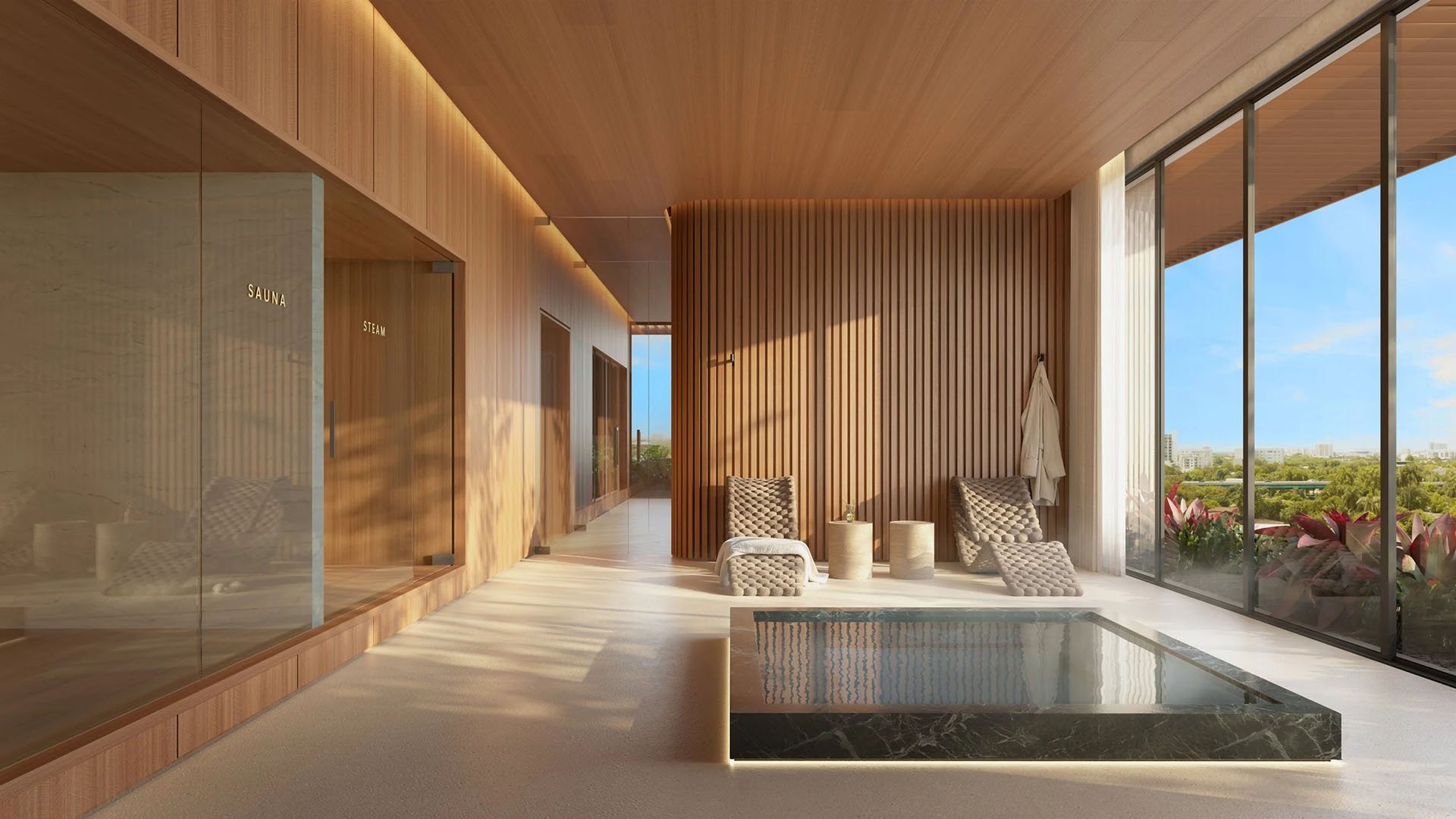
New construction can be compelling because the wellness concept may be integrated into the building from the beginning. The plunge experience may be designed alongside fitness, spa, locker, sauna, steam, treatment, and pool areas rather than added later as a standalone feature. That can create a more coherent wellness journey, particularly when the plunge is positioned as part of a recovery circuit rather than as a decorative basin near the water.
The caution is that pre-completion access is often evaluated before residents have tested the daily flow. Renderings and sales materials can communicate intention, but buyers should focus on the documents and specifications that define what will actually be delivered. Ask whether the cold plunge is part of the common elements, a limited common element, a club-style facility, or a feature tied to a separate membership or hotel component. Each structure can affect access, cost, and future control.
In Brickell, where buyers often weigh service, convenience, and vertical living, the key issue is friction. If the plunge is several steps removed from the gym, locker rooms, or spa circulation, it may be less useful for morning routines. If access requires reservations or staff coordination, it may feel more like an occasional indulgence than a daily practice.
New construction also requires attention to timing. A buyer should understand whether the plunge will be delivered at opening, phased later, or subject to association turnover. If wellness is central to the purchase decision, the feature should be treated as a material component of the lifestyle, not as a vague future enhancement.
Resale condominiums offer one major advantage: the buyer can inspect reality. Instead of imagining how a wellness area will function, the buyer can walk the space, observe maintenance, evaluate noise, check privacy, and ask direct questions about resident use. The difference between a well-run plunge amenity and a neglected one is often visible in the details.
Look at the water clarity, surrounding surfaces, towel service, signage, ventilation, and staff awareness. Ask how often the area is serviced, whether usage is restricted by hours, and whether guests may use it. Review association materials to understand whether the plunge has generated special costs, rule changes, or operational issues.
Resale also reveals culture. Some buildings treat wellness amenities as quiet, spa-like environments. Others function more casually, with poolside energy spilling into recovery areas. Neither is inherently wrong, but the buyer should match the building’s rhythm to personal expectations. A resident seeking meditative recovery after training may not value the same environment as a buyer who prefers a social resort atmosphere.
In Miami Beach and oceanfront settings, privacy deserves particular attention. A cold plunge placed near active outdoor spaces can be visually appealing, but it may not feel restorative if exposed to heavy foot traffic, dining areas, or family pool activity. Conversely, a discreet indoor or semi-private location may offer a more serious wellness experience, even if it photographs less dramatically.
The first question is legal access. Confirm whether all condominium residents have the right to use the cold plunge or whether use is limited by residence type, membership category, building component, or reservation policy. The language in the governing documents matters more than informal assurances.
The second question is practical access. Hours, staffing, sign-in procedures, guest rules, and capacity limits will determine whether the plunge becomes part of daily life. A feature available only during narrow windows may be less valuable than a simpler facility with reliable access.
The third question is adjacency. Cold plunge routines are usually linked to movement, heat, water, and rest. The best amenity layouts make transitions intuitive. Gym to sauna to plunge to shower should feel natural. If a resident must cross public spaces or outdoor decks in a robe, the experience may be less elegant than advertised.
The fourth question is maintenance. Cold water immersion spaces require consistent oversight. Buyers should ask how cleaning is handled, who is responsible for supervision, and how issues are reported. In a new building, this means reviewing proposed operating plans. In a resale building, it means observing actual condition and asking for the association’s current procedures.
The fifth question is cost. Even if the plunge is part of the common amenity package, upkeep is not free. Buyers should understand whether operating expenses are reflected in association dues, wellness fees, club fees, or other charges. The point is not to avoid cost. The point is to know what supports the standard of experience.
Some buyers may prefer a residence with enough interior or terrace space to create a personal recovery ritual, while others prefer a professionally maintained shared spa. The decision depends on lifestyle. Private wellness can offer control, but it also shifts responsibility to the owner. Shared wellness can offer scale, service, and design, but it requires rules and consideration for other residents.
A semi-private environment can be the sweet spot: refined enough to feel calm, but not so exclusive that access becomes complicated. When touring, notice whether the plunge area feels like part of a wellness sequence or an amenity inserted to satisfy a trend. Materials, drainage, seating, lighting, and robe-friendly circulation all matter.
For second-home buyers, simplicity is especially important. If the residence is used seasonally, the most valuable wellness amenity may be one that works effortlessly upon arrival. For full-time residents, the standard is higher: the plunge must hold up to repeated weekly use and fit naturally into the building’s service culture.
Start with your actual routine. If you train daily, the plunge should be close to fitness, showers, and changing areas. If you use wellness as a weekend ritual, ambiance may matter more than immediate adjacency. If guests and family will use the amenity, clarify guest policies early.
Then compare certainty. New construction may offer a more current wellness vision, but buyers should verify delivery, governance, and operating assumptions. Resale may offer less novelty, but it allows direct inspection of performance. The stronger choice is not automatically the newer building. It is the building where access, design, maintenance, and rules align with your life.
Finally, consider resale value without overreaching. Wellness amenities can help distinguish a building, but only when they are credible, maintained, and easy to use. A cold plunge that is beautifully integrated into the resident experience can feel like a meaningful luxury. One that is inconvenient, poorly documented, or rarely maintained can become little more than language in a brochure.
For portfolio shorthand, buyers may group this decision under New-construction, Resale, Pool, Brickell, Miami Beach, and Oceanfront considerations, but the real evaluation is more personal: does the amenity improve the way the residence lives every week?
Is cold plunge access more reliable in new construction or resale condos? Neither category is automatically better. New construction requires careful document review, while resale allows direct inspection of current operations.
What should I ask before relying on a cold plunge amenity? Ask who may use it, when it is open, how it is maintained, whether guests are allowed, and how the feature is described in the governing documents.
Should I trust renderings that show a cold plunge? Renderings can be useful for design intent, but they should not replace specifications, condominium documents, and written access terms.
Why does location within the amenity area matter? A cold plunge works best when it connects naturally to fitness, sauna, steam, showers, lockers, and quiet recovery space.
Can a resale condo offer a better wellness experience than a new building? Yes. A well-maintained resale building with clear rules and a calm wellness culture can outperform a newer concept that is not yet proven.
Are cold plunge amenities usually included in association dues? The cost structure varies by building. Buyers should confirm whether expenses are included in dues or tied to separate wellness, club, or service fees.
How should privacy be evaluated? Walk the space and observe sightlines, traffic, acoustics, and proximity to social areas. A visually striking location is not always the most restorative.
Do guest policies matter for cold plunge access? Yes. Guest rules can affect how the amenity feels day to day, especially in buildings with seasonal owners, visiting family, or active social use.
What is the biggest mistake buyers make? The biggest mistake is treating cold plunge access as a checkbox rather than an operational amenity that depends on rules, upkeep, and design.
How should I compare two otherwise similar condos? Choose the one where wellness access is clearer, easier to use, better maintained, and more consistent with your daily routine.
For a confidential assessment and a building-by-building shortlist, connect with MILLION.
If branded residences are on your mind — as a home or as an allocation — we would be glad to share what we are seeing, privately.
Begin a quiet conversation