A buyer-focused guide to reading lobby scale, proportion, privacy, and arrival sequence as part of resale value in South Florida’s luxury condominium market.
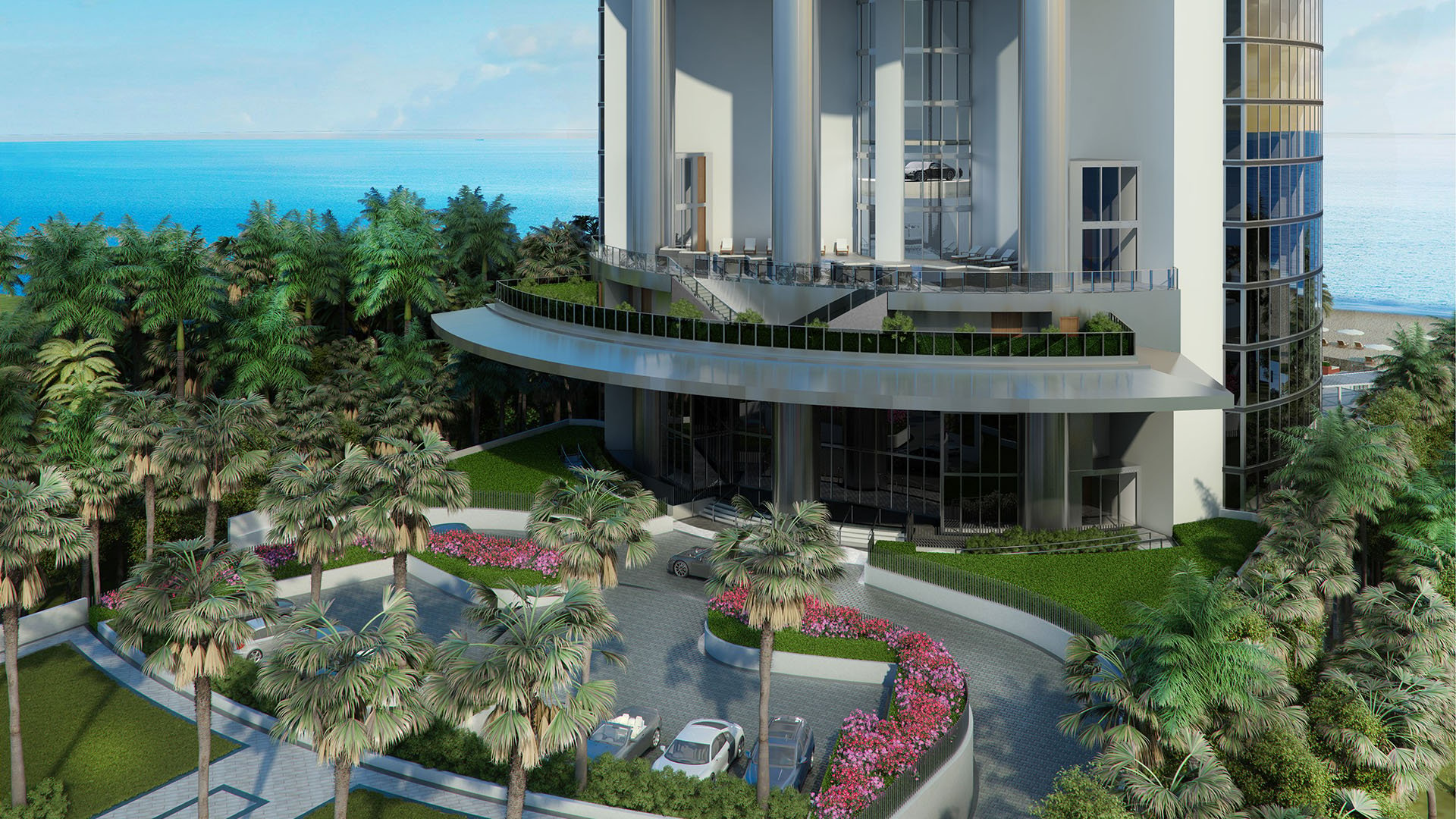
In South Florida luxury real estate, the lobby is more than a passageway. It is the first controlled environment a buyer experiences after valet, security, weather, traffic, and the public realm. When that space has volume-height, breadth, light, and architectural pause-it can shape perception before the elevator doors open.
The key is not size alone. A tall lobby can feel impressive, but it can also feel cold, commercial, or theatrically oversized. A more restrained room can feel richer when its proportions, materials, lighting, and service choreography are handled with discipline. For resale, the question is whether the lobby creates confidence. Does it suggest that the building is well conceived, well maintained, and socially appropriate for the buyer profile it hopes to attract?
That matters in South Florida because arrivals carry unusual weight. Residents return from beaches, boats, restaurants, schools, airports, private clubs, and business districts. Guests arrive for dinner, seasonal stays, or family gatherings. The lobby becomes a daily stage for privacy, convenience, and discretion. When volume supports those qualities, it can become a genuine resale advantage.
Lobby volume is most valuable when it gives the building a sense of ceremony without slowing residents down. A strong arrival should feel calm, legible, and protected. The best spaces allow a resident to move naturally from car to reception to elevator, while still offering a memorable architectural moment.
Buyers should look for proportion before spectacle. A double-height or grander room can help a building feel more established, especially when ceiling height is matched by appropriate width, furniture scale, art placement, and lighting. If the ceiling soars but the seating feels scattered, the desk feels exposed, or the acoustics amplify every conversation, the scale may work against the property.
Natural light can be a major advantage, but only when it is controlled. South Florida brightness is powerful. A luminous lobby can feel resort-like in the best sense, yet glare, heat, and fading materials can erode the impression. The stronger resale signal is a lobby that feels bright, shaded, and comfortable throughout the day.
Material integrity also matters. Stone, wood, metal, plaster, and glass should feel substantial rather than decorative. Buyers may not analyze every finish, but they sense whether a lobby has been designed for longevity. A room with volume exposes details: poor joints, weak lighting, thin furniture, and inconsistent maintenance become more visible at scale.
Not every grand lobby improves resale. Volume becomes a liability when it feels disconnected from the residential experience. If a lobby resembles a hotel convention space, a sales gallery, or a commercial atrium, some buyers will question whether the building prioritizes image over privacy.
Acoustics are often overlooked. A large room with hard surfaces can carry voices, rolling luggage, children, service conversations, and door movement. In a luxury setting, the ability to speak quietly and move discreetly is part of the value. A lobby that looks dramatic but sounds exposed may impress briefly and disappoint daily.
Staff positioning is another clue. The reception or concierge area should be visible enough to reassure, but not so central that every resident interaction becomes public. In resale showings, buyers often notice whether the arrival feels gracious or monitored. The difference is subtle, but important.
Maintenance costs deserve attention as well. Larger spaces require more lighting, climate control, cleaning, furnishing, floral programs, and periodic refreshes. A beautifully maintained lobby can support confidence in the association. A tired grand lobby can do the opposite, because its scale makes deferred upkeep impossible to hide.
In South Florida, lobby volume should be judged by context. A waterfront tower, an urban high-rise, and a boutique building do not need the same arrival sequence. The right question is whether the lobby reinforces the lifestyle the building promises.
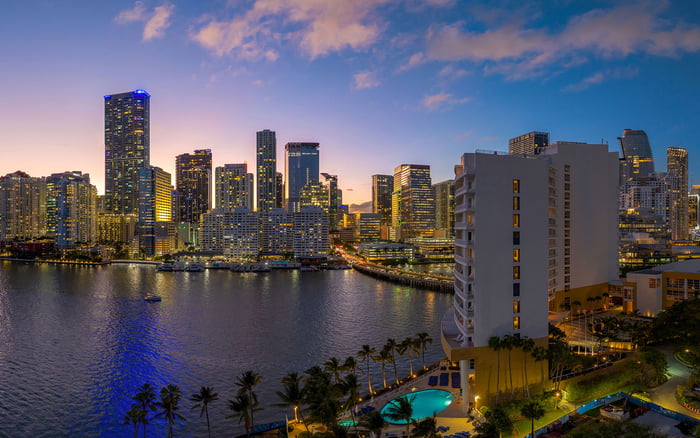
In Brickell, a lobby may need to buffer the pace of the city. The best arrivals create a transition from density to composure. Volume can be helpful here because it gives residents psychological distance from traffic, office towers, restaurants, and nightlife. But if the space feels too public, the advantage weakens.
In Miami Beach, the calculus is different. Buyers may value ease, sunlight, resort sensibility, and a softer relationship between indoor and outdoor life. A grand lobby can work beautifully, but it should still feel residential rather than transient. The most persuasive spaces offer elegance with restraint.
For oceanfront buildings, volume often supports a sense of destination. A strong lobby can frame arrival as part of a larger sequence that may include gardens, terraces, pools, beach access, or water views. Still, the room should not compete with the natural setting. If the beach or bay is the true luxury, the lobby should prepare the eye rather than overwhelm it.
For new construction, buyers should be careful not to confuse renderings with lived performance. Scale may look magnificent in marketing, but the resale test comes later: how the room ages, how staff operates within it, how residents use it, and whether the association maintains the standard. For resale property, the advantage is easier to inspect because the space is already functioning.
In portfolio language, this topic sits directly at the intersection of resale, new construction, Brickell, Miami Beach, oceanfront, and boutique positioning.
The most meaningful lobby advantage is often not the volume itself, but the quality of arrival it enables. Buyers at the top of the market frequently value privacy as much as drama. A building can have a grand room and still protect discretion if circulation is handled correctly.
Look at the path from valet or drop-off to the elevator bank. Are residents crossing guest seating areas unnecessarily? Are package, delivery, and service movements visible from the main arrival? Does the lobby create a calm route for everyday use, not only a photogenic moment for first impressions?
Separate but harmonious circulation can be a quiet resale strength. Luxury buyers often respond to buildings where operational life is intelligently concealed. They may not ask about it directly, but they feel the result. The space seems serene because the building is working in the background.
Seating also deserves attention. A lobby does not need to become a living room, but it should provide places to wait without feeling exposed. Furniture should match the scale of the room and the culture of the building. Too much seating can make a lobby feel like a lounge. Too little can make it feel ceremonial but inhospitable.
A buyer should arrive at different times if possible: morning, late afternoon, and early evening. The same lobby can feel entirely different as light, staffing, resident traffic, and valet activity change. In South Florida, where seasonal rhythms matter, the way a building handles busy periods is particularly revealing.
Pause for sound. Listen for voices, elevator chimes, rolling bags, street noise, and mechanical systems. A high-volume lobby with good acoustic control feels expensive. A high-volume lobby without it can feel restless.
Study the edges of the room. Corners, baseboards, elevator surrounds, planters, and door hardware often reveal maintenance discipline. In a large lobby, the perimeter tells the truth. If the most visible areas are cared for but the edges are neglected, buyers should think carefully about long-term stewardship.
Finally, consider whether the lobby aligns with the unit itself. A dramatic arrival can help support resale for a residence with comparable quality, views, plan efficiency, and finishes. But if the unit experience disappoints, the lobby cannot carry the value alone. It is an amplifier, not a substitute.
Treat lobby volume as a resale advantage when it passes four tests. First, it must feel proportionate to the building’s architecture and resident profile. Second, it must support privacy and efficient movement. Third, it must show durable material quality and active maintenance. Fourth, it must create a memorable emotional transition without feeling theatrical.
When those elements align, lobby volume can help a property stand apart in a crowded market. It gives buyers language for quality before they begin comparing floor plans and views. It reassures guests. It signals stewardship. Most importantly, it makes the act of coming home feel considered.
For South Florida buyers, that feeling is not superficial. It is part of the daily luxury of ownership. The right lobby does not merely impress on arrival. It continues to validate the purchase every time the doors open.
Does a larger lobby always improve resale value? No. Scale helps only when proportion, privacy, acoustics, materials, and maintenance support the experience.
What is the biggest warning sign in a grand lobby? A space that feels public, noisy, or poorly maintained can weaken the premium that volume is meant to create.
Should buyers prioritize lobby volume over views? Usually not. Lobby quality can support resale confidence, but views, floor plan, condition, and building operations remain central.
Is a boutique building at a disadvantage without a grand lobby? Not necessarily. Smaller buildings can create value through intimacy, discretion, and refined materials rather than sheer scale.
How can I judge lobby maintenance quickly? Look at lighting consistency, stone edges, furniture condition, elevator surrounds, fragrance, cleanliness, and staff presentation.
Does lobby design matter more in Brickell? It can be especially important because the lobby creates a transition from urban intensity to private residential calm.
Does an oceanfront building need a dramatic lobby? Not always. The strongest approach often frames the natural setting rather than competing with it.
Can new construction lobby renderings be trusted? They are useful for intent, but resale strength depends on execution, operations, and how the space ages after completion.
What should sellers emphasize about lobby volume? Sellers should highlight privacy, arrival sequence, material quality, staff presence, and the emotional consistency of coming home.
What is the best way to shortlist comparable options for touring? Start with location fit, delivery status, and daily lifestyle priorities, then compare stacks and elevations to validate views and privacy.
For a confidential assessment and a building-by-building shortlist, connect with MILLION.
If branded residences are on your mind — as a home or as an allocation — we would be glad to share what we are seeing, privately.
Begin a quiet conversation