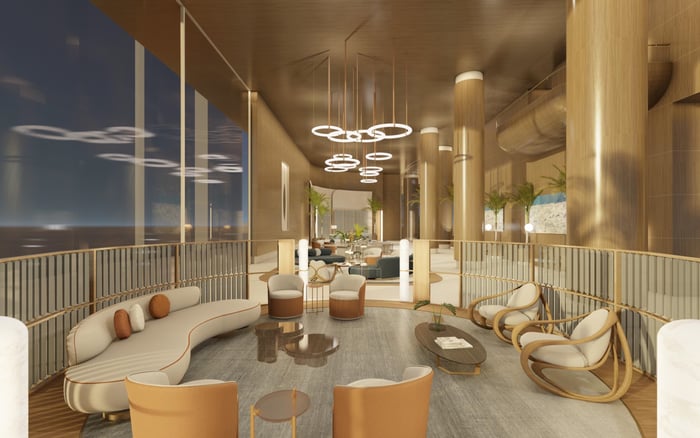
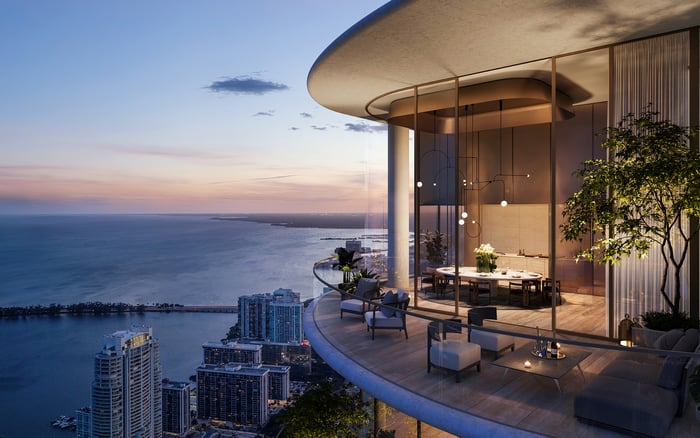
A privacy-first comparison of full-floor and half-floor residences in South Florida, focused on acoustic separation, elevator access, sightlines, terraces, operations, and value.
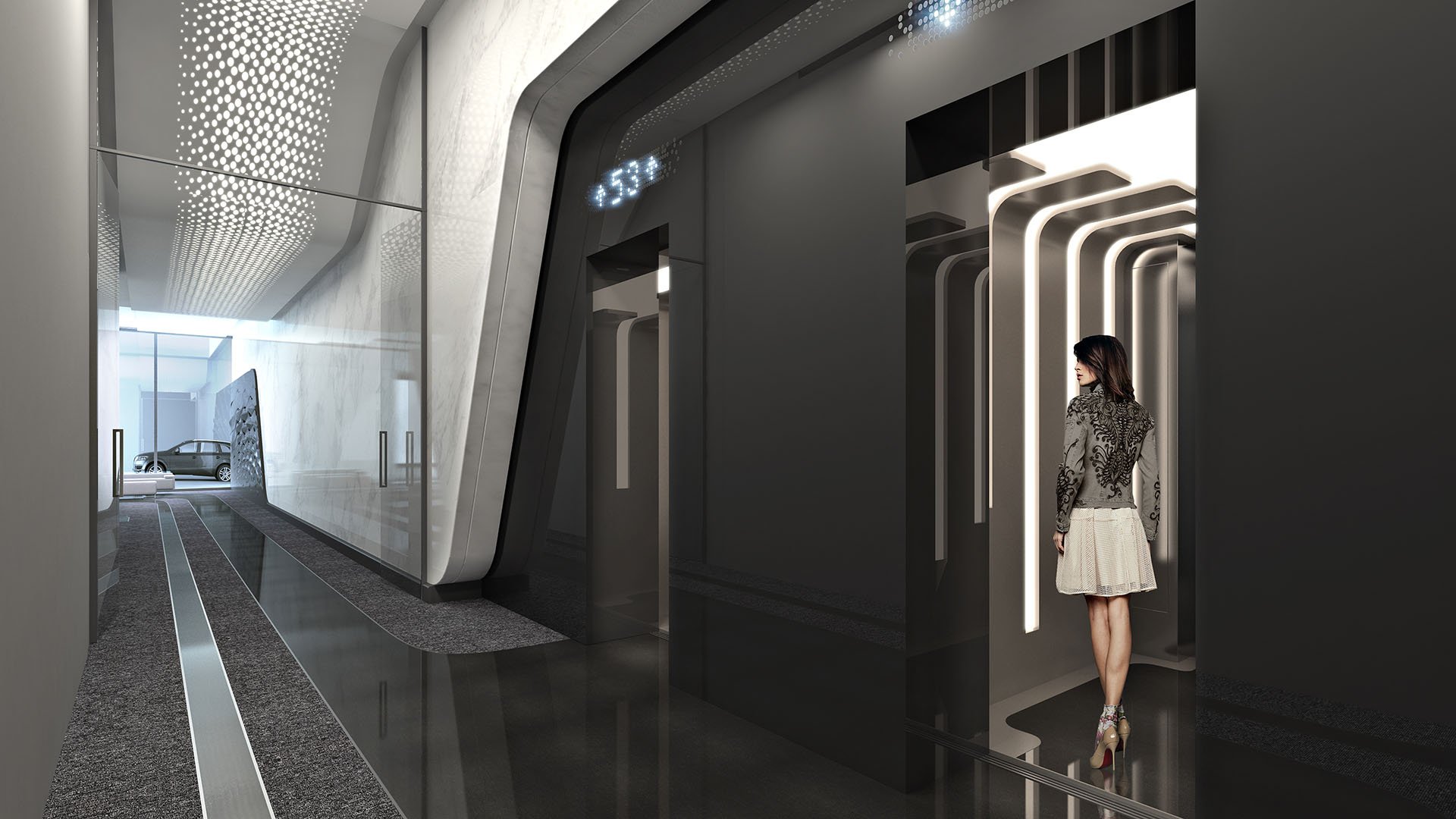
For a privacy-first buyer, the difference between a full-floor residence and a half-floor residence is not simply square footage. It is exposure. Who shares the arrival sequence? Which rooms touch yours? Which sightlines reach the bedroom, terrace, or family room? How much of daily life passes through building staff, elevators, service corridors, amenity spaces, and neighboring glass?
A full-floor residence occupies the entire floor plate, which typically eliminates same-floor residential neighbors and reduces shared-wall exposure. That is its clearest advantage. A half-floor residence usually shares the level with one other home, so the party wall, elevator vestibule, and service access points become the decisive variables. The more privacy-sensitive the buyer, the more the analysis should move from brochure language to architectural inspection.
In dense South Florida markets such as Brickell, Miami Beach, Sunny Isles, Surfside, and Fisher Island, privacy extends well beyond the next-door neighbor. Boats, beaches, neighboring towers, amenity decks, and opposite-facing glass can all become part of the privacy envelope.
The strongest structural advantage of a full-floor residence is the reduction of direct acoustic transfer points from adjacent residences. With no same-floor neighbor, there is no conventional party wall between two homes on that level. That can reduce the most obvious forms of lateral noise transfer: impact, music, voices, and lifestyle sound moving from one residence to another.
The second advantage is control over the plan. A full-floor layout generally allows more flexibility to separate public entertaining areas from bedrooms, family rooms, staff areas, and service functions. For owners who entertain formally, host family for extended stays, or maintain staff support, that separation can be as important as square footage itself.
Full-floor homes often have more perimeter exposure and more exterior walls. This can strengthen the sense of separation from neighbors, especially when the floor plate creates multiple orientations and deeper setbacks. Yet it also introduces a different privacy challenge: glass. Floor-to-ceiling windows deliver the views that define South Florida luxury, but they can also create exposure from nearby towers, the water, the beach, or an opposite amenity deck.
That is why full-floor privacy should never be assumed. A poorly sited full-floor home with exposed glass and shared circulation can feel less private than a carefully planned half-floor home in a lower-density building.
Half-floor residences can be highly private when the building is designed and operated with restraint. The key is to examine every shared condition. The party wall matters, but so does what sits on both sides of it. Bedroom-to-bedroom adjacency, living-room-to-bedroom adjacency, and service-to-bedroom adjacency create very different privacy profiles.
A half-floor home may offer better value when it combines strong acoustic construction, thoughtful elevator separation, limited unit density, and carefully planned sightlines. In a building where the second residence on the floor is buffered by service areas, closets, baths, or secondary spaces, the lived experience may be much more private than the floor count suggests.
The challenge is that half-floor residences have less margin for error. Shared walls and building systems can constrain plumbing, mechanical, service, and reconfiguration options. A buyer who plans to alter room placement for privacy should confirm whether the building systems allow meaningful change before assuming the plan can be remade.
When comparing urban offerings such as The Residences at 1428 Brickell, the right question is not merely whether the home is full-floor or half-floor. It is whether the residence protects arrival, sound, views, service movement, and daily routines with equal discipline.
Private or semi-private elevator access is one of the most important differentiators in this comparison. It reduces hallway encounters and helps control who arrives directly outside the residence. For many ultra-prime buyers, the elevator sequence is the first true test of privacy.
A private-elevator-style arrival can make a half-floor residence feel more discreet, particularly if the vestibule is well separated from the neighboring home. Conversely, a full-floor residence loses some of its advantage if visitors, deliveries, staff, or service personnel pass through shared areas with weak access control.
Ultra-luxury buildings such as One Thousand Museum Downtown Miami have helped reinforce vertical circulation as a privacy amenity. The lesson is broader than any single tower: elevator programming, destination control, service routing, and staff protocols matter as much as the floor plate itself.
A residence can look secluded and still underperform acoustically. Sound can travel through party walls, ceilings, floors, mechanical systems, plumbing chases, and doors. Building-code sound ratings create a baseline, but privacy-sensitive buyers should not assume baseline compliance equals luxury-level acoustic separation.
For half-floor residences, ask what rooms sit on both sides of the shared wall. Also ask how the wall was built, whether bedrooms are isolated from entertaining spaces, and how mechanical equipment is placed. For full-floor residences, do not ignore vertical sound from above or below. Impact noise from hard flooring, amenity levels, or mechanical areas can still affect the experience.
Privacy-first buyers should evaluate the home at different times of day if possible. Morning staff movement, evening entertaining, elevator use, and weekend amenity activity can reveal conditions that are invisible during a quiet showing.
Terrace privacy is often misunderstood. Private terraces and balconies can create a buffer from interior life, and full-floor residences often provide more outdoor area and greater control over outdoor sightlines. Still, exterior privacy depends on orientation, neighboring towers, balcony geometry, and the angle of exposure from the water.
A half-floor residence can lose privacy if its terrace is directly adjacent to the neighboring unit’s terrace. It can also lose privacy if the outdoor space faces another tower at close range. In waterfront settings, the view outward is only half the equation. Buyers should also consider who can see inward from boats, beaches, pool decks, restaurants, and marinas.
This is especially relevant in glass-forward coastal markets. Residences near the ocean, bay, or Intracoastal may feel open and serene during the day, then become more visually exposed at night when interiors are illuminated. Window treatments, lighting design, balcony depth, landscaping, and room placement all become part of the privacy strategy.
For Surfside buyers comparing low-density coastal living, The Delmore Surfside is the type of setting where terrace orientation, neighboring sightlines, and arrival discretion should be read together rather than separately.
Even the most private residence shares a building. Pools, gyms, spas, valet areas, package rooms, lobbies, elevators, and service corridors can dilute the privacy advantage of both full-floor and half-floor ownership unless the building provides a more controlled operating environment.
For privacy-first buyers, operations matter as much as architecture. Visitor screening, staff training, package handling, camera policies, elevator access, service scheduling, and guest protocols determine how private the building feels day to day. A quiet lobby, restrained valet operation, and disciplined staff culture can be more meaningful than a larger floor plate in a poorly managed tower.
In resort-style or branded environments such as The Ritz-Carlton Residences® Sunny Isles, buyers should look closely at how residential privacy is separated from shared amenities, guest movement, and service functions. The same principle applies across the market: privacy is an operating system, not just a floor plan.
If privacy is the priority, a full-floor residence usually deserves first consideration because it removes the most obvious same-floor neighbor issue. It can also justify a pricing premium when privacy, layout control, private access, and scarcity are the main purchase drivers.
But the decision should be made building by building. A well-designed half-floor residence can outperform a poorly sited full-floor residence if it has better acoustic separation, stronger elevator controls, more discreet service access, and fewer exposed sightlines. The smartest comparison is not full-floor versus half-floor in theory. It is this residence, on this level, in this building, with this operating culture.
Penthouse buyers should be especially rigorous. Height can improve separation, but it can also intensify wind exposure, glass visibility, elevator dependency, and amenity or mechanical adjacency. The most private home is the one whose architecture, operations, and orientation all work in the same direction.
Is a full-floor residence always more private than a half-floor residence? Usually it has the structural advantage because it eliminates same-floor neighbors, but the final answer depends on sightlines, elevators, acoustics, and operations.
What is the main privacy weakness of a half-floor residence? The shared party wall is the primary concern, followed by elevator vestibule design, service access, and terrace adjacency.
Can a half-floor residence feel as private as a full-floor residence? Yes, if the building has strong acoustic separation, private or semi-private elevator access, low density, and carefully protected views.
Should I prioritize sound privacy or visual privacy? Both should be evaluated separately because a home can look visually secluded while still transmitting noise through walls, floors, or systems.
Why does elevator access matter so much? It controls who arrives near the residence and reduces casual hallway encounters, which can materially affect daily privacy.
Do floor-to-ceiling windows reduce privacy? They can, especially near neighboring towers, beaches, boats, or amenity decks, so window treatments and lighting design matter.
Are terraces always a privacy advantage? Not always. A terrace can buffer the interior, but it can also expose the home if it faces another unit, tower, or public waterfront area.
Do building-code sound standards guarantee luxury privacy? No. They provide a baseline, but privacy-focused buyers should ask for details beyond minimum compliance.
Is a full-floor residence worth the premium? It can be when privacy, scarcity, layout control, and private access are the primary reasons for purchasing.
What should I inspect before choosing between the two? Count same-floor neighbors, review elevator access, inspect party-wall adjacencies, test sightlines, and study staff and guest protocols.
For a tailored shortlist and next-step guidance, connect with MILLION.
If branded residences are on your mind — as a home or as an allocation — we would be glad to share what we are seeing, privately.
Begin a quiet conversation