A discreet buyer’s guide to evaluating private 5G-style networks in South Florida luxury condos, with a focus on privacy, governance, amenity access, smart-home boundaries, and resale-minded diligence.
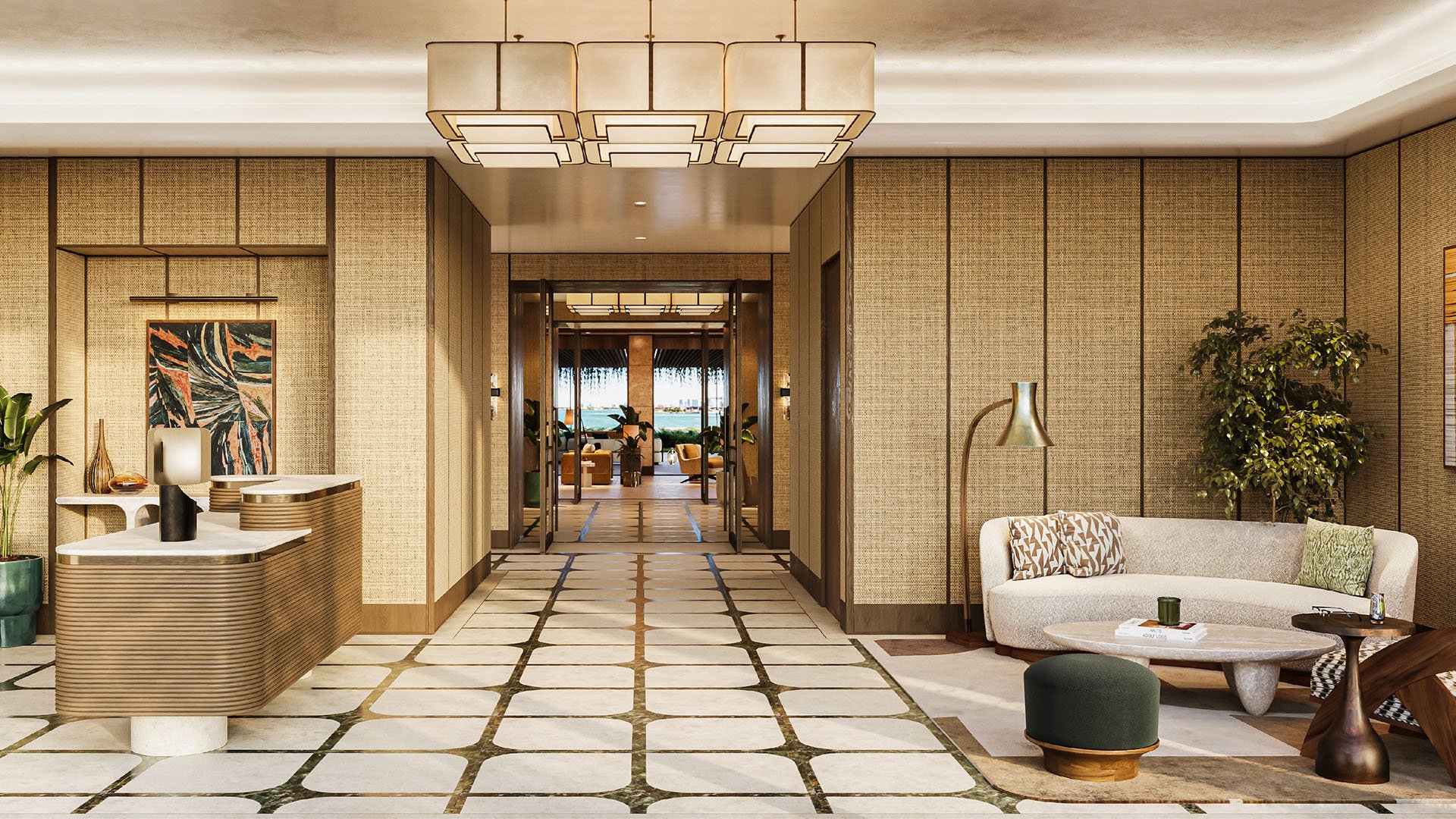
In South Florida’s most considered condominium purchases, privacy has traditionally meant elevator access, staff discretion, sightlines, floor height, and the careful separation of public and private space. Today, it also includes the invisible systems running through a residence: wireless networks, smart-home platforms, mobile coverage, amenity apps, access control, cameras, package systems, guest registration, and building communications.
For a luxury buyer, a private 5G-style network should not be treated as a marketing flourish. It is part of the home’s operational fabric. The right system can make a residence feel seamless, with stronger connectivity in amenity areas, more reliable service in garages and elevators, and better support for connected devices. The wrong governance structure can raise questions about data, vendor access, resident permissions, upgrade obligations, and what happens when the technology becomes dated.
This checklist is not about becoming a network engineer. It is about asking elegant, practical questions before signing, especially in markets where buyers expect residences to function as private offices, wellness retreats, entertainment settings, and secure family bases.
The phrase “private 5G-style network” can mean different things in a residential setting. It may refer to dedicated wireless infrastructure, carrier-enhanced coverage, private cellular capabilities, managed Wi-Fi, distributed antenna systems, or a hybrid approach designed to improve connectivity throughout the property.
A buyer’s first question should be simple: what exactly is being installed, who operates it, and what does the resident control? A polished sales presentation may emphasize speed, convenience, and future readiness, but privacy depends on the structure behind those promises. Ask whether the system is building-wide, residence-specific, amenity-specific, or layered across multiple environments.
The distinction matters. A system serving the lobby, spa, pool, marina lounge, garage, and elevators carries a different privacy profile than a network fully contained inside a single residence. The more shared the infrastructure, the more important it is to understand access rights, logs, maintenance procedures, and third-party involvement.
Begin with ownership. Ask whether the network infrastructure is owned by the condominium association, a developer entity, a carrier, a technology vendor, or another operating party. Ownership often influences upgrade decisions, service continuity, cost allocation, and resident recourse if expectations are not met.
Next, ask who can access the system. That includes building management, outside technicians, contracted technology teams, security personnel, and any platform administrators. A luxury buyer should understand whether access is role-based, logged, temporary, or broadly available.
Then examine data practices. Ask what information is collected when residents, guests, staff, and devices connect. At a minimum, buyers should seek clarity on device identifiers, usage logs, location-related information within the property, guest credentials, and retention periods. The goal is not to assume misuse. The goal is to confirm that the building has a disciplined privacy posture equal to the value of the residences.
Finally, ask how residents opt in or opt out. A truly sophisticated building should be able to explain which systems are mandatory for life safety, access, or core operations, and which systems are optional lifestyle conveniences.
The most appealing technology in a condominium often appears in the amenities. A resident may use one credential to access a wellness suite, reserve a cabana, call a private elevator, enter a club room, admit a trainer, and connect to high-speed service by the pool. Convenience is seductive, especially when it feels frictionless.
But amenity convenience should be separated from residence privacy. Ask whether guest access to amenities creates a digital trail connected to the owner. Ask whether household staff, visiting chefs, drivers, security teams, and extended family members receive separate credentials. Ask whether those credentials can be time-limited, revoked instantly, and reviewed by the owner.
In buildings where the buyer values discretion, the question is not only “does it work?” It is “does it reveal more than it should?” A well-designed system allows the home to feel effortless without turning every movement into an unnecessary record.
Inside the residence, privacy questions become more personal. Lighting, climate, shades, audio, entry locks, leak detection, appliance monitoring, and wellness features may all be connected. These systems can be exceptionally useful, but they should have boundaries.
Ask whether the in-residence smart-home system is separate from the building network. Ask whether the owner can choose independent passwords, independent routers, independent device naming, and independent service providers. Buyers planning to run private offices, art storage monitoring, family security systems, or staff quarters should be especially attentive to segmentation.
The strongest approach is layered. Building systems handle building functions. Residence systems handle residence functions. Personal devices remain under the owner’s control. Guest access is temporary. Staff access is limited. Critical systems are documented. Nothing important depends on a password only one vendor understands.
Network privacy should appear in more than a sales conversation. It belongs in the document review, legal questions, association budget review, and final walkthrough. Buyers should ask where technology obligations are described, how ongoing costs are allocated, and whether future upgrades may require assessments or changes in service.
During a walkthrough, ask to see the locations of network closets, low-voltage panels, equipment cabinets, and access points within the residence. Ask what is concealed, what is resident-owned, and what may be entered by building personnel. In a penthouse or highly customized residence, this is particularly important because bespoke layouts can complicate technology maintenance.
Across South Florida, the setting may vary from waterfront tower to urban high-rise to island enclave, but the privacy questions remain consistent. Buyers should seek clear answers about control, access, accountability, and how the system will be governed after delivery.
A luxury condominium should feel permanent, but technology ages quickly. Buyers should ask how software updates are handled, who approves them, and whether updates can change privacy settings. They should also ask what happens if a vendor relationship ends, a platform is discontinued, or a system becomes incompatible with newer devices.
The most resilient buildings document their technology stack clearly. They maintain administrative continuity, avoid overreliance on a single individual, and provide residents with a clean process for service requests. For buyers, the issue is not merely whether the network is impressive at delivery. It is whether it will remain governable five years later.
Also ask about outages. If a private network fails, what still works? Elevators, access control, emergency communications, garage entry, residence locks, and life-safety systems should have appropriate continuity planning. A beautiful system is not truly luxurious if it becomes fragile under stress.
The highest standard is not secrecy for its own sake. It is quiet control. A buyer should be able to understand what connects, who manages it, what is recorded, how long records are kept, and how access is revoked. The answers should be calm, specific, and documented.
For South Florida’s ultra-premium buyer, connectivity is now part of the residence’s architecture. It shapes how the home works, how staff circulate, how guests arrive, how business is conducted, and how private life remains private. The best buildings will not force buyers to choose between modern convenience and discretion. They will design both into the experience.
What is a private 5G-style network in a condo? It is a residential connectivity system designed to improve wireless performance, often through dedicated or managed infrastructure. The exact structure varies, so buyers should ask for a plain-language explanation.
Should buyers treat network privacy as a contract issue? Yes. Privacy, access, maintenance rights, and ongoing costs should be reviewed as part of the broader condo-document and legal diligence process.
What is the first question to ask a sales team? Ask who owns and operates the network infrastructure. That answer frames future questions about control, cost, upgrades, and accountability.
Can a building see what devices are connected? It depends on the system design and management permissions. Buyers should ask what device information is collected, who can view it, and how long it is retained.
Is amenity connectivity different from in-residence connectivity? Yes. Amenity systems are often shared environments, while in-residence systems should allow stronger owner control and clearer boundaries.
Should household staff have separate network credentials? Ideally, yes. Separate credentials make it easier to limit access, revoke permissions, and preserve a clean privacy structure.
What should be checked during the walkthrough? Buyers should identify equipment locations, access panels, routers, low-voltage closets, and any areas building personnel may need to enter.
Do smart-home systems create privacy concerns? They can if controls, passwords, vendors, and data practices are unclear. A segmented, well-documented system reduces unnecessary exposure.
What happens if the technology vendor changes? Buyers should ask whether the building has continuity plans, documentation, and administrative controls that survive a vendor transition.
Is better connectivity always better privacy? Not automatically. The best outcome combines performance with clear governance, limited access, transparent data practices, and owner control.
When you're ready to tour or underwrite the options, connect with MILLION.
If branded residences are on your mind — as a home or as an allocation — we would be glad to share what we are seeing, privately.
Begin a quiet conversation