A discreet buyer’s guide to narrowing South Florida luxury residences by privacy, arrival sequence, neighborhood rhythm, service culture, and long-term daily comfort rather than size alone.
In South Florida’s upper tier, square footage is often the easiest number to compare and the least useful place to start. A large residence can still feel exposed if the elevator, lobby, terrace, parking, staff route, or neighboring sightline works against discretion. Conversely, a more measured floor plan can live with remarkable ease when the arrival is calm, the building culture is quiet, and the neighborhood rhythm supports a low-profile life.
A privacy-first short list should begin with a different question: where can a buyer move naturally, host selectively, work comfortably, and leave without becoming part of the scenery? That standard shifts the search from a tour of impressive rooms to an assessment of control. Control over approach. Control over visibility. Control over sound. Control over who shares the building, the amenities, the marina, the beach path, and the elevator sequence.
The strongest short lists in South Florida often include fewer properties, not more. They are not built by chasing every trophy address. They are built by defining what privacy means for a specific household, then eliminating anything that would require compromise in daily life.
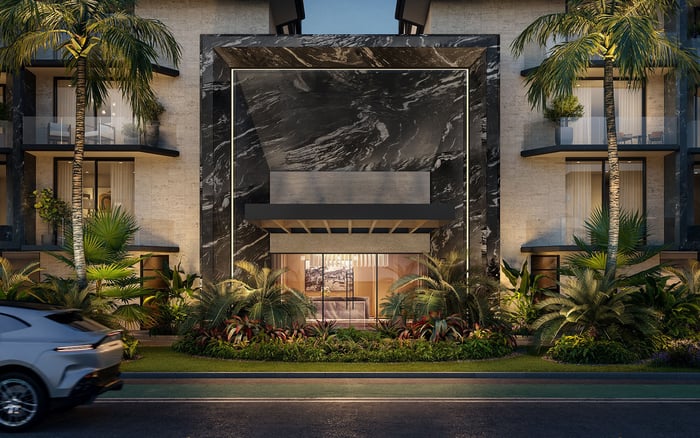
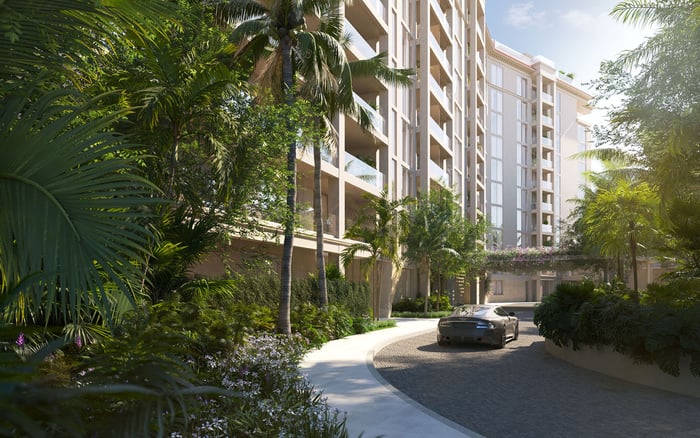
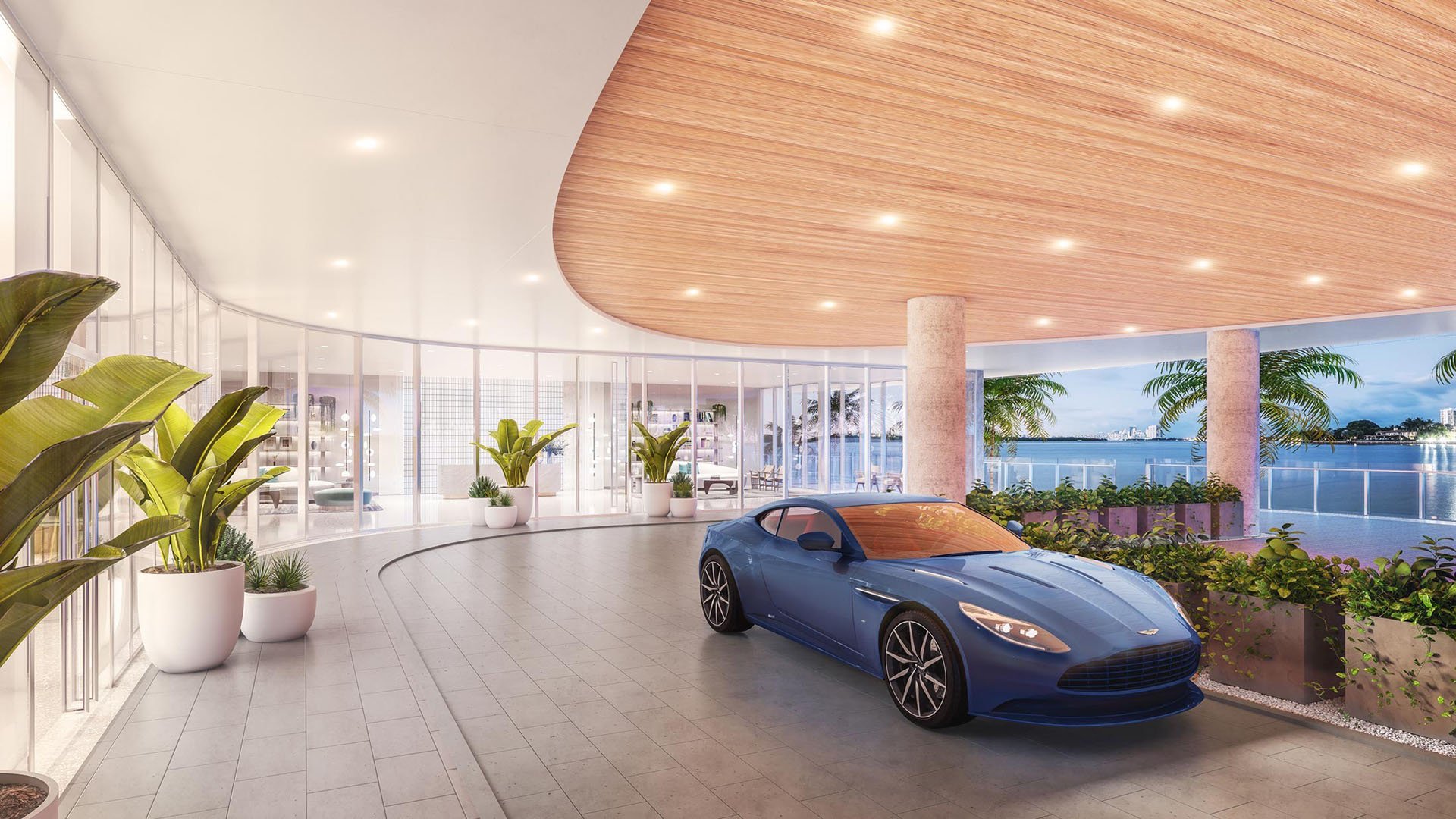
Privacy begins before the front door. For many buyers, the most revealing part of a property tour is the first three minutes: the approach, the drop-off, the parking logic, the lobby volume, and the path from car to residence. If those moments feel public, the rest of the home must work harder to compensate.
A discreet arrival does not always mean hidden. It means composed. It should allow residents and guests to enter without unnecessary friction, crowding, or performance. Buyers who travel frequently, employ staff, host family, or maintain a public profile should pay close attention to whether the building separates resident movement from social movement. The question is not simply whether service exists. It is whether service can happen quietly.
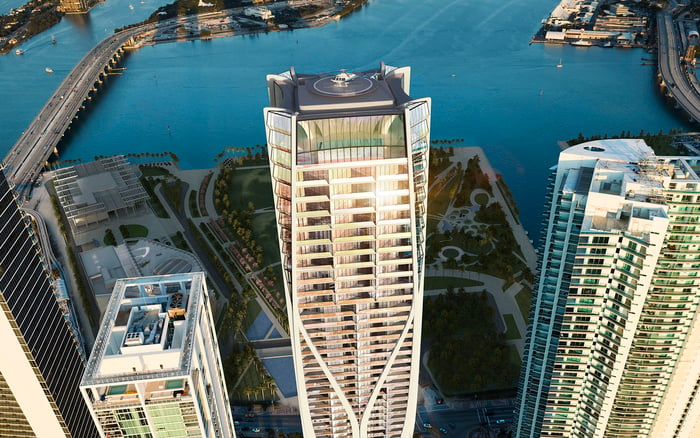
In an urban setting such as Brickell, the evaluation becomes especially nuanced. Buyers may want proximity, skyline energy, and a polished residential environment without feeling absorbed by the city’s constant pace. A residence such as The Residences at 1428 Brickell can be part of a privacy discussion not because the neighborhood is silent, but because the buyer is weighing how vertical living, access, and private residential routines can be reconciled in a central location.
South Florida offers many versions of discretion. Island settings, beach enclaves, low-rise residential pockets, historic neighborhoods, and urban towers all serve different temperaments. The goal is not to find the most secluded address in the abstract. It is to find the address whose public-private balance suits the buyer’s life.
For some, island living is the clearest answer. It creates an immediate psychological threshold between the outside world and home. For others, that threshold may feel too socially specific or too removed from everyday restaurants, offices, schools, clubs, or airport patterns. A buyer considering The Residences at Six Fisher Island is not merely comparing architecture or views. The more important question is whether the island framework matches the way the household actually moves.
Surfside offers another kind of privacy, defined by residential scale and a quieter beach-town cadence. In a setting like The Delmore Surfside, the short-list question becomes whether the buyer values a coastal address that feels removed from the busiest resort corridors while still remaining connected to the broader Miami Beach and Bal Harbour universe.
Boutique does not automatically mean private. A smaller building can still feel busy if amenities are overprogrammed, staff turnover is high, or short-term social patterns dominate the lobby. Yet boutique scale is often where privacy-led buyers find the right baseline, especially when residents share similar expectations around quiet, security, guest flow, and service etiquette.
The key is to evaluate culture as carefully as construction. Who is likely to use the amenities during the hours that matter to you? Does the pool feel like a resort scene or a residential extension of home? Are guest policies aligned with your comfort? Does the elevator system create a sense of calm, or does every departure feel communal?
Bay Harbor Islands can be compelling for buyers who want a residential pocket with water, proximity, and a more intimate neighborhood feel. A project such as The Well Bay Harbor Islands may enter the conversation for buyers comparing wellness-oriented living with the desire for a more measured setting. The privacy lens should remain practical: how the building feels at breakfast, after school, before a flight, and during a quiet weekend at home.
Terraces are central to South Florida living, but they are also where privacy can unravel. A wide outdoor room is less valuable if it faces directly into neighboring residences, a public pool deck, a busy waterfront corridor, or a nearby balcony stack. The best outdoor space is not always the largest. It is the one that can be used without self-consciousness.
During a showing, buyers should stand in multiple positions: seated, dining, at the railing, and inside with doors open. Sightlines change depending on posture, time of day, and lighting. Evening privacy is particularly important because interiors become more visible when lights are on. A residence that feels secluded at noon may feel exposed after sunset.
Coconut Grove and similar leafy neighborhoods can offer a softer privacy profile, where mature surroundings and a village rhythm shape the experience as much as the residence itself. In that context, Four Seasons Residences Coconut Grove can be considered alongside more urban or beachfront options to understand which version of outdoor privacy feels most natural.
Security and privacy overlap, but they are not the same. Security is about protection, protocols, and access control. Serenity is about how the property feels when those systems recede into the background. The best residences make security feel effortless rather than theatrical.
A buyer should ask how deliveries are handled, where vendors wait, how guests are announced, how staff enter, and whether building personnel understand discretion as part of service. This is particularly important for households with children, art, visible business interests, public-facing careers, or extended family visits.
A gated community may appeal to some buyers, but gates alone do not guarantee a private life. The same is true of a doorman, a guarded entry, or a private elevator. Each feature should be judged by how it functions in a normal week, not by how it reads on a brochure.
A privacy-first tour should rarely be sprawling. Too many showings can blur the details that matter most. Instead, create a matrix with five categories: arrival, exposure, sound, building culture, and daily route. Score each property immediately after the visit, while the sensory experience is still fresh.
Ask the same questions each time. Could you arrive after a long flight and feel unobserved? Could family visit without turning the residence into an event? Could staff support the home without crossing the main living path? Could you use the terrace in the evening? Could you leave for dinner without the entire lobby knowing your plans?
The best short list may contain one island option, one beachfront option, one neighborhood-driven option, and one urban option. That structure prevents the search from becoming repetitive. It also reveals what the buyer truly values. Often, the winner is not the largest residence. It is the one with the fewest daily intrusions.
Should privacy matter more than square footage in South Florida? For many luxury buyers, yes. Space matters, but privacy determines whether the home feels restful and usable every day.
What is the first thing to evaluate during a tour? Begin with the arrival sequence. The drive-up, lobby, parking, and elevator path reveal how exposed daily life may feel.
Is a private elevator always enough? No. It helps, but buyers should also examine guest flow, staff routes, deliveries, terraces, and neighboring sightlines.
Are smaller buildings always more private? Not automatically. A smaller building can be excellent, but only if the resident culture and operations support discretion.
How should buyers compare Brickell with quieter enclaves? Compare lifestyle rhythm rather than prestige alone. Brickell offers centrality, while quieter settings may offer a softer daily pace.
Why are terrace sightlines so important? Outdoor space is only valuable if it can be used comfortably. Privacy can change dramatically between daytime and evening.
Should public-profile buyers avoid busy neighborhoods? Not necessarily. The right building operations, access sequence, and residence orientation can make an urban address feel controlled.
What should families prioritize in a privacy-led search? Families should focus on secure arrivals, guest management, staff logistics, quiet amenities, and comfortable everyday routes.
How many properties should be on the final short list? A focused list of three to five serious contenders is often more useful than a broad tour of impressive but mismatched options.
What is the best way to shortlist comparable options for touring? Start with location fit, delivery status, and daily lifestyle priorities, then compare stacks and elevations to validate views and privacy.
For a discreet conversation and a curated building-by-building shortlist, connect with MILLION.
If branded residences are on your mind — as a home or as an allocation — we would be glad to share what we are seeing, privately.
Begin a quiet conversation