A disciplined pre-closing audit should connect marine engineering, permit history, dredging responsibility, title documents, elevation data, and binding insurance terms before a waterfront buyer releases contingencies.
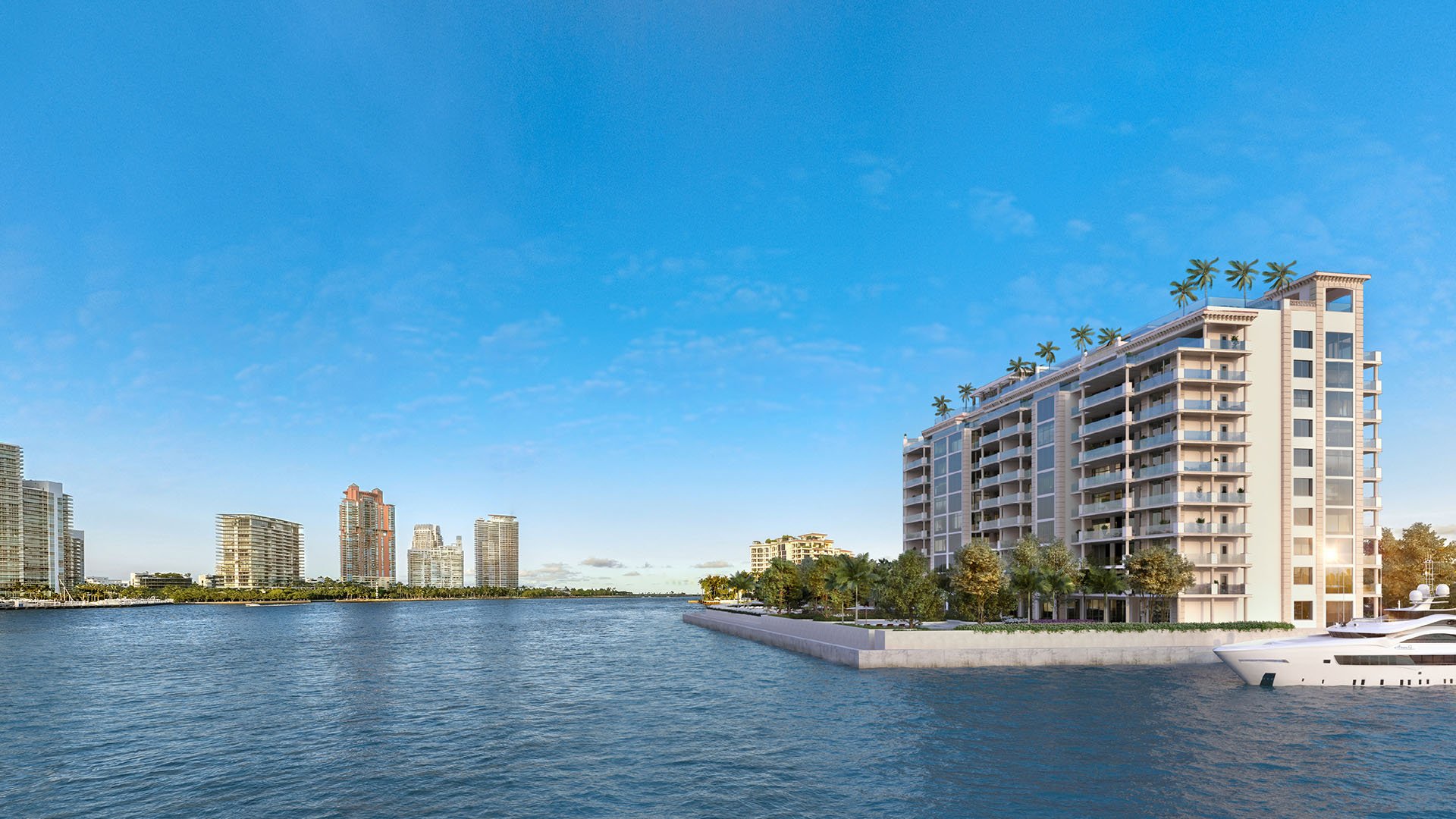
A Miami Beach waterfront residence cannot be fully understood through its interiors, architecture, or view corridor alone. The shoreline system beneath that view may carry structural, regulatory, financial, and insurance consequences that survive closing. A disciplined acquisition therefore requires two parallel reviews: one of the residence and another of the water's edge.
Miami Beach requires owners to maintain seawalls, bulkheads, living shorelines, and other shoreline protections in good repair. A structure may be presumed in disrepair when it permits upland erosion, allows material to pass through the barrier, or lets tidal water flow onto neighboring property or a public right-of-way. With approximately 53 miles of seawalls in the city, this is a central ownership issue, not a remote technicality.
This discipline applies across waterfront property types. A buyer evaluating estates and single-family inventory may face direct responsibility, while a condominium buyer may encounter association control, shared reserves, or assessments. For a residence at The Ritz-Carlton Residences® Miami Beach, as with any condominium, the analysis should extend beyond the unit to the governing documents, common elements, permits, and financial planning affecting shoreline assets.
The water view is an amenity, but the water's edge is infrastructure.
A general property inspection is no substitute for a dedicated assessment by a marine contractor or structural engineer. The scope should address the seawall cap, batter piles, tie-backs, joints, toe conditions, drainage, and soil stability behind the wall. The professional should examine cracking, movement, settlement, washout, voids, corrosion, displaced materials, and evidence of water or soil passing through the system.
The written report should identify defects, estimate remaining service life, recommend repair or replacement, and provide a defensible cost framework. Florida coastal-design rules require toe-scour protection for seawalls and bulkheads to satisfy geotechnical and hydraulic criteria. Riprap can also be highly technical. For a qualifying revetment, the outer layer is subject to requirements that include rocks at least two feet in diameter.
Engineering conclusions should be reconciled with visible conditions and seller disclosures. Miami Beach may treat limited work, such as riprap replacement, as exempt when an engineering report confirms that the seawall itself is structurally sound. That distinction makes the report important not only for budgeting, but also for defining the likely permitting path.
The file review should encompass the seawall, dock, boat lift, riprap, dredging, and every other shoreline alteration. Identify open, expired, unresolved, or missing permits, then compare approved plans and final inspections with current conditions. Prior emergency armoring or post-storm work also warrants attention because temporary measures seaward of the Coastal Construction Control Line are governed through a specialized process.
Seawall construction waterward of that line generally requires a state coastal-construction permit. Restoration exemptions are conditional and can turn on submerged lands, project location, navigation, flood control, and water quality. Work in an artificially created waterway may follow criteria different from those applying to a natural bay, estuary, or lagoon. An exemption should never be assumed merely because a wall already exists.
The municipal search should include citations, notices, liens, and open code cases. Structurally deficient walls may also enter Florida Building Code enforcement. Under the city's seawall ordinance, fines can reach $500 per day. After citation, an owner must demonstrate progress within 60 days, submit a permit application within six months, and complete the required work within 730 days.
For condominium due diligence at Apogee South Beach or The Perigon Miami Beach, buyers should request association-level records rather than rely solely on a unit title search. Minutes, engineering materials, reserve information, insurance correspondence, contracts, and special-assessment history can reveal obligations not visible within the residence.
Water depth and navigability can depend on maintenance beyond the parcel. Identify every dredging permit affecting the property, canal, basin, marina, homeowners association, or shared facility. Confirm the permit holder, remaining term, disposal obligations, scheduled maintenance, and cost-sharing provisions. Applicable Florida joint coastal permits must allow two maintenance or dredging-disposal events or have a life of at least 15 years, whichever is greater.
Next, review canal agreements, easements, submerged-land authorizations, declarations, and recorded maintenance covenants. A boat slip, dock, or lift may be physically present without establishing who can repair it, whether access crosses another interest, or how future work is funded. Compare the survey and legal description with the physical wall and dock to identify encroachments or improvements extending beyond the parcel boundary.
The same inquiry is appropriate when considering Shore Club Private Collections Miami Beach or another coastal condominium. The crucial question is not only whether water access exists today, but also which entity controls the relevant infrastructure and bears the next capital obligation.
A vegetated or hybrid shoreline is not maintenance-free. Living shorelines have a distinct permit-exemption pathway, so the buyer should obtain the original design, authorization, inspection history, and maintenance records. Confirm which vegetation, stabilization components, or hybrid elements must be preserved and which party is responsible for ongoing care.
The audit should also distinguish immediate defects from future adaptation planning. Ask whether contemplated elevation, replacement, drainage, or resilience work has advanced from discussion to engineering, permitting, contracting, or assessment. For MILLION buyer's guides, the essential principle is simple: a concept in meeting minutes is not equivalent to an approved, funded scope.
Obtain the property's FEMA flood-zone information and a current elevation certificate showing finished-floor elevation relative to base flood elevation. Then secure property-specific flood and homeowners quotations using the elevation certificate, inspection findings, claims history, and shoreline-condition documents requested by prospective carriers.
Do not treat an early estimate as a final insurance outcome. Confirm coverage terms, deductibles, exclusions, underwriting conditions, and the documents required to bind. Where an association is involved, review both the master program and the coverage intended for the residence, with qualified insurance counsel clarifying potential gaps.
The contract should allocate responsibility for existing citations, permit closeouts, engineering work, seawall repairs, and pending dredging assessments. Depending on the findings, counsel may structure seller completion, a credit, an escrow, a price adjustment, or a carefully defined survival obligation. The closing file should specify required evidence, deadlines, access rights, and the consequences of incomplete performance.
The most refined transaction is not the one with the shortest checklist. It is the one in which the engineer's findings, permit history, title documents, association obligations, survey, capital plan, and insurance terms tell the same coherent story.
For discreet guidance on your next South Florida waterfront acquisition, connect with MILLION.
If branded residences are on your mind — as a home or as an allocation — we would be glad to share what we are seeing, privately.
Begin a quiet conversationA marine contractor or structural engineer should separately assess the cap, piles, tie-backs, joints, toe conditions, and soil stability behind the wall.
Upland erosion, material passing through the barrier, or tidal water flowing onto neighboring property or a public right-of-way can trigger that presumption.
The ordinance provides for fines of up to $500 per day for cited violations.
The owner must show progress within 60 days, apply for a permit within six months, and complete required work within 730 days.
Review records for seawalls, docks, boat lifts, riprap, dredging, living shorelines, and other shoreline alterations, including open or expired permits.
No. Exemptions depend on factors such as location, submerged lands, navigation, flood control, and water quality.
It should identify the permit holder, remaining term, disposal duties, planned maintenance, and the parties responsible for sharing costs.
Obtain its design, authorization, inspection history, and maintenance records, along with documents assigning responsibility for ongoing care.
Buyers should obtain FEMA flood-zone information and a current elevation certificate showing finished-floor elevation relative to base flood elevation.
The contract should allocate citations, permit closeouts, engineering, repairs, and dredging assessments through clear completion, credit, escrow, or pricing terms.