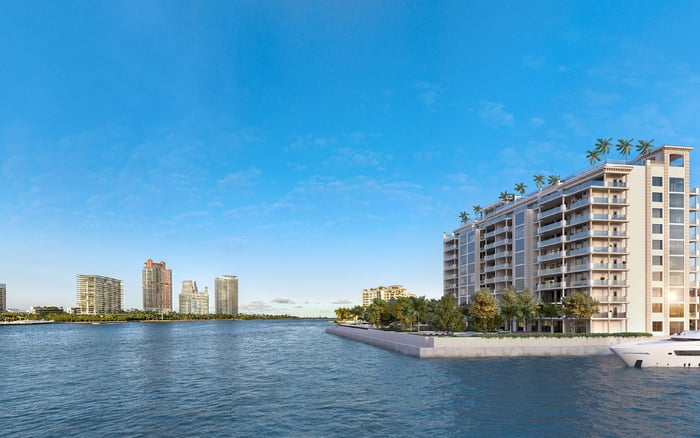
A discreet buyer’s framework for assessing access, privacy, operations, resilience, and day-to-day security before selecting a South Beach residence.

For a security-conscious buyer, choosing a South Beach residence is less about finding the longest amenity list than understanding how the property operates. The strongest evaluation begins with a private household brief: who will occupy the home, how often it will be used, who requires access, what arrives regularly, and which routines should remain discreet.
That brief should distinguish among privacy, convenience, life safety, property protection, and continuity. These priorities overlap, but they are not interchangeable. A tightly controlled arrival may support privacy while complicating staff access. A seamless guest experience may feel elegant while demanding more rigorous authorization behind the scenes.
The objective is not to identify a universally “secure” building. It is to select a residence whose physical layout, management culture, and operating protocols align with the buyer’s life.
Security planning begins before the front door. Trace every routine path from the street to the residence, including arrivals for owners, guests, household staff, service providers, deliveries, parking, and ride-share use. Observe where identities are verified, where visitors wait, and where public and private circulation intersect.
Repeat the exercise at different times. A polished daytime tour may not reveal how the property manages evening guests, busy weekends, weather interruptions, or simultaneous deliveries. Ask who controls exceptions, how approvals are recorded, and what happens when an expected person arrives without complete instructions.
South of Fifth buyers may begin a comparison with Apogee South Beach and Continuum on South Beach, then apply the same arrival audit to every candidate. The point is not to infer performance from a name or location, but to compare observable procedures consistently.
Cameras, gates, desks, and controlled doors are only the visible layer. Buyers should examine how the building administers credentials, responds to lost devices, updates resident permissions, supervises contractors, and documents incidents. The quality of execution matters more than the presence of equipment alone.
Request a clear explanation of access zones. Consider the routes to parking, elevators, amenity spaces, storage, mail areas, and any secondary entrance. Determine whether each credential opens only what is necessary and whether shared spaces create avoidable exposure.
Gated-community expectations can serve as a useful mental reference, but a vertical residence operates differently. Its security depends on the coordination of people, technology, circulation, and management. No single barrier should substitute for layered planning.
Discretion is an operational discipline. During due diligence, determine who is responsible for access decisions, how front-of-house and security roles are separated, and how personnel communicate during an unusual event. Ask whether procedures are written, reviewed, and practiced without requesting sensitive technical details.
Staff continuity also merits attention. Residents benefit when authorized personnel understand household preferences, yet familiarity must remain professional and governed by policy. Buyers should ask how temporary staff, vendors, and third-party contractors are identified and supervised.
When considering The Ritz-Carlton Residences® South Beach, or any service-led residence, evaluate how hospitality and access control coexist. A warm arrival should rest on disciplined verification rather than informal recognition alone.
The most suitable floor plan is not necessarily the largest. Security-focused buyers should map daily movement within the home: entry visibility, separation between private and service areas, bedroom placement, terrace access, package staging, and the location of valuable objects. The aim is to limit unnecessary circulation through private rooms.
For a second home, absence protocols become especially important. Clarify who may enter while the owner is away, how maintenance visits are approved, how emergencies are communicated, and whether the owner can maintain an independent record of authorized access. Qualified advisers should review any private technology installed within the residence for control, maintenance, and cybersecurity.
At Setai Residences Miami Beach or elsewhere in Miami Beach, a buyer should test whether the home supports the household’s preferred division among entertaining, service, and retreat. Lifestyle alignment is a security advantage because it reduces ad hoc workarounds.
A rigorous review extends beyond the tour. With appropriate legal, insurance, engineering, and security advisers, examine the governing documents and available policies relevant to access, guests, staff, renovations, deliveries, emergencies, and owner-installed systems. Confirm which responsibilities belong to the association, management, owner, and outside vendors.
Waterfront ownership also warrants a broader continuity discussion. Ask how the building communicates during severe weather, utility interruptions, elevator disruptions, or temporary access changes. Review backup plans in practical terms: who makes decisions, how residents receive instructions, and how the residence of an absent owner is handled.
This is not a search for absolute protection. It is an effort to identify dependencies, understand response procedures, and determine whether the household can operate comfortably within them.
Before committing, revisit the property with the household’s routines in mind. Walk the owner, guest, staff, delivery, and emergency routes. Note blind transitions, waiting areas, door behavior, mobile reception, lighting, and places where residents may be tempted to bypass protocol for convenience.
Use a written matrix to compare candidates. Categories might include arrival control, private circulation, staffing, credential governance, visitor handling, absence management, emergency communication, and adaptability for approved in-residence systems. Avoid assigning a single score until the buyer has identified which categories are non-negotiable.
A specialist can assess technical exposure, while counsel and insurance advisers can clarify obligations and coverage. The buyer’s role is to define the desired balance: discreet but not isolating, controlled but not cumbersome, and resilient without making the home feel institutional.
What should a security-focused buyer assess first? Begin with household routines, access needs, privacy priorities, and absence patterns before comparing buildings.
Is a staffed lobby enough? No. Buyers should also understand credential control, visitor procedures, circulation, escalation, and management oversight.
Should I request detailed security plans? Request enough information to evaluate governance and response, but do not expect sensitive technical material to be distributed casually.
Why test more than one arrival route? Owners, guests, staff, contractors, and deliveries may use different paths, each with distinct points of exposure.
How should deliveries be evaluated? Review authorization, identity checks, waiting or staging areas, notifications, and movement beyond the receiving point.
What matters for an occasionally occupied home? Focus on authorized entry, maintenance oversight, incident notification, recordkeeping, and clearly assigned responsibility during absences.
Can technology replace trained personnel? Technology can support controls, but procedures, judgment, maintenance, and accountable management remain essential.
Should floor plans be part of the security review? Yes. Entry sightlines, private-room separation, service circulation, terraces, and storage can affect day-to-day discretion.
Who should participate in due diligence? Depending on the buyer’s needs, the team may include legal, insurance, engineering, cybersecurity, and physical-security advisers.
Can any residence guarantee complete security? No. The goal is a layered plan that reduces avoidable exposure and supports an appropriate response when conditions change.
To compare the best-fit options with clarity, connect with MILLION.
If branded residences are on your mind — as a home or as an allocation — we would be glad to share what we are seeing, privately.
Begin a quiet conversation