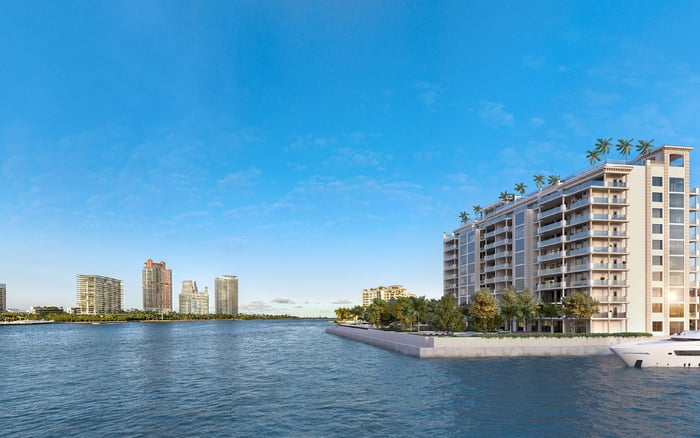
A buyer-focused framework for evaluating Miami Beach waterfront residences where polished branded service must coexist with privacy, governance clarity, and meaningful owner control.

For a discerning buyer, the appeal of a branded waterfront residence extends beyond polished service. The more consequential question is whether that service supports the owner’s preferred way of living without compromising privacy, flexibility, or authority over the home.
In Miami Beach, a sound purchase decision begins by separating three ideas often presented as one: the residence, the service platform, and the rules governing ownership. A refined arrival experience may be compelling, but residential control is defined elsewhere-in governing documents, management agreements, budgets, use restrictions, and daily operating protocols.
For this Buyer's Guide, Branded Residences is a useful category, while Waterfront, Miami Beach, Lifestyle, and Second-home priorities remain distinct filters. Buyers should test each independently before deciding which combination feels genuinely luxurious.
A thoughtful search compares projects through a consistent lens rather than allowing each presentation to set its own criteria. Shore Club Private Collections Miami Beach can be placed in a working comparison set focused on the relationship between brand experience and private ownership. The objective is not to presume how any project operates, but to identify the questions that reveal meaningful differences.
The same discipline applies when considering The Ritz-Carlton Residences® Miami Beach. Buyers should request precise explanations of which services are included, which are optional, who provides them, how charges may change, and what happens if management or branding arrangements evolve.
The comparison should also account for the practical rhythm of ownership. Ask how residents, guests, household staff, vendors, and advisers enter the property. Examine reservation systems, service hours, delivery procedures, security protocols, and any distinctions among residence types. These details often shape daily satisfaction more decisively than an extensive amenity inventory.
Branded service promises consistency, recognition, and ease. Residential control concerns enforceable rights and obligations. Sophisticated buyers evaluate both but never treat one as proof of the other.
When reviewing Setai Residences Miami Beach, for example, the useful inquiry is not whether the name feels established. It is whether the ownership structure, association framework, management responsibilities, and house rules align with the buyer’s expectations. Apply the same questions to every candidate without exception.
Control has several dimensions. Personal control includes the ability to furnish, renovate, host, staff, occupy, or leave the residence vacant within applicable rules. Financial control requires visibility into recurring charges, reserves, assessments, insurance responsibilities, and optional service costs. Governance control encompasses voting, board authority, management oversight, dispute procedures, and the mechanisms available when owners seek change.
No single structure is inherently best. Some buyers value a highly managed environment with fewer personal decisions. Others prefer service on request and broader discretion within the residence. The right fit is an arrangement whose constraints are understood, accepted, and proportionate to the convenience provided.
An amenity can be visually impressive yet operationally inconvenient. Before purchasing, buyers should determine who may use each space, whether access can be reserved, whether guests are permitted, whether fees apply, and whether operating hours suit their routines. Apply the same scrutiny to dining, wellness, housekeeping, transportation, beach-related services, and in-residence requests whenever offered.
The Perigon Miami Beach can be considered through this operating-model lens alongside other candidates. Request written answers and reconcile marketing language with the documents governing ownership. If a service is material to the purchase decision, understand its availability, cost, priority rules, and provider before committing.
Staffing also warrants close attention. Buyers should ask whether services are delivered by association personnel, a branded operator, outside vendors, or some combination. That distinction may affect billing, accountability, privacy, and continuity. The goal is not maximal staffing, but a clear chain of responsibility when an owner needs assistance or resolution.
Waterfront living introduces priorities that should remain distinct from branding. Evaluate outlook, privacy, outdoor usability, arrival experience, and the relationship between the residence and shared spaces. Consider how the home will function during full-time occupancy, brief visits, extended absences, and periods when guests or household staff are present.
Physical review and specialist advice are essential. Through qualified professionals, buyers should investigate building systems, maintenance responsibilities, insurance obligations, emergency procedures, reserves, and any planned work. They should also determine which elements are maintained collectively and which remain the owner’s responsibility.
For buyers arriving by car, boat, or private driver, access should be tested as a real sequence rather than admired in a rendering or plan. Follow the route from the property boundary to the residence, noting handoffs, permissions, waiting points, and exposure. Discretion is often created through operational choreography, not decoration.
A primary residence may place greater weight on storage, staffing, daily deliveries, work routines, and resident governance. A Second-home buyer may prioritize preparation before arrival, absence management, simplified maintenance, and reliable communication. A buyer who entertains frequently may focus on guest access, service capacity, parking procedures, and private dining logistics.
Create a written ownership brief before comparing homes. Define nonnegotiable rights, preferred services, acceptable restrictions, privacy expectations, and a realistic annual operating range. Then score each residence against that brief. This discipline prevents a memorable presentation from displacing the practical standards that will govern years of ownership.
The final decision should feel calm rather than theatrical. In the best alignment, service removes friction while the ownership framework preserves autonomy where it matters most.
Legal, financial, insurance, tax, and property-condition questions require guidance from qualified professionals familiar with the transaction and the buyer’s circumstances. The editorial framework is straightforward: verify the service promise, identify the decision-makers, quantify obligations, map restrictions, and understand remedies.
Request all relevant documents early enough to review them without pressure. Compare written terms across candidates, record unresolved questions, and do not rely on verbal assurances. A luxury residence earns confidence when its operating reality is as considered as its design.
What does residential control mean in a branded residence? It encompasses the owner’s rights, restrictions, financial obligations, and influence within the property’s governing and operating structure.
Is a prestigious brand enough to establish service quality? No. Buyers should examine the actual scope of service, provider, hours, costs, standards, and accountability mechanisms.
Which documents deserve the closest review? Review governing documents, budgets, management terms, house rules, disclosures, insurance materials, and available financial information with qualified advisers.
How should optional services be evaluated? Confirm availability, pricing, notice requirements, provider responsibility, and whether residents receive priority during busy periods.
Why do guest policies matter? Guest registration, access, parking, amenity use, and hosting rules can materially affect privacy and daily convenience.
Should a second-home buyer use different criteria? Yes. Absence management, residence preparation, communication, maintenance coordination, and arrival procedures may carry greater weight.
How can buyers assess privacy before purchasing? Study arrival routes, access controls, staffing procedures, shared-space circulation, vendor protocols, and the handling of personal information.
Are more amenities always better? No. Relevance, access, operating rules, capacity, and recurring costs matter more than the number of amenities presented.
What financial questions should be asked? Clarify recurring charges, reserves, potential assessments, insurance responsibilities, service fees, and the process for budget changes.
What is the best final test before committing? Confirm that written rights, costs, restrictions, and service procedures align with the ownership brief and the advice received from independent professionals.
For a tailored shortlist and next-step guidance, connect with MILLION.
If branded residences are on your mind — as a home or as an allocation — we would be glad to share what we are seeing, privately.
Begin a quiet conversation