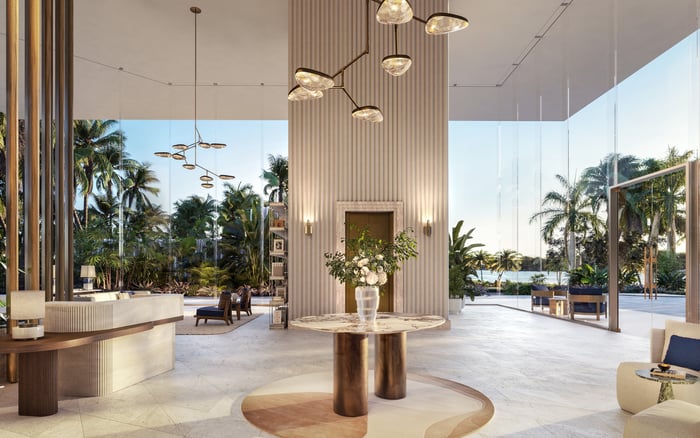
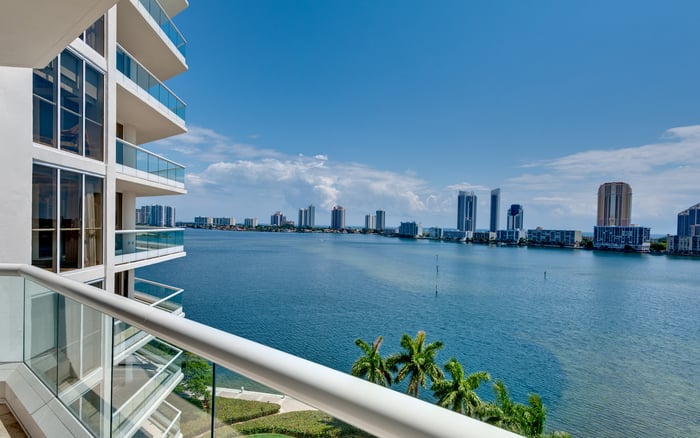
South Beach luxury buyers are increasingly reading residences through the lens of quiet, connectivity, and private work life, not only views and amenity scale.
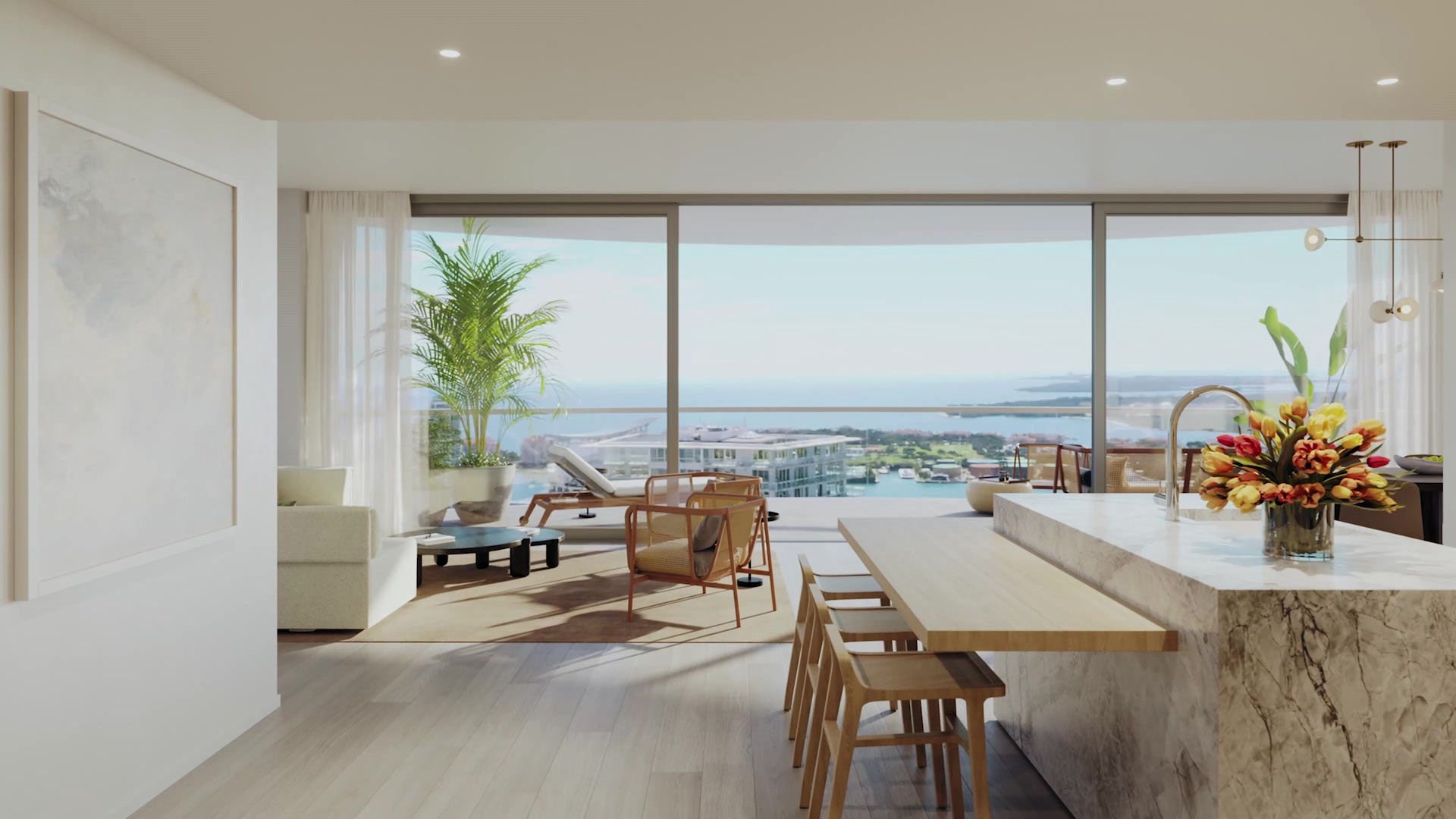
South Beach has always been fluent in spectacle: light on water, dining rooms that fill late, architecture that moves between glamour and restraint. Yet the most sophisticated residential question in the neighborhood is now quieter. Can a home let its owner participate fully in South Florida life, then withdraw into genuine privacy, stable connectivity, and acoustic calm?
For the ultra-premium buyer, that question is no longer secondary. It now sits beside exposure, ceiling height, service culture, parking, and building pedigree. A residence may have a seductive terrace and a celebrated address, but if calls bleed into bedrooms, elevator sound travels, or a primary suite cannot function as a sanctuary, the experience is incomplete.
South Beach answers this question best when buyers evaluate it not as a postcard, but as a sequence of controlled environments. The building lobby, elevator vestibule, private entry, living area, office zone, bedroom corridor, and terrace all matter. True comfort is cumulative.
In luxury real estate, quiet is often mistaken for the absence of activity. In South Beach, it is better understood as control. The neighborhood is animated by design, hospitality, beach culture, and constant arrival. The strongest residences do not pretend that energy does not exist. They manage it through orientation, depth, glazing, interior planning, and separation between public and private rooms.
Buyers should listen before they look. A showing during a calm weekday hour reveals one version of a home; a second visit at a more active time may reveal another. Stand near the entry, the bedroom wall, the terrace doors, and the work area. Notice mechanical hum, corridor activity, neighboring terraces, and the way sound changes when doors close. In an ultra-premium setting, the objective is not simply reduced noise. It is tonal refinement: no sharp intrusions, no persistent vibration, no sense that the city has entered the private realm uninvited.
The best layouts create acoustic gradients. A social zone can open generously to views and entertaining, while bedrooms and workrooms sit behind a second layer of privacy. Entry galleries, powder rooms, closets, and service corridors can act as buffers. Even furniture planning has a role, because upholstered surfaces, rugs, libraries, and millwork can soften rooms without compromising elegance.
Remote work changed the definition of a luxury residence. Connectivity can no longer be treated as a utility-closet issue, hidden until move-in. For many buyers, the home must support video meetings, streaming, security systems, smart-home controls, climate preferences, and family devices without friction.
That makes technology infrastructure a due diligence category. Buyers should ask how the residence receives service, where equipment is housed, how discreetly upgrades can be made, and whether the plan allows for a dedicated work environment without cords, improvised routers, or visible clutter. The most graceful technology is the least theatrical. It is felt in reliability, not seen in hardware.
South Beach is particularly interesting because its luxury appeal is both social and international. Owners may arrive for a season, a long weekend, or an extended work stay. A residence must be ready immediately, with systems that support a global lifestyle and do not require domestic negotiation every time a laptop opens. A well-planned home allows one person to host, another to rest, and another to take a confidential call without the household reorganizing itself.
Remote-work privacy is about more than a door. It is about what happens before and after that door. Can a guest pass through the residence without crossing the work zone? Can household staff access service areas without interrupting calls? Can a partner use the kitchen or terrace while a meeting is underway? Can children or visiting family occupy a media room without sound carrying into the office?
These questions reveal whether privacy has been designed or merely declared. A den off the main living room may photograph well, but it may not perform well. A secondary bedroom with an en suite bath may become a stronger office if it sits on a quieter side of the plan. A library niche may work beautifully for reading, but poorly for confidential calls.
South Beach rewards buyers who think in daily choreography. Morning calls, afternoon wellness routines, evening entertaining, and late arrivals each require their own degree of separation. The right residence allows the owner to shift from public to private modes without friction.
Search labels such as Miami Beach, Sofi, South of Fifth, Oceanfront, New-construction, and Second-home may look like simple shorthand, but they often signal the lifestyle questions a buyer should test in person: exposure, walkability, service expectations, seasonal use, and the balance between animation and retreat.
Begin with the primary suite. It should feel protected, not merely large. Notice whether it shares walls with elevators, service areas, amenity levels, or high-traffic interior corridors. Consider how morning light, terrace access, and interior doors influence rest. A beautiful bedroom that cannot hold quiet is a compromise.
Then study the likely work zone. The strongest remote-work space has a stable background, flattering natural or controllable light, privacy from household circulation, and proximity to a bath or refreshment point. If the space must double as a guest room, examine whether both uses can coexist without constant reconfiguration.
Next, evaluate infrastructure with the same seriousness applied to stone, appliances, and millwork. Ask where equipment can be placed, how visible it will be, and whether the building and unit plan allow for future technology needs. Luxury buyers should be wary of residences that rely on afterthought solutions in rooms meant to feel calm.
Finally, test the threshold between indoors and outdoors. South Beach living depends on terraces, views, and open air, but terrace doors should give the owner a genuine choice. Open, the home should feel expansive. Closed, it should feel composed.
South Beach does not answer the South Florida comfort question by becoming quiet in the conventional sense. Its appeal is precisely that it remains alive. The luxury is selectivity: the ability to step into the neighborhood’s rhythm, then close the door on a residence that behaves with discretion.
For the most discerning buyer, the trophy is no longer only a view corridor or an entertaining room. It is a home that protects concentration, sleep, conversation, and personal rhythm. Acoustic comfort, technology infrastructure, and remote-work privacy are not niche preferences. They are the modern grammar of residential ease.
When these elements align, South Beach becomes more than a destination. It becomes a functioning private base for global owners who expect beauty without disruption, sociability without exposure, and connectivity without visible strain.
Why is acoustic comfort important in a South Beach residence? It determines whether the home can offer true retreat while remaining close to the neighborhood’s energy.
Should buyers visit a residence more than once before deciding? Yes. Different times of day can reveal different patterns of sound, light, traffic, and building activity.
What makes a good remote-work room in a luxury condo? A strong work room has privacy, controlled light, a professional background, and minimal household interruption.
Is a den always the best office location? Not always. The best office is the space with the right acoustic separation and circulation pattern.
How should buyers think about technology infrastructure? Treat it as part of the architecture, with attention to service access, equipment placement, and future flexibility.
Can an Oceanfront home still feel private? Yes, if the plan, glazing, entry sequence, and bedroom placement create a controlled interior experience.
Why does layout matter for confidential calls? Layout determines whether voices, movement, and visitors pass through or around the work zone.
Are New-construction residences automatically better for remote work? Not automatically. Buyers should still test the plan, systems, sound control, and practical daily flow.
What should Second-home buyers prioritize? They should prioritize effortless arrival, reliable systems, secure privacy, and rooms that work immediately.
What is the ultimate South Beach luxury for modern owners? The ability to choose engagement or retreat at any moment, without sacrificing elegance or performance.
For a discreet conversation and a curated building-by-building shortlist, connect with MILLION.
If branded residences are on your mind — as a home or as an allocation — we would be glad to share what we are seeing, privately.
Begin a quiet conversation