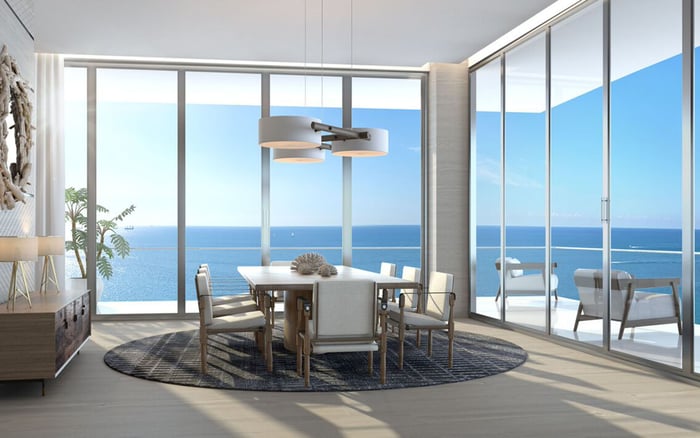
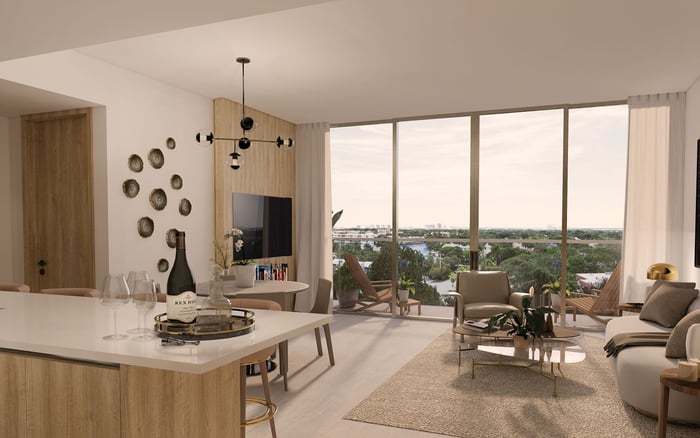
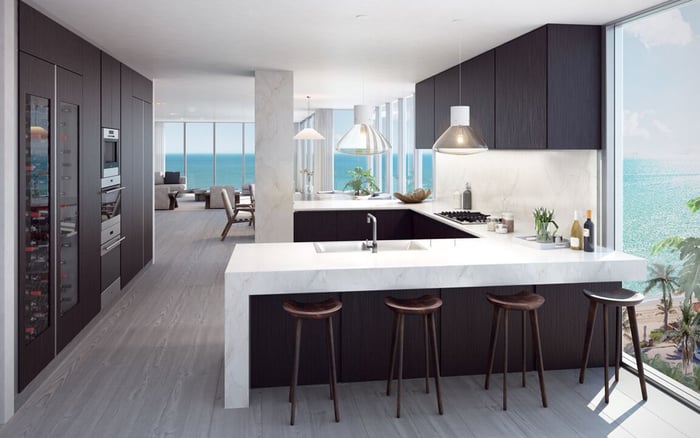
A discreet buyer-focused analysis of how three South Florida residential names turn brand language into confidence, lifestyle meaning, and long-term residential value.
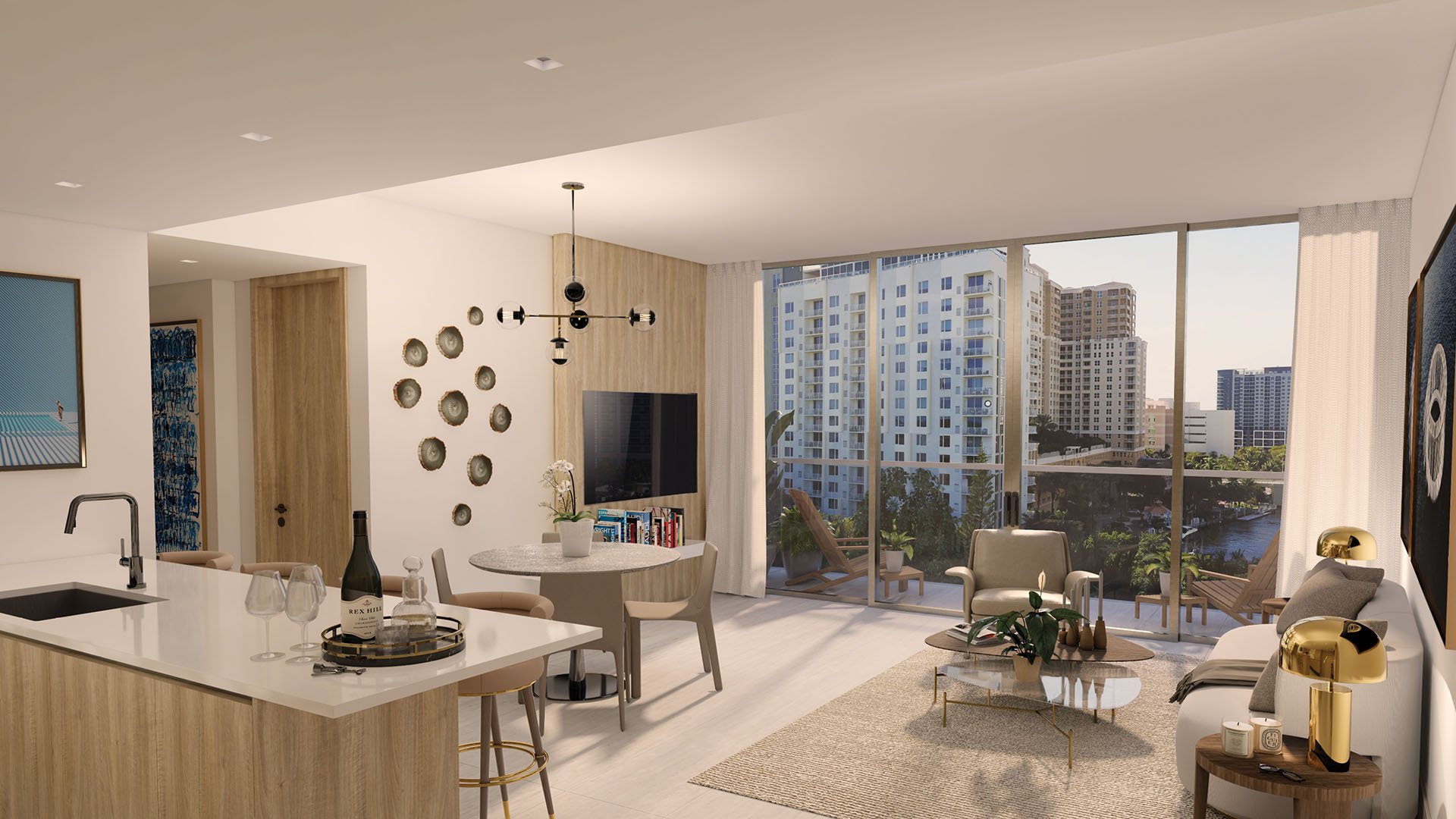
In South Florida’s luxury residential market, a name is rarely neutral. It can suggest service, privacy, design discipline, neighborhood posture, or the social rhythm a buyer expects to inhabit. For sophisticated purchasers, brand language is not branding itself. Branding is the surface. Brand language is the vocabulary that organizes expectations before a buyer studies a floor plan.
That distinction matters when comparing Sixth & Rio Fort Lauderdale, The Ritz-Carlton Residences® Fort Lauderdale, and Alma Bay Harbor Islands. Each name speaks to a distinct value proposition. One emphasizes locality and urban orientation. One carries the established cadence of hospitality. One leans into the softer, boutique language of an island residential setting.
For buyers, this is more than semantics. The right language can reduce uncertainty. It frames how a residence should feel, how the building should be judged, and what kind of future buyer may understand it quickly on resale. In a market where design and location already compete at a high level, clarity becomes a form of value.
Fort Lauderdale has matured into a luxury market where buyers increasingly compare buildings through nuance rather than headline claims. The city’s appeal is no longer limited to broad ideas of beach, boating, and access. It is also about tone. Does a building feel resort-oriented, urban, discreet, residential, or service-led?
Sixth & Rio Fort Lauderdale uses a name that immediately anchors itself in place. The language is local, directional, and concise. It does not depend on an imported lifestyle code. Instead, it suggests proximity, neighborhood logic, and a more grounded form of residential identity. For a buyer, that can translate into confidence when the appeal is tied to living in Fort Lauderdale as a city, not simply consuming it as a destination.
By contrast, The Ritz-Carlton Residences® Fort Lauderdale enters the conversation through a globally understood hospitality reference. Its value language is different. The name asks the buyer to think about continuity, service expectations, and an elevated residential experience associated with a recognized marque. In the Branded Residences category, that kind of language can be powerful because it shortens the interpretive path. Buyers understand what the name is intended to evoke even before individual building details are considered.
Nearby luxury comparables, including Four Seasons Hotel & Private Residences Fort Lauderdale, reinforce how deeply hospitality language has entered the city’s residential vocabulary. But not every buyer wants the same register. Some want the implied choreography of service. Others want a building whose value feels less formal and more embedded in the neighborhood. Fort Lauderdale is now broad enough to accommodate both readings.
Alma Bay Harbor Islands works differently from the Fort Lauderdale examples. “Alma” carries a softer emotional texture. It feels intimate, less corporate, and more personal. In a location known for a quieter residential rhythm, that language can be meaningful.
Bay Harbor Islands often appeals to buyers who are not seeking spectacle as the primary luxury signal. They may be weighing privacy, neighborhood scale, proximity, and a sense of retreat. In that context, Alma Bay Harbor Islands reads as boutique language rather than institutional language. It does not have to announce size or service to communicate value. It can instead suggest a residence that feels composed and personal.
This is why projects in the area benefit from names that are easy to remember and emotionally legible. A buyer comparing Alma with another Bay Harbor Islands project such as The Well Bay Harbor Islands is not only comparing residences. The buyer is comparing value narratives. One name may imply calm domesticity. Another may imply wellness. Both can be effective if the building experience supports the promise.
Luxury buyers remember what is clear. A project with a disciplined name has an advantage because it creates a mental file. That file may be geographic, as with Sixth & Rio. It may be service-oriented, as with The Ritz-Carlton Residences® Fort Lauderdale. It may be emotional and residential, as with Alma.
This is where design and architecture enter the value discussion. A building’s design language should not feel detached from its naming language. If a name suggests calm, the interiors and common spaces should not feel overstated. If a name suggests service, circulation and arrival should feel controlled. If a name suggests local urban living, the experience should make the neighborhood feel accessible and natural.
Lifestyle follows the same logic. Buyers are increasingly alert to whether a development’s verbal promise aligns with the life they expect to live. Waterfront language, for example, can be powerful in South Florida, but only when it supports a broader sense of daily use, views, access, or atmosphere. The word alone is not enough. The buyer wants coherence.
That coherence can influence perceived value because it makes the residence easier to explain. A future seller benefits when the next buyer can quickly understand what the property represents. In high-end markets, value is often protected by scarcity, location, and execution, but it is also protected by memorability.
The best way to read brand language is not to accept it passively, but to test it. A buyer should ask what the name promises and whether the residential experience appears capable of sustaining that promise over time.
For Sixth & Rio Fort Lauderdale, the question is whether the project’s identity supports a refined Fort Lauderdale lifestyle with a clear sense of place. For The Ritz-Carlton Residences® Fort Lauderdale, the question is whether the branded language aligns with the level of polish and expectation a buyer associates with the name. For Alma Bay Harbor Islands, the question is whether the intimate language of the name feels consistent with the neighborhood and the buyer’s desired pace of living.
That analysis is especially useful because brand language can carry both opportunity and risk. A strong name can attract attention, but it also raises expectations. A quieter name can feel more enduring, but it must still be distinctive enough to hold memory. The most valuable residential brands are not necessarily the loudest. They are the ones that make the buyer’s decision feel both emotional and rational.
Why does brand language matter in luxury real estate? It shapes the buyer’s first interpretation of value, lifestyle, and long-term desirability before detailed due diligence begins.
Is brand language the same as a branded residence? No. A branded residence typically carries an established hospitality or design identity, while brand language is the broader way any project communicates meaning.
How does Sixth & Rio Fort Lauderdale communicate value? Its name emphasizes locality and place, positioning the project through a Fort Lauderdale residential lens rather than an imported lifestyle code.
How does The Ritz-Carlton Residences® Fort Lauderdale communicate value? Its name carries a recognized hospitality association, which can help buyers understand the intended level of residential polish and expectation.
How does Alma Bay Harbor Islands communicate value? Alma uses a softer, more intimate name that aligns with a boutique residential reading of Bay Harbor Islands.
Should buyers pay more attention to name or execution? Execution matters more, but a strong name can help organize expectations and make the residence more memorable.
Can a quieter project name still support premium value? Yes. In discreet luxury markets, restraint can be a strength when the location and residential experience feel coherent.
Why is Fort Lauderdale important in this comparison? Fort Lauderdale offers a useful contrast between local residential identity and hospitality-led luxury language.
Why is Bay Harbor Islands important in this comparison? Bay Harbor Islands highlights how boutique language can appeal to buyers seeking privacy, scale, and a calmer residential cadence.
What is the best way to shortlist comparable options for touring? Start with location fit, delivery status, and daily lifestyle priorities, then compare stacks and elevations to validate views and privacy.
When you're ready to tour or underwrite the options, connect with MILLION.
If branded residences are on your mind — as a home or as an allocation — we would be glad to share what we are seeing, privately.
Begin a quiet conversation