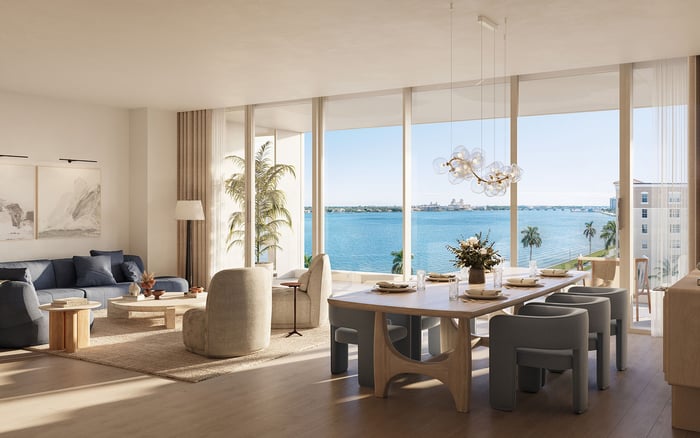
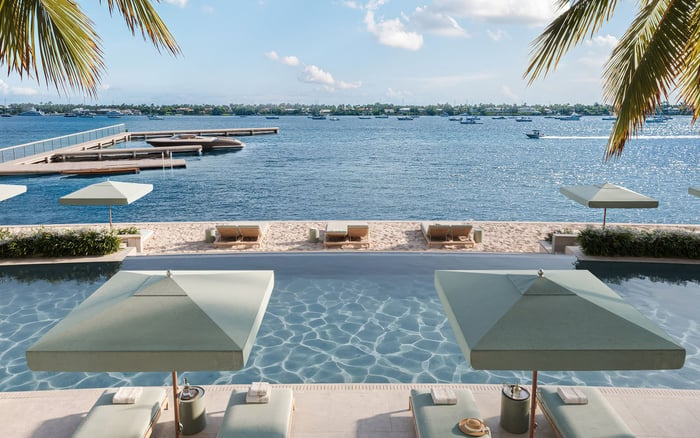
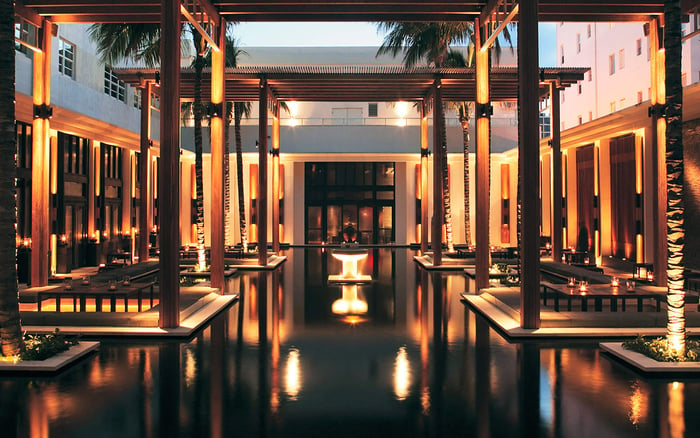
South Florida’s strongest luxury residences are proving that brand language matters only when it becomes a daily residential experience. Shorecrest Flagler Drive, The Residences at 1428 Brickell, and Kempinski Residences Miami Design District each frame value through a different lens: quiet waterfront privacy, engineered urban sanctuary, and hospitality-informed brand discipline.
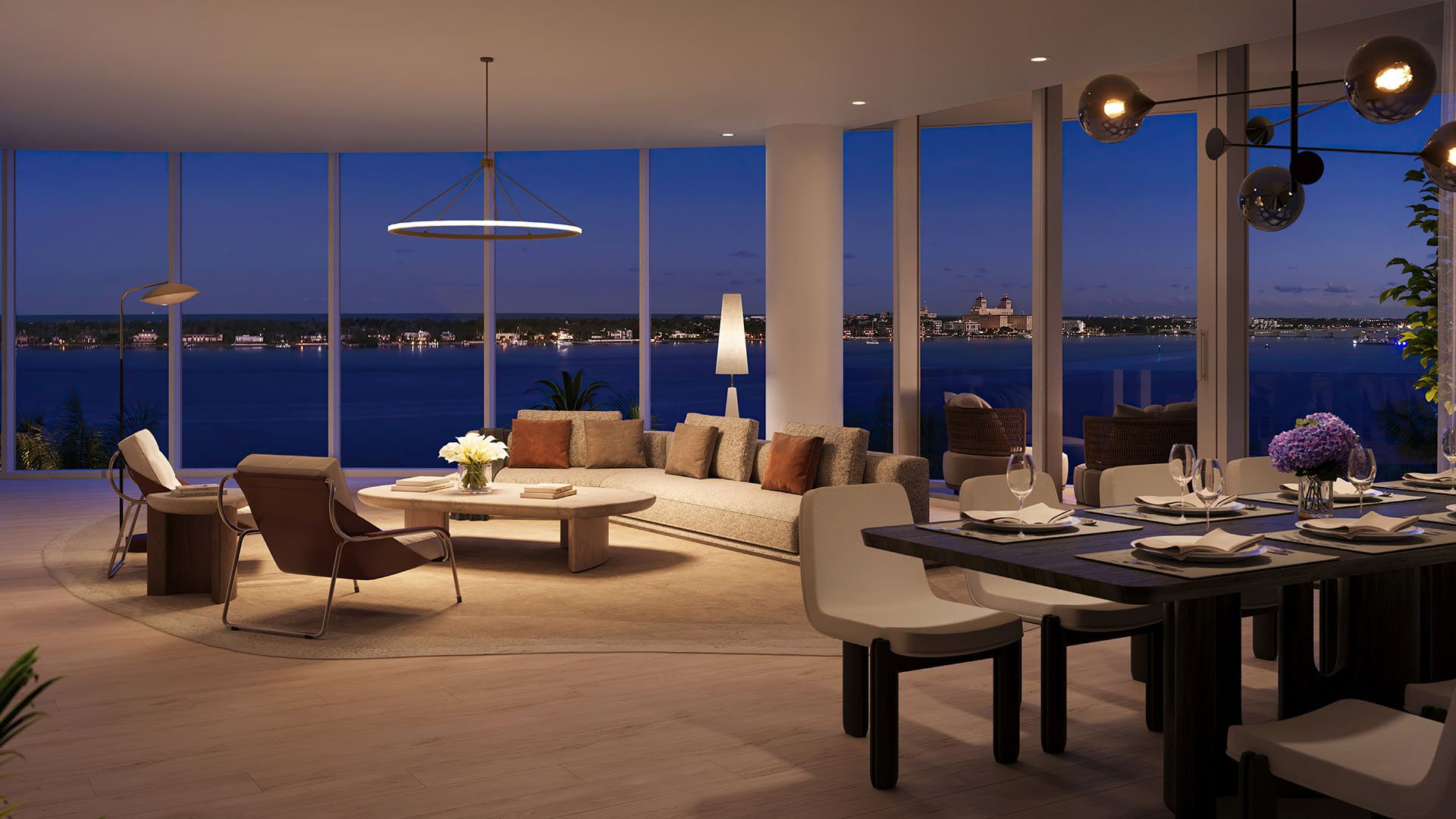
In South Florida luxury real estate, brand language has become more than a naming exercise. It is a promise about how a residence should feel, function, age, and stand apart in an increasingly sophisticated market. The strongest projects do not rely on a logo alone. They translate identity into architecture, privacy, amenity logic, service expectations, and the quiet confidence buyers feel when a home aligns with the way they actually live.
That distinction is especially clear when comparing Shorecrest Flagler Drive West Palm Beach, The Residences at 1428 Brickell, and Kempinski Residences Miami Design District. Each speaks a different dialect of luxury. Shorecrest is defined by calm waterfront intimacy. 1428 Brickell is framed as a meticulously engineered urban sanctuary. Kempinski introduces a hospitality-branded framework in the Design District, where the essential question is whether the brand promise is visible in the residential experience itself.
For the ultra-premium buyer, the central test is simple: does the language of the project become a livable advantage, or does it remain marketing atmosphere?
Shorecrest’s brand language is intentionally restrained. Rather than leaning on the scale of a global hospitality name, it is positioned around calm, privacy, and a design-led residential experience. That makes it particularly relevant in West Palm Beach, where high-end residential demand is increasingly shaped by livability, boutique scale, and the desire for a quieter daily rhythm.
Here, value is less about immediate recognizability than atmosphere. Waterfront positioning becomes part of the brand system. Privacy becomes a form of luxury. Architecture and setting become tools for creating a life that feels protected, composed, and personal. For buyers who understand the nuance of West Palm Beach, that can be a meaningful differentiator.
The appeal is not merely that Shorecrest is waterfront. It is that the waterfront narrative is tied to daily-use quality: arrival, outlook, interior calm, building scale, and the sense that the residence is designed for living rather than spectacle. In a market where many projects compete for attention, a quieter identity can create its own authority.
This is where Waterfront value becomes more emotional than transactional. A buyer is not only purchasing proximity to water. The buyer is purchasing the discipline of a residential environment where views, privacy, and calm support the home’s long-term desirability.
If Shorecrest’s language is quiet and atmospheric, 1428 Brickell’s is urban, engineered, and performance-oriented. The project’s identity as a meticulously engineered urban sanctuary gives its brand language a more technical edge. It is not simply selling the convenience of Brickell. It is presenting a residential concept in which engineering, privacy, urban access, and technology-forward sustainability all contribute to value.
That matters in Brickell because vertical luxury must answer a different set of buyer questions. How does a residence protect privacy in a dense urban setting? How does design offset the intensity of the city? How does sustainability become more than a talking point? How do specifications and amenities reinforce confidence in the asset over time?
For 1428 Brickell, the answer lies in making the brand promise tangible. Engineering must be felt in the building’s systems and sense of control. Privacy must be legible in the way residences are planned and experienced. Urban convenience must not compromise domestic calm. Sustainability must feel integrated into the value proposition rather than treated as a separate credential.
This is where The Residences at 1428 Brickell becomes an instructive case for Design & Architecture buyers. The language of sanctuary is credible only if the product supports it at every layer, from design and specification to amenity programming and the confidence a buyer associates with long-term ownership.
Kempinski brings another dimension to the conversation: Branded Residences as a value category. In the Design District, a name with hospitality resonance invites buyers to evaluate the residence through a different lens. The question is not whether the brand is known. The question is whether the brand creates a better residential life.
For a buyer considering Kempinski Residences Miami Design District, the relevant test is practical. Does the brand suggest consistency? Does it shape expectations around service, design tone, and building culture? Does it create a recognizable standard that future buyers will understand? Most importantly, does the residence stand on its own if the buyer looks beyond the name?
This is the mature way to read branded luxury in Miami. The brand should help organize trust, but it should not substitute for product quality. A compelling branded residence must still deliver on privacy, plan efficiency, materials, amenity logic, and neighborhood fit. When those layers align, brand language can become a value amplifier. When they do not, the name alone is not enough.
The comparison between Shorecrest, 1428 Brickell, and Kempinski is less about choosing a single winner than understanding three different models of residential value.
Shorecrest asks the buyer to value privacy, setting, and atmosphere. Its language is rooted in the idea that West Palm Beach luxury can be quieter, more intimate, and more design-led than logo-driven. For a buyer seeking calm and waterfront identity, that restraint may be precisely the point.
1428 Brickell asks the buyer to value engineering, urban convenience, and an elevated sense of control. Its language is modern and technical, but the value proposition depends on whether those promises appear in the residence, the amenity experience, and the project’s ability to feel private within a dense urban core.
Kempinski asks the buyer to evaluate the power of hospitality-informed identity. In a district associated with design, culture, and visual sophistication, brand language has to be more than decorative. It must become a disciplined residential standard.
For serious buyers, the smartest approach is to walk through each project’s vocabulary and translate it into concrete questions. If a project says private, where is that privacy created? If it says sanctuary, what design or engineering decisions produce that feeling? If it says branded, what does the brand actually change about ownership?
South Florida’s best luxury projects increasingly compete through identity, but identity only has value when it is built into the lived product. Shorecrest Flagler Drive West Palm Beach, The Residences at 1428 Brickell, and Kempinski Residences Miami Design District show three distinct paths: intimate waterfront calm, engineered urban sanctuary, and hospitality-informed branded discipline.
For the ultra-premium buyer, brand language should be read as a due-diligence tool. The more precisely a project can translate its language into daily residential advantages, the stronger its claim to lasting value.
What does brand language mean in luxury real estate? It is the way a project expresses its identity through words, design, service expectations, and the buyer experience. The value appears when that identity is visible in daily residential life.
Why is Shorecrest different from a traditional branded residence? Shorecrest is positioned around calm, privacy, waterfront setting, and design-led living rather than a large hospitality name. Its value is tied to atmosphere and livability.
What is the core appeal of Shorecrest Flagler Drive West Palm Beach? The appeal is intimate waterfront living in West Palm Beach with an emphasis on privacy, design, and a quieter luxury identity.
How is The Residences at 1428 Brickell positioned? It is framed as a meticulously engineered urban sanctuary where privacy, engineering, sustainability, and Brickell convenience shape the residential promise.
Why does sustainability matter at 1428 Brickell? Technology-forward sustainability supports the project’s performance-oriented identity. For buyers, it can contribute to confidence in the residence over time.
What should buyers ask about Kempinski Residences Miami Design District? Buyers should ask how the brand affects service, design standards, privacy, and ownership experience. The name should enhance the product, not replace it.
Are branded residences automatically more valuable? Not automatically. Brand value depends on whether the residence delivers tangible benefits in design, service, amenities, and long-term desirability.
Which buyer is best suited to Shorecrest? Shorecrest may suit buyers who prioritize waterfront calm, boutique scale, privacy, and a more discreet version of West Palm Beach luxury.
Which buyer is best suited to 1428 Brickell? 1428 Brickell may suit buyers who want an urban Miami residence where engineering, privacy, convenience, and contemporary systems are central to value.
What is the main lesson across these three projects? Brand language creates residential value only when it becomes tangible in the home, the building, and the way ownership feels every day.
For a tailored shortlist and next-step guidance, connect with MILLION.
If branded residences are on your mind — as a home or as an allocation — we would be glad to share what we are seeing, privately.
Begin a quiet conversation