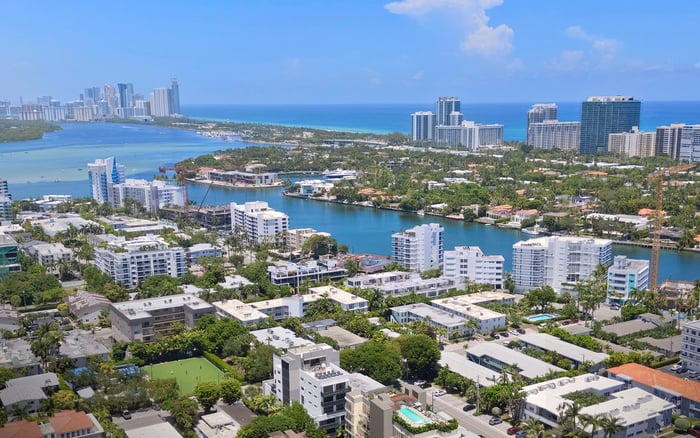
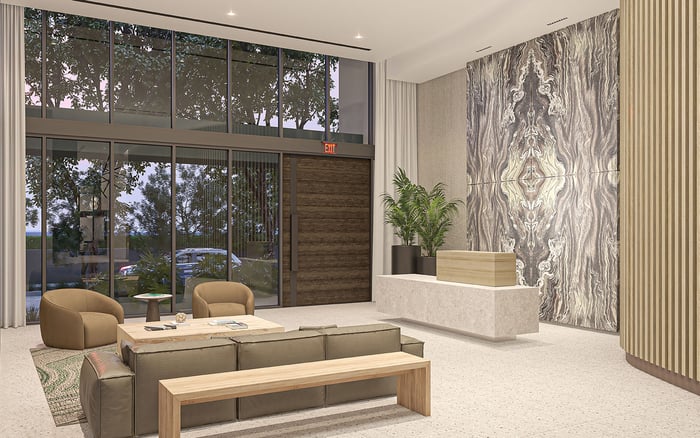
A buyer-oriented look at how adjacent-site uncertainty reframes the Coconut Grove versus Bay Harbor Islands decision for luxury residential purchasers.
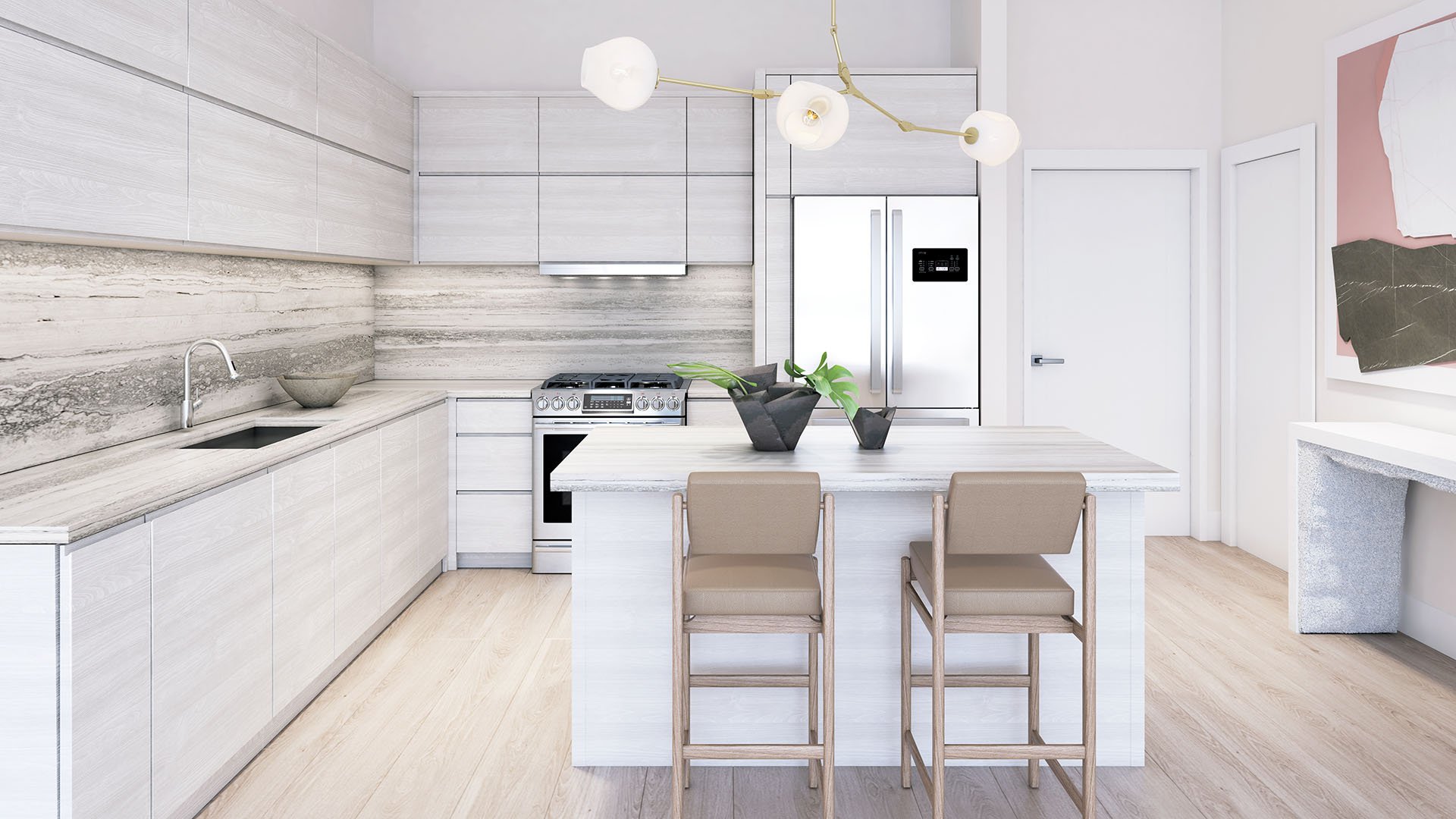
For sophisticated South Florida buyers, the question is no longer only whether Coconut Grove or Bay Harbor Islands feels more aligned with daily life. The sharper question is what can happen next door, across the street, or within the sightline after closing. Neighboring development risk now belongs in the luxury underwriting conversation because it touches the qualities affluent buyers are actually purchasing: privacy, light, water orientation, arrival sequence, quiet, architectural context, and exit liquidity.
This is not a reason to avoid either market. It is a reason to compare them with greater discipline. A residence can be beautifully designed and still carry a very different risk profile depending on what surrounds it. A buyer studying Arbor Coconut Grove may be weighing the intimacy of the Grove experience, while a buyer considering Bay Harbor Towers may be evaluating how island adjacency shapes light, water, and approach. The decision becomes less about which neighborhood is better and more about which uncertainty is easier to understand, price, and live with.
Coconut Grove attracts buyers who often want a layered residential experience rather than a purely vertical one. That texture is central to its appeal, but it also requires careful parcel-by-parcel review. In a Coconut Grove search, neighboring development risk is often a question of context. What sits beside the residence today? What condition is it in? Could a future structure alter the sense of enclosure, garden privacy, or morning light?
This is where disciplined buyers slow down. They do not treat a view as permanent simply because it appears calm at the showing. They ask whether the value of the home rests on a protected experience or on an assumption. In boutique buildings and townhome-scale settings, a single adjacent parcel can matter as much as a skyline does in a high-rise market.
Projects such as Four Seasons Residences Coconut Grove and The Well Coconut Grove sit within this broader buyer psychology: the Grove purchaser is often paying for atmosphere. When atmosphere is the asset, future construction nearby is not a side issue. It is part of the core value analysis.
Bay Harbor Islands invites a different kind of diligence. The buyer is often studying the relationship between residence, water, neighboring buildings, access, and the cadence of a compact luxury environment. Bay Harbor risk questions tend to become spatial very quickly. Which side of the building carries the strongest experience? What is the exposure to adjacent lots? How dependent is the premium on a particular corridor of openness?
This does not make the islands more fragile. It makes the underwriting more geometric. In a setting where proximity can be part of the appeal, small differences in orientation, floor height, building line, and neighboring conditions can affect how a residence lives. A well-chosen unit may preserve the qualities that matter most to its owner, while another in the same general area may be more exposed to future disruption.
That is why a buyer comparing Alana Bay Harbor Islands with The Well Bay Harbor Islands should not stop at interiors, amenities, or brand tone. The more valuable exercise is to stand inside the future daily experience and ask what can change around it.
The Coconut Grove versus Bay Harbor Islands decision often begins with lifestyle, then becomes a risk allocation exercise. If the buyer values canopy, village rhythm, and a sense of residential layering, the Grove may feel emotionally correct. If the buyer values island composure, water proximity, and a more contained geography, Bay Harbor Islands may feel more natural. But neighboring development risk can reverse an otherwise intuitive choice.
A buyer may prefer Coconut Grove in theory, yet choose Bay Harbor Islands because the particular unit under review has a clearer adjacency story. Another may prefer Bay Harbor Islands, yet choose Coconut Grove because the specific residence offers a more legible surrounding context. The neighborhood is the frame, but the parcel condition is the evidence.
For new-construction purchasers, the issue is especially important because the finished experience is partly imagined. Renderings, model residences, and amenity narratives can be persuasive, but the surrounding context deserves equal attention. The most valuable question is not simply, “What am I buying?” It is, “What am I relying on around what I am buying?”
The first question is whether the premium is view-driven, privacy-driven, access-driven, or brand-driven. If the premium depends heavily on an open sightline, the buyer should treat nearby development potential as a pricing issue. If the premium depends more on services, interior quality, and architectural identity, the same neighboring risk may be less material.
The second question is whether the potential change would be temporary or permanent. Construction activity can be disruptive for a period; a new neighboring mass can affect the residence for the entire ownership horizon. These are different risks and should be discussed differently.
The third question is whether the buyer’s preferred floor, exposure, or line has a more resilient relationship to its surroundings. In both Coconut Grove and Bay Harbor Islands, two residences in the same project can carry very different adjacency profiles. Higher is not automatically safer, lower is not automatically compromised, and a water view is not automatically protected. The answer depends on the specific relationship between the home and its neighbors.
Finally, the buyer should ask how the next purchaser will interpret the same issue. Luxury real estate is lived emotionally but sold comparatively. If future buyers will also worry about the adjacent parcel, that concern should be reflected in today’s negotiation.
The most elegant purchase strategy is not defensive; it is informed. Before committing, buyers should review available public materials, current surroundings, association documents where applicable, surveys when relevant, and contract language with qualified counsel and advisors. The goal is to clarify what is knowable, what is uncertain, and what should be priced.
In Coconut Grove, the advisory conversation may focus on privacy, garden exposure, approach, construction sensitivity, and how neighboring improvements could alter the feel of the residence. In Bay Harbor Islands, it may focus more intensely on orientation, building edge, water relationship, and the way adjacent structures frame daily life.
The best buyers do not expect zero risk. They seek a risk they understand. That distinction is powerful. It allows them to choose with confidence, negotiate with precision, and avoid overpaying for assumptions disguised as permanence.
Coconut Grove and Bay Harbor Islands are not separated merely by taste. They are separated by the kind of uncertainty a buyer is willing to underwrite. Coconut Grove often asks whether future change might affect atmosphere and privacy. Bay Harbor Islands often asks whether future change might affect edge condition, openness, and spatial clarity. Both can be excellent choices. The better choice is the one where the buyer has examined the neighboring condition as carefully as the residence itself.
In a market where luxury is increasingly defined by serenity, not spectacle, the smartest acquisition may be the one that feels effortless because the hard questions were asked early.
Why does neighboring development risk matter in a luxury purchase? It can affect privacy, light, view quality, construction disruption, and future resale perception.
Is Coconut Grove riskier than Bay Harbor Islands? Not inherently. The risk depends on the specific residence, surrounding parcels, exposure, and buyer priorities.
Is Bay Harbor Islands riskier than Coconut Grove? Not inherently. Its risk profile is often more about adjacency, orientation, and how neighboring buildings frame the home.
Should I avoid a residence if there is development nearby? Not automatically. The question is whether the likely impact is temporary, permanent, material, or already priced in.
Do higher floors always reduce neighboring development risk? No. Floor height helps in some cases, but exposure, distance, view corridor, and building position matter as much.
What should a buyer review before signing a contract? Buyers should consult qualified advisors on surveys, public materials, association documents, and contract protections.
Can a beautiful view be assumed to remain unchanged? No. A view should be treated as an asset that requires its own diligence and pricing discipline.
How should pre-construction buyers think about the issue? They should study not only the planned residence but also the surroundings that will shape the completed experience.
Does neighboring development risk affect resale? Yes, if future buyers perceive the risk as affecting privacy, quiet, views, or the overall residential experience.
What is the best way to choose between the two areas? Compare the specific homes, not just the neighborhoods, and decide which uncertainty is clearer and more acceptable.
For a discreet conversation and a curated building-by-building shortlist, connect with MILLION.
If branded residences are on your mind — as a home or as an allocation — we would be glad to share what we are seeing, privately.
Begin a quiet conversation