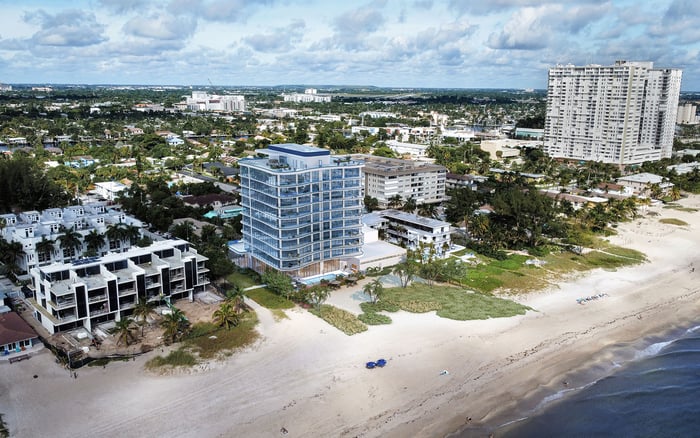
A disciplined family-office review of Armani Casa Residences Pompano Beach, focused on contractual documents, deposit protections, association governance, recurring costs, and coastal insurance exposure.

A family-office review of Armani Casa Residences Pompano Beach should distinguish the design and branding proposition from the enforceable rights, costs, and risks established by the transaction documents. That separation is particularly important when capital may be committed before the completed residence and its operating history can be evaluated.
The investment team should treat promotional materials as an introduction rather than a substitute for legal, financial, insurance, and technical diligence. The controlling agreement and condominium documents should support every material assumption used in the approval memorandum.
Begin by identifying precisely what the buyer would own and which elements would be shared. Request the site plan, condominium plat, unit schedule, floor stack, phasing provisions, and descriptions of common and limited common elements. Counsel should reconcile those materials with the purchase agreement and disclosure package.
The review should address privacy, voting rights, expense allocation, amenity access, construction sequencing, and any infrastructure shared with another component. Any inconsistency among sales materials and legal documents should be resolved in writing before approval.
Comparable discipline can be applied when evaluating The Ritz-Carlton Residences® Pompano Beach and W Pompano Beach Hotel & Residences. The useful comparison is the ownership and operating structure attached to each residence, not brand recognition alone.
Before funds are wired, the investment team should obtain the purchase agreement and every incorporated exhibit. Each payment should be mapped to its trigger, escrow treatment, release conditions, and available remedies.
Counsel should examine cancellation rights, default provisions, closing extensions, assignment restrictions, financing language, and the treatment of buyer funds if the development plan or delivery terms change. Material business points should appear in the controlling documents rather than remain in informal communications.
The approval memorandum should also address the proposed ownership entity, authorized signatories, source-of-funds procedures, tax review, succession objectives, and transfer restrictions. These issues can affect execution and long-term flexibility even when the residence is intended primarily for personal use.
Review the declaration, bylaws, rules, architectural standards, management agreement, proposed budget, reserve materials, and alteration procedures. These documents can shape an owner's ability to customize interiors, install art or security systems, coordinate staff access, and complete future renovations.
The analysis should cover developer control, turnover provisions, board composition, voting thresholds, leasing and guest rules, contractor requirements, service access, and approval timelines. It should also determine whether the brand has a continuing operational, design, or approval role.
Any branding or licensing materials should be reviewed for duration, renewal, termination, quality-control rights, fees, and the consequences of a change in affiliation. Recurring charges should be evaluated by scope and contractual basis rather than by headline comparisons.
The same framework can support a comparison with Waldorf Astoria Residences Pompano Beach. A family office should normalize the services, reserves, and owner obligations included in each budget before drawing conclusions.
For a coastal South Florida acquisition, the committee should request available information about the proposed master insurance program and review it alongside the condominium documents. The objective is to identify which risks belong to the association, which remain with the unit owner, and how uninsured losses or deductibles may be allocated.
The review should consider wind, named-storm, flood, water intrusion, ordinance-and-law, exclusions, loss assessments, and coverage for improvements and betterments. Counsel and the insurance adviser should also clarify how deductibles apply and whether the declaration permits related costs to be charged through common expenses or owner assessments.
The unit-owner program should be coordinated with the master coverage. The family office should evaluate protection for custom interiors, collections, temporary relocation, household staff, personal liability, and other exposures relevant to the intended use.
Scenario testing should include changes in premiums, a significant deductible allocation, an uninsured loss, and a special assessment. Rosewood Residences Hillsboro Beach may offer another South Florida reference point for structural comparison, although each project's documents and insurance arrangements require an independent review.
The committee should condition approval on a reconciled project structure, a deposit and escrow map, a governance and brand-rights memorandum, and a carrying-cost model supported by the available contractual and budget materials. Open issues should be assigned to a responsible adviser with a deadline and a required form of resolution.
The final decision should weigh legal control, recurring obligations, liquidity constraints, construction and delivery risk, insurance exposure, and the residence's intended family use. This process preserves discretion without allowing presentation materials to substitute for enforceable protections.
What should a family office review first? Start with the purchase agreement, disclosure package, condominium documents, project plans, and all incorporated exhibits.
Why should project descriptions be reconciled? Consistent legal and technical documents help the buyer understand the ownership interest, shared elements, voting rights, and expense obligations.
What deposit terms require attention? Review payment triggers, escrow treatment, release conditions, cancellation rights, defaults, extensions, and remedies.
Should sales materials control the investment decision? No. Material assumptions should be confirmed in the executed agreement and other controlling documents.
Which governance documents are important? Examine the declaration, bylaws, rules, architectural standards, management agreement, proposed budget, and reserve materials.
What branded-residence provisions should be reviewed? Assess the brand's role, licensing duration, quality controls, fees, termination rights, and consequences of a change in affiliation.
How should recurring costs be compared? Normalize each budget by identifying the services, reserves, insurance, and owner obligations included in the stated charges.
What insurance questions should the committee ask? Determine the scope of master coverage, applicable exclusions and deductibles, unit-owner responsibilities, and loss-assessment exposure.
Why coordinate master and unit-owner insurance? Coordination helps identify gaps involving interiors, improvements, personal property, relocation, staff, and liability.
What should be resolved before investment approval? The committee should require clear project, deposit, governance, cost, and insurance analyses, with material open items resolved in writing.
When you're ready to tour or underwrite the options, connect with MILLION.
If branded residences are on your mind — as a home or as an allocation — we would be glad to share what we are seeing, privately.
Begin a quiet conversation