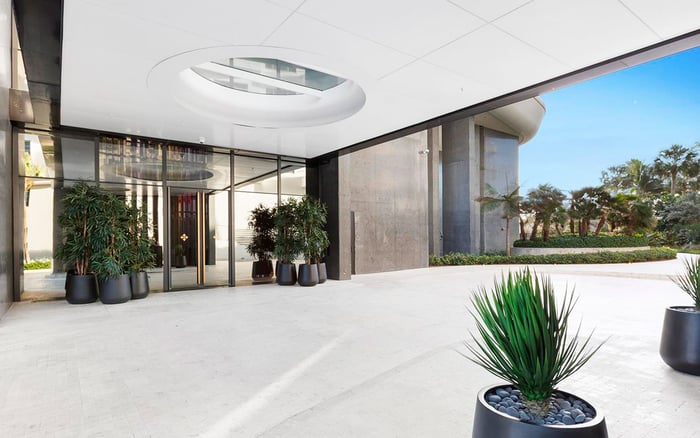
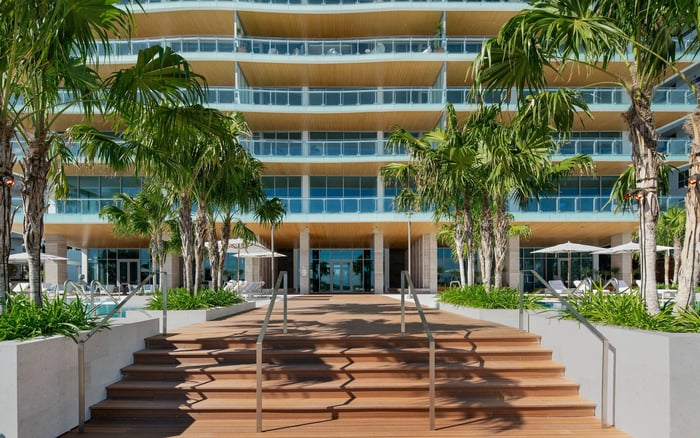
Faena House pairs discreet oceanfront service with a data-rich arrival experience. Before closing, buyers should examine how visitor, valet, surveillance, amenity, app, and potential biometric records are controlled, retained, shared, and deleted.
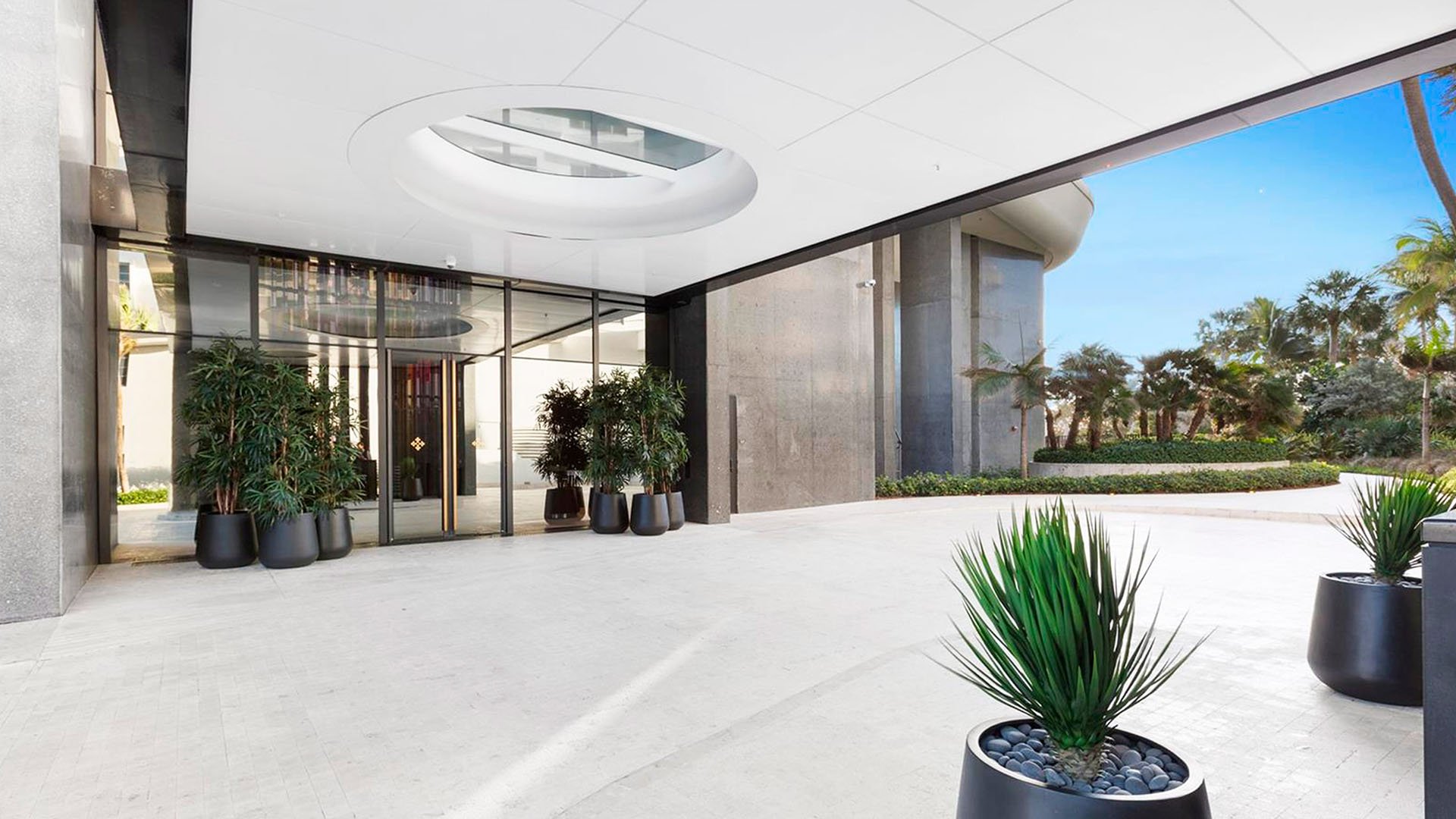
At Faena House Miami Beach, effortless living begins well before the front door. The 17-story, 47-residence condominium at 3315 Collins Avenue offers a 24-hour doorman, valet, security surveillance, five-star concierge, and secure private underground parking. Residents also receive preferred status and access to Faena Hotel services, placing the property within a broader hospitality setting rather than a purely stand-alone tower.
That service model is compelling precisely because it anticipates needs. It can also create records. Guest arrivals, vehicle retrievals, amenity bookings, concierge requests, elevator movements, and access credentials may reveal household patterns. For a serious buyer, privacy diligence should therefore sit alongside financial review, physical inspection, and association-document analysis.
In a service-rich residence, privacy depends on how convenience is recorded and governed.
Marketing language describes the experience, not the underlying data architecture. Faena House’s exact visitor-registration fields, screening workflow, and retention periods are not specified. Nor is the current existence of a dedicated resident app established. Biometric keyless access and direct elevator access have been associated with the wider Faena residential ecosystem, but that does not confirm their present use at Faena House.
The distinction matters. Buyers should not assume that a feature exists-or that it does not-based on broad brand language. Request current written answers from the association or management, and identify the entity legally responsible for each system. This is particularly important in branded residences, where condominium operations, hospitality services, and outside technology vendors may intersect.
A visitor log can encompass far more than social guests. Ask for current procedures governing family visitors, vendors, domestic staff, contractors, deliveries, drivers, and recurring service providers. The response should explain what information is requested, whether identification is scanned, whether photographs are taken, how residents authorize entry, and how long each record remains available.
The building’s triple-height lobby and staffed arrival environment mean movements may be visible to doormen, security personnel, valet teams, and concierge staff. Buyers should ask which employees can search visitor histories, whether access is role-based, and whether an audit trail records who opened or changed a file. For household staff, determine whether profiles remain active until manually revoked and whether former staff credentials are deleted rather than simply disabled.
Buyer’s guides often focus on approvals, budgets, and reserves. At this level of Miami Beach ownership, the operating rules for people entering on a resident’s behalf deserve equal attention.
The current existence of a dedicated Faena House resident app is not established. The appropriate diligence question is therefore conditional: Does guest registration, building access, concierge service, package handling, or amenity booking require an app or web portal today?
If the answer is yes, request the current privacy policy and terms before closing. Establish the operator’s identity, the categories of information collected, the vendor list, data-sharing provisions, the account-deletion process, and the treatment of records after a resale. Ask whether residents can use a staffed, telephone, key-card, or other non-app alternative without losing essential services.
Permissions also matter. A buyer should understand whether the software requests access to contacts, location, Bluetooth, camera, or notifications-and which permissions are truly necessary. The goal is not to reject technology, but to ensure the residence remains functional when an owner prefers a narrower digital footprint.
Biometric access at Faena House should be treated as unconfirmed unless management provides a current written statement. Ask specifically whether facial, fingerprint, or other biometric readers are used at entrances, elevators, parking areas, or amenities. If any are present, confirm whether enrollment is optional and whether an equivalent non-biometric credential is available.
Then examine the full lifecycle. Who controls the biometric template? Where is it stored-on a device, in a central system, or with a vendor? Who may access it, how is it secured, when is it deleted, and what happens when a unit is sold? Written policy should also address failed scans, replacement credentials, vendor changes, and breach response.
Owners comparing the service layers of Setai Residences Miami Beach or The Ritz-Carlton Residences® Miami Beach can apply the same questions. The point is not to presume identical systems, but to compare each property through documented governance rather than brand familiarity.
Surveillance warrants its own written schedule. Request camera locations, footage-retention periods, live-view permissions, export rights, security-vendor access, third-party disclosure practices, and procedures for law-enforcement requests. Include incident reports, which may connect names, units, guests, images, and staff observations.
Valet operations create another data trail. Determine whether vehicle make, model, plate, key custody, arrival time, retrieval time, or driver identity is recorded digitally. Ask whether the association, Faena, or an outside valet operator controls those records-and how a resident can correct or delete inaccurate information.
Amenity use deserves similar attention. The staffed beach club, cabana service, spa, fitness center, pool, and concierge may generate bookings associated with a residence. Because the property also includes a children’s playroom and children’s pool, families should ask whether attendance, reservations, unit associations, or camera footage involving minors is retained.
Preferred status and access to Faena Hotel services enhance the lifestyle proposition, but they raise a precise governance question: Are condominium profiles kept separate from hotel, Faena Rose, marketing, and hospitality customer-management systems? Penthouse marketing has included Faena Rose membership, preferred hotel status, and private-concierge access, yet buyers should verify which benefits attach to the specific unit under consideration.
Request an explanation of whether service activity crosses between residential and hospitality databases, whether consent is optional, and whether declining marketing use affects core residential service. The same scrutiny is useful when considering Shore Club Private Collections Miami Beach or any residence connected to a broader service ecosystem.
Before closing, seek association documents and written management answers covering these points:
Privacy is not an argument against white-glove service. It is a request for precision about the systems that make that service possible. At Faena House, the most sophisticated diligence connects physical security, digital convenience, and hospitality access into one documented view of an owner’s exposure.
For discreet guidance on South Florida luxury property selection and due diligence, connect with MILLION.
If branded residences are on your mind — as a home or as an allocation — we would be glad to share what we are seeing, privately.
Begin a quiet conversationCurrent biometric use is unconfirmed. Buyers should obtain written confirmation and ask whether a non-biometric alternative is available.
A dedicated resident app is not confirmed. Buyers should ask whether any app or portal is required for access, guests, concierge requests, or amenities.
Ask what data is collected for guests, vendors, domestic staff, contractors, and deliveries, who can view it, and when it is deleted.
Valet systems may record vehicle details, plates, key custody, and retrieval activity. Buyers should identify the data controller and applicable retention policy.
Request written policies covering camera locations, footage retention, authorized access, exports, third-party disclosures, and law-enforcement requests.
Yes. Beach club, cabana, spa, fitness, pool, and concierge activity may create reservations or service records linked to a residence.
Families should ask whether reservations, attendance records, unit associations, or camera footage involving minors are retained and who may access them.
Buyers should ask whether residential records are separated from hotel, Faena Rose, marketing, and hospitality customer-management systems.
Written policies should explain when owner accounts, access credentials, visitor histories, and any biometric templates are disabled or deleted after closing.
Seek written answers on retention, internal permissions, vendor access, breach response, disclosure procedures, deletion rights, and non-digital alternatives.