A buyer-oriented review of Faena House’s arrival infrastructure, nearby retail, hotel connection, and residence-level privacy, with the operating questions owners should resolve before purchase.
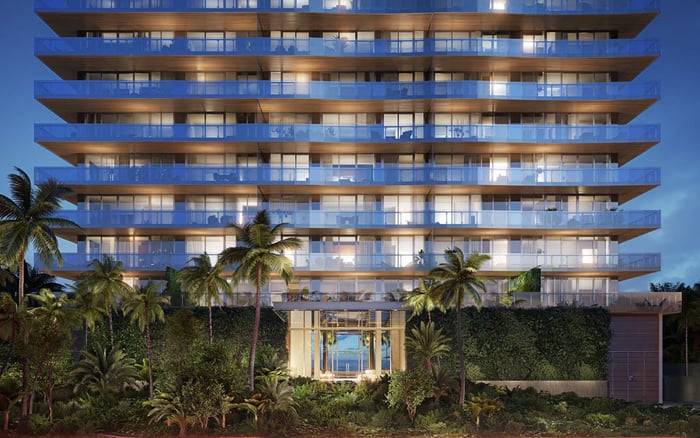
At Faena House Miami Beach, ownership extends beyond an oceanfront address at 3315 Collins Avenue. It encompasses a residential arrival sequence, access to services at the neighboring Faena Hotel, and proximity to the retail and experiential life of the Faena District. For a buyer, those relationships deserve the same scrutiny as the residence itself.
The essential distinction is between physical infrastructure and daily operation. A covered entrance, underground parking, and service entrances establish useful capabilities. They do not, by themselves, establish delivery routes, valet response times, or complete separation between residential and hospitality circulation. Privacy should be evaluated as a sequence of controlled transitions, not a single amenity.
This review centers on three ownership questions: how district activity meets the building, how goods and personnel reach a residence, and how discreetly an owner moves from vehicle to front door.
Curio at Faena Bazaar is a retail and experiential destination on Collins Avenue within the surrounding district. Its presence helps define the neighborhood, but it should not be confused with established retail tenancy inside Faena House. Nor does proximity establish how many visitors pass the residential entrance or whether they affect owner arrivals.
The practical inspection is straightforward: walk the approach to the condominium, identify the residential threshold, and ask management how nonresident inquiries are handled. Check whether wayfinding clearly distinguishes residential, hotel, and retail destinations. These are matters to inspect, not shortcomings to presume.
A buyer also considering Setai Residences Miami Beach should apply the same discipline independently: distinguish the appeal of a destination address from the access rules of the particular residence. A neighborhood experience and a private home can complement each other, but the operating boundary matters more than proximity alone.
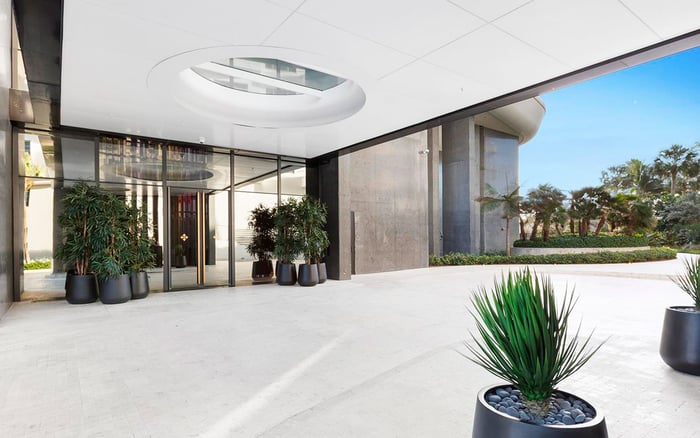
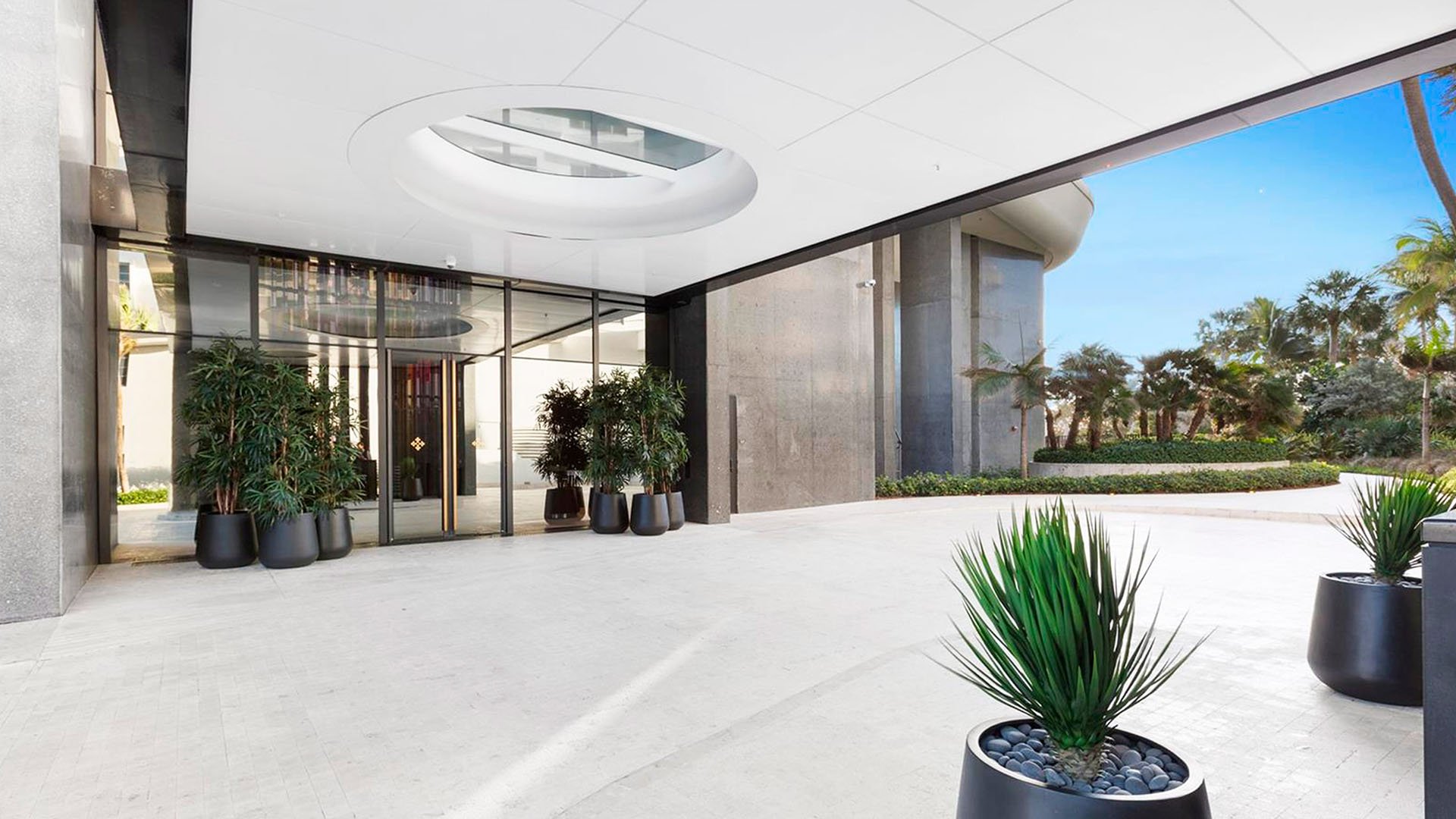
Faena House has a porte-cochère for covered vehicle arrivals. Its parking is described as secure, private underground parking with valet service. The service offering also includes a 24-hour doorman, valet, security surveillance, and concierge services.
Together, these features provide the framework for an attended arrival. They do not establish a guaranteed waiting time or a self-parking entitlement. Ask management to walk through the sequence from Collins Avenue to the covered entrance, vehicle handoff, garage retrieval, and onward access to the residence.
The most useful questions address exceptions. What happens when several vehicles arrive together? Where are waiting vehicles directed? Which curb-use rules govern the approach? How are private drivers, ride services, and visiting guests handled? Request the current valet queue protocol and any event-day staffing plan rather than assuming the everyday arrangement covers every scenario.
A scheduled visit can demonstrate the sequence, but one smooth arrival is not a performance audit. Seek written confirmation of any parking rights that materially influence the purchase.
An underground service corridor connects Faena House with the neighboring hotel. That connection is relevant to hotel-linked service, but it does not establish the current routes for parcels, groceries, restaurant orders, or outside vendors. Treat each category as a distinct operational question.
For parcels, request delivery hours, courier check-in requirements, storage arrangements, and resident notification procedures. For groceries and prepared food, ask whether staff accept orders, how perishables are handled, and whether refrigerated storage is available. None of these procedures should be inferred from the presence of a concierge.
For furniture, contractors, and maintenance personnel, confirm loading arrangements, any freight-elevator access, reservation requirements, and permitted service hours. Ask where credentials are checked and who authorizes movement beyond the receiving point.
Second-home buyers should also clarify what happens when an owner is absent: whether deliveries may be accepted, who may authorize apartment entry, and how unattended items are managed. The decisive issue is the handoff from outside provider to building staff and, where permitted, from staff to the residence. That chain deserves a clear explanation before closing.
Faena House includes private or semi-private elevator vestibules and service entrances. That distinction matters. It does not support a blanket claim that every residence enjoys fully private elevator access. Review the floor plan alongside the actual access controls.
A full-floor penthouse is specifically described as having a private interior elevator and service entrance. That configuration should not be generalized to other homes in the building.
For the residence under consideration, establish whether the vestibule is shared, which elevator calls require authorization, and how guests obtain access. Then follow the service route: where it terminates, how entry is approved, and whether staff or vendors can arrive without passing through the principal entrance. Confirm service-entrance rules rather than treating a separate door as proof of separate circulation throughout.
For a shortlist that includes The Perigon Miami Beach, apply the same residence-specific questions without assuming equivalent configurations or procedures. The comparison should rest on confirmed access arrangements, not a general promise of privacy.
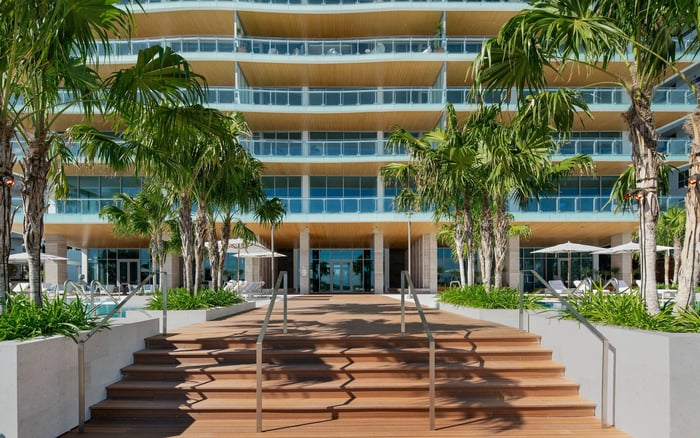
Faena House owners are offered preferred status and access to services at the neighboring Faena Hotel. The residential offering includes an attended private beach club with cabana service, a landscaped pool, a children’s pool, an ocean-view fitness center, and an in-house spa with separate men’s and women’s sauna and steam-room facilities.
These amenities give the operational review a positive purpose: preserving convenience while clarifying access arrangements. Ask how residential amenities screen guests and how hotel services are requested, authorized, and delivered.
The underground corridor warrants its own review. Obtain the agreements governing access and ask management to explain hotel staff movement and the separation of residential and hospitality service routes. Preferred hotel status describes an ownership benefit; it does not, on its own, define every access right, service condition, or operating procedure.
A disciplined purchase review should bring together the residence plan, current house rules, parking entitlements, delivery procedures, and applicable hotel-service agreements. Have the relevant professionals reconcile those documents with the management walkthrough, especially where a particular privacy or service arrangement is central to the decision.
Faena House’s documented features support an attended residential setting with hotel-linked conveniences. The remaining task is neither to assume friction nor to promise its absence. It is to establish how the specific home is served today, where access is controlled, and which rights accompany ownership. For a privacy-conscious buyer, that clarity is part of the luxury.
For a discreet perspective on South Florida ownership, explore MILLION.
If branded residences are on your mind — as a home or as an allocation — we would be glad to share what we are seeing, privately.
Begin a quiet conversationFaena House is an oceanfront condominium at 3315 Collins Avenue in Miami Beach’s Mid-Beach/Faena District.
Curio is a retail and experiential destination in the surrounding Faena District. Its proximity does not establish retail tenancy inside Faena House.
The stated service offering includes a 24-hour doorman, valet, security surveillance, and concierge services. The building also has a covered porte-cochère entrance.
Parking is described as secure, private underground parking with valet service. Buyers should separately confirm any self-parking rights.
No building-wide assumption is warranted: the described configurations include private or semi-private elevator vestibules and service entrances. Confirm the arrangement and access controls for the specific residence.
A full-floor penthouse is specifically described as having a private interior elevator and service entrance. That configuration should not be generalized to other residences.
An underground service corridor connects Faena House with the hotel, but its existence does not establish current parcel, grocery, restaurant, or vendor delivery routes.
Request current delivery hours, courier screening, loading and freight-elevator arrangements, package storage, and procedures for refrigerated or unattended deliveries.
Owners are offered preferred status and access to services at the neighboring Faena Hotel. Review the applicable agreements for access rights and service conditions.
The residential offering includes an attended private beach club with cabana service, landscaped and children’s pools, an ocean-view fitness center, and a spa with separate men’s and women’s sauna and steam-room facilities.