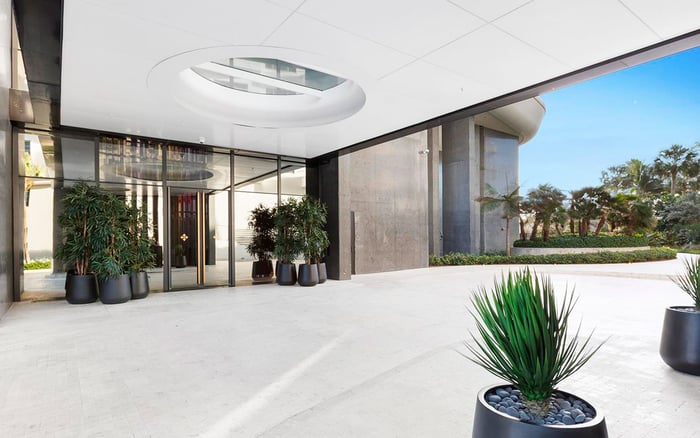
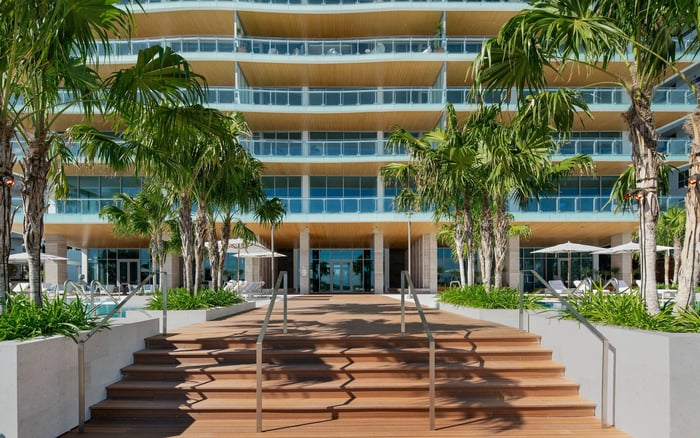
At 57 Ocean, the transition from a newly delivered condominium to an owner-governed residential community deserves the same scrutiny as the residence itself. Buyers should examine board education, reserve planning, insurance strategy, vendor controls and maintenance records before treating luxury service as evidence of disciplined governance.
At a newly completed **ocean**front condominium, closing can feel like the culmination of a purchase. In governance terms, it is closer to the beginning. Owners inherit not only private residences and shared amenities, but also a corporate structure responsible for budgets, contracts, insurance, maintenance and the consistent application of community rules.
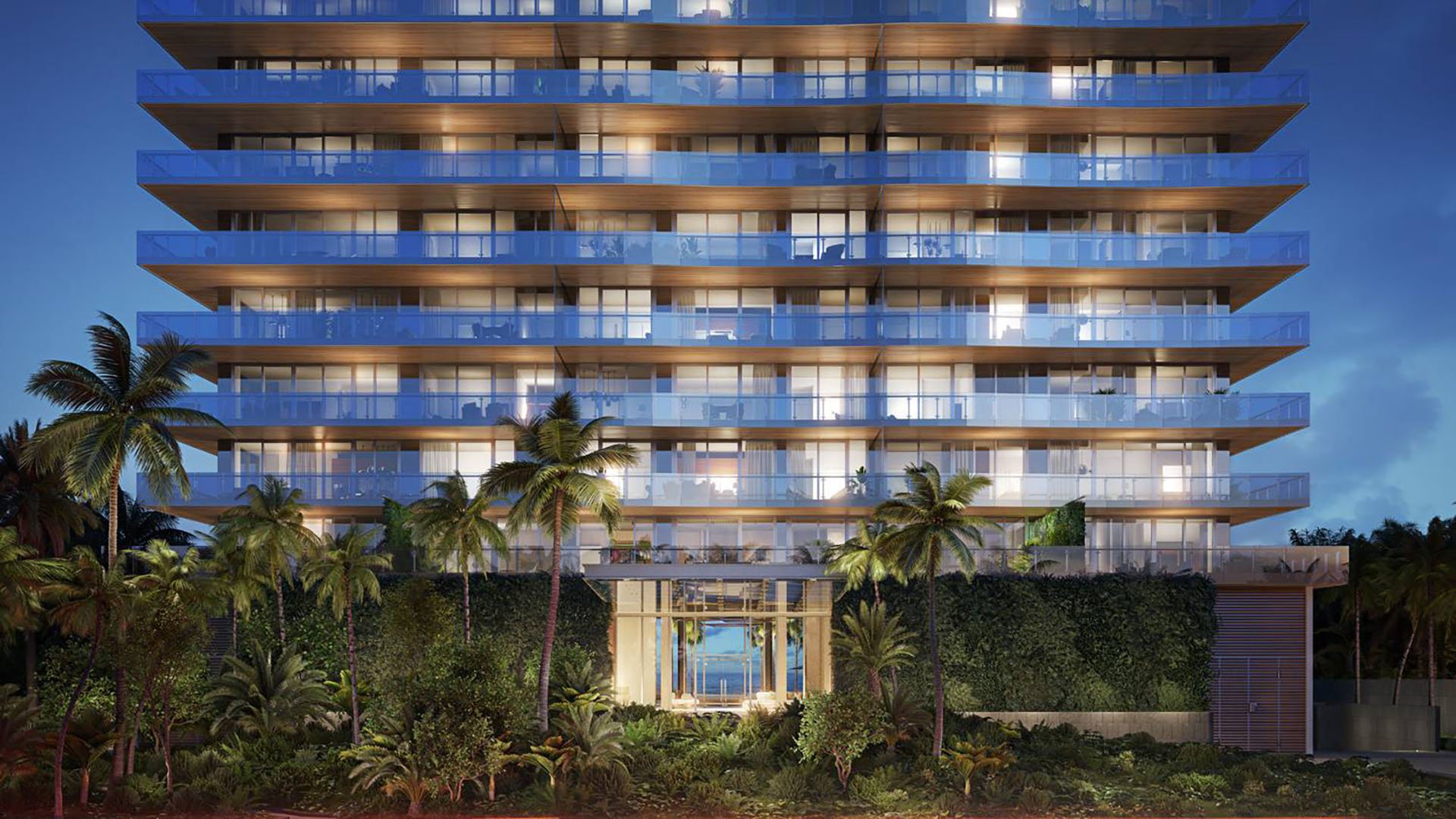
That distinction is especially important at 57 Ocean Miami Beach, an 18-story, Arquitectonica-designed condominium at 5775 Collins Avenue in Mid-Beach. Positioned on Miami Beach’s Millionaire’s Row, the property was originally presented as a boutique development of 71 luxury residences. Construction was completed in September 2021, with closings and move-ins scheduled to begin that October.
The building was sold out at completion, including a $36 million full-floor penthouse transaction. Those launch-era milestones establish market context, but they do not answer the longer-term ownership question: How effectively does the association translate a refined physical asset into a consistently managed residential environment?
Luxury service is visible, while governance discipline is revealed in records and decisions.
57 Ocean Condominium Association, Inc. was formed as an active Florida not-for-profit corporation on August 16, 2021. Its principal and mailing address is the management office at 5775 Collins Avenue. Kathryn Chenault is identified as president; Simon Elias as vice president and director; and Pablo Teran as secretary, treasurer and director.
Annual reports for 2023, 2024 and 2025 document continued corporate reporting during the building’s early occupancy years. This baseline information confirms the association’s legal identity, address and named officers over those filing periods.
It does not, however, establish the precise date on which control transferred from the developer to unit owners. Nor does it demonstrate the scope of director education, the adequacy of reserves, the quality of insurance decisions or the rigor of maintenance procedures. Board-training materials, reserve studies, meeting minutes and detailed governance policies are not publicly disclosed.
For a resale buyer, that gap should not be filled with assumptions. It should prompt a focused document review. The same principle applies when considering established coastal properties such as Faena House Miami Beach: Architectural distinction and governance evidence belong in separate parts of the diligence file.
A condominium board governs a shared financial and physical asset. Education helps directors understand the limits of their authority, the importance of documented decisions and the distinction between strategic oversight and day-to-day management. For buyers, the relevant issue is not whether every director has a technical background. It is whether the board demonstrates a repeatable process for obtaining qualified advice, evaluating alternatives and preserving a clear record.
At 57 Ocean, this matters because the association’s responsibilities extend beyond a conventional lobby and pool deck. The service program includes pool and beach attendants, while the design incorporates indigenous landscaping and vertical gardens. Each feature creates recurring decisions involving staffing, vendor scope, service standards, preventive care and budget priorities.
Board education can support discipline in five areas: reading financial statements, understanding reserve assumptions, reviewing insurance options, supervising management and applying governing documents consistently. A sophisticated board should also recognize when an issue requires legal, engineering, accounting or insurance expertise. Education does not guarantee a preferred outcome, but it can strengthen the quality and traceability of the decision-making process.
A serious review begins with the declaration, bylaws, current budget and recent financial statements. Buyers should also request available meeting minutes, reserve information, insurance summaries, pending assessment disclosures, major vendor agreements and records concerning material maintenance or repair programs. The objective is to determine whether policy, funding and execution align.
Director education should be assessed through available certificates, orientation materials or meeting discussions. Reserve planning deserves equal scrutiny. Rather than considering only the total cash balance, buyers should ask which components are contemplated, how assumptions are updated and how the board responds when actual costs diverge from projections.
An insurance review should examine coverage structure, deductibles, exclusions and the association’s process for obtaining professional guidance. Vendor oversight should reveal clear scopes, renewal terms, performance monitoring and approval controls. Minutes can show whether significant matters receive substantive discussion, decisions are formally recorded and follow-up responsibilities are assigned.
These requests are not accusations of weak management. They are standard buyer’s-guide questions for a high-value shared asset. Buyers comparing the oceanfront experience at The Perigon Miami Beach or The Ritz-Carlton Residences® Miami Beach should apply the same framework while evaluating each property solely through its own governing documents and records.
A polished annual budget can still leave essential questions unresolved. Long-term discipline emerges from the relationship among planning, documentation and execution. If landscaping is central to the design, for example, buyers should look for a defined maintenance scope and a process for addressing deterioration. If attendants are integral to the resident experience, the association should be able to explain how service expectations are contracted, monitored and funded.
Meeting cadence offers another useful line of inquiry, but frequency alone is not enough. More revealing is whether materials are distributed in time for informed review, conflicts are handled appropriately and decisions can be followed from proposal through completion. Consistent enforcement also matters: Selective or poorly documented enforcement can create uncertainty for owners.
No single record proves excellent governance. Taken together, however, budgets, minutes, contracts, reserve materials and maintenance histories can indicate whether the association operates proactively or responds only when an issue becomes urgent.
57 Ocean entered occupancy with a compelling foundation: direct oceanfront positioning, design by Arquitectonica, Moss Construction as general contractor and a limited residence count. Preserving that proposition requires an association capable of managing its service, landscape and building obligations over time.
For prospective owners, the prudent approach is to separate what is established from what must be verified. The association exists, named officers have been disclosed and annual corporate reporting continued through 2025. The exact turnover date and the substance of internal governance practices require association-level documentation.
That distinction is not merely procedural. In a luxury condominium, disciplined governance shapes the predictability of ownership, the condition of common areas and the credibility of future planning. A buyer who examines the board’s educational posture, reserve methodology, insurance process and vendor controls is evaluating the operating architecture behind the physical one.
For discreet guidance on Miami Beach condominium ownership and due diligence, connect with MILLION.
If branded residences are on your mind — as a home or as an allocation — we would be glad to share what we are seeing, privately.
Begin a quiet conversation57 Ocean is at 5775 Collins Avenue in Mid-Beach, along Miami Beach’s Millionaire’s Row corridor.
Construction was completed in September 2021, with closings and move-ins scheduled to begin in October 2021.
The Arquitectonica-designed building rises 18 stories and was originally marketed with 71 luxury residences.
57 Ocean Condominium Association, Inc. was formed as a Florida not-for-profit corporation on August 16, 2021.
No. The filings establish the association’s identity and officers, but not the precise date of turnover to unit-owner control.
It can support more informed oversight of budgets, reserves, insurance, vendors and governing documents. Buyers should verify the association’s actual education records.
Buyers should request governing documents, budgets, financial statements, meeting minutes, reserve information, insurance summaries and material vendor agreements.
The amenity program includes pool and beach attendants, while indigenous landscaping and vertical gardens add continuing service and maintenance responsibilities.
No. They document continued corporate reporting, but do not establish reserve adequacy, maintenance quality or the rigor of board practices.
Review how the association plans, documents and executes decisions across reserves, insurance, maintenance, vendor supervision and rule enforcement.