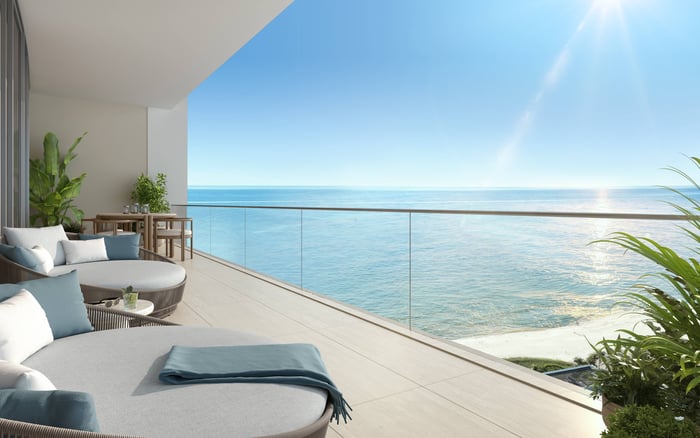
A discreet buyer’s guide to three South Florida branded residences, comparing ownership flexibility, association governance, and livability across Fort Lauderdale, Pompano Beach, and Boca Raton.

The most sophisticated South Florida buyers are no longer evaluating branded residences as symbols alone. The sharper question is how a property performs after closing: how ownership can be used, how association governance protects the building’s character, and how comfortably the residence supports everyday life across many seasons.
That is the useful frame for comparing Auberge Beach Residences & Spa Fort Lauderdale, Waldorf Astoria Residences Pompano Beach, and Mr. C Residences Boca Raton. Each is best understood as a branded residential project, not as a conventional condo-hotel shortcut. The distinction matters. Branded residential ownership asks a building to balance private-home discretion with hotel-caliber expectations, while still operating under condominium association rules that affect every owner.
The result is not a simple ranking. It is a lifestyle calibration across Fort Lauderdale, Pompano Beach, and Boca Raton, three addresses that speak to different ways of living in South Florida’s luxury market.
Ownership flexibility is often reduced to a single issue, usually whether an owner can use the residence part-time, seasonally, or as a long-hold asset. In practice, flexibility is a bundle of questions. Can the household arrive with little friction? Are guest-use policies clear? Does the association framework support the owner’s preferred rhythm? Are there restrictions that may feel minor at purchase but consequential after several years?
For Auberge Beach Residences & Spa Fort Lauderdale, the Fort Lauderdale context may appeal to buyers who want a residence in an established luxury coastal setting with a branded-service sensibility. The key due diligence is not to assume that brand equals unlimited use. It is to read the governing documents and confirm how private ownership, household guests, and any leasing intentions are treated.
Waldorf Astoria Residences Pompano Beach brings the Pompano Beach example into the same conversation. Buyers considering this location should focus on how the association structure supports a residential atmosphere while preserving the expectations associated with a hospitality name. Flexibility should be tested against real behavior, including seasonal visits, family use, and potential resale positioning.
Mr. C Residences Boca Raton brings the Boca Raton lens: a branded residence evaluated not only for image, but for day-to-day compatibility. Boca Raton buyers often think in terms of enduring use, household routine, and a polished but livable environment. The central question is whether the ownership rules align with that long-range intention.
In high-end condominium ownership, association governance is not administrative background. It is part of the asset. The declaration, bylaws, house rules, leasing provisions, architectural controls, pet policies, service protocols, and approval procedures shape the owner experience as much as the lobby or arrival sequence.
This is especially true in branded residences, where owners expect privacy and consistency, but the building must also protect the shared brand environment. Rules can preserve value by limiting friction, maintaining standards, and clarifying what is acceptable before conflicts occur. Yet rules can also narrow a buyer’s intended use if they are not reviewed carefully before contract.
The practical approach is to ask how each association balances three interests: the individual owner, the collective ownership body, and the brand identity of the residence. A buyer who values maximum personal discretion may prioritize different provisions than a buyer who wants a highly curated and uniform residential culture.
In portfolio shorthand, Fort Lauderdale, Pompano Beach, and Boca Raton represent three distinct buyer rhythms, but the same discipline applies in each case: the rules should be read as carefully as the floor plan.
A branded residence can impress quickly. Long-term livability is slower and more revealing. It asks whether the property can serve as a true residence, not only as a beautiful arrival moment. For a primary user, that means daily convenience, privacy, service consistency, and a building culture that feels natural rather than performative. For a seasonal owner, it means the ability to return smoothly and feel immediately at home. For a future seller, it means the ownership structure is legible to the next sophisticated buyer.
This is where the three-property comparison becomes less about amenity language and more about fit. Auberge Beach Residences & Spa Fort Lauderdale is the Fort Lauderdale example for buyers weighing branded residential ownership against coastal permanence. Waldorf Astoria Residences Pompano Beach is the Pompano Beach example for buyers considering how a hospitality name can shape expectations in a developing luxury conversation. Mr. C Residences Boca Raton is the Boca Raton example for buyers who may place equal weight on refinement and residential cadence.
None of these lenses requires unsupported assumptions about pricing, inventory, or amenity programming. The more useful exercise is personal: map the rules, service expectations, and geographic identity against how the residence will actually be used.
Begin with your ownership pattern. If the residence is intended as a primary home, association culture and daily livability should lead the decision. If it is intended as a seasonal base, arrival experience, guest-use clarity, and lock-and-leave confidence become more important. If it is part of a broader wealth strategy, resale readability and governance quality deserve early attention.
Next, separate brand affection from legal structure. A name can signal service, design intent, and confidence, but the association documents define the owner’s rights and obligations. Buyers should review the rules before falling in love with the narrative.
Finally, choose the city as much as the building. Fort Lauderdale, Pompano Beach, and Boca Raton sit within the same regional luxury market, but they do not create the same daily life. The best purchase is the one where geography, governance, and personal use all point in the same direction.
Are these three properties conventional condo-hotels? They are framed as branded residential projects rather than conventional condo-hotel examples.
Why does ownership flexibility matter so much? Flexibility affects how an owner can use the residence over time, including personal use, guest use, and any future plans that depend on association rules.
Is one of the three clearly the most flexible? The available facts do not support ranking one as the most flexible. Buyers should compare the governing documents directly.
What should buyers review before purchasing? Buyers should review the declaration, bylaws, house rules, leasing provisions, approval procedures, and any brand-related operating standards.
Why are association rules so important in branded residences? Association rules protect the shared residential environment and define how private ownership coexists with hotel-caliber service expectations.
How should a seasonal buyer approach this comparison? A seasonal buyer should focus on ease of arrival, clarity around household guests, service consistency, and whether the rules support intermittent use.
How should a full-time resident approach the decision? A full-time resident should prioritize daily comfort, privacy, governance culture, and whether the building feels like a true home.
Does the brand name replace legal due diligence? No. The brand may shape expectations, but the condominium documents define the owner’s practical rights and responsibilities.
How do the three locations differ in this comparison? Fort Lauderdale, Pompano Beach, and Boca Raton create different lifestyle contexts within South Florida’s luxury residential market.
What is the best way to decide among them? Match the property’s rules, location, and ownership structure to how the residence will be used over the next several years.
For a tailored shortlist and next-step guidance, connect with MILLION.
If branded residences are on your mind — as a home or as an allocation — we would be glad to share what we are seeing, privately.
Begin a quiet conversation