Mandarin Oriental Residences, West Palm Beach and South Flagler House offer distinct visions of residential entertaining. For buyers, the decisive comparison lies in documented occupancy limits, catering permissions, arrival procedures, and operating responsibility, not amenity names alone.
For a West Palm Beach buyer who entertains regularly, a private-event room can extend the home without bringing every gathering into it. The appeal is discretion: a dinner, family celebration, or business reception in a residential setting. Yet the most consequential details are rarely the finishes. They are the permitted guest count, the caterer's access, and the route visitors take through the building.
Mandarin Oriental Residences, West Palm Beach and South Flagler House West Palm Beach frame that inquiry differently. Mandarin Oriental emphasizes branded staffing and hospitality services; South Flagler House advertises multiple entertaining rooms and catering infrastructure. Neither presentation alone establishes which property can accommodate a buyer's preferred event.
The useful comparison is not which amenity sounds more lavish. It is which documented operating arrangement best supports an owner's plans for hosting while protecting the privacy of other residents.
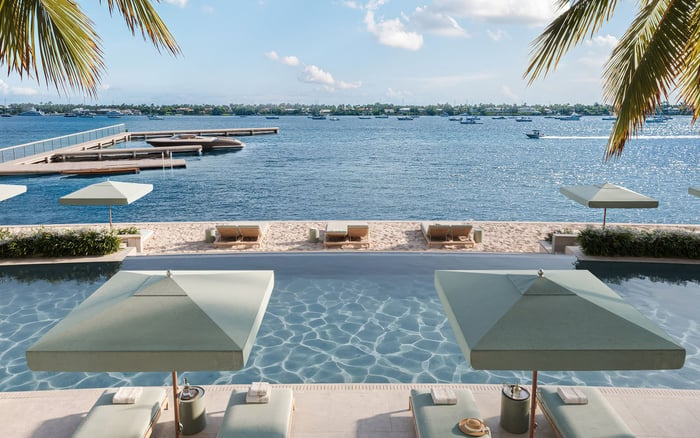
Mandarin Oriental Residences, West Palm Beach is planned for 5400 N. Flagler Drive, directly on the Intracoastal waterfront. It is presented as an upcoming residential property, not a conventional hotel. That distinction matters: buyers should not assume hotel-style event access or unrestricted use of hospitality facilities.
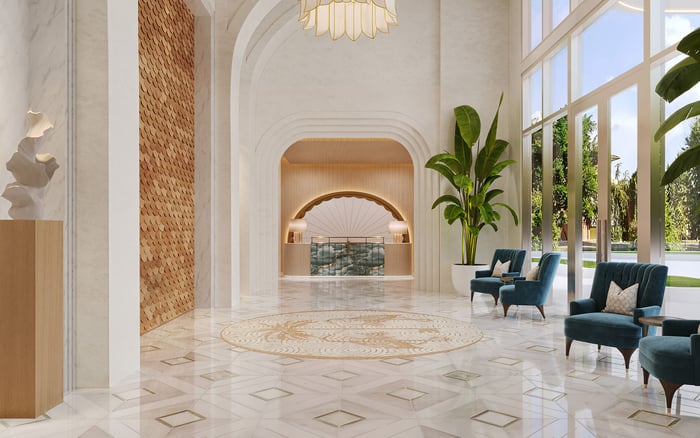
The advertised program includes a business center and private-event spaces, with a social lounge featuring a chef's kitchen, a garden room, outdoor pavilions with grilling stations, and flexible meeting rooms connected to the business lounge. These offer several potential settings for entertaining, but their names do not establish approved guest capacities or reservation rights.
The service offering includes a dedicated team of full-time Mandarin Oriental-trained staff. A Director of Residences, 24-hour concierge, valet, and security are also advertised. Buyers should establish which personnel would support an event and whether those services are included, charged separately, or subject to availability.
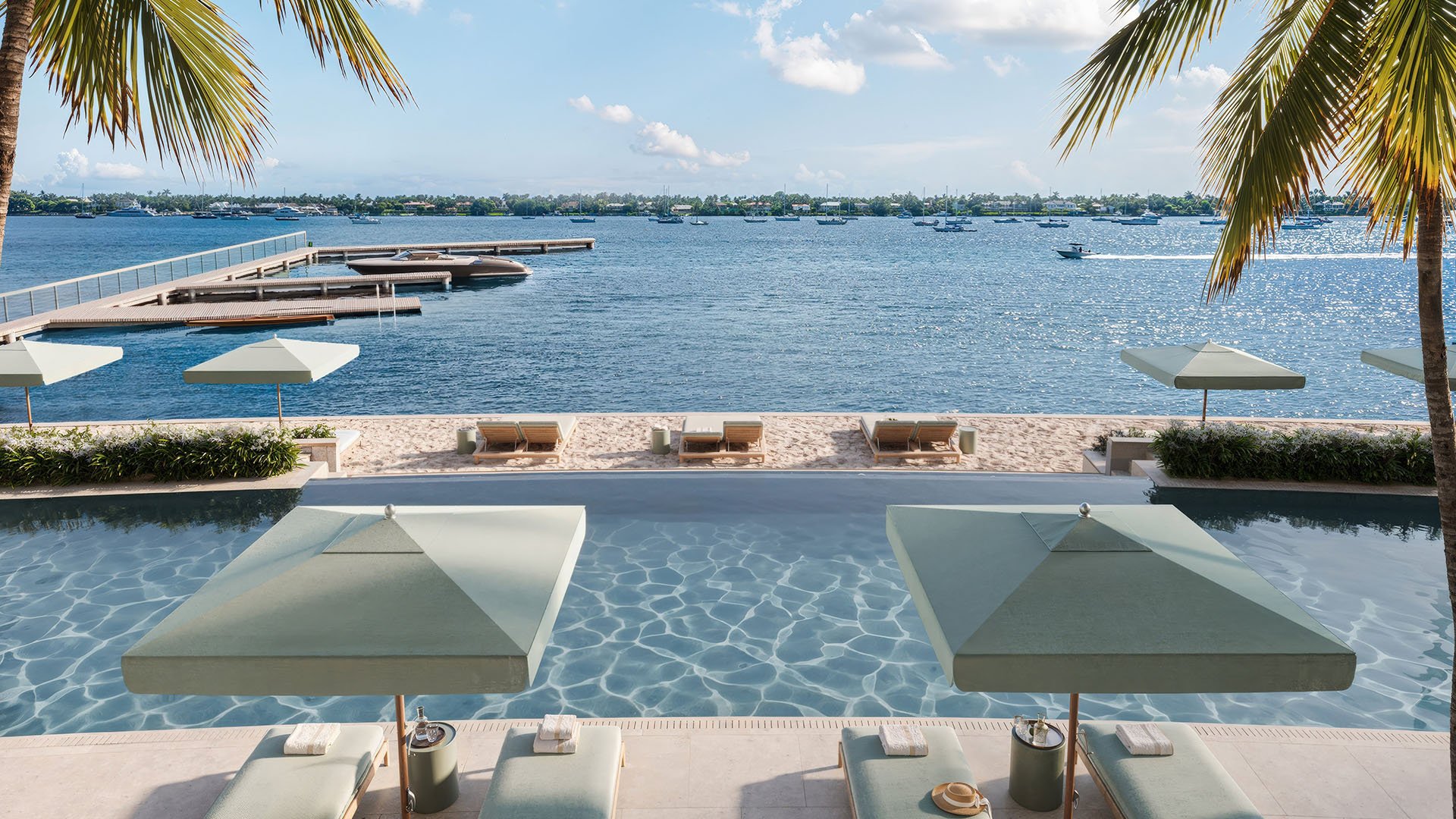
Poolside food-and-beverage service by Mandarin Oriental is also advertised. That does not establish an exclusive catering requirement for private events-or permission to bring in an outside chef.
South Flagler House's advertised residential program comprises 105 residences, including two- to five-bedroom homes, penthouses, and guest suites. Its entertaining program includes an entertainment lounge with a catering kitchen and a party room with a catering kitchen. A commercial kitchen is advertised separately.
For an owner planning hosted dinners, this infrastructure is relevant. Still, a catering kitchen and a commercial kitchen are not interchangeable promises. Permitted users, preparation activities, equipment access, and operating rules all require written confirmation.
The advertised concierge offering includes amenity bookings and private-event planning, alongside dinner reservations, transportation, housekeeping, and daily errands. Coordination can be valuable, but buyers should distinguish help with arrangements from responsibility for food service, vendor compliance, security, or cleanup.
Advertised security and parking features include 24/7 concierge and security, a secured underground garage, assigned parking, valet service, and controlled access. These details require developer confirmation and do not, on their own, establish an event-specific arrival protocol.
Neither property's described amenities establish comparable legal event-room capacities. There is therefore no defensible basis for ranking them by guest count. Instead, give the sales and management teams a specific event scenario: a seated dinner, a standing reception, or a meeting with outside attendees.
Request the approved seated and standing occupancy limits for the intended room, together with the applicable fire-code documentation. Ask whether staff and vendors count toward the limit and whether the proposed furniture arrangement changes permitted occupancy. Do not assume adjacent rooms or outdoor areas can be combined for a larger gathering.
Reservation rights deserve equal attention. Confirm whether a booking grants exclusive use, how far in advance it can be made, and whether event frequency is limited. Ask for permitted hours, music and noise restrictions, cancellation terms, and setup and breakdown windows. A room that accommodates the guest list may still be unsuitable for the desired schedule.
The first catering question is straightforward: may the resident appoint an outside caterer? Follow with questions about approved-vendor requirements, kitchen access, licenses, insurance, and required staffing. Establish whether vendors may cook on site or only finish and serve prepared food.
Alcohol warrants separate written clarification. Ask who may supply and serve it, what liability requirements apply, and whether additional insurance or personnel are necessary. Neither property's amenity description establishes those permissions.
Request an itemized estimate covering room charges, kitchen access, service staffing, valet, additional security, cleaning, deposits, and any administrative or service charges. Clarify who bears responsibility for damage and late departures. The objective is not merely a price quotation, but a clear allocation of obligations before invitations are sent.
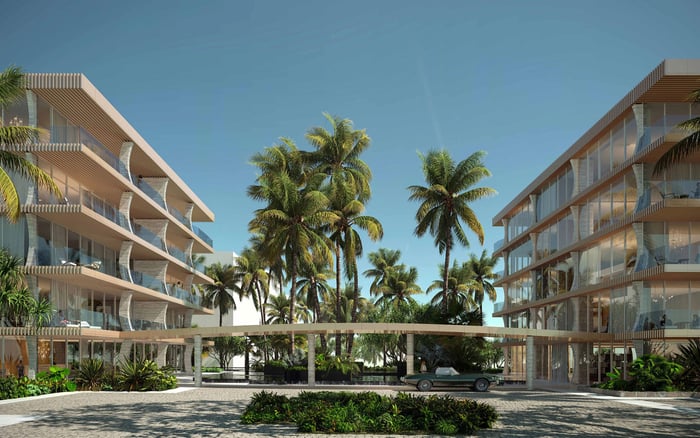
Mandarin Oriental's planned arrival features a private porte-cochère beneath a sculpted canopy, with a central water feature and landscaped approach. This defines an architectural arrival experience, not a documented procedure for registering guests or screening vendors.
For both properties, ask how guest preregistration works, whether identification is checked, and who authorizes an unexpected attendee. Clarify how visitors reach the event room and whether elevator access is restricted. Request separate explanations for guest arrival, catering deliveries, and vendor departure.
The central question is whether event traffic can be managed without compromising resident circulation. Ask about loading routes, valet arrangements, separation of resident and event traffic, and circumstances requiring additional guards. A polished entrance and controlled access are useful attributes, but neither substitutes for an event plan.
For a Palm Beach buyer extending a search to Alba West Palm Beach, the same discipline applies: compare written permissions rather than infer entertaining rights from amenity names. This is a diligence framework, not an assertion that another property offers equivalent facilities.
Request the declaration, bylaws, house rules, amenity reservation policy, catering and vendor policy, insurance requirements, and proposed management agreement. Where rules remain proposed, ask which provisions may change and who has authority to change them.
Finally, distinguish the responsibilities of brand personnel, the association, management, valet and security contractors, and caterers. The strongest fit is the residence whose documented rules accommodate your intended gatherings with clear accountability. Until those terms are established, neither development can responsibly be declared superior for private-event capacity, catering freedom, or arrival security.
For a discreet perspective on residential choices and buyer priorities, explore MILLION.
If branded residences are on your mind — as a home or as an allocation — we would be glad to share what we are seeing, privately.
Begin a quiet conversationThe available amenity descriptions do not establish comparable legal guest limits. Buyers should request approved seated and standing capacities and applicable fire-code documentation.
Its planned program includes private-event spaces, a social lounge with a chef's kitchen, a garden room, outdoor grilling pavilions, and flexible meeting rooms connected to the business lounge.
South Flagler House advertises an entertainment lounge and a party room with catering kitchens, plus a separate commercial kitchen. Permitted users and operating rules require confirmation.
Advertised poolside food-and-beverage service by Mandarin Oriental does not establish an exclusive private-event catering requirement. Buyers should request the applicable catering policy.
The described amenity program does not establish outside-caterer permissions. Confirm vendor eligibility, kitchen access, insurance, and staffing requirements in writing.
Its concierge team is advertised as coordinating amenity bookings and private-event planning. Buyers should clarify the scope, charges, and division of responsibilities.
It describes a planned architectural arrival experience. It does not establish guest-registration, vendor-screening, or event-traffic separation procedures.
Advertised features include 24/7 concierge and security, controlled access, valet, assigned parking, and a secured underground garage. Buyers should confirm these with the developer and request event-specific procedures.
Request the declaration, bylaws, house rules, reservation and vendor policies, insurance requirements, and proposed management agreement. Clarify whether the relevant provisions are final or proposed.
Not on the established details alone. A meaningful comparison requires documented guest limits, catering permissions, costs, and arrival procedures matched to the buyer's intended events.