Maison D’Or’s advertised service menu invites a more exacting family-office review: what assessments include, how requests are prioritized, how vendors are paid, and who takes responsibility when service falls short.

For a family office, residential luxury is measured in part by what no longer requires the principal’s attention. Travel arrangements, household preparation, childcare coordination, and dinner service offer meaningful convenience when authority, cost, and accountability are clear. At Maison D'Or South Flagler, that distinction belongs near the front of the acquisition file.
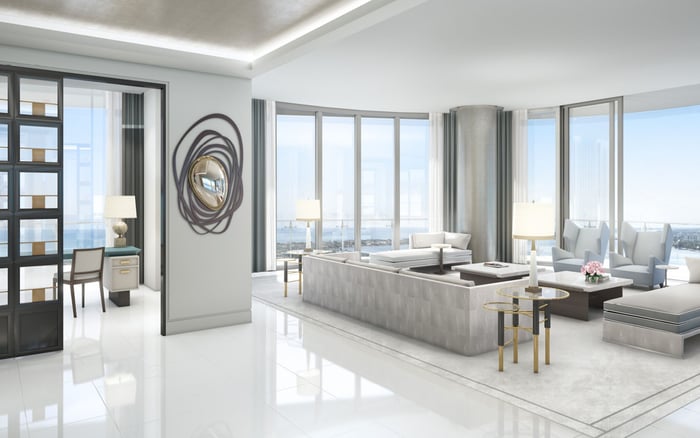
The planned West Palm Beach condominium comprises 19 stories and 39 residences at 3705 South Flagler Drive, on a 1.4-acre waterfront site across the Intracoastal Waterway from Mar-a-Lago. Planned homes range from approximately 3,000 to more than 10,000 square feet, with two- to four-bedroom layouts. That scale warrants a household-management review alongside the architectural one.
The advertised concierge menu is broad, but breadth is not an operating standard. Prioritization rules, vendor economics, and escalation procedures must be established in writing, not inferred from the promise of attentive service.
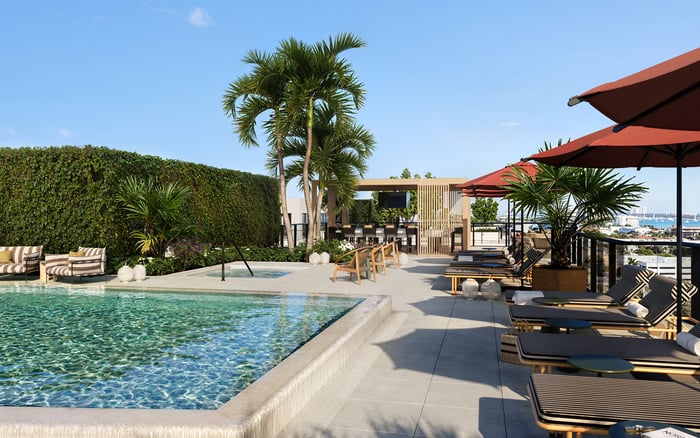
Marketed amenities include a waterfront pool and spa plaza, waterfront fitness center, wellness center, wine storage and tasting lounge, screening theater, guest suites, café, boardroom, and salon room. A new boat dock is marketed as accommodating up to four vessels.
Evaluate these features separately from the concierge menu. A dock does not establish a resident’s docking entitlement; guest suites do not establish booking priority or pricing. Request the applicable access, reservation, and charging rules before incorporating either into a household plan.
Buyers also considering Forté on Flagler West Palm Beach should draw the same distinction between physical amenities and service commitments. The comparison should rest on written terms, not an assumption that similar settings imply similar operating arrangements.
The development partners are Kolter Urban and Perko Development Partners. The condominium’s legal developer is PK Flagler House LLC, which uses Kolter-related trademarks under a licensing and marketing agreement. For diligence purposes, commercial identity and contractual responsibility should remain distinct.
Ask counsel to identify which entity makes each service commitment, which party will manage delivery, and which documents govern after occupancy. Keep developer warranty matters separate from concierge complaints and association operations. A single point of contact may simplify communication, but it should not obscure responsibility for resolving the underlying issue.
The resulting file should distinguish planned offerings from enforceable obligations and clarify how service terms may change. An undisclosed policy should not be presumed absent.
The advertised menu includes airline and private-air reservations, boat or yacht charter, limousine or chauffeur services, restaurant and nightlife arrangements, activity arrangements, and golf coordination. Household assistance includes housekeeping, grocery shopping, personal shopping, and absentee-owner care. Personal chefs, in-residence dining, sommelier services, and event planning extend the hospitality proposition.
Some services are expressly à la carte. The first diligence document should therefore be an included-versus-chargeable matrix showing what assessments cover, what carries a separate coordination charge, and what requires direct payment to a provider. Ask whether minimum charges, after-hours premiums, or cancellation fees apply; do not presume they do.
Next, request staffing by shift and written response targets. Distinguish acknowledgment of a request from confirmation of a booking and completion of the service. Ask how competing requests are prioritized, whether time-sensitive needs receive different treatment, and what happens when the preferred provider is unavailable.
For a buyer weighing Alba West Palm Beach alongside Maison D’Or, this matrix provides a consistent comparison framework without presuming identical service models.
Convenience can justify a fee. The question is not whether coordination has a price, but whether the owner can understand and approve that price before committing.
Request written disclosure of referral fees, commissions, rebates, administrative charges, and markups. Ask whether management, another building-related entity, or the concierge provider retains any compensation. These are diligence questions, not assertions that such arrangements exist.
Obtain sample quotes that separate vendor cost, taxes, gratuities, and building or coordination fees. Clarify who issues the invoice, who collects payment, and whether an approved estimate may change without renewed authorization. For recurring services, request the terms governing price adjustments and cancellation.
The family office should be able to reconcile the original request, approved quote, completed work, and final invoice. An elegant service experience need not come at the expense of transparent accounting.
The concierge menu also advertises nanny or childcare assistance, dog sitting, walking and grooming, laundry and dry cleaning, floral and plant care, engineering services, and fuel delivery. Each category warrants a scope appropriate to its risks.
Language describing service arrangements does not, by itself, establish direct employment, guaranteed vendor performance, or building liability for third-party work. Request provider identities, written scopes, relevant insurance and licensing evidence, screening procedures, and explicit liability allocation. Clarify who handles refunds, replacement providers, property damage, and disputed work.
For childcare and household access, establish who may admit a provider and authorize changes. For absentee-owner care, request a defined inspection scope and reporting format. For engineering work, clarify the boundary between private-residence services and building systems. The objective is a clear handoff, not an assumption that building employees deliver every advertised service.
Request an escalation schedule covering concierge failures, maintenance emergencies, security incidents, billing disputes, vendor complaints, and developer warranty matters. Each category should identify a primary contact, backup contact, escalation deadline, and person responsible for closure.
Ask how after-hours issues are routed and which incidents trigger immediate notification to the owner or family office. A concierge acknowledgment is not an emergency response protocol. Billing disagreements likewise require a documented review path, not informal assurances.
If Mr. C Residences West Palm Beach is also under consideration, apply the same questions independently. A hospitality-oriented presentation should prompt careful review, not substitute for it.
Before delegating purchases, designate authorized requestors and spending approvers. Set approval thresholds, clarify emergency exceptions, and establish how sensitive travel, family, and payment information may be shared. Request incident reporting and monthly reconciliation that allow the family office to review charges without reconstructing conversations.
The final file should contain the service matrix, staffing and priority rules, vendor-fee disclosures, provider-accountability terms, escalation schedule, and household authorization policy. These are requested controls, not established Maison D’Or procedures. Their value is straightforward: they turn a promising service menu into a framework the buyer can evaluate with confidence.
For a discreet perspective on South Florida residences and buyer priorities, explore MILLION.
If branded residences are on your mind — as a home or as an allocation — we would be glad to share what we are seeing, privately.
Begin a quiet conversationIt is planned for 3705 South Flagler Drive in West Palm Beach, on a 1.4-acre waterfront site across the Intracoastal Waterway from Mar-a-Lago.
The planned condominium comprises 39 residences across 19 stories. Planned homes range from approximately 3,000 to more than 10,000 square feet.
PK Flagler House LLC is identified as the legal condominium developer. The development partners are Kolter Urban and Perko Development Partners.
No such blanket inclusion is established; some services are expressly à la carte. Buyers should request a written matrix separating included services from separately charged arrangements.
It does not establish those operating standards. Request written priority rules, staffing coverage, and separate targets for acknowledgment, confirmation, and completion.
The advertised offerings do not establish vendor-markup economics. Request written disclosure of any markups, referral fees, commissions, rebates, or administrative charges.
Arrangement language alone does not establish building liability, direct employment, or guaranteed performance. Obtain written scopes and explicit responsibility and liability terms.
The menu includes nanny or childcare assistance and dog sitting, walking, and grooming. Provider screening, access authorization, and accountability should be reviewed separately.
Request named contacts and deadlines for concierge failures, maintenance emergencies, security incidents, billing disputes, vendor complaints, and developer warranty matters.
Designate authorized requestors, spending approvers, and emergency exceptions. Establish privacy safeguards, incident reporting, and monthly reconciliation of approved quotes against final charges.