A buyer-focused guide to evaluating Regalia’s views, neighboring development rights, and construction exposure, with a clear distinction between today’s panorama and enforceable protection.
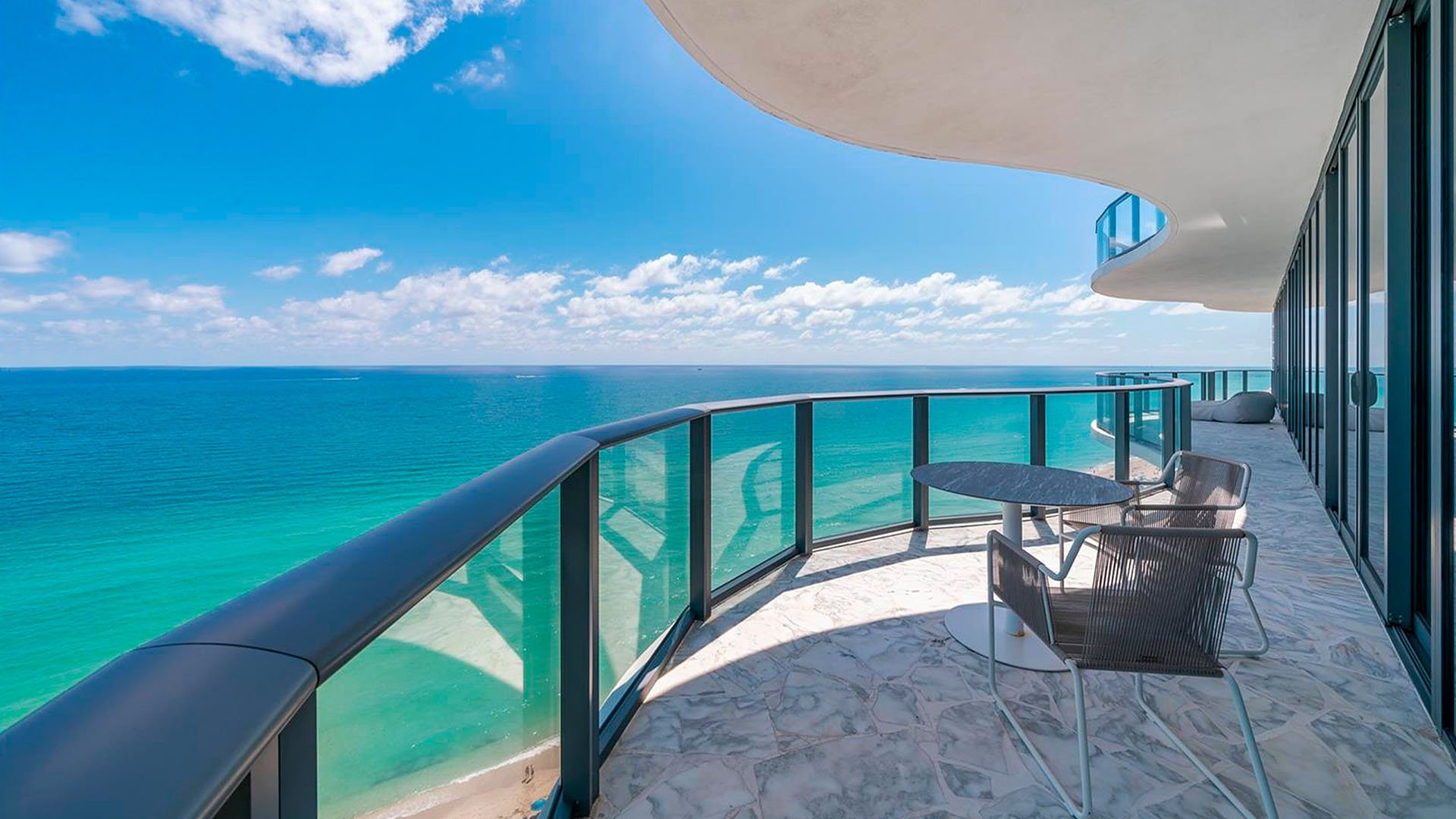
At Regalia Sunny Isles Beach, the panorama deserves close attention-as does the paperwork behind it. Located at 19575 Collins Avenue, near Sunny Isles Beach’s northern boundary with Golden Beach, Regalia is a completed oceanfront condominium. Construction began in October 2011 and concluded in May 2014, spanning approximately 31 months. It is not an active development site.
The 46-story tower has 39 residences, predominantly full-floor homes. That configuration makes an orientation-by-orientation assessment especially useful: a residence’s appeal may depend on several outlooks rather than a single ocean-facing window. Descriptions of 360-degree views characterize the panorama, not a legally protected envelope around the building.
For a buyer, the essential distinction is between what can be enjoyed today, what neighboring owners may be entitled to build, and what restrictions actually bind those parcels. Treat these as three separate questions before assigning lasting value to a particular sightline.
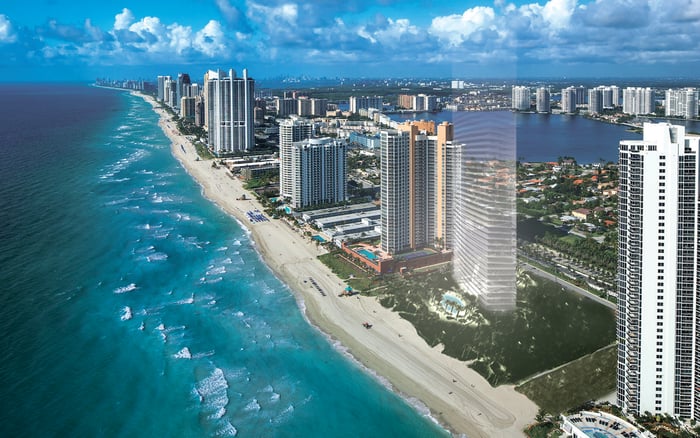
Regalia’s northern outlook faces Golden Beach’s predominantly single-family, lower-density setting-a different context from Sunny Isles Beach’s condominium-tower environment. That distinction matters visually. It does not, by itself, establish a permanent view easement or guarantee that surrounding development rights will remain unchanged.
Start with the specific residence. Identify which views matter most from principal living spaces, bedrooms, and outdoor areas. Then distinguish a broad panorama from a narrower sightline whose appeal depends on an opening between buildings. A general statement about expansive views cannot resolve those residence-specific differences.
Legal diligence should include the title commitment, survey, condominium declaration, recorded easements, restrictive covenants, and any relevant development-rights agreements. Have counsel determine whether a claimed restriction is recorded, enforceable, applicable to the relevant parcels, and protective of the particular view being valued. Without that analysis, “protected” remains a proposition to test, not an acquisition assumption.
Document balcony views from the actual positions a buyer expects to use. Assess terrace sightlines separately rather than inferring them from interior photographs. Consider requesting dated photographs and a simple orientation plan identifying the northern, southern, western, and ocean-facing outlooks.
For southern and western sightlines in particular, connect the visible landscape to identifiable neighboring parcels. The useful question is not merely whether a building could appear nearby, but whether an allowable or approved building envelope could intersect the view from this residence.
Buyers also considering Jade Signature Sunny Isles Beach should apply the same discipline to each candidate residence. Comparison is most useful when it follows identical questions about orientation, parcel rights, and documentary protection-not when it treats an attractive panorama as a guarantee transferable across buildings.
Before assessing risk, establish parcel identifiers for the land relevant to each important sightline. Ask a land-use professional to examine applicable zoning, permitted dimensions, approved plans, zoning resolutions, and any development-rights agreements. The objective is a documented picture of what is allowed, what has been approved, and what remains contingent.
Sunny Isles Beach’s Planning and Zoning Department administers land-development regulations and reviews development plans, zoning matters, and transfers of development rights. Those functions make planning records an essential part of diligence, distinct from the search for building permits. A quiet site does not settle the question of its development potential.
Approved-development records are a starting point, not a conclusion. Review the underlying resolutions and plans, then check whether later approvals or extensions affect their status. A 24-month site-plan validity provision also warrants attention: an approval may become void if a building permit is not issued within that period, subject to applicable extensions or other approvals. Confirm the current rule and its application with the city before relying on an apparent expiration.
The same parcel-specific standard applies when comparing Regalia with Turnberry Ocean Club Sunny Isles. Neither a recognizable project name nor an appealing neighborhood substitutes for examining the land that influences a particular residence’s outlook.
Keep three categories distinct: pending applications, issued permits, and inspection activity. An application indicates a matter under review, not evidence that construction is underway. An approval likewise does not establish when a crane will arrive.
Effective May 1, 2025, new-construction projects, including new high-rises, must complete Planning and Zoning pre-development review and approval before applying for a building permit. A neighboring proposal may therefore appear in planning records before it appears as a building-permit application. A permit-only search can miss an earlier stage relevant to view-risk monitoring.
Building-permit applications are reviewed for compliance with zoning codes, the Florida Building Code, and other regulatory requirements. Buyers should request planning status and building status separately, recording the date of each check. For purchasers weighing Bentley Residences Sunny Isles alongside a completed residence, the distinction between entitlement, permission to build, and demonstrated activity is equally important.
A credible assessment of neighboring construction timing begins with issued permits and recent inspection activity. These records help distinguish a prospective development from documented construction progress. They should not be stretched into an unsupported mobilization or completion date.
If a seller or representative offers a specific crane schedule, request the dated basis for that statement and have the relevant status confirmed. Do not treat development approval as a crane calendar. Nor should Regalia’s historical construction period be used to forecast the duration of an unrelated neighboring project.
Separate temporary construction exposure from permanent view change. A crane may affect an outlook during construction; the completed building’s dimensions pose a different question. Understanding both allows the buyer to evaluate near-term enjoyment and longer-term sightlines without conflating them.
Before committing, consolidate the findings into a residence-specific brief: important views, relevant parcels, documentary restrictions, planning approvals, permit status, and unresolved timing questions. Ask advisers to distinguish verified conditions from assumptions and to refresh time-sensitive records before the acquisition decision.
The goal is not to eliminate every uncertainty. It is to understand which qualities are observable today, which depend on neighboring rights, and which have enforceable protection. At Regalia, that clarity allows the buyer to appreciate the setting without confusing a compelling panorama with a permanent legal promise.
For a considered approach to South Florida’s exceptional residences, explore MILLION.
If branded residences are on your mind — as a home or as an allocation — we would be glad to share what we are seeing, privately.
Begin a quiet conversationRegalia is at 19575 Collins Avenue, Sunny Isles Beach, FL 33160, near the city’s northern boundary with Golden Beach.
No. Regalia is a completed oceanfront condominium whose construction concluded in May 2014.
Construction began in October 2011 and concluded in May 2014, an approximately 31-month period.
Regalia is described as a 46-story tower with 39 residences, predominantly full-floor homes.
No. They describe the residences’ outlook, not an enforceable permanent view corridor.
No. Its predominantly single-family setting provides context, but it is not a permanent view easement.
Review the title commitment, survey, condominium declaration, recorded easements, restrictive covenants, and relevant development-rights agreements. Counsel should assess their applicability and enforceability.
A neighboring proposal may appear in planning review before building-permit issuance. Planning approvals and zoning resolutions address different questions from permit status and inspection activity.
No. Examine issued permits and recent inspection activity, and request a dated basis for any specific crane schedule.
No. A 24-month validity provision may apply, but extensions or other approvals can affect the outcome; confirm the current rule and parcel-specific status with the city.