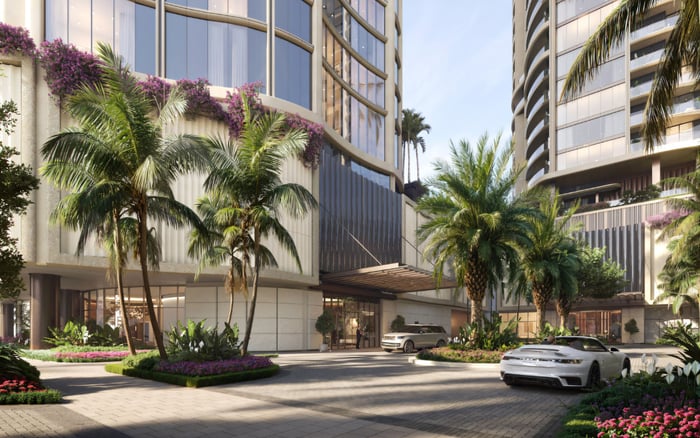
For buyers at Rosewood Residences Hillsboro Beach and Mandarin Oriental Residences, West Palm Beach, a carefully documented service framework should distinguish hospitality from home oversight, authorized access, and emergency decision-making.

The most valuable luxury may be the confidence that a residence remains attended to while its owner is elsewhere. At Rosewood Residences Hillsboro Beach and Mandarin Oriental Residences, West Palm Beach, advertised services make that expectation particularly relevant. Yet hospitality, home maintenance, and authority to act inside a private residence are distinct commitments.
For buyers evaluating branded residences, the essential question is not simply whether someone can arrange assistance. It is who must perform each task, under which agreement, at what cost, and with whose permission. A concierge introduction does not establish authority to enter, diagnose damage, approve repairs, or accept responsibility for the outcome.
Advertised offerings are a useful starting point, not a complete operating contract. Inspection intervals, emergency spending limits, entry rights, response guarantees, and liability allocation should be confirmed in the applicable documents-not inferred from a service description.
At 1180 Hillsboro Mile, Rosewood Residences Hillsboro Beach advertises residential butler service, a dedicated concierge, an on-site general manager, 24-hour security and valet service, and a house car. In-residence dining and catering from the on-site restaurant extend the hospitality offering into the home.
Its expressly described home-management services cover cleaning, maintenance, floral arrangements, and pantry stocking. These are meaningful conveniences, but buyers should obtain a task-level schedule defining what each service includes. Maintenance, for example, should be distinguished from a repair request, vendor coordination, or an inspection of an unoccupied residence.
À La carte services are performed by third parties for an additional fee. Request the fee schedule and identify who contracts with those vendors. Direct Rosewood management of the amenity collection should not be treated as proof that every private-residence function has the same staffing, payment, or liability arrangement.
Planned at 5400 North Flagler Drive, Mandarin Oriental Residences, West Palm Beach advertises a dedicated team of full-time, Mandarin Oriental-trained staff, together with 24-hour concierge and security. Its described property-management services include rapid response, repair requests, and artisan recommendations.
Pre-arrival and “away from home” maintenance deserve particular attention. Buyers should ask whether these services include scheduled interior visits, condition checks, preparation for arrival, or coordination of separately authorized work. The description alone establishes neither frequency nor inspection depth, and it does not guarantee a response time.
Planned housekeeping, in-residence dining, valet parking, and personal training should likewise be distinguished from protective oversight. A residence can be beautifully prepared for arrival without that preparation constituting an inspection of HVAC operation, moisture conditions, or potential leaks.
Request the declaration, bylaws, rules, purchase and disclosure documents, applicable management and service agreements, fee schedule, insurance requirements, and emergency-access policy. Have counsel identify which provisions govern the residence and how conflicts between documents are resolved.
Then request a responsibility schedule distinguishing the association, branded operator, property manager, general manager, engineering team, security provider, and outside vendors. Each duty should have a named responsible party and an escalation contact-not a general reference to “management.”
For each desired service, record whether it is included, optional, outsourced, or owner-paid. Cover housekeeping, HVAC checks, leak monitoring, storm preparation, pantry stocking, plant care, and vendor supervision. Identify ordering procedures, cancellation terms, and any authorization required before work begins. An advertised service category is no substitute for an agreed scope of work.
Request an absence-care protocol that states inspection frequency and distinguishes a visual walkthrough from equipment testing or specialist diagnosis. Ask which temperature and humidity readings are recorded, how leak alerts are handled, and what conditions trigger escalation. These are recommended documentation points, not established policies at either project.
Each visit should ideally produce a record identifying personnel, entry and exit timestamps, observations, photographs where appropriate, and work performed. Clarify how owners receive those records and how unresolved findings remain visible until addressed.
Keep pre-arrival instructions separate: desired indoor conditions, cleaning, stocking, and confirmation that requested work is complete. Document how the owner activates or suspends absence services and what happens when occupancy dates change. A standing service arrangement is easier to evaluate when both routine tasks and exceptions are explicit.
Ordinary access should specify notice, consent, permitted personnel, and whether vendors must be supervised. Request written controls for keys, smart locks, alarm codes, access logs, and personal belongings. Establish how credentials are issued, withdrawn, and reviewed when staff or contractors change.
Emergency authority requires its own framework. Ask which events qualify, who may authorize entry and work, and what spending threshold applies. Distinguish immediate protective measures from restoration or replacement, and clarify whether authorization differs between those stages.
Set an escalation sequence for the owner, representative, and fallback contact. If none can be reached, the documents should explain any standing authorization and its limits. Define notification channels, required incident documentation, and invoice delivery timing. Do not assume round-the-clock security confers unlimited authority to undertake repairs inside a residence.
Request pre- and post-storm procedures addressing terraces, outdoor furnishings, power, HVAC, and water intrusion. Clarify what owners must complete themselves, which services require advance booking, and how an unoccupied residence is checked afterward. Storm preparation and post-event assessment should be described separately.
Mandarin Oriental’s West Palm Beach offering includes a planned private marina with dock-master services and capacity for vessels up to 60 feet. Buyers considering that amenity should keep dock, marina, and vessel-owner responsibilities distinct from residence management. Dock-master service alone does not define responsibility for securing, inspecting, or maintaining an owner’s vessel.
The same document-first approach is useful when considering Forté on Flagler West Palm Beach alongside these residences. Compare the written responsibilities attached to each purchase without assuming that one building’s service framework applies to another.
Ask who pays for emergency attendance, outside vendors, deductibles, and restoration. Obtain vendor insurance requirements and clarify responsibility for damage during entry or subsequent work. Counsel and an insurance adviser should review how the service agreement interacts with the owner’s coverage.
The objective is not to diminish the appeal of attentive service. It is to make that service dependable through defined duties, permissions, records, and costs. An omission from advertising is not proof that an operational policy does not exist; request the policy and assess its terms.
For a considered approach to South Florida residence selection, explore MILLION.
If branded residences are on your mind — as a home or as an allocation — we would be glad to share what we are seeing, privately.
Begin a quiet conversationRosewood describes cleaning, maintenance, floral arrangements, and pantry stocking. Buyers should obtain written definitions of the tasks, fees, and responsible parties.
The service description should not be treated as an all-inclusive fee schedule. Rosewood states that à la carte services are performed by third parties for an additional fee.
Mandarin Oriental advertises pre-arrival and away-from-home maintenance. Buyers should confirm the visit schedule, inspection scope, reporting, and authorization requirements.
No such authority is established by the advertised service descriptions alone. Entry permission, repair approval, and spending authority should be confirmed separately in writing.
Request the declaration, bylaws, rules, purchase and disclosure documents, applicable management and service agreements, fee schedule, insurance requirements, and emergency-access policy.
A recommended record identifies personnel, timestamps, observations, appropriate photographs, and work performed. Buyers should also clarify how unresolved findings are tracked and communicated.
Specify qualifying emergencies, authorized decision-makers, spending thresholds, escalation contacts, and limits on standing authorization. Distinguish immediate protective measures from restoration or replacement.
Confirm ordinary and emergency entry rights, notice and consent rules, credential custody, access logs, and vendor supervision. Include procedures for withdrawing credentials when personnel change.
The planned marina includes dock-master services and capacity for vessels up to 60 feet. Buyers should separately document marina, dock, and vessel-owner duties rather than infer vessel-care obligations.
No. Buyers should request the applicable policy and assess its terms rather than treat an advertising omission as proof that a procedure is absent.