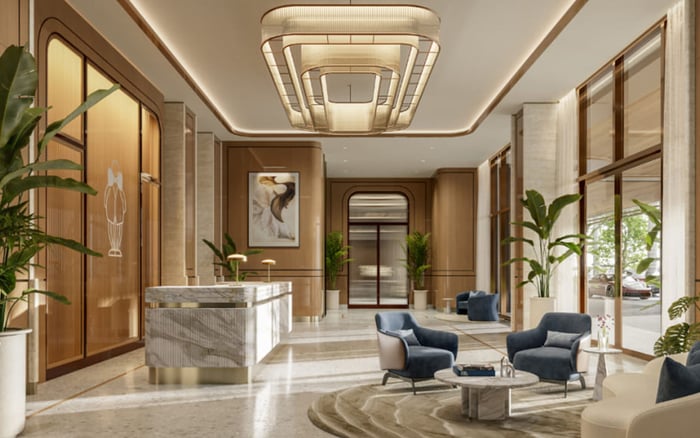
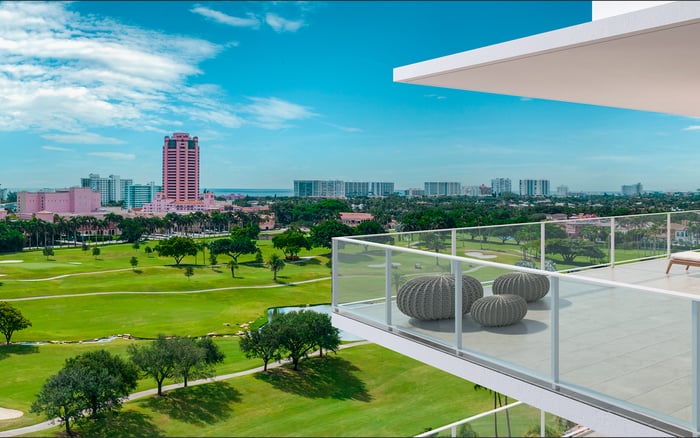
Collector fairs increasingly influence how affluent Boca Raton buyers think about display, privacy, lighting, entertaining and long-term residential value.
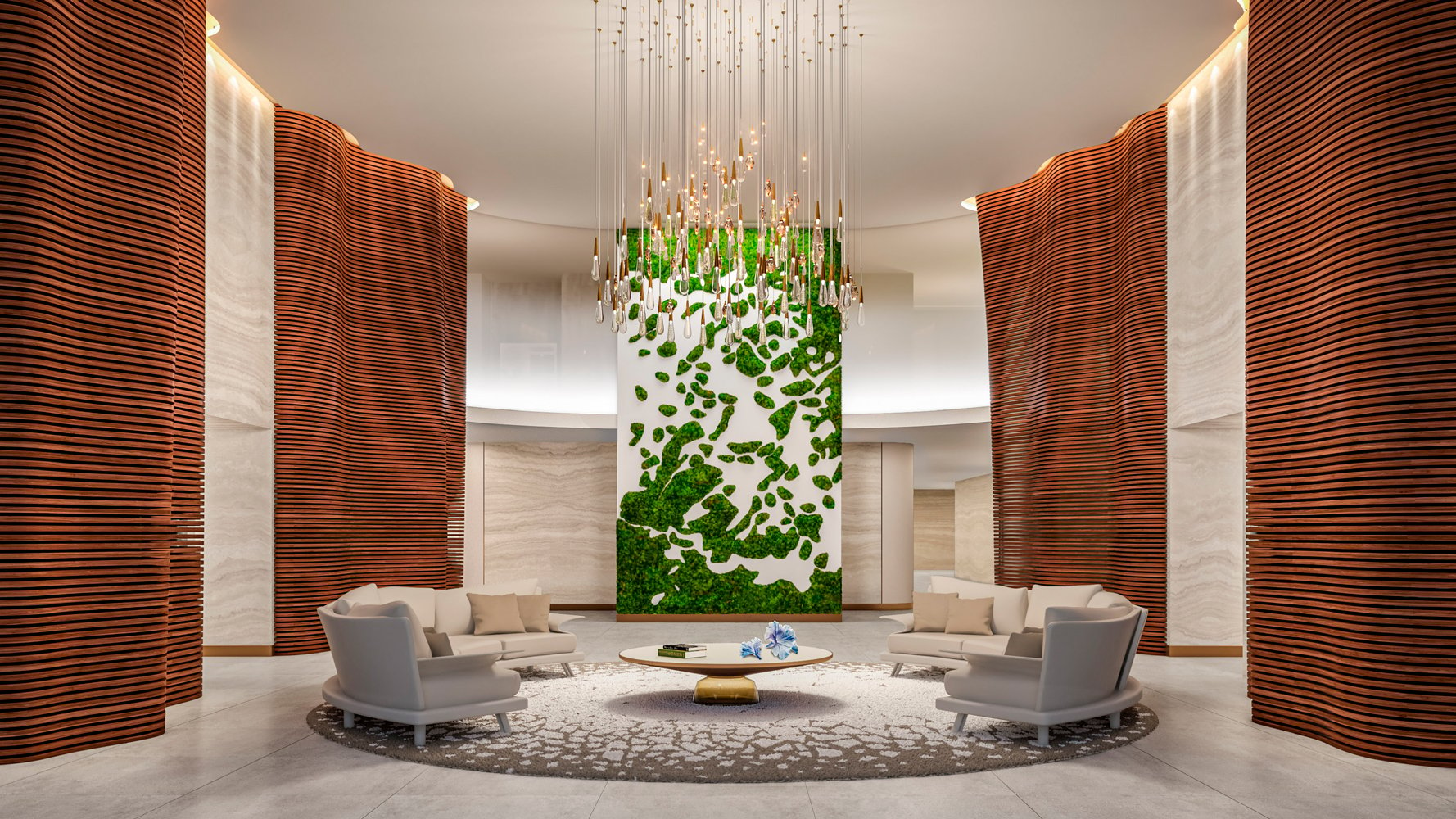
For the Boca Raton buyer who moves comfortably among art, design, watches, jewelry, automobiles and rare wine, the major collector fair is more than a social calendar entry. It is a live laboratory for taste. A fair floor reveals how objects are lit, how provenance is discussed, how rooms are paced and how privacy is maintained around valuable possessions. Increasingly, those lessons travel home.
In Boca Raton, this influence is subtle rather than theatrical. The most sophisticated owners are not asking for homes that feel like showrooms. They are asking for residences that can absorb collections without surrendering warmth, family function or resort ease. The priority is not simply wall space. It is control: over light, humidity, circulation, security, acoustics, guest flow and the ability to live with important pieces without making daily life feel formal.
That is why buyers comparing Alina Residences Boca Raton, Glass House Boca Raton and other high-end options are often thinking beyond the standard checklist. The residence must support both quiet ownership and occasional presentation. It must feel appropriate after a collector weekend, a philanthropic dinner, a private salon or a season of guests.
Collector fairs train the eye quickly. A buyer may arrive focused on a painting or sculpture, then leave thinking about proportions, negative space and how a room edits the objects within it. In a residence, that translates into fewer compromised walls, better ceiling heights where possible, disciplined lighting plans and furniture layouts that avoid crowding significant pieces.
It also sharpens the conversation around entry sequence. A fair booth is carefully staged to create anticipation. In a home, the same principle applies to arrival foyers, elevator landings, gallery corridors and living rooms that reveal views gradually. Boca Raton buyers who collect often prefer an understated threshold, followed by a more expansive interior moment. It is a language of discretion first, impact second.
Art Basel season has also helped normalize the idea that collecting is not confined to one category. A single owner may care about contemporary art, collectible design, rare cars, archival fashion and books. The home, therefore, cannot be designed around one object type alone. It needs flexibility, layered storage and rooms that can evolve as acquisitions change.
The obvious fair-driven request is display. The more important request is preservation. Direct glare, uncontrolled humidity, crowded service paths and casual handling can diminish the pleasure of ownership. High-end buyers are learning to ask sharper questions before committing: Where will crates go? How will art enter the residence? Can oversized pieces move without improvisation? Is there a wall suitable for a rotating installation? Can lighting be tuned without turning the living room into a gallery?
These questions affect both condominium and single-family decisions. In a vertical residence, elevator dimensions, private vestibules, loading protocols and building management culture can matter. In a house, driveway access, staff circulation, storage rooms and climate-separated areas may become decisive. A beautiful room is not enough if the logistics are fragile.
This is where new construction can hold appeal, particularly when buyers want contemporary infrastructure, clean spatial planning and less compromise in the mechanical and lighting systems. A residence such as The Residences at Mandarin Oriental Boca Raton may enter the conversation not only for brand association, but because today’s buyer is evaluating how a full residential environment supports a polished, service-aware lifestyle.
Collector fairs are social ecosystems. They reward hospitality that feels intimate, not crowded. Boca Raton homes are taking cues from that rhythm. Owners want spaces where ten guests can feel as well accommodated as forty, where a dinner can begin around an artwork and end on a terrace, and where service remains present but quiet.
The emphasis is shifting from sheer square footage to sequence. A living room should connect naturally to dining, outdoor areas and discreet service zones. Kitchens are expected to be both beautiful and operational, but serious hosts increasingly value a secondary prep area, concealed storage and paths that keep staff circulation from interrupting the evening.
Pool, terrace and golf are no longer generic lifestyle words in this context. They are part of a curated residential composition. A pool terrace may function as a sculpture setting by day and a private reception area by night. Golf access or club proximity may matter less as a sport alone and more as part of a broader network of leisure, privacy and relationship-building. For Boca Raton, where club culture and residential calm are deeply intertwined, the collector mindset can make these features feel more strategic.
The more valuable the collection, the more privacy matters. Buyers are increasingly attentive to sightlines from neighboring buildings, guest access, staffed entrances, package handling and how public a residence feels during peak social periods. A home that photographs beautifully may still fail if it exposes too much of the owner’s life.
This is especially relevant in Boca Raton searches by international and seasonal buyers who may spend part of the year elsewhere. They want a residence that can close down gracefully, reopen easily and maintain a sense of control in their absence. Security is not just a system. It is a planning philosophy that touches garages, elevators, service doors, storage and digital infrastructure.
At Mr. C Residences Boca Raton, as with other hospitality-informed residential concepts, buyers may be particularly attuned to the choreography between private living and service culture. The collector buyer often values the same quality in a residence that they value at a fair: access when desired, separation when needed.
Boca Raton’s appeal to collector-minded buyers is rooted in balance. It offers a quieter residential posture than Miami’s most visible districts, while remaining connected to the broader South Florida circuit. For many owners, that is the point. They can engage with major fairs, dinners and cultural events, then return to a home environment that feels more composed.
The best residences for this audience do not compete with the collection. They provide the right frame. That may mean calm materials, generous wall planes, controllable daylight, refined outdoor rooms and enough architectural restraint to let meaningful objects breathe. It may also mean amenities that support recovery after highly social weeks: wellness rooms, spa-like baths, private terraces and calm common areas.
For sellers and developers, the message is clear. Luxury is no longer defined only by finish level. It is defined by how intelligently a property supports the owner’s life, possessions and social world. A collector fair may inspire the purchase, but the residence must sustain the lifestyle long after the tent comes down.
Why do collector fairs influence Boca Raton home searches? They expose buyers to refined standards of lighting, display, circulation and privacy that become relevant when evaluating residences.
Do collectors always need gallery-like homes? No. Many prefer warm, livable interiors with select gallery-grade elements rather than a residence that feels like an exhibition space.
What room features matter most for art display? Flexible wall space, controlled lighting, clean proportions and reduced glare are often more important than decorative complexity.
How does entertaining change for collector-minded owners? Entertaining becomes more curated, with attention to guest flow, service access and rooms that can frame conversation around objects.
Is a condominium suitable for serious collectors? It can be, provided access, elevator movement, management protocols, privacy and storage needs align with the owner’s collection.
Why is privacy so important in this segment? Privacy protects both lifestyle and possessions, especially for seasonal owners or buyers who entertain high-profile guests.
Does new construction offer an advantage? It may, particularly when buyers want modern lighting, mechanical systems, service planning and cleaner spatial flexibility.
Should buyers consider future acquisitions? Yes. A residence should allow collections to evolve without forcing immediate renovation or awkward room compromises.
How important are outdoor areas for collectors? Outdoor rooms can extend entertaining and provide sculptural or social settings, but they should be planned with privacy in mind.
What is the smartest first step for a collector buyer? Define how the home must support display, preservation, entertaining and security before focusing only on aesthetics.
For a confidential assessment and a building-by-building shortlist, connect with MILLION.
If branded residences are on your mind — as a home or as an allocation — we would be glad to share what we are seeing, privately.
Begin a quiet conversation