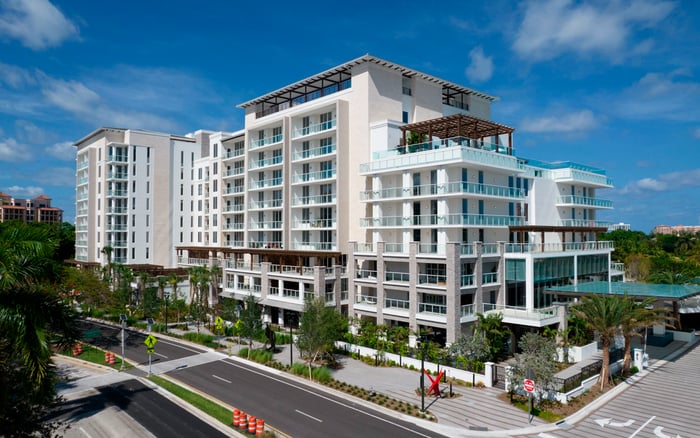
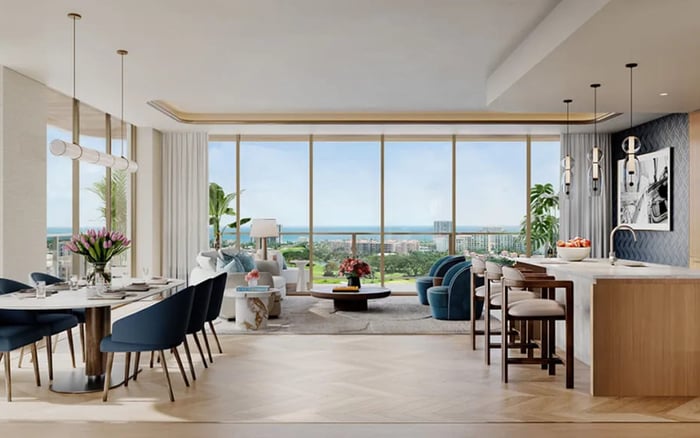
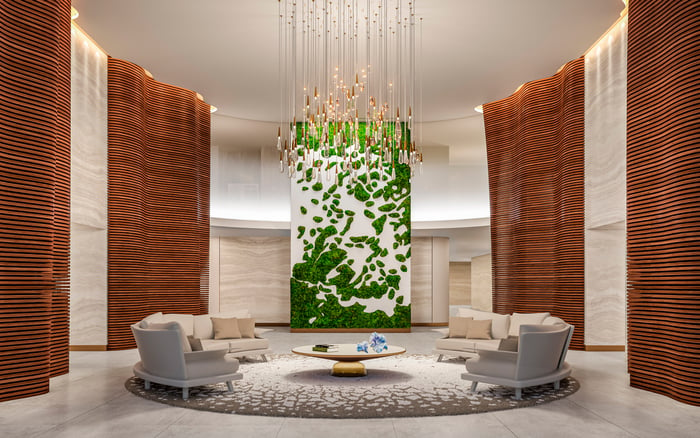
A buyer-focused look at how security, discretion, and controlled access shape the Mr. C residential experience in Boca Raton, from arrival sequencing to amenity privacy.
At the top of the South Florida condominium market, security is no longer judged only by what is visible. Sophisticated buyers are looking at how a building manages movement, information, service, and social exposure without making daily life feel defensive. That is the right lens for Mr. C Residences Boca Raton, where the privacy conversation should be understood as part of the broader residential experience.
The security conversation here is best approached as operational rather than theatrical. This article does not disclose proprietary manuals, internal staffing protocols, camera layouts, or access-control technologies, and serious buyers should be cautious about assuming specifics that have not been formally provided. The more useful question is how a high-end residence organizes the core control points that define privacy: arrival, lobby interface, elevator movement, guest credentialing, domestic staff access, deliveries, and amenity use.
That emphasis places Mr. C Residences Boca Raton within a broader South Florida pattern. Buyers comparing Boca Raton with Palm Beach, Miami Beach, Coconut Grove, and Brickell often want service that is attentive without being intrusive. In that context, hospitality matters because it suggests recognition, etiquette, and anticipation, not simply a front desk.
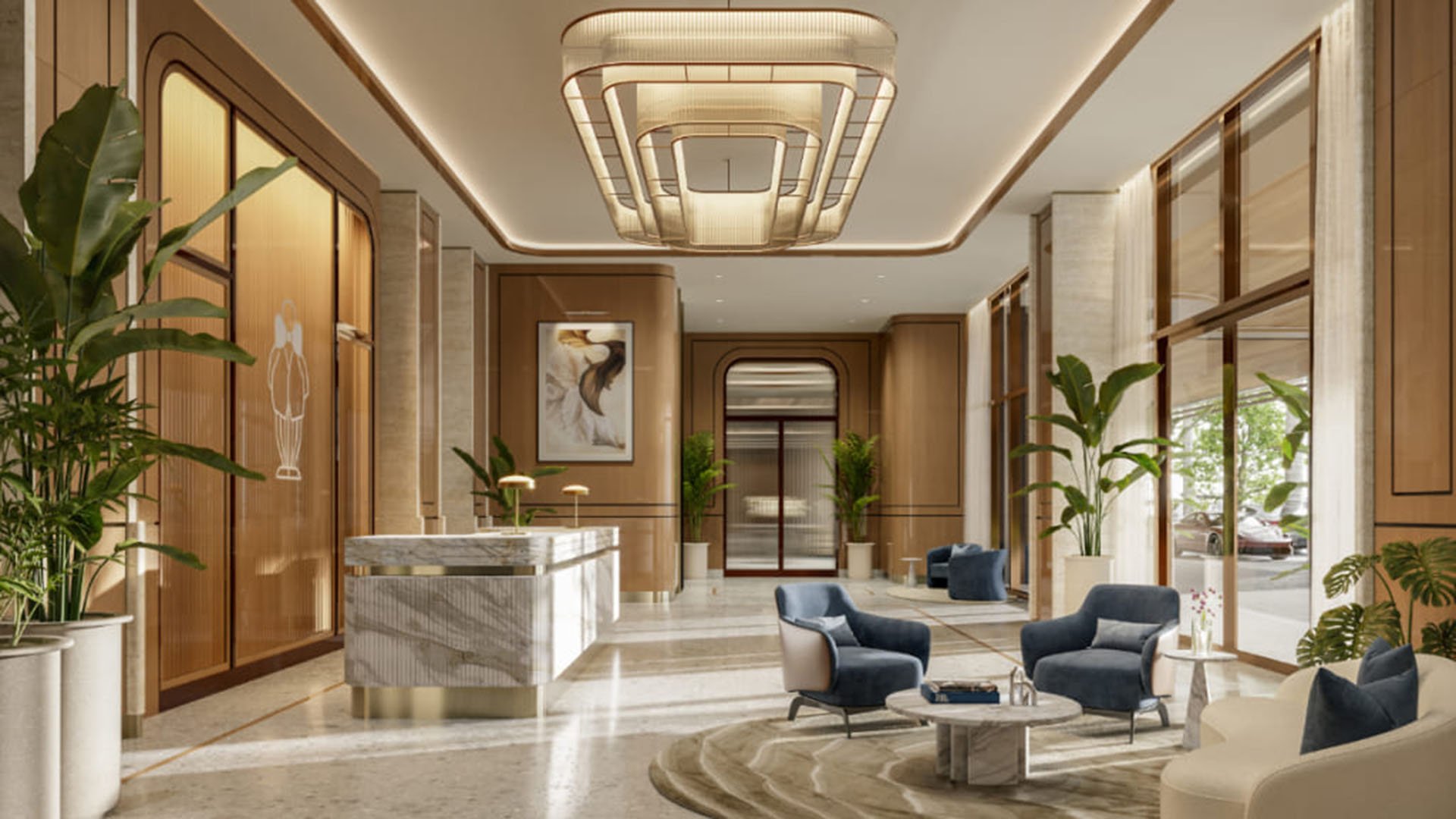
In luxury condominium living, privacy begins before the resident reaches the front door. Whether the arrival point is a porte cochère, valet court, or lobby vestibule, the first staff interaction creates the building’s initial filter. For high-visibility residents, family offices, seasonal owners, and buyers who host frequently, the arrival sequence is where discretion becomes practical.
The best buildings manage this moment with choreography. Drivers, invited guests, vendors, and residents should not feel as if they are moving through the same social bottleneck. The building experience should distinguish a resident returning home from a visitor awaiting authorization, a delivery arrival, or a scheduled service provider. The result is not just security. It is calm.
This is where Boca Raton’s new luxury cycle becomes relevant. Buyers looking across Alina Residences Boca Raton, Glass House Boca Raton, and Mr. C Residences Boca Raton are often evaluating more than finishes and views. They are asking how the building protects the residential rhythm of daily life.
At a hospitality-led residence, concierge coordination can be more than a convenience layer. It may become the central interface for controlled access, helping organize expected arrivals, confirm guest permissions, coordinate amenity use, and respect resident preferences. This does not require the atmosphere of an institution. In fact, the strongest version feels almost invisible.
The privacy value is subtle but meaningful: a guest is expected, a vendor is scheduled, a driver is directed, and a resident is not placed in the position of explaining the same preference repeatedly. For owners with household staff, assistants, trainers, chefs, medical providers, or regular vendors, the building’s ability to manage repeat access can be essential.
Luxury living often involves a larger orbit of people than a standard apartment household. The access system has to respect that complexity while preserving the resident’s sense of home.
Elevator strategy is one of the most important and least glamorous parts of high-end building privacy. Buyers may evaluate whether the elevator experience supports separation among residents, guests, service functions, and more private residential areas. The issue is not only who enters the building. It is how people move once inside.
In the best luxury-condo settings, controlled elevator journeys reduce unnecessary interaction. Residents should not feel exposed every time a delivery is handled, a contractor is scheduled, or a guest arrives for another unit. The goal is not isolation for its own sake. It is a sense that private life is not constantly intersecting with building logistics.
This matters especially in new-construction residences, where buyers expect access planning to be embedded into the design rather than patched on later. It also explains why residents moving from gated communities often ask different questions than traditional condo buyers. They are accustomed to layered entry, predictable circulation, and a degree of separation between public arrival and private living.
The most revealing security moments are usually repetitive, not dramatic. Food deliveries, packages, florists, repair technicians, dog walkers, drivers, housekeepers, and personal staff create frequent building-entry events. If those flows are not managed carefully, a luxury lobby can become a busy interchange rather than a discreet residential threshold.
For Mr. C Residences Boca Raton, the buyer’s security review should therefore emphasize soft security: staff awareness, controlled interactions, privacy etiquette, and low-friction access management. Soft does not mean casual. It means the resident experience is protected through training, judgment, and coordination, without every interaction feeling like a checkpoint.
Buyers should ask how guest approvals are handled, how recurring domestic staff access is organized, where deliveries are received, how food deliveries are routed, and how vendors are prevented from lingering in resident-facing areas. The answers may vary by final building operations and association policy, but the questions themselves are central to evaluating discretion.
This is also where Boca Raton buyers often differ from purely urban buyers. The expectation is not only efficiency. It is composure. A residence can lose much of its serenity if the access choreography feels improvised.
Amenities create another layer of access sensitivity. Pools, lounges, fitness spaces, wellness areas, dining rooms, and private event settings are shared environments, but they should not make residents feel overexposed. Social privacy is one of the defining luxuries in a service-forward residence: the ability to participate in community life without surrendering control over visibility.
At Mr. C Residences Boca Raton, amenity discretion should be considered part of the same operating philosophy as arrival and concierge service. The buyer is not simply evaluating access to shared spaces. The buyer is evaluating how those spaces are reserved, moderated, staffed, and protected from feeling too public.
The comparison set reinforces the point. A buyer considering The Residences at Mandarin Oriental Boca Raton may be thinking carefully about service culture, privacy, and the relationship between hospitality and home. A buyer also watching Mr. C Residences West Palm Beach will likely understand that brand-led residences compete on how smoothly the service experience is delivered, not merely on amenity count.
Because internal security procedures are not public-facing in full detail, due diligence should be direct and specific. Buyers should review disclosed building materials, ask about arrival management, understand guest and vendor approval procedures, and clarify how residential privacy is supported in amenity areas. The objective is not to extract sensitive operational information. It is to understand whether the building’s service culture aligns with the buyer’s personal privacy profile.
For some owners, discretion means minimal visibility during daily arrivals. For others, it means reliable guest handling, protected family routines, careful staff etiquette, or the ability to host without turning the residence into a public stage. The strongest buildings recognize that privacy is personal. It is not a single feature. It is a pattern of decisions repeated every day.
Mr. C Residences Boca Raton belongs in that conversation because the residential promise is tied to hospitality, controlled access, and a polished sense of welcome. In the ultra-premium market, the best security is the kind that supports ease. Residents should feel known, not watched; protected, not processed.
Is Mr. C Residences Boca Raton a luxury-residence security topic? Yes. The topic is best understood through the lens of buyer due diligence around privacy, discretion, and controlled access in Boca Raton.
Does this article disclose specific security technology? No. It does not establish proprietary details such as biometric systems, camera layouts, staffing manuals, or internal access-control specifications.
What does controlled access mean in this context? It refers to the practical management of arrivals, guests, elevators, staff, deliveries, and amenity use rather than a single visible feature.
Why is the arrival sequence important for privacy? It is the first point where residents, drivers, guests, and vendors may intersect, making arrival choreography central to discretion.
How does concierge coordination relate to security? Concierge coordination can help organize expected arrivals, guest permissions, amenity use, and resident preferences in a hospitality-led manner.
Why are domestic staff and vendors part of the access conversation? Luxury owners may rely on household staff, drivers, chefs, trainers, and service providers, which makes recurring access management important.
Are deliveries a meaningful security issue? Yes. Packages, food deliveries, and service drop-offs create frequent entry events that should be managed without disrupting resident privacy.
Why do elevators matter in a luxury condominium? Elevator planning can help separate residents, guests, service activity, and private residential areas, reducing unnecessary exposure.
How should buyers think about amenity privacy? Shared amenities should feel social but controlled, allowing residents to use them without feeling overly visible or publicly staged.
What is the best way to shortlist comparable options for touring? Start with location fit, delivery status, and daily lifestyle priorities, then compare stacks and elevations to validate views and privacy.
For a confidential assessment and a building-by-building shortlist, connect with MILLION.
If branded residences are on your mind — as a home or as an allocation — we would be glad to share what we are seeing, privately.
Begin a quiet conversation