A buyer-focused editorial on how South Florida’s leading hospitality-branded residences convert service identity, architectural presence, and neighborhood context into perceived residential value.
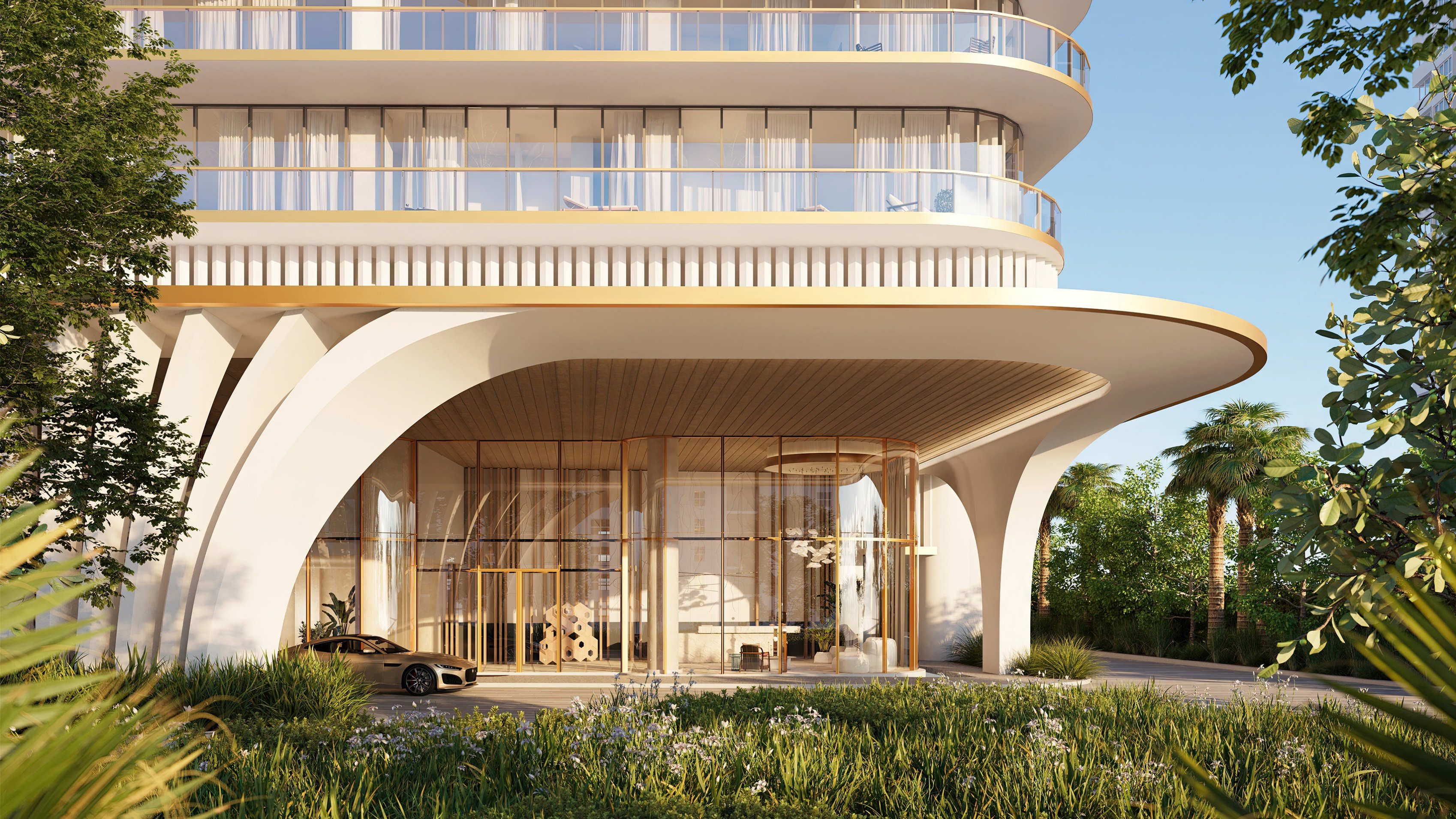
In South Florida’s upper tier, Branded Residences are no longer defined by a logo at the porte cochere. For sophisticated buyers, the question is more exacting: does the hospitality identity translate into a private residential experience that feels coherent, durable, and worth paying attention to over time?
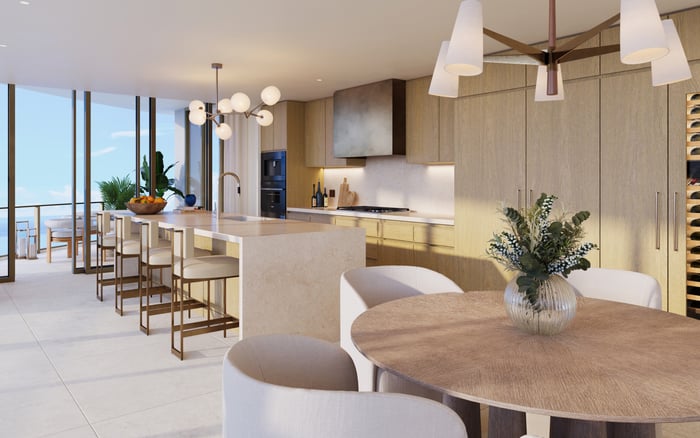
That is where brand language becomes residential value. A luxury hotel name can create confidence, but confidence becomes persuasive only when it carries through design discipline, service standards, amenity logic, and the daily atmosphere of the building. A residence should not feel like a hotel room enlarged for ownership. It should feel like a private home shaped by a recognizable standard of care.
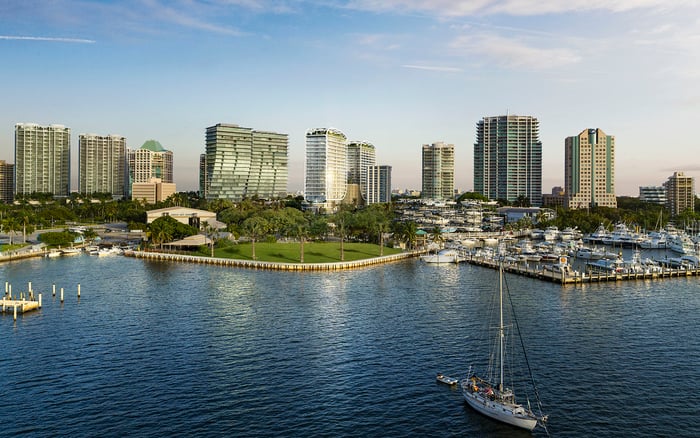
South Florida offers a revealing comparison. Four Seasons Residences Coconut Grove represents the quieter, service-led end of the spectrum. The Ritz-Carlton Residences® Fort Lauderdale introduces a coastal Fort Lauderdale lens. Waldorf Astoria Residences Downtown Miami brings the conversation into Downtown Miami’s high-visibility arena, where architecture and urban identity carry greater weight.
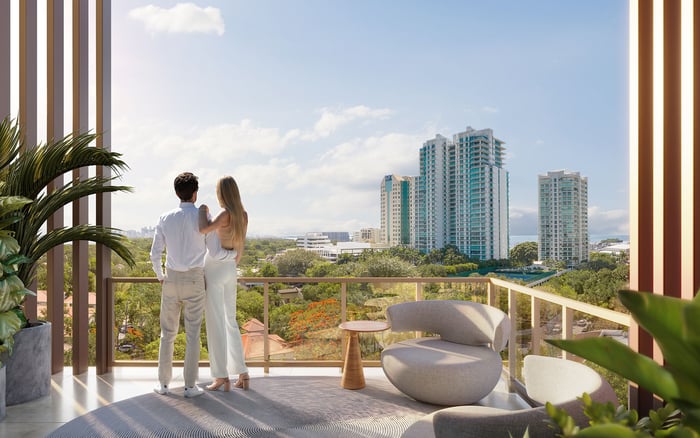
Coconut Grove has always rewarded a softer kind of luxury. Its appeal is not based on spectacle alone, but on shade, water, privacy, and a village-like cadence that differs sharply from Miami’s denser urban corridors. Within that setting, Four Seasons Residences Coconut Grove reads as a study in quiet refinement.
The brand language here is discretion. Four Seasons is most persuasive when the buyer imagines not just an amenity menu, but the absence of friction: the remembered preference, the well-managed arrival, the residential routine that feels calm because the service infrastructure is already in place. In a private-home context, that distinction matters. Buyers at this level are not only purchasing finishes or views. They are purchasing the expectation that the building will understand how to behave.
This is where perceived value can become resilient. A known hospitality standard helps frame the residence before the buyer enters the unit. It suggests that architecture, operations, and service are aligned around a consistent idea of living. In Coconut Grove, that idea is not loud. It is measured, residential, and deliberately composed.
Fort Lauderdale brings a different residential psychology. It is less vertical than Downtown Miami in feeling, yet more openly coastal than Coconut Grove. For buyers considering The Ritz-Carlton Residences® Fort Lauderdale, the branded question becomes one of translation: how does a name associated with polished hospitality support the expectations of a private coastal lifestyle?
The answer should not be reduced to brand familiarity. At the top of the market, familiarity is only the first layer. The more meaningful layer is whether the building’s service culture, privacy, arrival sequence, and amenities reinforce the way owners actually live. Fort Lauderdale buyers may be balancing primary residence needs, second-home use, beach access, and a desire for a calmer alternative to Miami’s densest districts.
In that context, brand value is practical as much as emotional. A hospitality name can organize expectations before purchase and simplify ownership after purchase. It can also give buyers a shared vocabulary for what the residence is meant to represent: polished, consistent, and professionally managed.
Downtown Miami changes the equation. Here, visibility is part of the proposition. Waldorf Astoria Residences Downtown Miami functions in a denser urban setting, where landmark design, skyline presence, and brand recognition can become central to perceived value.
The Waldorf Astoria language is more theatrical than the Four Seasons example in Coconut Grove. It is tied to iconography, urban glamour, amenity programming, service structure, and the force of a marketing narrative that can be understood at a glance. In a vertical downtown environment, that recognizability matters. A buyer may be responding not only to the private residence, but to the building’s role in the city’s visual identity.
This does not make the Downtown Miami approach better or worse. It makes it different. The value proposition is more externalized. Where Coconut Grove rewards discretion, Downtown Miami rewards legibility. A landmark silhouette can give a residence cultural presence, and cultural presence can influence how buyers perceive the asset long before they evaluate the floor plan.
Investment thinking in branded residences should be precise, but not overly mechanical. The strongest branded projects do not depend on unsupported claims of premiums or guaranteed performance. They work because the brand helps reduce uncertainty in a category where buyers are evaluating many intangible qualities at once.
A buyer may ask: will the service remain consistent? Will the amenity program feel relevant five years from now? Does the architecture speak clearly to its neighborhood? Does the brand fit the way residents want to live, or is it merely decorative? These questions are often more useful than chasing a single numerical answer.
Four Seasons Residences Coconut Grove and Waldorf Astoria Residences Downtown Miami illustrate the range. One converts hospitality language into understated residential calm. The other uses architecture, service, and narrative to create a more public urban statement. The Ritz-Carlton Residences® Fort Lauderdale sits within the same buyer conversation as a coastal branded option, where the test is whether the identity supports everyday residential ease.
The most important exercise is to separate brand recognition from brand performance. Recognition is what gets a buyer to look. Performance is what makes the residence feel credible after the first impression fades.
Service should be legible without being intrusive. Design should feel specific to the neighborhood rather than generic to the brand. Amenities should have a residential rhythm, not simply a hospitality checklist. Privacy should be designed into circulation, staff interaction, parking, arrival, and shared spaces. The building should communicate its value quietly, even when the architecture is intentionally bold.
For South Florida buyers, the best branded residence is not necessarily the most famous name. It is the project where name, place, service, and architecture reinforce one another. That alignment is what turns brand language into residential value.
What is the main value of a branded residence? Its value is the translation of a trusted hospitality identity into private-home design, service, and buyer confidence.
How does Four Seasons Residences Coconut Grove differ from Downtown Miami branded residences? It represents a quieter, service-led approach shaped by Coconut Grove’s more discreet residential character.
Why is Waldorf Astoria Residences Downtown Miami a contrasting example? It operates in a denser urban setting where landmark architecture, visibility, and brand recognition carry more weight.
Does a luxury brand automatically create better resale value? Not automatically. The brand must be supported by design quality, service consistency, and neighborhood fit.
How should buyers evaluate The Ritz-Carlton Residences® Fort Lauderdale? Buyers should focus on whether the brand promise supports the coastal lifestyle, service expectations, and ownership rhythm they want.
Are branded residences more about service or architecture? The strongest examples combine both. Service creates daily confidence, while architecture shapes identity and long-term perception.
Why does Coconut Grove matter in this comparison? Coconut Grove gives the branded-residence model a quieter context, distinct from the scale and visibility of Downtown Miami.
Why does Downtown Miami matter for branded residences? Downtown Miami allows a branded tower to become part of the skyline, making identity and urban presence central to its appeal.
Should buyers compare branded residences across different neighborhoods? Yes, but the comparison should account for lifestyle, density, privacy, and how each brand fits its setting.
What is the best way to shortlist comparable options for touring? Start with location fit, delivery status, and daily lifestyle priorities, then compare stacks and elevations to validate views and privacy.
To compare the best-fit options with clarity, connect with MILLION.
If branded residences are on your mind — as a home or as an allocation — we would be glad to share what we are seeing, privately.
Begin a quiet conversation