A buyer-focused editorial on why yacht-season planning can sharpen the logic for a Miami Beach pied-à-terre, with attention to privacy, access, service, and lock-and-leave ownership.
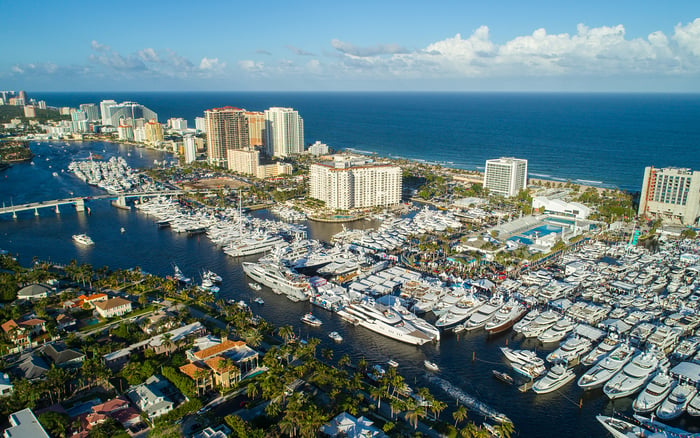
Fort Lauderdale International Boat Show has a way of making South Florida feel less like a destination and more like a system. For a certain buyer, the week is not simply about yachts, tenders, toys, and hospitality. It is a reminder that the region operates across multiple centers of gravity, with Fort Lauderdale, Miami Beach, Bal Harbour, Surfside, Brickell, Coconut Grove, and the islands each serving a different purpose.
That is where the Miami Beach pied-à-terre becomes more than a romantic idea. It becomes an operating base. The buyer who arrives for the show may begin with a marine agenda, but the more durable question is residential: where should life feel easiest when the boat, the airport, the dinners, the beach, and the private meetings are all competing for time?
The answer is rarely just the closest address. A better-positioned pied-à-terre allows a buyer to move through South Florida with less friction, while still returning to a residence that feels private, quiet, and intuitively serviced. For the internal brief, the language is simple: Fort Lauderdale access, Miami Beach privacy, second-home ease, marina adjacency, and oceanfront serenity.
Miami Beach offers a different kind of value during yacht-driven weeks. Fort Lauderdale may anchor the boat-show itinerary, but Miami Beach often anchors the lifestyle around it. The right residence can support late arrivals, early departures, family stays, client entertaining, and restorative downtime without asking the owner to behave like a hotel guest.
This distinction matters. A hotel can be convenient, but a pied-à-terre can be personally calibrated. Wardrobes stay in place. Preferred linens, fitness routines, wine storage, office setups, art, and staff protocols become consistent. The residence becomes a private rhythm rather than another reservation.
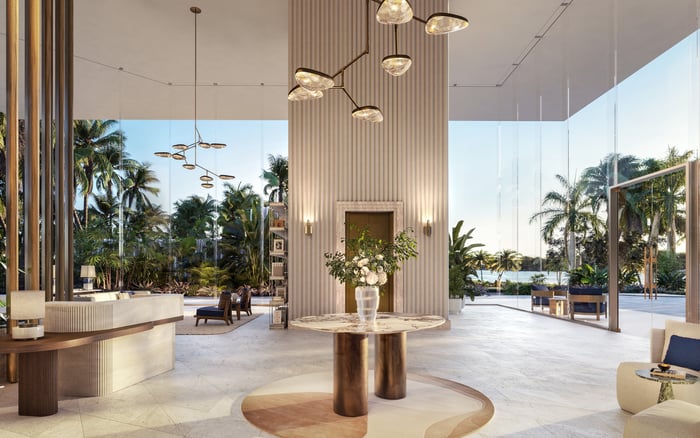
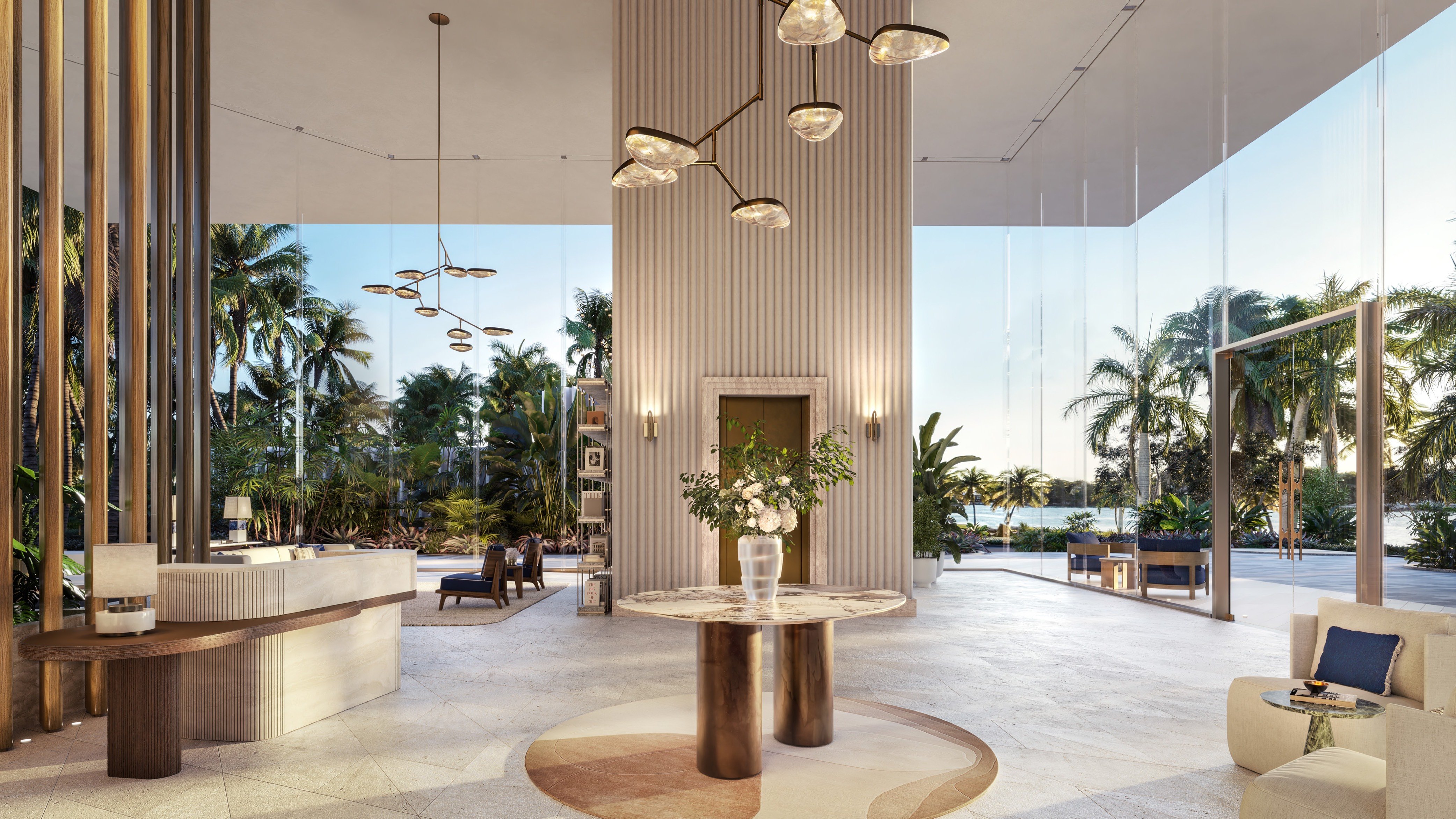
On Collins Avenue and in the quieter stretches of Miami Beach, the strongest homes are not trying to compete with the yacht. They offer the counterpoint: a composed interior, a direct relationship to light and water, and an arrival sequence that feels protected rather than performative. Projects such as The Perigon Miami Beach speak to that sensibility, particularly for buyers who want the beach to be present without allowing the address to feel overexposed.
Positioning is not just geography. It is the intersection of access, mood, building culture, service, and how a residence behaves when the owner is away.
For a yacht owner or serious marine enthusiast, the obvious instinct is to think in terms of drive time. That is understandable, but incomplete. A Miami Beach pied-à-terre should also be evaluated for how it performs between events: Can the owner arrive without ceremony? Can guests be hosted with discretion? Can the residence remain secure, maintained, and ready after long absences? Does the building feel calm in peak season?
The best pied-à-terre is not necessarily the largest home in the portfolio. It is often the most precise. It may have a generous terrace rather than an excessive floor plan. It may prioritize sunrise, breeze, and privacy over theatrical amenities. It may sit close enough to the social map without being directly inside it.
That is why a residence such as Shore Club Private Collections Miami Beach can appeal to buyers who want a hospitality-informed setting without losing the sense of private ownership. The attraction is not spectacle. It is the feeling that the building understands how sophisticated owners actually live.
Every true pied-à-terre must pass the lock-and-leave test. This is especially important for buyers who divide time among multiple homes, boats, and business centers. If ownership introduces another layer of management, the property has failed its most important purpose.
A strong lock-and-leave residence should feel ready on arrival and serene on departure. That means building operations matter as much as views. Security, valet, maintenance, package handling, housekeeping coordination, private elevator experiences, wellness areas, and staff fluency can become decisive. The buyer is not only purchasing interior space. The buyer is purchasing continuity.
Miami Beach also has an emotional advantage in this regard. A compact residence near the water can feel complete even during a short stay. A morning swim, a quiet breakfast, a meeting across the causeway, and dinner nearby can all happen without the psychological sprawl of a larger seasonal home. For some owners, that efficiency is the luxury.
In South Beach, The Ritz-Carlton Residences® Miami Beach offers a useful example of why brand, service, and residential privacy remain important in the pied-à-terre conversation. Buyers are not only asking whether the address is beautiful. They are asking whether it can be trusted to function elegantly when life is moving quickly.
A Miami Beach pied-à-terre does not replace Fort Lauderdale in the yacht-season equation. It complements it. Fort Lauderdale remains essential to the marine conversation, and many buyers will continue to keep business, marina, or hospitality plans there. The question is whether the owner wants to sleep and live in the same place where the event energy is concentrated.
For some, the answer is yes. For others, the more refined move is to let Fort Lauderdale serve the day and Miami Beach serve the evening. That split can be especially appealing when family members, guests, or advisors have different agendas. One person may be focused on the show, another on wellness, restaurants, shopping, or beach time. A well-positioned Miami Beach base gives the household options.
There is also a portfolio logic. A buyer may already have significant exposure to waterfront property elsewhere. In that case, the South Florida residence does not need to be a full-scale estate. It needs to be exact. It should solve for access, weather, entertaining, and personal restoration.
For buyers who still want a Fort Lauderdale residential reference point, St. Regis® Residences Bahia Mar Fort Lauderdale keeps the marine lifestyle firmly in view. But the Miami Beach pied-à-terre remains compelling precisely because it offers a different register of living.
The best candidate for this strategy is not the occasional tourist. It is the buyer who already understands South Florida but wants to refine the way they use it. They may arrive for yachting, art, dining, wellness, business, or family reasons, but they are no longer satisfied with improvising each visit.
This buyer wants an address that feels useful without feeling transactional. They value service, but not noise. They want access, but not congestion. They may entertain, but they prefer the residence to remain controlled. Above all, they want the property to make South Florida easier.
That is why the conversation should begin with lifestyle sequencing rather than square footage. Where do you arrive? Where do you dine? Where do you board? Where do guests stay? How often will the residence sit vacant? What does a perfect 36-hour stay look like? These questions reveal more than a generic wish list ever could.
Boat-show weeks can create urgency, but the smartest buyers resist buying the mood of the moment. Instead, they use the event to pressure-test their assumptions. If a Miami Beach residence feels useful during the busiest, most choreographed week of the season, it is more likely to function well during quieter months too.
The disciplined brief is simple: choose the address that reduces friction, protects privacy, and feels rewarding even when there is nothing on the calendar. In that sense, Fort Lauderdale International Boat Show can strengthen the case for Miami Beach not because it pulls attention away from Fort Lauderdale, but because it reveals the value of having a calm, beautifully serviced base just beyond the intensity.
A better-positioned pied-à-terre is not about chasing the center of activity. It is about choosing the place from which every part of South Florida feels more effortless.
Why consider Miami Beach if the boat show is in Fort Lauderdale? Miami Beach can function as a quieter residential base while Fort Lauderdale serves the marine agenda. The appeal is the balance between access and retreat.
Is a pied-à-terre the same as a second home? A pied-à-terre is often a more precise second home, designed for shorter stays, easy arrivals, and minimal management between visits.
What matters most in a Miami Beach pied-à-terre? Service, privacy, access, building culture, and lock-and-leave reliability usually matter more than size alone.
Should yacht owners prioritize marina proximity above all else? Marina access is important, but it should be weighed against privacy, traffic patterns, guest needs, and the owner’s daily rhythm.
Is oceanfront living always the best choice? Oceanfront can be highly desirable, but the best choice depends on light, privacy, service, and how the owner plans to use the residence.
Can a branded residence make sense for this buyer? Yes, when the brand supports discreet service and operational consistency rather than simply adding name recognition.
How large should a pied-à-terre be? The right size depends on the owner’s travel pattern, guest profile, entertaining needs, and tolerance for ongoing upkeep.
Is Miami Beach better for lifestyle than Fort Lauderdale? It depends on the owner’s priorities. Miami Beach can offer a strong lifestyle base, while Fort Lauderdale may remain central to yachting plans.
When should buyers start the search? Buyers should begin before peak seasonal pressure whenever possible, so decisions are guided by fit rather than urgency.
What is the most common mistake? The common mistake is buying for an event week instead of choosing a residence that performs beautifully throughout the year.
To compare the best-fit options with clarity, connect with MILLION.
If branded residences are on your mind — as a home or as an allocation — we would be glad to share what we are seeing, privately.
Begin a quiet conversation