A discreet buyer’s guide to using family-office conference season as a lens for evaluating a more strategic South Florida pied-à-terre near the Miami Design District.
For a family office, a South Florida pied-à-terre is rarely just a place to sleep between dinners. During conference season, it becomes a private operating platform: a calm arrival point, a place to reset between meetings, and a residential expression of how the family wants to move through Miami. As the calendar concentrates, the weaknesses of a poorly positioned home base become harder to ignore.
That is why the Miami Design District deserves a more serious place in the conversation. It sits at the intersection of design, collecting, hospitality, and access, without requiring an owner to choose a single Miami identity. A better-positioned pied-à-terre near this orbit can serve principals, adult children, advisers, guests, and visiting executives with less friction than a residence selected purely for view, brand, or headline value.
The decision is not about buying into a moment. It is about matching a residence to the family’s actual South Florida pattern: where meetings happen, where dinners feel natural, how much privacy is required, and whether the property remains effortless when no one is in residence.
Conference season changes the way a home is judged. A residence that feels impressive during a leisurely weekend may feel inefficient when the day includes breakfasts, private presentations, gallery visits, dinners, and last-minute introductions. The right pied-à-terre shortens transitions and reduces the need to over-plan.
For families comparing neighborhoods, the Design District offers a different proposition from a purely beachfront address or a tower in the financial core. It can feel more conversational, more design-led, and more connected to the cultural rhythm many visiting families already seek. The most compelling residence is not necessarily the largest. It is the one that lets the principal arrive, host quietly, work privately, and depart without drama.
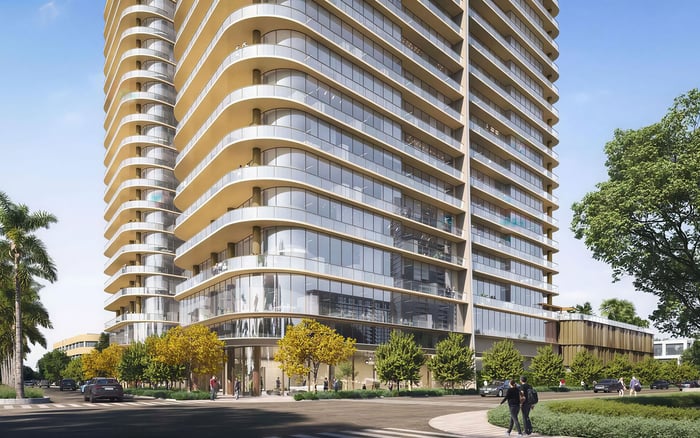
This is where projects in and around the district enter the shortlist. Kempinski Residences Miami Design District is the kind of address a buyer may study when the priority is proximity to the district itself, rather than treating it as an occasional destination. For those who want a slightly broader urban radius, Miami Design Residences Midtown Miami can sit within the same mental map, especially for buyers who want access to the district while keeping a Midtown-oriented routine.
The best family-office residences work because they remove small irritations before they become large ones. Parking, arrival sequence, elevator privacy, building staffing, service access, guest flow, package handling, housekeeping coordination, and the ability to keep a home ready on short notice all matter. These are not glamorous details, but they define the experience.
A pied-à-terre also needs to respect the mixed nature of family-office travel. One trip may be led by the principal; another by a spouse, next-generation family members, advisers, or trusted guests. The residence should feel refined without being precious. It should be comfortable enough for a long weekend, polished enough for an informal meeting, and manageable enough that ownership does not become another operating burden.
That is why the language of Investment and Second-home should coexist. The property may be enjoyed emotionally, but it should be evaluated with discipline: building quality, location logic, carrying cost comfort, liquidity expectations, and the degree to which the residence solves a recurring need. A beautiful apartment that does not reduce friction is not truly better positioned.
A Design District-oriented pied-à-terre does not have to exclude other Miami geographies. In fact, the most thoughtful buyers often compare it against Brickell, Edgewater, Wynwood, and Miami Beach before committing. Each label describes a distinct rhythm.
Brickell can appeal when the calendar is weighted toward finance, legal, and professional meetings. A buyer considering a more formal city-tower experience might look at 888 Brickell by Dolce & Gabbana as part of that comparison, particularly if brand, skyline presence, and a central business setting are important. The tradeoff is that the daily mood may feel more corporate than cultural.
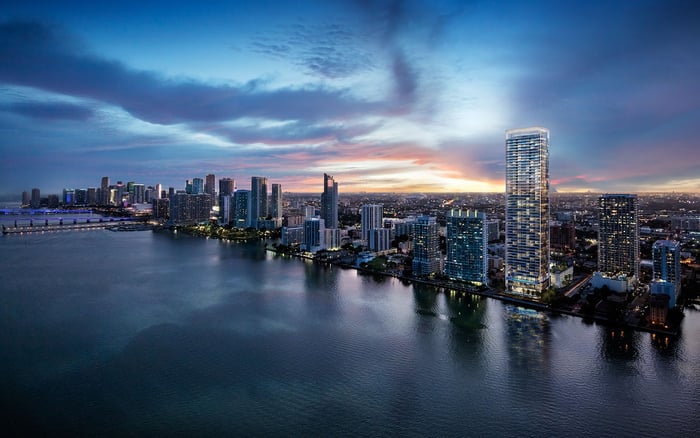
Edgewater can serve buyers who want water views and proximity to central Miami without moving fully into the Design District. EDITION Edgewater may appeal to those who want a more residential waterfront posture while keeping the district, downtown, and surrounding dining circuits within consideration. Wynwood, by contrast, may feel more creative and informal, useful for families whose Miami pattern includes art, studios, and younger social energy.
Miami Beach remains its own category, especially for buyers who prioritize sand, resort atmosphere, and established coastal routines. Yet for conference-season efficiency, beach access alone may not answer the question. The better test is whether the residence supports the family’s real itinerary without forcing constant back-and-forth movement.
A better-positioned pied-à-terre begins with use-case clarity. Who will use it most often? How many nights per year are realistic? Is the property meant for a couple, a principal traveling with staff, or a rotating family group? Will it be used for quiet work, dinners before events, or simply as a refined retreat between appointments?
Then comes building fit. Ultra-premium buyers should study arrival privacy, vertical circulation, service culture, residence layout, outdoor space, noise exposure, and storage. A dramatic plan can underperform if it lacks practical separation between entertaining and resting. A smaller residence can outperform if it is beautifully planned, easy to maintain, and close to the right destinations.
New-construction may appeal when a buyer wants contemporary systems, fresh common areas, and less immediate renovation complexity. Resale may appeal when immediacy, proven building culture, or a specific view corridor matters more. Neither is automatically superior. The right choice depends on how the residence will be used during the busiest weeks of the year and how gracefully it will sit empty when the family is elsewhere.
The Design District’s appeal for a family-office buyer is not only aesthetic. It is the possibility of discretion. A principal can move between private meetings, design appointments, dining, and cultural programming without making the residence feel like a stage. The best pied-à-terre should be elegant, but it should not demand attention every time the owner arrives.
In a market where trophies are easy to admire, the sharper move may be to buy for fit. Conference season exposes that distinction. If the current South Florida base feels slightly out of sync, too far from the actual calendar, too large to manage, too public, or too narrowly recreational, then a better-positioned Miami pied-à-terre may be less of an indulgence than a strategic correction.
Why would a family office consider a pied-à-terre near the Miami Design District? It can provide a refined base close to design, dining, private meetings, and central Miami routines without defaulting to a purely beach or office-tower setting.
Is a Design District-oriented residence mainly for collectors? No. Collecting may be part of the appeal, but the stronger case is lifestyle efficiency, privacy, and access during compressed travel periods.
How should buyers compare it with Brickell? Brickell may suit a more business-centered calendar, while the Design District may better serve a culture, hospitality, and design-led itinerary.
Does waterfront living still matter? It can matter greatly, but it should be weighed against daily movement, arrival ease, and how often the family actually uses the water-oriented lifestyle.
What makes a pied-à-terre feel better positioned? The right location, building service, privacy, layout, and ease of maintenance all matter more than size alone.
Should a buyer prioritize New-construction? New-construction can offer modern systems and fresh design, but resale may be preferable when immediacy or a specific building culture is the priority.
How important is staff and service coordination? It is central for many family-office users because the residence must stay prepared, secure, and effortless between visits.
Can the residence support informal meetings? Yes, if the plan allows a polished arrival, comfortable seating, and separation between hosting areas and private rooms.
Is this primarily an Investment decision? It should be evaluated with Investment discipline, even when the primary motivation is convenience, privacy, and family use.
What is the best way to shortlist comparable options for touring? Start with location fit, delivery status, and daily lifestyle priorities, then compare stacks and elevations to validate views and privacy.
For a discreet conversation and a curated building-by-building shortlist, connect with MILLION.
If branded residences are on your mind — as a home or as an allocation — we would be glad to share what we are seeing, privately.
Begin a quiet conversation