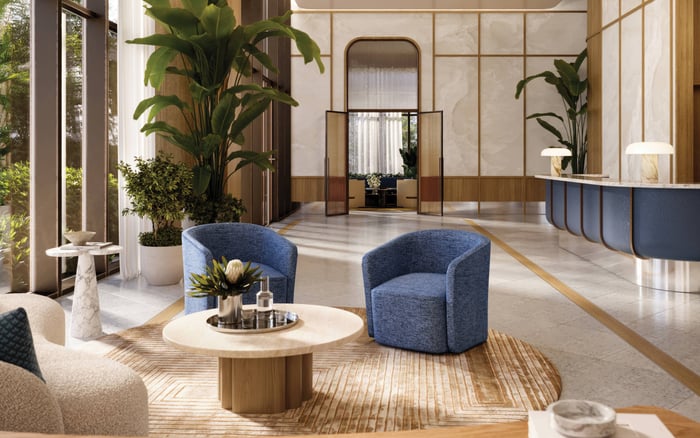
For family buyers, arrival design is daily infrastructure. The strongest choice aligns elevator privacy, valet choreography, service circulation, and backup planning with the household’s real routines.
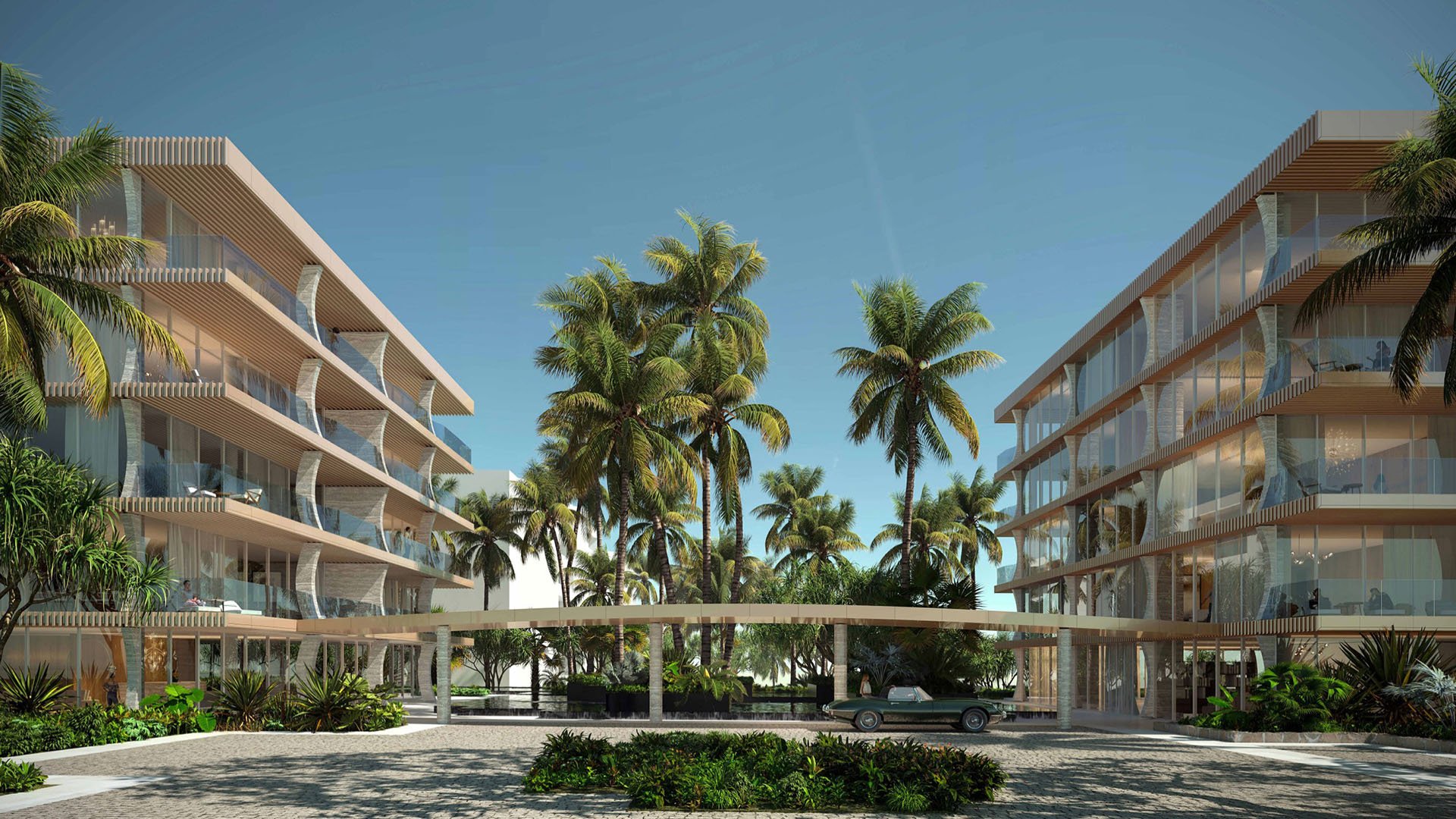
For a family buyer, the residence does not begin at the front door. It begins at the curb, continues through the valet court and lobby, and ends only when children, guests, groceries, luggage, pets, and household staff reach the apartment with minimal friction.
That sequence deserves the same scrutiny as ceiling height or terrace depth. Private elevator access can create discretion, but its value depends on everything that happens before and around the elevator. Valet service may feel effortless during a quiet tour yet perform differently when several households depart at once. The relevant question is not whether these features exist, but whether the complete system supports the family’s actual day.
This buyer’s guide perspective is especially important when comparing Palm Beach with West Palm Beach, where families may encounter different building formats and arrival experiences. The objective is not to identify a universally superior model, but to select the choreography that best fits one household.
Private elevator access can describe several arrangements. Buyers should clarify whether the elevator opens directly into the residence, into a private vestibule, or onto a landing shared with another home. They should also ask how access credentials work, whether visitors can reach the floor without staff authorization, and where deliveries wait.
The vestibule deserves close attention. Is there enough space for a stroller, sports equipment, shopping bags, or several arriving guests? Can the interior door be secured independently? Does the elevator opening expose views into the home, or does the entry preserve a visual buffer?
Families considering Palm Beach Residences can use these questions as a framework for discussion without assuming that a project name or luxury positioning provides the answers. Floor plans, operating documents, and an in-person demonstration should establish the precise arrangement.
Valet should be evaluated as transportation infrastructure. During a showing, trace the route from vehicle handoff to residence entry. Note where children stand while a car is retrieved, whether the waiting area is protected, how luggage is staged, and whether residents cross paths with service vehicles or delivery activity.
Then test realistic scenarios: a school departure, an evening event, a weekend guest arrival, and a return with beach gear. Ask how residents request vehicles, where multiple cars queue, how keys are controlled, and what happens when a household needs two vehicles at nearly the same time.
A tour of Forté on Flagler West Palm Beach and The Ritz-Carlton Residences® West Palm Beach should therefore extend beyond the residence and amenity spaces. Buyers can request a complete curb-to-door walk-through and compare every transition on equal terms.
Privacy is strongest when circulation remains legible. Families should understand how residents, guests, vendors, food deliveries, movers, and household employees enter and move through the building. A private elevator loses some practical value if deliveries repeatedly arrive at the residential threshold without a clear protocol.
Ask where packages are received, how refrigerated deliveries are handled, and whether larger items use a service elevator. Clarify how a nanny, tutor, caregiver, or private-school driver would be admitted. For pets, examine the route to the exterior and whether it requires crossing formal lobby areas.
The same review applies to new-construction and completed residences. Renderings may express atmosphere; operating documents and live demonstrations reveal circulation. When evaluating Alba West Palm Beach, for example, a family can bring its own schedule to the conversation and ask management or the sales team to map every recurring arrival.
Convenience should not depend on a single point of access. Buyers should ask which route is used when a private elevator is unavailable, how stair access is controlled, and whether another elevator can serve the residence. The answers should account for young children, older relatives, mobility needs, strollers, and pets.
Valet operations also require contingencies. Ask how vehicles are retrieved during heavy rain, building work, unusually busy periods, or temporary equipment interruptions. Families with drivers should clarify where a driver waits and whether that arrangement conflicts with valet circulation.
These are not pessimistic questions. They distinguish polished hospitality from resilient service.
Create a simple scorecard after each visit. Rate curb safety, handoff clarity, waiting comfort, elevator privacy, guest access, delivery separation, staff circulation, and backup access. Add one category for emotional ease: Did the sequence feel calm when imagined with the whole family present?
Lifestyle compatibility matters more than any single dramatic feature. A direct elevator entry may suit a household that prioritizes discretion, while a well-managed private vestibule may provide a more useful buffer. Likewise, valet may be ideal for one family and less suitable for another that wants immediate, independent vehicle access.
Before committing, visit at more than one time if possible and request written clarification of operating procedures. The right choice is the building whose daily system remains intuitive under ordinary pressure-not merely the one that creates the strongest first impression.
Does private elevator access guarantee complete privacy? No. Buyers should verify the landing configuration, credential controls, guest authorization, camera placement, and delivery procedures.
What should families inspect in a private elevator vestibule? Examine usable space, sightlines into the home, door security, lighting, and room for strollers, luggage, or multiple arrivals.
When is the best time to observe valet operations? Visit at times that resemble the household’s likely departure and return patterns, then ask how busier periods are managed.
Should a buyer ask to test the full arrival route? Yes. Walk from vehicle handoff through the lobby and elevator to the residence while carrying the items the family commonly brings.
How should deliveries be evaluated? Confirm receiving locations, notification procedures, service-elevator use, temporary storage, and the final handoff point.
Why does guest circulation matter? It determines how easily visitors can be welcomed without weakening privacy or creating repeated interruptions inside the residence.
What backup elevator questions are essential? Ask what happens during maintenance or an interruption, which alternate route applies, and how controlled access is preserved.
Is valet always preferable for a family? Not necessarily. Its value depends on retrieval consistency, waiting conditions, vehicle availability, and compatibility with drivers or multiple cars.
How can buyers compare Palm Beach buildings fairly? Use the same household scenarios and scorecard at every property rather than comparing amenity descriptions alone.
What is the most important final test? Decide whether the curb-to-residence journey feels secure, intuitive, and manageable when the family’s busiest routine is imagined honestly.
To compare the best-fit options with clarity, connect with MILLION.
If branded residences are on your mind — as a home or as an allocation — we would be glad to share what we are seeing, privately.
Begin a quiet conversation