A design-led look at why Key Biscayne can make strategic sense for a South Florida pied-à-terre, especially for buyers balancing privacy, access, architecture, and long-term lifestyle value.
Design Miami has a way of sharpening what sophisticated buyers notice. After days spent studying proportion, materiality, lighting, craft, and restraint, the definition of a South Florida pied-à-terre becomes more exacting. It is no longer enough to own a convenient apartment at a recognizable address. The stronger question is whether the residence improves the owner’s life every time it is used.
That is where Key Biscayne becomes more compelling. For the buyer arriving for the cultural calendar, private dinners, gallery appointments, family weekends, or a winter reset, the island offers a calmer thesis. It is close enough to participate in Miami’s energy, yet removed enough to feel composed. The case is not simply geographic. It is emotional, architectural, and operational.
A better-positioned pied-à-terre should perform quietly. It should make arrival easy, departure uncomplicated, and continuity feel natural across city, beach, family, wellness, and privacy. In that frame, Key Biscayne is not a compromise. It can be the more deliberate choice.
The most persuasive South Florida pied-à-terre is rarely the loudest one. It is the residence that lets an owner move through the region with confidence while preserving the feeling of a private life. Key Biscayne speaks to that desire because its appeal is fundamentally residential. The island reads less like a stage and more like a sanctuary.
For buyers searching under broad labels such as Key Biscayne or second home, the nuance matters. A pied-à-terre here should be evaluated less as a trophy object and more as a personal operating base. Can it support a spontaneous long weekend? Can it welcome family without friction? Can it feel equally appropriate after a formal design dinner or a morning by the water?
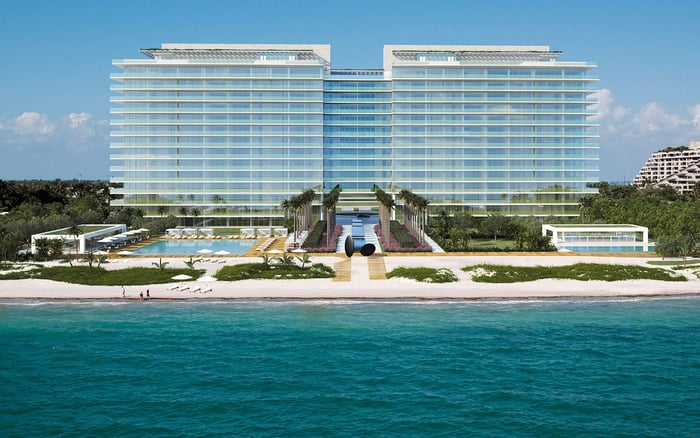
Within that context, Oceana Key Biscayne belongs in the conversation for buyers who want a Key Biscayne reference point while assessing how island living compares with more urban or hotel-branded alternatives elsewhere in South Florida. The name itself signals the essential promise: a setting oriented around water, privacy, and a quieter cadence.
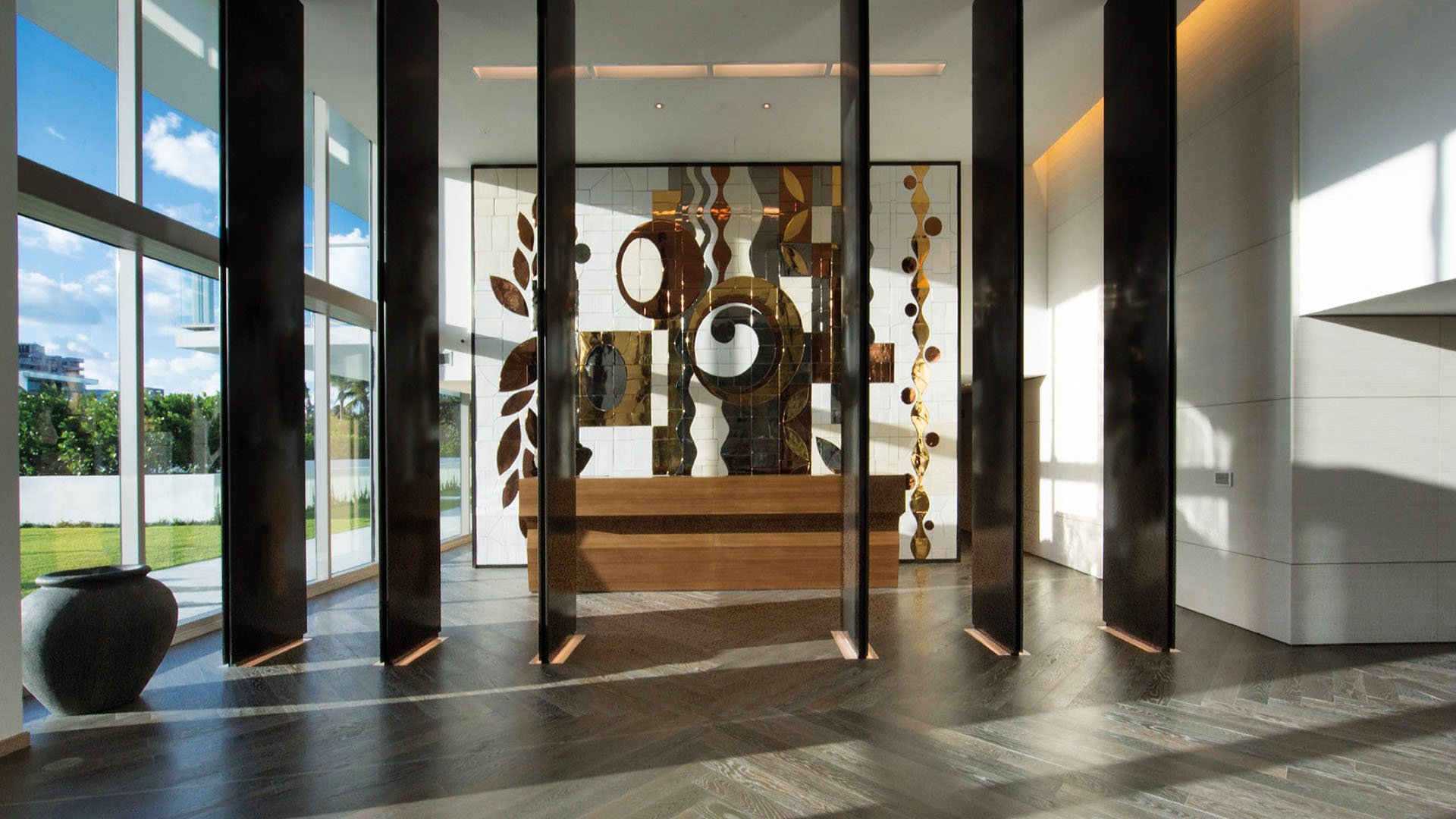
Design Miami encourages buyers to think beyond finishes. A refined residence is not defined by a single marble, fixture, or furniture package. It is defined by how spaces receive light, how rooms transition, how terraces extend daily rituals, and how architecture supports the owner rather than announcing itself.
That filter is especially useful in Key Biscayne. The island rewards homes and residences that understand ease. A pied-à-terre should not feel like a showroom. It should feel edited, resilient, and personal. The best interiors can accommodate art, books, textiles, and objects collected over time without becoming visually crowded.
Buyers should consider three design questions. First, does the plan create separation between entertaining and rest? Second, does the view or exposure shape the emotional tone of the residence? Third, will the materials improve with use, or will they demand constant correction? In a pied-à-terre, durability is not the enemy of elegance. It is part of the elegance.
Key Biscayne becomes clearer when compared with other high-demand South Florida settings. Miami Beach offers a stronger association with cultural immediacy, dining, and oceanfront glamour. A buyer considering The Ritz-Carlton Residences® Miami Beach may be drawn to a more resort-inflected lifestyle and the convenience of being embedded in one of the region’s most recognizable residential environments.
Brickell, by contrast, serves a different purpose. It is an urban base for buyers whose Miami life is tied to business, dining, banking, and a vertical rhythm. Una Residences Brickell can make sense for those who want the efficiency of a mainland address while remaining connected to the water. The Brickell buyer is often optimizing for immediacy.
Coconut Grove offers another kind of softness: mature landscaping, a village atmosphere, and a more intimate residential mood. Four Seasons Residences Coconut Grove may appeal to buyers who want hospitality association within a neighborhood known for calm rather than spectacle.
Against these alternatives, Key Biscayne’s strength is its balanced remove. It is not trying to be Miami Beach, Brickell, or Coconut Grove. Its value lies in the ability to participate selectively, then return to an island setting that feels distinct.
Positioning is not merely a matter of location on a map. For the ultra-premium buyer, positioning means alignment among use case, building culture, privacy, maintenance, and long-term relevance. A residence can be beautifully designed and still be poorly positioned if it does not match how the owner actually lives.
A Key Biscayne pied-à-terre should be tested against real scenarios. An owner lands late, wants a quiet arrival, and expects the residence to feel ready. Guests come for three nights, but the owner still needs privacy. A spouse wants beach time, another family member wants access to city plans, and no one wants the weekend to feel over-scheduled. These are not small details. They are the architecture of ownership.
A better-positioned residence reduces decisions. It has the right scale, the right storage, the right terrace, the right service expectations, and the right level of discretion. It does not require the owner to adapt to the property. The property adapts to the owner’s pattern.
Design-led buyers often become more selective after sustained exposure to collectible design and contemporary architecture. They begin to see the difference between decoration and discipline. That shift can make Key Biscayne more attractive because the island’s strongest qualities are understated.
A pied-à-terre here does not need to compete for attention. It can offer a more private canvas for serious living: morning routines, small dinners, water views, art placement, and the pleasure of leaving the mainland behind without disconnecting from it. In this sense, Design Miami strengthens the case for Key Biscayne by reminding buyers that sophistication is often measured by subtraction.
The same logic applies to timing. Buyers should avoid choosing a residence only because it is convenient for one event or one season. The more durable question is whether the home remains desirable when the calendar quiets. If the answer is yes, the pied-à-terre has moved beyond occasion and into lifestyle infrastructure.
Begin with use, not inventory. Decide whether the residence will serve couples, family, guests, collecting, wellness, remote work, or a combination of all five. Then evaluate buildings and residences through that lens.
Prioritize privacy without isolating yourself. A South Florida pied-à-terre should make the region feel accessible, but not unavoidable. Key Biscayne’s appeal is strongest for buyers who want choice: the ability to engage with Miami’s cultural life and then step back into a quieter environment.
Finally, keep the interior brief disciplined. Let the residence breathe. Leave room for art and for life. The best pied-à-terre is not a miniature primary home. It is a concentrated expression of what the owner values most when time is limited.
Why consider Key Biscayne for a South Florida pied-à-terre? Key Biscayne can offer a quieter residential base while keeping Miami’s cultural, dining, and business districts within reach.
How does Design Miami influence the buying lens? It encourages buyers to focus on proportion, materials, craft, and how a residence actually supports daily rituals.
Is Key Biscayne better for privacy than a mainland address? It can feel more private because of its island character, but the right fit depends on the building, residence, and owner’s routine.
Should a pied-à-terre be smaller than a primary home? Often yes, but it should never feel under-scaled for the way the owner entertains, rests, stores belongings, and hosts guests.
How should buyers compare Key Biscayne with Brickell? Brickell may suit buyers prioritizing urban immediacy, while Key Biscayne may better suit those seeking a calmer home base.
How should buyers compare Key Biscayne with Miami Beach? Miami Beach offers stronger resort and cultural energy, while Key Biscayne offers a more discreet residential rhythm.
What design qualities matter most in a pied-à-terre? Light, flow, terrace usability, acoustic comfort, storage, and durable materials matter more than decorative novelty.
Can a Key Biscayne residence work for family weekends? Yes, if the plan provides privacy, flexible guest accommodations, and an easy relationship to outdoor time.
Is a pied-à-terre primarily an investment decision? It should be financially disciplined, but the best decision also reflects lifestyle, access, privacy, and long-term usability.
What is the most common mistake buyers make? They buy for a single season or event instead of choosing a residence that works elegantly throughout the year.
To compare the best-fit options with clarity, connect with MILLION.
If branded residences are on your mind — as a home or as an allocation — we would be glad to share what we are seeing, privately.
Begin a quiet conversation