A discreet buyer’s guide to approaching Florida domicile when relocating from New York to Surfside, with emphasis on intent, consistency, advisory coordination and home selection.

For New York buyers considering Surfside, the first instinct is often to start with the residence: ocean view, privacy, arrival sequence, service culture, proximity to Bal Harbour, and the everyday calm of a smaller coastal address. Those details matter. Yet Florida domicile is not created by a beautiful closing alone. It is a legal and tax posture built around intent, conduct, records and consistency.
The luxury buyer’s challenge is that life rarely changes in one clean motion. A family may acquire in Surfside while retaining a Manhattan apartment, maintaining professional ties in New York, or dividing the year around school, travel, philanthropy and board obligations. That is precisely why domicile should be considered before the contract is signed, not after the movers arrive.
For many high-net-worth households, the most elegant plan is also the most disciplined one. The Florida residence should not read as a seasonal indulgence if the owner’s position is that Florida has become the center of life. It should support the way the buyer actually intends to live.
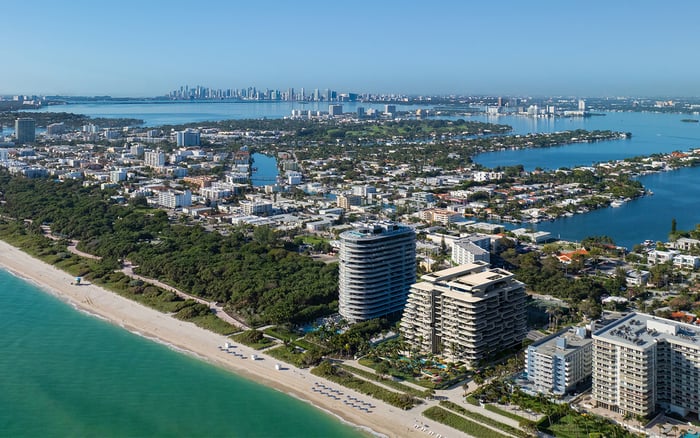
Surfside offers a rare tone within Miami’s luxury map: intimate, coastal, polished and comparatively restrained. It appeals to buyers who want oceanfront access without the constant theater of a larger resort district. That discretion is central to its appeal for families arriving from New York, where privacy and convenience often command a premium.
A buyer studying The Delmore Surfside is usually not thinking only about square footage. The more important question is whether the home can function as the primary stage for daily life: morning routines, hosting, wellness, family time, work calls and quiet evenings. A residence that feels complete makes it easier for the owner’s conduct to align with the stated intention.
That same lens applies to established coastal addresses such as Arte Surfside, where the appeal is less about spectacle and more about design clarity, privacy and a collected sense of arrival. Domicile planning is not about aesthetics, but the right physical environment can reduce the friction of making Florida feel like home.
The most delicate part of a New York-to-Florida move is not what the buyer gains in Florida. It is what remains active in New York. A retained residence, professional presence, family patterns, club life, storage, household staff, medical routines and social obligations may all deserve careful review with advisors.
None of those connections is automatically fatal to a Florida plan. Ultra-affluent lives are complex by nature. The issue is whether the complete picture tells one coherent story or two competing ones. If the Florida home is described as the new center of life, the buyer’s calendar, household administration and personal records should not contradict that position.
This is where a casual approach can become expensive. A buyer who treats domicile as a closing checklist may overlook the lived evidence that accumulates after closing. The more significant the wealth profile, the more important it becomes to coordinate the real estate decision with tax counsel, estate counsel and family office administration.
The strongest domicile planning begins with behavior. Buyers should think about where they wake up, where they keep important personal effects, where they gather family, where they receive personal services and where their household is actually managed. The answer should not depend on a slogan. It should be visible in the rhythms of life.
In Surfside, that means choosing a home that can carry the full weight of residence. Ocean House Surfside may appeal to buyers who want a more residential coastal framework, especially if the objective is to replace a New York routine rather than merely supplement it. The question is not whether the home is impressive. The question is whether it is sufficient.
Buyers should also consider how quickly the Florida home can become operational. Furnishings, staff, technology, art installation, storage, security, club relationships and family logistics all influence whether the move feels real in practice. A delayed or incomplete setup can make a primary residence feel like a second home, even when the purchase price suggests otherwise.
Not every Florida move should point to the same neighborhood. Surfside is compelling for buyers who prize quiet luxury, beach access and a village scale. Miami Beach may suit those who want a broader cultural and social rhythm, with dining, design and hospitality closer at hand. Brickell serves buyers whose Florida life is tied to finance, international business and a more vertical urban routine.
For a buyer comparing Surfside with Miami Beach, The Ritz-Carlton Residences® Miami Beach represents a different residential proposition: more central to the broader Miami Beach lifestyle, yet still oriented around privacy and service. That may be the better fit if the buyer’s Florida identity is social, cultural and highly connected.
For a buyer whose work life is migrating with them, The Residences at 1428 Brickell speaks to another version of permanence. Brickell is not a substitute for Surfside. It is a different declaration about how the owner expects to live, work and host in Florida.
Domicile should not be delegated to the real estate contract alone. The buyer’s advisory table should be assembled before the purchase timeline hardens. Tax counsel, estate counsel, the family office, insurance advisors, lending professionals and the real estate team should be working from the same objective.
That coordination matters because one decision often affects another. Estate planning may need to reflect the new residence. Insurance may influence timing and occupancy. Financing may shape ownership structure. Art, vehicles, entity interests, household staff and charitable commitments may require their own analysis.
The best advisors will not promise simplicity. They will create a sequence. For luxury buyers, that sequence should include pre-contract planning, ownership review, post-closing implementation and a long-term recordkeeping discipline. Domicile is not a document signed once. It is a position maintained over time.
Before selecting a Surfside residence, buyers should ask whether the property can support genuine permanence. Is it large enough for family and guests without depending on New York overflow? Does it offer the privacy needed for a primary household? Can it accommodate work, wellness, storage, staff and entertaining without compromise?
They should also ask whether the timing is realistic. A Florida domicile story can feel strained if the owner acquires a property but continues to live mostly elsewhere while the residence remains unfinished, unfurnished or unavailable. The purchase should be paired with a practical transition plan.
Finally, buyers should be candid about what they are unwilling to give up. If New York will remain emotionally, professionally or practically dominant, advisors should know that at the outset. A refined plan begins with candor, not wishful thinking.
Is buying in Surfside enough to establish Florida domicile? No. A purchase can support the plan, but domicile depends on intent, conduct and a consistent overall life pattern.
Should I speak with advisors before or after making an offer? Before is preferable. The ownership structure, timing and transition plan may all matter.
Can I keep a New York residence? Possibly, but retained New York ties should be reviewed carefully so the overall story remains coherent.
Why is Surfside attractive for New York buyers? Surfside offers privacy, coastal living and a quieter residential scale while remaining connected to Miami’s luxury corridor.
Does a larger Florida home help the domicile narrative? It can help if the home genuinely supports daily life, family routines, work and long-term occupancy.
Should my estate plan be reviewed during the move? Yes. A domicile change can intersect with estate, trust, insurance and family office planning.
Is Brickell a better fit than Surfside for some buyers? Yes. Brickell may suit buyers whose Florida life is centered on business, finance and urban convenience.
Can a seasonal pattern create problems? It can if the owner claims Florida as the center of life while personal conduct suggests otherwise.
What is the most common mistake luxury buyers make? Treating domicile as a paperwork exercise instead of a coordinated lifestyle, legal and tax transition.
Is this article tax or legal advice? No. Buyers should consult qualified professionals before making domicile, tax or estate decisions.
To compare the best-fit options with clarity, connect with MILLION.
If branded residences are on your mind — as a home or as an allocation — we would be glad to share what we are seeing, privately.
Begin a quiet conversation