A practical, discreet framework for weekly travelers evaluating whether Key Biscayne can function as a true lock-and-leave luxury base before committing to a residence.

For a buyer who travels weekly, Key Biscayne is not simply a matter of beach proximity, privacy, or the emotional pull of island living. It is a systems question. The residence must perform when the owner is airborne, delayed, returning late, or leaving again before the property has fully reset. The right purchase is less about the prettiest view and more about whether access, staffing, security, insurance, and management can withstand a repeating travel schedule.
That pressure-test belongs before the offer, not after closing. A weekend tour can flatter almost any luxury property. A serious evaluation should recreate the buyer's actual life: early departures, late arrivals, short turnarounds, extended absences, guest coordination, pet routines, deliveries, storm preparation, and the need for trusted eyes on the residence while the owner is away.
In search terms, this is often the Key-biscayne, Second-home, Oceanfront, Waterview buyer who may also compare a Gated-community or Brickell alternative. The distinction matters because each lifestyle solves the travel problem differently.
The first test is behavioral. Spend time in Key Biscayne on the same days and at the same hours you normally leave for the airport, private aviation, meetings, school commitments, or the office. Do not judge the island by a sunny afternoon arrival. Judge it by a morning departure with luggage, a late return after a flight delay, and the practical burden of leaving again the next day.
If the residence will serve as a lock-and-leave base, ask whether the ritual feels calm or compressed. Where does luggage live? How easily can a driver or car service coordinate pickup? Is there a covered arrival experience, a secure package process, and staff who understand repeat travel patterns? Can the home be cooled, cleaned, inspected, and stocked before arrival without the owner orchestrating every detail?
This is where a condominium may outperform a single-family home for certain buyers. A building with attentive front-of-house service can reduce friction. A house may offer greater privacy and control, but it typically requires a deeper bench of vendors and more active oversight. The better choice depends on how much invisible labor the owner is willing to manage.
Weekly travelers should not treat access as a footnote. Key Biscayne living has a different rhythm from mainland neighborhoods, and the bridge and arrival sequence deserve precise evaluation. The question is not whether access is beautiful. The question is whether it remains tolerable when time is tight and the calendar is unforgiving.
Run the route yourself. Test it with a driver. Test it when you are tired. Test it when you need to be somewhere exactly on time. If private aviation is part of the routine, include that in the rehearsal. If commercial flights dominate, build the airport run into the decision. A residence can be exquisite and still be the wrong fit if the owner begins every travel week with avoidable tension.
Buyers comparing island quiet with urban immediacy may look at St. Regis® Residences Brickell as a reference point for the Brickell convenience mindset. That does not make Brickell better. It simply clarifies what Key Biscayne must deliver in exchange for its more secluded residential mood.
A weekly traveler should evaluate the residence as a private operating platform. In a condominium, that means understanding front desk coverage, access control, package handling, guest registration, maintenance request protocols, contractor access, and how management communicates when the owner is out of town. In a house, it means identifying who checks the property, who supervises vendors, who responds after weather events, and who has authority to act quickly.
Ask scenario-based questions. What happens if a water alarm triggers while the owner is abroad? Who meets a technician? How are deliveries secured? Can housekeeping access the residence without compromising privacy? How are keys, fobs, and service entries controlled? These are not minor operational details. They are the difference between a serene second residence and a beautiful property that quietly consumes the owner's calendar.
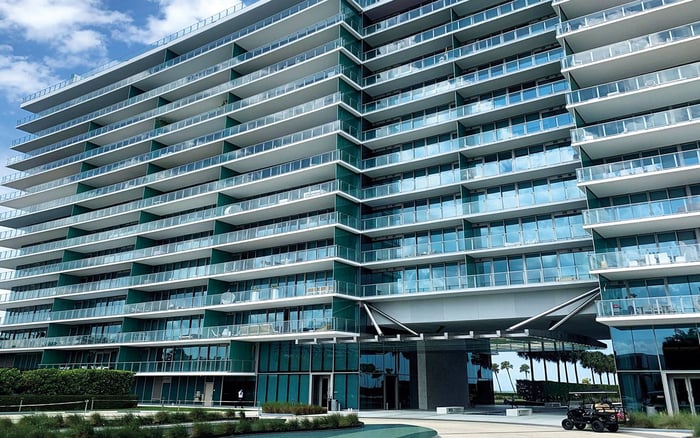
For buyers studying condominium discipline on the island itself, Oceana Key Biscayne is a natural project to include in the conversation. The goal is not to be dazzled by branding, but to understand how a building's daily service culture would support a traveler who is absent as often as present.
In coastal South Florida, insurance, wind exposure, flood considerations, and hurricane readiness are not abstract closing documents. For the weekly traveler, they are lifestyle variables. If the owner is frequently away, the residence must be prepared by people and procedures rather than by last-minute personal intervention.
Before buying, understand how the association or property team communicates before severe weather, how shutters or protective systems are handled, how outdoor furnishings are secured, and what responsibilities remain with the owner. If the property is a single-family home, build a clear storm protocol with named vendors, access authority, and decision rights. If it is a condominium, clarify the boundary between building responsibility and owner responsibility.
The best residences make preparation feel procedural rather than emotional. That is the standard frequent travelers should require.
Key Biscayne appeals to buyers who value discretion, waterfront atmosphere, and a softer daily tempo. But frequent travelers should be candid about how often they will actually use the beach, club, marina, fitness facilities, tennis, dining, and social infrastructure. A residence can be perfect for a family month and inefficient for a one-night turnaround.
Ask which amenities you will use on a Tuesday arrival, not only during a holiday stay. If boating or club life is part of the attraction, pressure-test the logistics of reservations, storage, access, guests, and staff coordination. If the property will host family while the owner is away, consider whether the setting is intuitive for them without constant instruction.
Buyers often compare Key Biscayne with Miami Beach for a different blend of water, service, and social adjacency. Continuum on South Beach can serve as one such comparison point, particularly for those weighing a more active coastal setting against Key Biscayne's quieter residential character.
The most important luxury for a weekly traveler is not always square footage. It is continuity. A condominium may offer fewer private grounds but more structured oversight. A single-family residence may provide space, privacy, and a stronger sense of estate living, but it also requires more decisions about landscape, pool care, inspections, pest control, storm preparation, security systems, and vendor accountability.
Neither model is inherently superior. The correct answer depends on the owner's tolerance for management. If the buyer already has a family office, estate manager, or trusted local property team, a house can be viable. If the buyer wants to arrive, sleep, swim, repack, and leave with minimal coordination, a serviced condominium may be the more elegant solution.
For a mainland comparison with a residential garden and bay-oriented lifestyle, Park Grove Coconut Grove may help buyers understand how another established coastal neighborhood balances privacy, service, and access. Comparing alternatives clarifies whether Key Biscayne is a conviction or simply a beautiful first impression.
The best pressure-test is not dramatic. It is repetitive and practical. Visit at your real travel hours. Walk the arrival path with luggage. Time the sequence from residence to car and back again. Speak with building or property management. Review storm planning. Confirm vendor depth. Ask how the residence behaves when no one is watching.
Then separate romance from reliability. Key Biscayne can be deeply compelling for the right buyer, particularly one who values water, privacy, and a calmer residential cadence. But a weekly traveler should buy only when the island's rhythm complements the travel rhythm rather than competing with it.
Luxury is not merely the ability to leave. It is the confidence to return and find everything exactly as it should be.
Should weekly travelers choose a condo or a house in Key Biscayne? A condo may offer more built-in oversight, while a house may offer more privacy and control. The better choice depends on how much management the owner wants to handle personally.
What is the first thing to test before buying? Rehearse your real weekly departure and return pattern. The property should feel efficient on a pressured travel day, not only during a relaxed showing.
How important is building staff for a frequent traveler? Very important if the residence will often be vacant. Staff protocols for access, packages, guests, vendors, and emergencies can materially affect the ownership experience.
Should insurance be reviewed before making an offer? Yes. Wind, flood, and broader coastal coverage considerations should be understood early because they influence both cost and confidence.
How should buyers evaluate storm preparation? Ask who does what before severe weather and how decisions are made when the owner is away. The plan should be written, practical, and vendor-supported.
Is Key Biscayne best as a primary home or second home? It can be either, but weekly travelers should evaluate it as a Second-home operating base if they expect repeated absences. The residence must perform while vacant.
What role should security play in the decision? Security should be evaluated as a daily operating system, not merely a feature. Consider access control, guest procedures, service entries, and remote communication.
Should buyers compare Key Biscayne with Brickell or Miami Beach? Yes, comparison sharpens the decision. Brickell may clarify convenience priorities, while Miami Beach may clarify coastal service and social access preferences.
How can buyers assess vendor reliability? Ask who handles cleaning, maintenance, inspections, pool care, landscaping, and emergency response. The names and responsibilities should be clear before closing.
What is the clearest sign Key Biscayne is the right fit? The clearest sign is that travel feels calmer, not more complicated. The residence should protect time, privacy, and confidence every week.
To compare the best-fit options with clarity, connect with MILLION.
If branded residences are on your mind — as a home or as an allocation — we would be glad to share what we are seeing, privately.
Begin a quiet conversation