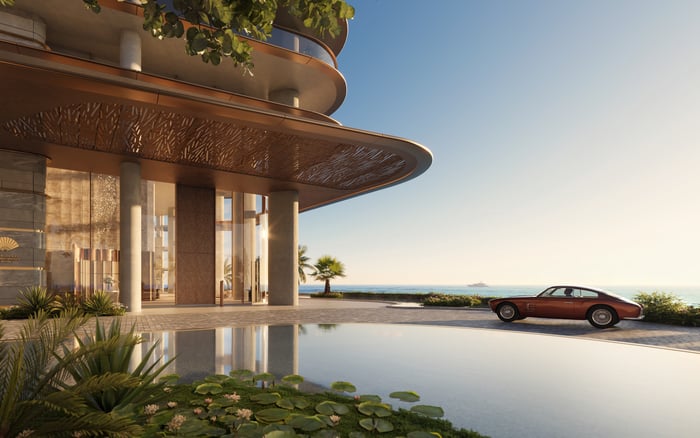
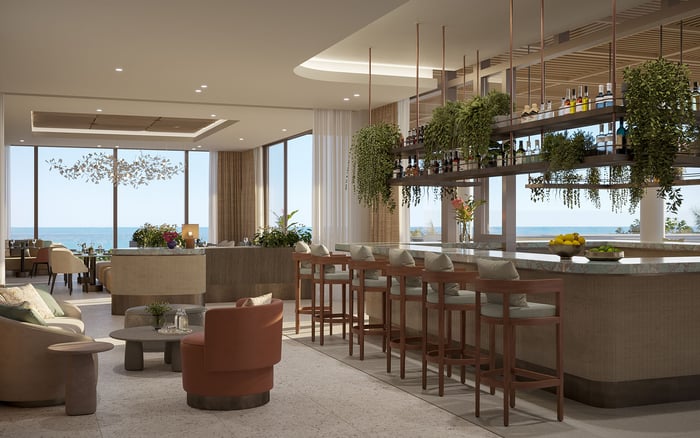
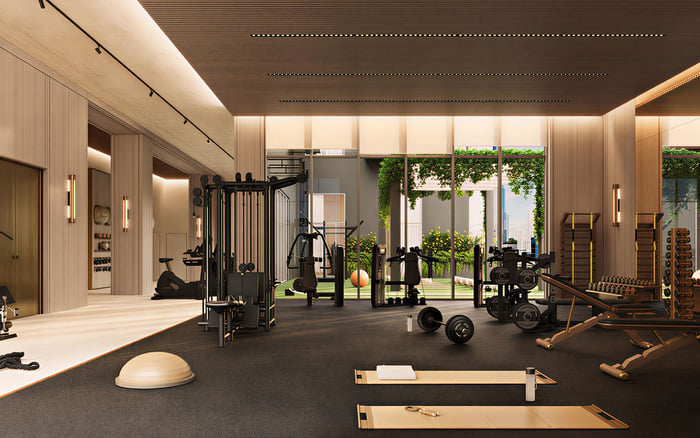
A document-led buyer’s guide to comparing wellness access, indoor air, potable water systems, and booking rules at two distinct South Florida branded residences.
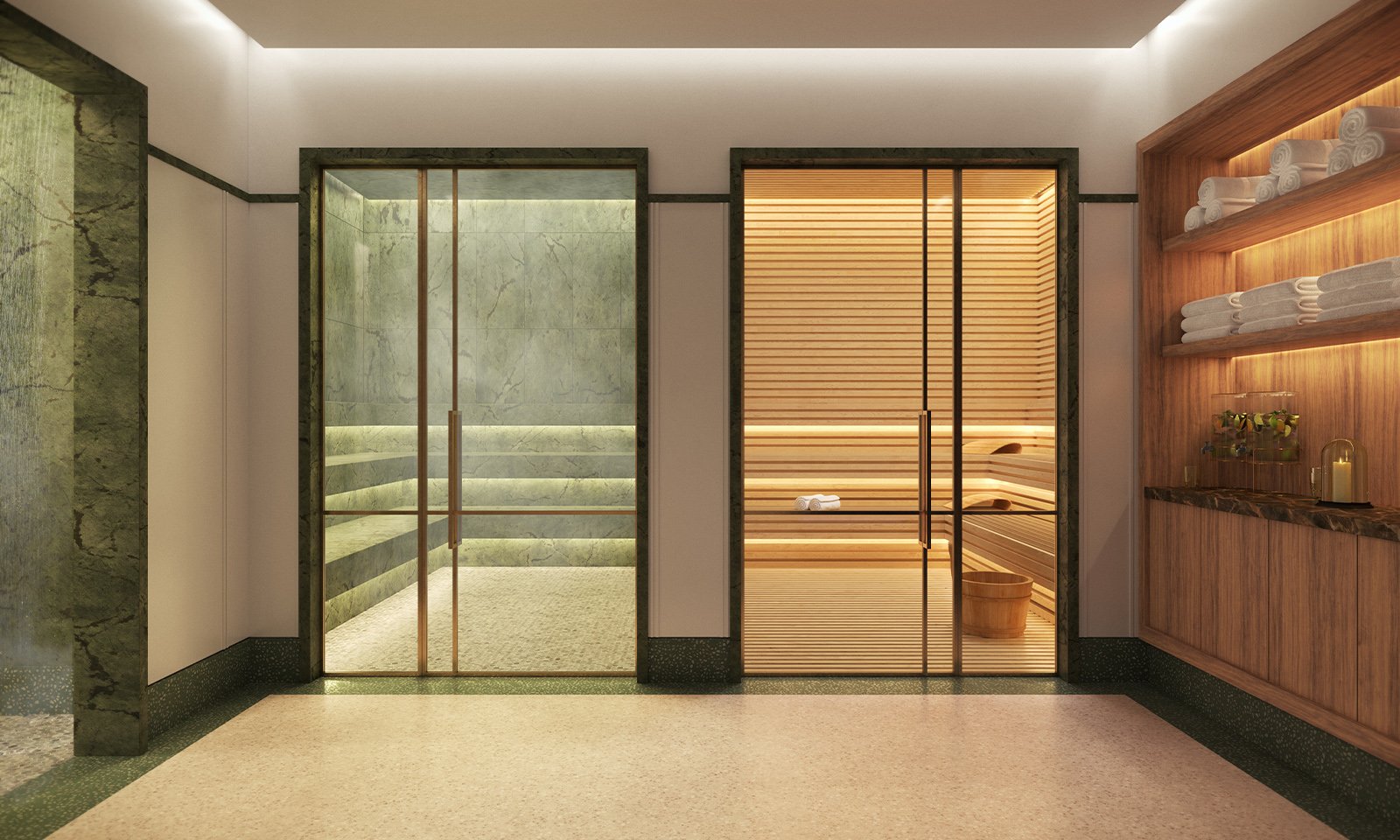
Within South Florida’s Branded Residences category, wellness is increasingly positioned as both a lifestyle proposition and a private service ecosystem. Buyers, however, should distinguish the visual appeal of a spa, pool, or fitness suite from the operating details that determine whether those spaces perform as expected.
The comparison between 888 Brickell by Dolce & Gabbana and Shell Bay by Auberge Hallandale is particularly instructive. The former proposes an urban, vertically integrated wellness program in Brickell. The latter is conceived as a gated private-club environment in Hallandale Beach, where fitness and recovery sit alongside golf, racquet sports, pools, boating, and hospitality.
This buyer’s guide focuses on four questions: how many people can realistically use the wellness program, what the mechanical specifications reveal about indoor air, how potable water is treated, and which documents control reservations and access.
The decisive luxury is not the number of amenities, but the clarity of access and performance.
888 Brickell is planned as a 90-story tower with 259 hybrid two- to four-bedroom residences, a five-star hotel, and roughly 115,000 square feet of amenities. Its proposed wellness offering includes a fitness center, yoga and Pilates spaces, an indoor padel court, a spa, and hot and cold plunge pools. Spa and recovery services are expected to include IV therapy, massages, facials, thermal experiences, a juice bar, and grooming.
Capacity should be assessed space by space. Buyers can request occupancy limits, operating hours, appointment intervals, class sizes, treatment-room counts, cancellation policies, and any resident priority. The indoor padel court adds a climate-controlled recreation option, but the practical value of a single court depends on reservation duration, advance-booking windows, guest permissions, and peak-hour demand.
The pool program also requires clear separation. A 44-foot lap pool on the 43rd floor is reserved for residents, while a separate elevated Pool Club features an approximately 3,800-square-foot pool deck and a more social character. Buyers should confirm whether the Pool Club is shared with hotel guests, whether cabanas carry charges, and whether residence renters retain the same access as owners.
For context, purchasers considering wellness-led living elsewhere in the neighborhood may also review House of Wellness Brickell, while keeping the comparison centered on executed specifications and rules rather than amenity names.
Shell Bay presents a different demand profile. Its Auberge component is planned with 60 guest rooms and suites alongside 108 branded residences. The wider gated club community is expected to encompass golf, tennis, pickleball, padel, a 48-slip yacht club, and a members’ clubhouse with spa and fitness facilities. Residential amenities are planned to include rooftop pools, private cabanas, and spa facilities, along with indoor and outdoor fitness and wellness spaces.
Here, capacity is distributed among private building amenities, hotel facilities, and club spaces. Buyers should obtain a matrix identifying who may use each venue: residents, hotel guests, club members, accompanied guests, or residence renters. They should also request booking windows, daily limits, no-show rules, guest fees, and priority during high-demand periods. The phrase “medical day spa” should not be treated as a defined clinical offering without an enumeration of clinicians, therapies, or medical services.
Neither project identifies HEPA filtration, MERV ratings, enhanced outside-air rates, ionization, dedicated in-residence purification, or WELL or Fitwel certification in its amenity descriptions. That absence is not evidence of weak performance. It means buyers should move beyond marketing language and request written mechanical schedules.
For each residence and common area, request the specified filter rating, outside-air rate, humidity-control approach, equipment location, replacement interval, and party responsible for maintenance. Ask whether the residence has an independent system or shares elements with hotel or common-area operations. Clarify whether spa treatment rooms, fitness studios, locker areas, and indoor recreation spaces have distinct ventilation or exhaust requirements.
Backup-power coverage also matters. Buyers should determine which ventilation, controls, pumps, and amenity systems continue operating during an interruption. Any upgrade promised by a sales representative should appear in the purchase agreement or an incorporated technical exhibit.
Neither development specifies building-wide potable-water filtration, in-unit reverse osmosis, ultraviolet treatment, or comparable domestic-water systems. Shell Bay also does not identify specialized pool-water treatment. Buyers therefore need a system diagram, not a general assurance that water is filtered.
The diligence request should identify treatment at the building entry point, any additional in-unit stage, filter type, service interval, replacement cost, monitoring method, and maintenance responsibility. Confirm whether filtered water reaches every cold-water fixture or only a dedicated kitchen tap. Refrigerators, ice makers, wet bars, coffee systems, and bathroom fixtures should be addressed explicitly.
Recent water-quality testing can establish a baseline, while turnover and warranty documents should state who responds if performance falls outside specification. For pools, plunge pools, and thermal facilities, buyers can request sanitation protocols, testing frequency, closure procedures, and operating responsibility without presuming a particular treatment technology.
888 Brickell is marketed as a flexible condo-hotel whose residences may be rented while remaining available for owner enjoyment. Minimum stays, blackout dates, owner-use limits, rental splits, and reservation priority are not stated. Those economics and privileges should be verified in the declaration, hotel documents, and rental-management agreement.
A buyer should model housekeeping charges, management deductions, booking lead times, cancellation terms, furnishing requirements, and amenity access while the home is rented. Around-the-clock hospitality and exclusive residential amenities become meaningful distinctions only when the governing documents define service scope and eligibility.
At Shell Bay, the central issue is the intersection of condominium, hotel, and private-club governance. The project includes hotel and residential components but does not publish a nightly residential rental program or detailed owner-booking rules. Review the condominium, club, and hotel documents together for initiation fees, recurring dues, membership transferability, tee-time access, spa priority, cabana reservations, guest privileges, and treatment of renters.
The same discipline applies when comparing another hospitality-oriented Broward property such as Auberge Beach Residences & Spa Fort Lauderdale: branding may frame the experience, but documents define the owner’s enforceable rights.
Before contracting, assemble a diligence file containing final amenity plans, capacity and reservation policies, HVAC schedules, domestic-water diagrams, maintenance obligations, current operating budgets, and every agreement governing rental or club participation. Renderings can communicate intent, but they should not substitute for declarations, engineering specifications, executed agreements, or final rules.
The better choice is therefore personal. 888 Brickell may suit a buyer seeking vertically integrated urban wellness and flexible-use potential. Shell Bay may appeal to someone who values a broader private-club setting with open-air activity, golf, racquet sports, pools, and boating. In either case, the premium should be judged by demonstrable system performance and dependable access.
For discreet guidance on comparing South Florida luxury residences, consult MILLION.
If branded residences are on your mind — as a home or as an allocation — we would be glad to share what we are seeing, privately.
Begin a quiet conversation888 Brickell proposes a vertically integrated urban program, while Shell Bay combines residential wellness with a broader private-club, resort, golf, racquet, and boating environment.
Plans include fitness, yoga and Pilates spaces, an indoor padel court, a spa, hot and cold plunge pools, and separate resident and social pool experiences.
The planned 44-foot lap pool on the 43rd floor is described as resident-only, separate from the more social Pool Club.
Request occupancy limits, class sizes, operating hours, booking windows, guest policies, treatment-room counts, and resident priority for every major amenity.
Their public amenity materials do not identify HEPA filtration, MERV ratings, enhanced fresh-air rates, or dedicated in-residence purification systems.
Ask for mechanical schedules covering filter ratings, outside-air rates, humidity control, maintenance responsibility, replacement intervals, and backup-power coverage.
Public materials for both projects do not specify building-wide potable-water filtration, in-unit reverse osmosis, or ultraviolet treatment.
Confirm treatment stages, filter maintenance, replacement costs, testing, and whether filtered water reaches refrigerators, ice makers, wet bars, and other fixtures.
No. Public descriptions do not state minimum stays, blackout dates, owner-use limits, rental splits, or reservation priority, so governing agreements require review.
Buyers should verify which amenities require club membership and how priority works among residents, members, hotel guests, renters, and accompanied guests.