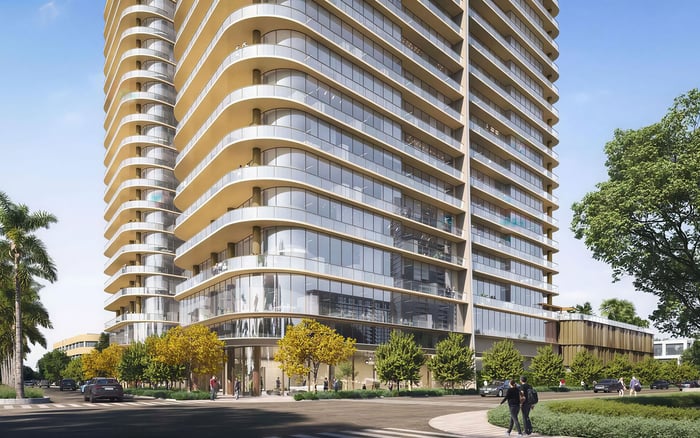
Miami Tropic presents a compelling pre-construction proposition, but sophisticated buyers should settle the intended contracting and ownership structure before reserving. The controlling documents, lender requirements, deposit schedule, and professional advice should be coordinated around one precise buyer identity.

At Miami Tropic Residences, the architectural proposition is unusually legible. Planned for 3501 NE 1st Avenue, the development occupies the meeting point of the Design District, Midtown, and Wynwood. Terra and Lion Development Group are co-developing the tower, with architecture by Arquitectonica and interiors by Yabu Pushelberg. It is also chef Jean-Georges Vongerichten's first residential real-estate project.
Those attributes may frame the lifestyle decision, but they should not eclipse a quieter contractual question: Who, precisely, will be the buyer? An individual, revocable trust, irrevocable trust, or limited liability company can present markedly different considerations for financing, estate planning, tax, privacy, and liability. The correct answer depends on the purchaser's circumstances, not a generic preference for one structure.
The name on the reservation should reflect a coordinated ownership plan, not a placeholder.
For sophisticated purchasers, titling is best treated as a pre-reservation decision. The complete Reservation Agreement and Purchase Agreement are not publicly available. It therefore cannot be determined whether a later buyer substitution would require developer consent, be treated as an assignment, carry a fee, or alter deposit obligations.
A reservation may appear preliminary, yet it begins a documentary sequence that can culminate in a binding purchase contract and staged deposits. Advertised Miami Tropic deposit structures include additional 10% installments tied to post-contract deadlines. That makes the contracting identity far more than an administrative field.
If the intended owner is a trust, the reservation may need the trust's exact legal name, date, jurisdiction, and the trustee's stated capacity. If the purchaser will be an LLC, the sales team may require the entity's precise name, formation jurisdiction, manager or authorized-signatory capacity, and supporting organizational documents. Buyers should obtain the project's current written requirements rather than assume that a shortened name or future amendment will suffice.
No categorical prohibition on purchases by trusts or LLCs has been identified. Equally, there is no basis to assume that a buyer can reserve individually and later transfer the contract without consequence. The controlling developer documents determine the available path.
This discipline applies across the market. A purchaser comparing the Design District setting with Kempinski Residences Miami Design District, a Wynwood option such as Frida Kahlo Wynwood Residences, or an Edgewater alternative such as Villa Miami should evaluate each project's documents independently. Similar geography or positioning does not make contractual provisions interchangeable.
Before submitting the reservation, the purchaser's Florida real-estate counsel should review the exact buyer designation and the current form of the relevant documents. The inquiry should address whether a post-reservation or post-contract name change is permitted, whether it constitutes an assignment, whether consent is discretionary, whether a fee applies, and whether the original signer remains liable.
The sales team should then confirm in writing how the buyer must appear. For a trust, that means identifying the trustee and signing capacity correctly. For an LLC, it means verifying the entity's full name, jurisdiction, status, and authorized signer. Any required supporting documents should be assembled before the reservation deadline, not after funds have been transmitted.
Financing requires parallel attention. A buyer planning to borrow should ask the lender whether it will underwrite the intended trust or LLC structure and how the loan, purchase agreement, and closing title must align. Signing personally while expecting an entity to own at closing can create an avoidable inconsistency if the developer or lender does not accept the change on the buyer's preferred terms.
International purchasers need an additional layer of coordination. Florida real-estate counsel and qualified cross-border tax advisers should evaluate the proposed structure before documents are signed. Project sales materials are no substitute for advice addressing the purchaser's residency, intended use, succession objectives, and wider holdings.
Miami Tropic Residences has been described as a 48- or 49-story tower with 329 condominiums. Homes are marketed in one- through four-bedroom configurations spanning approximately 852 to 2,892 square feet, supported by more than 41,000 square feet of anticipated indoor and outdoor amenities.
Pricing illustrates why current documentation matters. Ranges have varied from roughly $982,000 to $4 million and from $1.1 million to $6 million at different inventory dates. Bedroom-level pricing has also presented one-bedroom residences from $914,000, two bedrooms from $1.7 million, three bedrooms from $2.6 million, and four bedrooms from $4.1 million. None of these figures should replace a dated availability sheet and the price stated in the developer's documents.
Completion estimates also vary. Dates of 2027 and 2028 have both been presented, while the current estimate is the fourth quarter of 2029. A prudent investment review should therefore distinguish broad marketing expectations from enforceable contractual language governing construction, extensions, cancellation rights, and closing obligations.
The same approach belongs in buyer's guides for any major pre-construction acquisition: preserve the dated reservation, executed agreement, deposit receipts, entity records, written sales confirmations, and lender correspondence in one coordinated file. The objective is not paperwork for its own sake. It is to ensure that the buyer identity, funding plan, and closing structure remain consistent as the development progresses.
Miami Tropic's location between the Design District, Midtown, and Wynwood, combined with its design team and culinary identity, gives buyers several compelling reasons to evaluate the project. Yet the reservation should follow, not precede, the ownership analysis.
Before signing, confirm the exact buyer name, signing capacity, entity or trust documentation, financing compatibility, and rules governing substitutions or assignments. Counsel should review the current developer-issued Reservation Agreement and Purchase Agreement, while tax advisers address consequences specific to the purchaser. Pricing, deposits, and delivery expectations should also be confirmed in dated writing.
For a private review of Miami Tropic availability and a coordinated pre-construction acquisition strategy, connect with MILLION.
If branded residences are on your mind — as a home or as an allocation — we would be glad to share what we are seeing, privately.
Begin a quiet conversationThe intended ownership structure should be coordinated with counsel, tax advisers, and any lender before the reservation is signed.
No reviewed public project material states a categorical prohibition, but the current developer documents and sales requirements control.
The public materials do not confirm this. Counsel should determine whether substitution needs consent, constitutes an assignment, incurs a fee, or affects deposits.
Buyers should confirm the exact trust name, jurisdiction, trustee identity, signing capacity, and required supporting documents with the sales team.
Confirm the entity's full legal name, formation jurisdiction, authorized signer or manager capacity, status, and required organizational records.
The intended borrower, purchase agreement, underwriting, and closing title should use a structure acceptable to the lender and developer.
Publicly advertised schedules use staged payments, including additional 10% installments tied to post-contract deadlines.
Public estimates vary among 2027, 2028, and the fourth quarter of 2029, so buyers should rely on current developer-issued documents.
Public project materials describe 329 condominiums in a tower characterized as either 48 or 49 stories.
International buyers should seek Florida real-estate and qualified cross-border tax advice tailored to residency, ownership, succession, and intended use.