A buyer-focused comparison of the advertised privacy and service features at St. Regis® Residences Brickell and House of Wellness Brickell, with practical questions for evaluating arrivals, elevator access, guest routes, and residential operations.
The most persuasive expression of residential luxury is often an uneventful arrival: a car received discreetly, an elevator reached without unnecessary encounters, and a front door that feels removed from the city. For buyers, that experience must be evaluated through layouts and operating rules, not atmosphere alone.
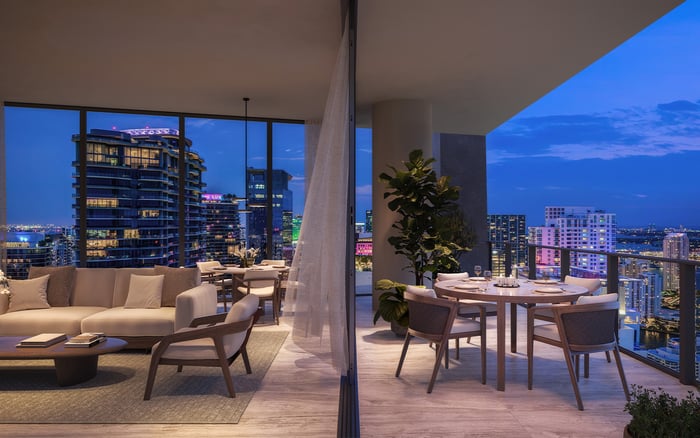
At St. Regis® Residences Brickell, the advertised offering includes private elevators, private entry foyers, a private residential lobby, and round-the-clock residential services. House of Wellness Brickell emphasizes wellness-focused living and private outdoor terraces, while its resident and visitor circulation arrangements remain unconfirmed.
The distinction is meaningful but narrow. St. Regis has the stronger documented privacy-oriented feature set, not a proven operational security advantage. Neither an elegant arrival court nor a wellness identity establishes how residents, guests, deliveries, and staff move through a building.
At 1809 Brickell Avenue in South Brickell, on Miami’s waterfront, St. Regis is marketed around a residential arrival sequence that extends from the entrance to the home. Private elevators and private entry foyers support a direct arrival path, while the private residential lobby provides a separate residential setting.
The development is described as a gated bayfront enclave of 152 private homes, with no hotel rooms and no transient use. Those descriptions should not become assumptions about owner occupancy, minimum lease terms, or rental restrictions. The governing documents must define those matters.
Private elevators warrant equally careful interpretation. They do not, by themselves, establish exclusive elevator cars, resident-only elevator banks, or independent routes for guests and service personnel. Buyers should ask which homes each elevator serves, how floor permissions work, and where visitors wait before proceeding upstairs.
The practical test is whether privacy continues through every transition. A private foyer is valuable, but garage connections, lobby access, and service routes determine how consistently that privacy is maintained.
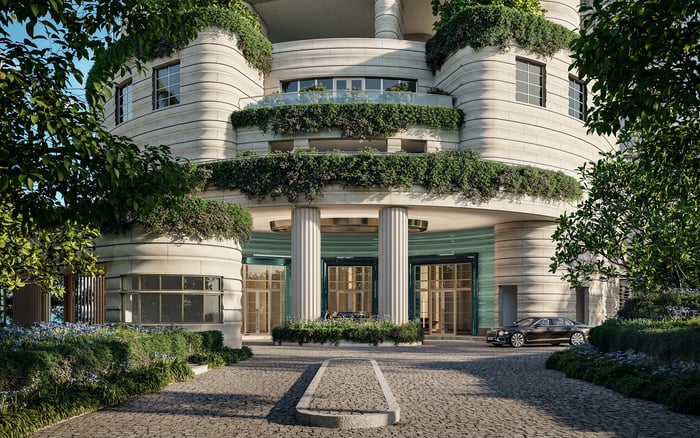
St. Regis advertises a porte-cochère, commissioned art, a signature water feature, and on-site valet service. The offering also includes private residential parking, on-site parking, and EV charging. These features describe an arrival environment; they do not establish its access-control procedures.
For buyers who value discretion, the critical questions begin at the vehicle door. Where do residents, invited guests, ride-hail passengers, and delivery drivers stop? Does someone arriving from the garage pass through a controlled residential threshold? Can a visitor reach an elevator before being authorized?
Advertised services include 24-hour security and valet parking, but staffing levels, surveillance coverage, and operating protocols remain unconfirmed. Likewise, the advertised luxury house car service does not specify pickup arrangements or privacy procedures.
A useful review traces two journeys: the owner returning home and an unfamiliar visitor arriving for the first time. Ask the sales team to demonstrate both on the plans, identifying each point where staff authorization or access credentials are required.
St. Regis advertises a 24-hour attended lobby and concierge, along with 24-hour butler service. For owners, the appeal is attentive assistance without the feeling of a public hospitality environment. These are advertised specifications, not confirmation that services are already operating.
Service availability and guest separation are distinct questions. A concierge may coordinate a visitor’s arrival, but the circulation plan and written rules determine whether that visitor shares an owner’s route. Butler service also requires clarity about access permissions, scheduling, and the handling of requests while the resident is away.
Keyless residential entry is advertised, although the credential technology and its integration with elevator access are unspecified. Buyers should establish whether permission is limited to a particular door, floor, or time window, and how access is withdrawn.
Request the proposed procedures for housekeeping, tradespeople, food deliveries, parcels, and moves. The objective is not simply more service, but service that preserves the private residential experience.
House of Wellness Brickell’s residential address is 152 SW 9th Street, Miami, FL 33130. Its sales gallery is at a separate address: 1200 Brickell Avenue, 18th Floor. A gallery visit should not be mistaken for an inspection of residential arrival conditions.
The tower is described as 34 stories with 656 homes. Scale alone does not establish congestion, elevator waiting times, or a less private experience. Elevator capacity, zoning, layout, staffing, and access policies remain essential context.
Its positioning centers on wellness-focused living and private outdoor terraces. Private elevators, resident-only elevator banks, a separate guest lobby, 24-hour concierge, valet, and staffed security remain unconfirmed. Unconfirmed does not mean absent; buyers should not treat a lack of detail as a design conclusion.
The next step is a detailed plan review. Establish the residential entrance, parking connection, elevator arrangement, and routes used by guests and deliveries before assigning a privacy premium to any particular home.
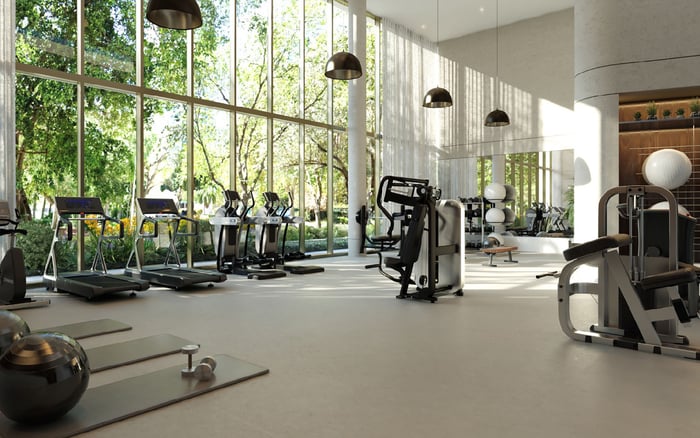
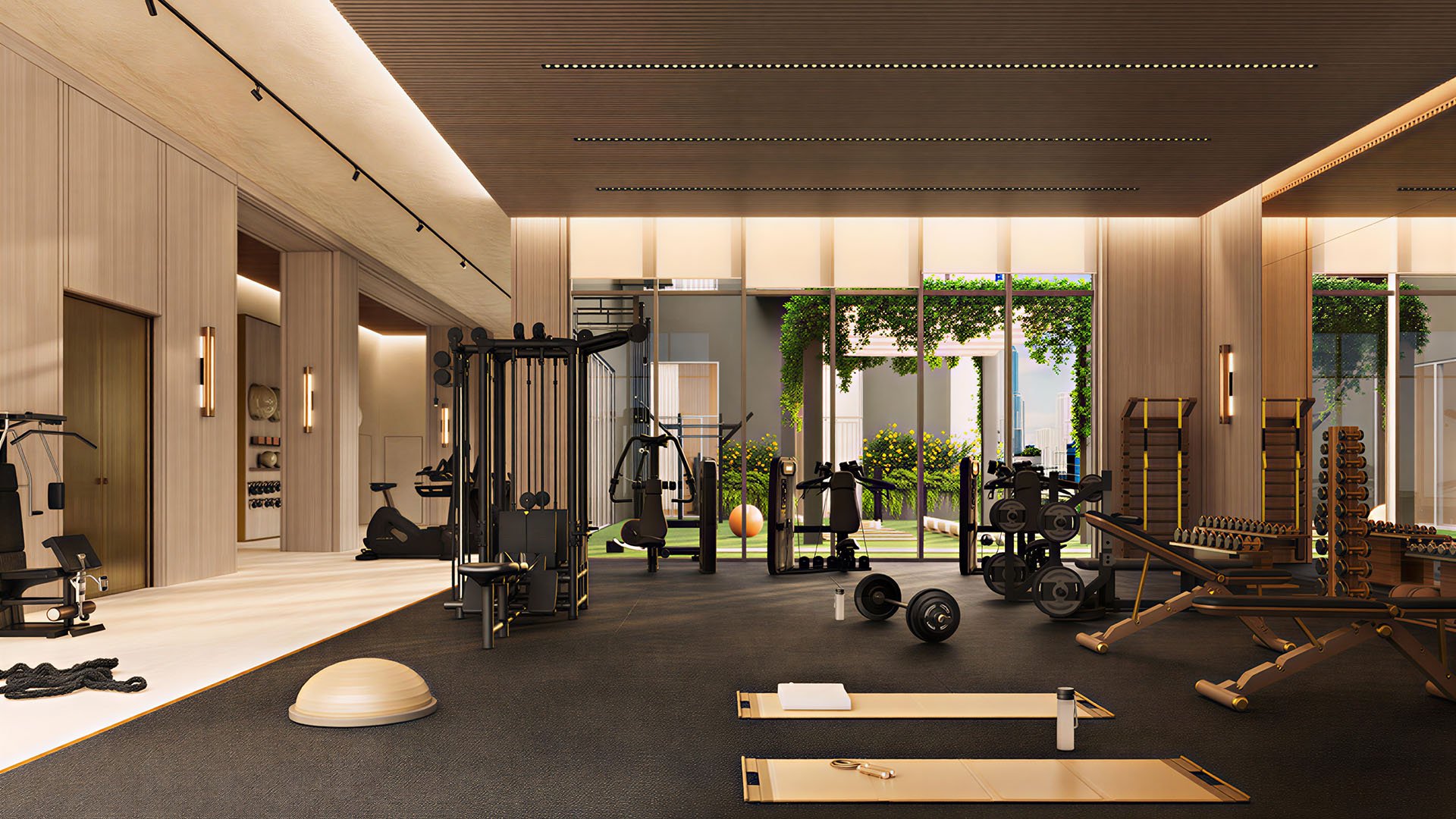
The private threshold of a home and the shared life of a building deserve separate consideration. St. Regis advertises a private marina, fitness and wellness facilities, pools, lounges, and dining. A complete guest-access policy for those spaces remains unconfirmed.
Ask whether visiting friends may use each facility, whether reservations or resident accompaniment are required, and how outside service providers are admitted. At House of Wellness, the same questions should accompany any discussion of wellness-focused living. That positioning does not establish who may enter particular shared spaces.
For buyers also considering The Residences at 1428 Brickell, this is a comparison framework, not a claim of equivalent features. Evaluate each property against the same daily scenarios: an early workout, a guest’s arrival, a delivery, and a return from an evening out.
Request circulation plans showing resident, guest, delivery, housekeeping, and moving routes. Review them alongside elevator zoning, parking connections, guest-registration rules, amenity-access policies, and written security procedures. Where routes overlap, establish how access is managed rather than assuming physical separation.
Ask which advertised services are included, how they will be staffed, and what remains subject to final operating arrangements. Written definitions are more useful than broad assurances of privacy or personalized attention.
St. Regis offers a more explicit advertised privacy and service proposition. House of Wellness requires further confirmation of the circulation and staffing features relevant to this comparison. A sound purchase decision rests on how the plans and rules support the buyer’s actual routines, not which identity feels more exclusive.
For a discreet conversation about matching a Brickell residence to your privacy and service priorities, connect with MILLION.
If branded residences are on your mind — as a home or as an allocation — we would be glad to share what we are seeing, privately.
Begin a quiet conversationSt. Regis® Residences Brickell is located at 1809 Brickell Avenue in South Brickell, on Miami’s waterfront.
The residential address is 152 SW 9th Street, Miami, FL 33130. Its sales gallery is separately listed at 1200 Brickell Avenue, 18th Floor.
St. Regis has the stronger documented offering, including advertised private elevators, private entry foyers, and a private residential lobby. This does not establish a proven operational security advantage.
No. Buyers should review elevator zoning and circulation plans to establish whether guests, deliveries, and service personnel share resident routes.
The offering includes a 24-hour attended lobby, concierge, and butler service, while service materials also list 24-hour security and valet parking. These are advertised features, not confirmation of current operations.
Those features remain unconfirmed, as do resident-only elevator banks, a separate guest lobby, 24-hour concierge, and valet. They should not be described as absent.
Keyless residential entry is listed. The credential technology and its integration with elevator access controls are unspecified.
No. Buyers should request governing documents to confirm permitted rentals, minimum lease terms, and any occupancy restrictions.
No. Elevator capacity, zoning, layout, staffing, and operating rules are needed to assess congestion and privacy.
Request circulation plans, elevator zoning, parking connections, guest-registration rules, amenity-access policies, and written security procedures. These help distinguish advertised features from the proposed daily operating experience.