A discreet buyer’s guide to testing whether an Edgewater residence can support the cadence, privacy, maintenance discipline, and return rituals of a refined South Florida second home.

A polished second-home purchase in Edgewater should begin with a simple question: how will the property live when you are not performing for a showing, entertaining for a single weekend, or projecting an idealized Miami calendar onto the space? The answer is rarely found in marble, glazing, or a sunset alone. It is found in repetition. Arrival, unpacking, grocery stocking, workouts, guests, remote work, maintenance, departure, and return should all feel composed.
For South Florida buyers, Edgewater occupies a particularly interesting category. It can feel residential, urban, waterfront-adjacent in spirit, and connected to the broader Miami lifestyle without requiring the same daily pattern as a resort enclave. That flexibility is attractive, but it also demands discipline. A second home should not become a beautiful obligation. It should support a personal cadence that is easy to resume after two weeks, two months, or an entire season away.
Before touring, write down your real rhythm. Will you come for long weekends, school holidays, winter stretches, art week, boat days, business meetings, or family gatherings? Will you arrive late, host often, work remotely, or keep the residence as a private retreat? These answers change what matters.
A buyer who visits frequently may value convenience, fast valet flow, and low-friction access more than oversized formal space. A buyer who stays for longer seasonal periods may focus on storage, kitchen function, closet depth, guest separation, and the ability to live without feeling temporary. A buyer who lends the residence to adult children or relatives should evaluate privacy between bedrooms, building guest protocols, and whether the home remains elegant under multiple routines.
This is where buyer’s guides can be most useful: not as a checklist of prestige signals, but as a way to translate lifestyle into measurable property questions.
Second-home ownership is defined by transitions. Arrival should feel calm; departure should not leave behind a list of unresolved tasks. Ask how deliveries are handled, how keys and authorized access are managed, how maintenance visits are scheduled, and what happens when an issue arises while you are away. The more a residence depends on your physical presence to function, the less polished the rhythm becomes.
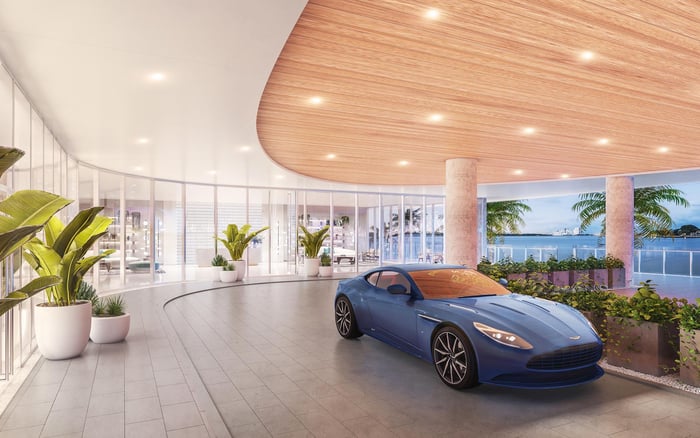
During a tour, imagine entering after a flight, after dinner, with luggage, or with guests who do not know the building. Note where bags go, how long the route from car to residence feels, and whether the lobby sequence preserves discretion. Then imagine leaving. Can you close the door and trust the systems, staff communication, and building routine to keep the residence prepared for your next return?
When comparing options such as Villa Miami or EDITION Edgewater, the question is not only which presentation feels more glamorous. It is which one best supports the way you actually come and go.
A second home can tolerate drama, but it cannot tolerate daily irritation. Look closely at the floor plan. Is there a natural place for luggage without disrupting the entry? Can guests stay without occupying the emotional center of the home? Does the primary suite feel private when others are awake? Is there a proper place to work that does not turn the dining table into an office?
Terraces deserve particular scrutiny. A terrace can be a signature pleasure in Miami living, but it should suit your actual use. If you picture morning coffee, late dinners, reading, or quiet calls, consider exposure, privacy, furniture depth, and how often you would realistically step outside. Do not let the idea of outdoor space outrun the behavior it is meant to serve.
Storage is equally important. A polished second-home rhythm often depends on keeping duplicates in place: clothing, toiletries, sport gear, entertaining pieces, and seasonal items. If every visit requires packing as if for a hotel, the property has not yet become a true residence.
In Edgewater, polished living is often less about a single feature and more about the absence of friction. Walk the building path as if you already live there. How intuitive are the common spaces? Does the service culture feel formal, relaxed, anonymous, or highly personal? Would that tone still suit you after the novelty fades?
Amenities should be evaluated by frequency, not brochure appeal. A pool, fitness area, lounge, private dining space, or wellness facility matters only if it improves your regular stay. The strongest purchase decision comes when a buyer can name exactly when and how each amenity will be used. Otherwise, the cost is emotional as well as financial: you are buying into a lifestyle you may not actually inhabit.
A tour of Aria Reserve Miami or The Cove Residences Edgewater can be most productive when treated as a rehearsal. Move slowly, ask operational questions, and imagine an ordinary Tuesday rather than a celebratory first weekend.
New-construction can be compelling for a second-home buyer who wants contemporary systems, fresh design language, and the opportunity to align a residence with future plans. Yet it also requires a different temperament. Some buyers enjoy the process of selection, anticipation, and phased decision-making. Others prefer to walk into a finished residence, test the acoustics, understand the light, and judge the building culture immediately.
Neither approach is inherently superior. The correct choice depends on your tolerance for timeline, customization, and unknowns. If the second home is meant to reduce complexity in your life, be candid about whether a pre-completion path supports that goal. If the second home is part of a longer-range South Florida strategy, patience may feel entirely appropriate.
For some buyers, Lilli Miami Edgewater may belong in the conversation precisely because comparison sharpens the brief. Seeing multiple Edgewater options helps distinguish attraction from fit.
Luxury buyers are often trained to compare price per square foot, view category, finish package, and building stature. Those factors matter, but they should not replace the deeper test: would you use this residence well? A second home that is slightly less dramatic but significantly easier to inhabit may create more value in real life than a more theatrical home that complicates every stay.
Waterfront expectations also deserve careful calibration. Some buyers want visual serenity; others want a social base, a workweek retreat, or a launch point for Miami dining and culture. The premium you pay should reflect the life you will actually lead, not the life a marketing image suggests.
Lifestyle value is not vague. It can be observed through repeated visits, different times of day, candid conversations about operations, and a direct review of what you need the home to do when you are absent.
Visit more than once. Walk the arrival path. Sit quietly in the residence. Open closets. Stand on the terrace without speaking. Ask how the building handles guests, deliveries, service providers, repairs, and emergencies. Consider who will use the home besides you, and whether the residence remains graceful under their presence.
Then ask one final question: does this property make your South Florida life feel simpler, more elegant, and more repeatable? If the answer is yes, the second-home rhythm is not merely polished. It is durable.
What is the first thing to evaluate in an Edgewater second home? Start with your actual use pattern, including arrival frequency, guest needs, work habits, and how long you plan to stay each time.
Should I prioritize views or building operations? Views matter, but operations often define the day-to-day experience. A polished building rhythm can make ownership feel effortless.
How many times should I tour before deciding? More than once is wise. Different times of day can reveal light, sound, traffic flow, privacy, and the building’s daily tempo.
Is new-construction better for a second home? It depends on your tolerance for timelines and decision-making. Some buyers prefer future-ready design, while others want immediate certainty.
How important is storage for part-time living? Very important. Good storage allows the residence to function as a true home rather than a place that requires constant packing.
What should I ask about guest access? Ask how visitors, family members, service providers, and deliveries are authorized, announced, and managed when you are present or away.
Does Edgewater suit a quiet lifestyle? It can, depending on the building, floor plan, exposure, and your personal routine. Test quiet moments during the tour, not just the views.
How should I evaluate a terrace? Consider privacy, exposure, furniture usability, and whether you would use it daily, seasonally, or mainly when entertaining.
Should I compare Edgewater with other Miami neighborhoods? Yes, if your rhythm is still unclear. Comparing neighborhoods can clarify whether you want urban energy, resort calm, or a balance of both.
When is a second home truly ready to buy? When the residence supports arrival, living, hosting, maintenance, and departure without adding unnecessary complexity.
For a discreet conversation and a curated building-by-building shortlist, connect with MILLION.
If branded residences are on your mind — as a home or as an allocation — we would be glad to share what we are seeing, privately.
Begin a quiet conversation